















Is hot yoga good for your heart? For most healthy adults, a regular practice looks helpful in a modest, exercise-sized way. It is not a treatment, though, and the heat adds real strain. That is why every hot yoga teacher must learn heat safety, and why anyone with a heart condition should ask a doctor first.

Is Hot Yoga Good for Your Heart? The Short Answer
Students ask “is hot yoga good for your heart” before they ask about anything else, and teachers are the people they ask. So a good teacher needs an answer that is honest, not a sales line. Here is the version we teach at YogaFX.
- For healthy adults: hot yoga is real cardio work, and regular exercise is good for the heart whatever the room temperature.
- For raised blood pressure: the research is early, so a doctor decides, not the studio.
- For known heart disease: nobody can promise safety, so the answer starts with a cardiologist.
So, is hot yoga good for your heart? Mostly yes for the healthy, with limits. Because the heat changes how the body copes, the real skill is not quoting studies. Instead, it is spotting trouble early and knowing what to do next. This guide covers both halves: what the evidence says, and the heat safety every hot yoga teacher must know.
This article is general information, not medical advice. Please consult a healthcare professional before starting hot yoga, especially if you have a heart or blood pressure condition.
What the Research Says: Is Hot Yoga Good for Your Heart?
Let us start with the wider picture, because yoga overall has the bigger evidence base. A pooled analysis of 64 randomised trials, with nearly 17,000 people, found that yoga was linked with a systolic blood pressure about 4.5 points lower than in control groups. Harvard Health reported the result, along with a 7.6 point drop in LDL cholesterol.
Harvard Health described the effects as modest yet positive, and added that the reason is not entirely clear.
Hot yoga has a much smaller pile of studies. One of the best known is the Bikram Yoga Heart Study, published by Hunter and colleagues in Experimental Physiology in 2018. It compared yoga practised in a heated room with yoga practised at a comfortable temperature, and it looked at how well blood vessels widen.
News coverage summarised the finding as no extra vascular benefit from the heat. In other words, any gain may come from the movement and breathing rather than from the temperature itself.
A 2025 systematic review (Willmott and colleagues) pooled 43 hot yoga studies with 942 participants. That sounds large, but most single studies are small, so the honest summary of whether hot yoga is good for your heart is promising and unproven.
For blood pressure, the same caution applies: hot yoga blood pressure studies are small, and Bikram yoga and blood pressure research is still early. If you want a trial-by-trial look at the same question from a different angle, read this breakdown of the hot yoga heart trials.
Why “Is Hot Yoga Good for Your Heart?” Matters for a Teacher
A student who hears “yes, it is good for your heart” may walk in feeling invincible. Then they push through dizziness because they think the class is medicine. As a result, the teacher’s job is to keep the claim modest and the room safe. If a student asks about pressure specifically, our guide to how yoga can help with high blood pressure is a good next read.
What Happens Inside a 90-Minute Hot Class
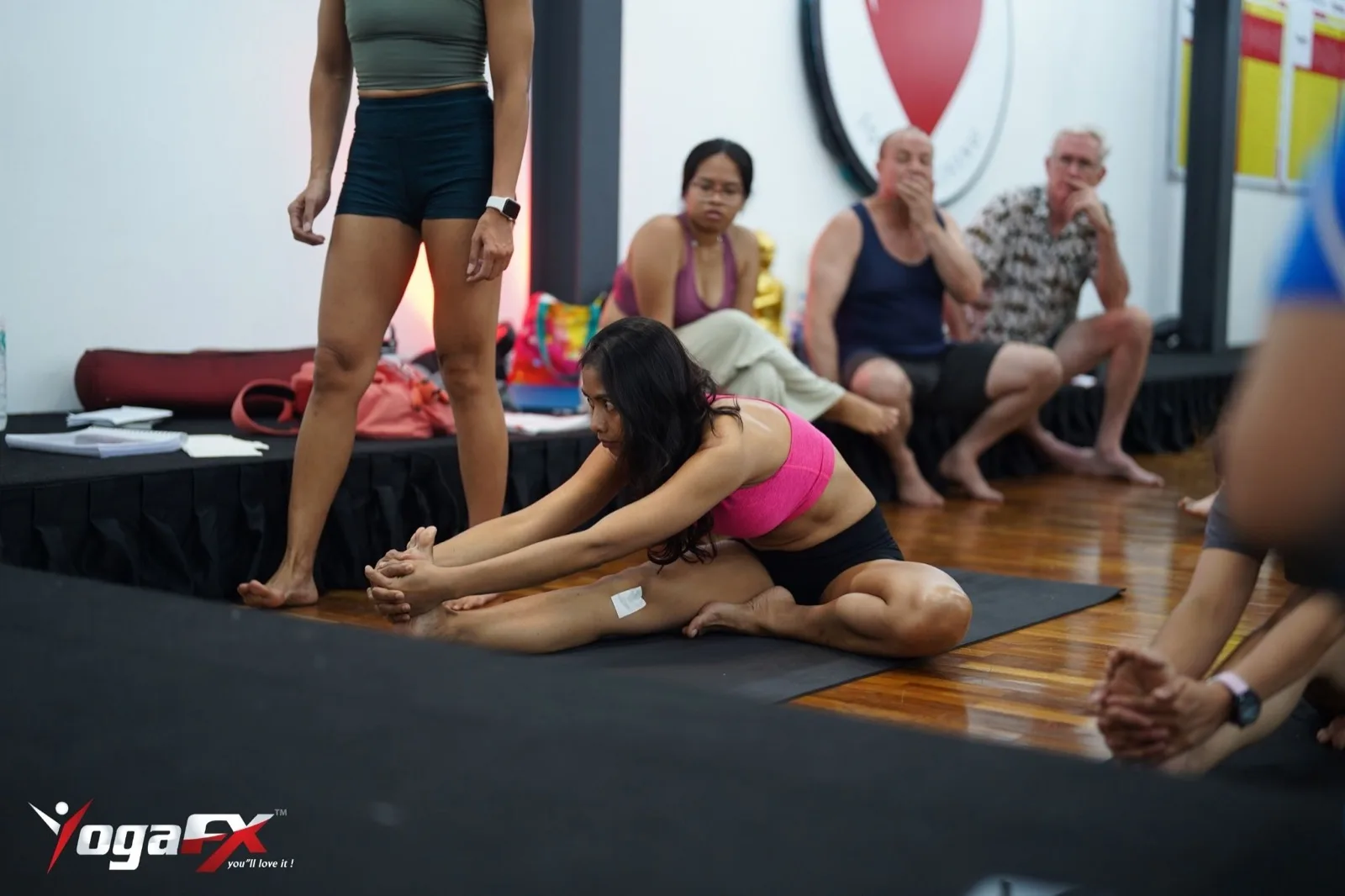
A YogaFX class runs 90 minutes in a room held near 40°C with about 40% humidity. The heat is natural tropical heat in Bali, not an electric heater. That combination matters, because humid air slows the evaporation of sweat, and evaporation is how the body cools itself.
The heart works harder to push blood to the skin for cooling and to the muscles for movement. A 2014 University of Wisconsin-La Crosse study (Porcari and colleagues) measured the effort of a 90-minute Bikram class. It estimated about 333 calories for women and 460 for men, at roughly 80% of maximum heart rate. So the class is real exercise, and the infographic below shows the setting in numbers.
90 min
Class length
One continuous class, so the heart works for a long time.
40°C
Room heat
Natural tropical heat, no electric heaters.
40%
Humidity
Humid air slows sweat evaporation and cooling.
~80%
Of max heart rate
Average effort in a 90-minute class (Porcari 2014).
Notice what the numbers do not say. They do not say the heat is harmful, and they do not say it is protective. Asking “is hot yoga good for your heart” cannot be settled by a thermometer. They describe a demanding setting, which is why teachers screen students and watch the room.
Who Should See a Doctor Before Class
Most healthy adults cope with a hot class once they build up slowly. Some students, though, need a doctor’s clearance first. Teachers are not doctors, so the right move is to ask the question and point the student to someone who is. A short health form at sign-up does this well.
Ask students to check with their doctor before class if they tell you any of the following:
- A heart diagnosis of any kind, including rhythm problems, valve problems, heart failure or a past heart attack.
- Unsettled blood pressure, whether high or low, or dizzy spells that come without warning.
- Tablets that change how the body handles heat or fluid, such as some pressure medicines and water pills.
- Pregnancy, because overheating is a known worry.
- A recent fever or stomach bug, since the body is already low on fluid.
Students recovering from a heart event often wonder if they can return to the hot room. Their cardiologist or rehab team answers that, not the studio. A teacher can say, kindly and clearly, “Please ask your doctor, and I will help you start gently once you have their okay.”
Heat Warning Signs: What Teachers See and What They Do
A teacher cannot read a student’s heart rate from the front of the room. Instead, you read the body. The table below turns that into a quick reference. Any sign that does not settle quickly with rest and water deserves a serious response.
| Warning sign | What you may see | What a teacher does |
|---|---|---|
| Dizziness or light-headedness | Swaying, gripping the mat, stopping mid-posture | Cue the student to sit or lie down, breathe slowly and rest. No rush to rejoin. |
| Muscle cramps | A sudden grab at a calf or foot, a wince | Let them rest, offer water, and keep the rest of the class moving. |
| Nausea or headache | Pale face, hand on the stomach, eyes closed | Move them to the floor near the door, cool them with a towel and watch closely. |
| Confusion or slow responses | A blank look, no reaction to simple cues | Treat as urgent. Stop their practice, get help, and call emergency services if it does not clear fast. |
| Chest pain, racing or irregular heartbeat | Hand on the chest, gasping, a grey colour | Call emergency services at once. Do not wait, and do not let them restart. |
This is general guidance. Every teacher should also take a recognised first aid course, because a table cannot replace hands-on practice.
7 Essential Heat Safety Rules Every Teacher Learns
If a student asks “is hot yoga good for your heart”, these seven rules are the habits that keep the answer a safe yes. They apply whether your class has five students or fifty.
- Screen before the first class. Use a short health form and follow up on any heart, pressure or pregnancy answer.
- Name the exits early. Tell the room in the first minutes that stepping out of a posture or lying down is part of the practice.
- Build up slowly. New students need time to adapt to the heat, so suggest fewer classes in the first weeks.
- Talk about hydration. Encourage steady sips before, during and after class instead of one large drink at the end.
- Slow the transitions. Many dizzy moments happen when someone stands up quickly from the floor. Cue the movement and give time.
- Scan the room constantly. Watch faces, colour and balance, not only postures.
- Know your emergency plan. Keep the nearest medical help, a first aid kit and clear steps in your head before you teach.
The aim is a student who comes back next week feeling well. A teacher who protects the next class protects the habit, and the habit is where any heart benefit would come from.
How Students Adapt to the Heat, and How to Pace Them
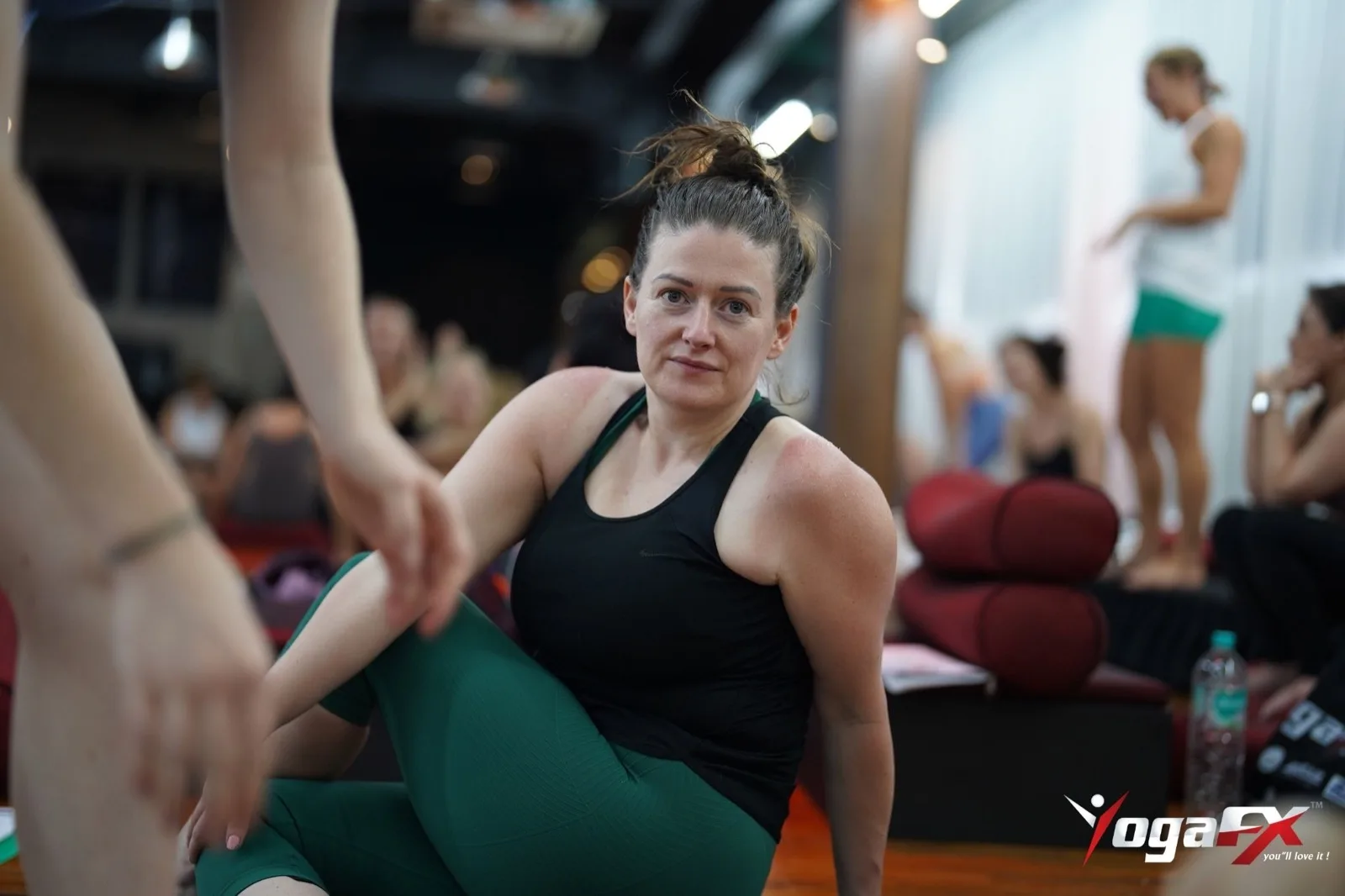
Anyone wondering “is hot yoga good for your heart” should know that a first hot class feels different from the tenth. The body adapts to heat over repeated exposures, so new students usually find the room calmer after a few weeks. That is a general pattern in heat physiology, and individual speed varies a lot.
Teachers use that pattern to pace beginners. For example, a student in week one should expect to rest often, and nobody should treat that as weakness. Meanwhile, a regular who has missed a month of classes is a beginner again for the first few sessions. Tell them so.
- Week one: aim to finish the class feeling steady, not to complete every posture.
- After a break: return at a gentler level and rebuild over a couple of weeks.
- After travel or illness: check in at the door before class and ask how they slept and ate.
Reading the Room: Three Quick Checks During Class
You cannot stare at one student for 90 minutes. Instead, build a loop that covers the room every few minutes. Many teachers use three checks.
- Faces and colour. A very red, grey or blank face needs a closer look.
- Balance and breathing. Swaying, a gasping breath or a long hold of breath tells you the effort is too high.
- Who has gone quiet. A student who stops moving or answering cues may be struggling, even if they look calm.
Scripted teaching helps here, because a fixed dialogue frees your attention. When you are not inventing the next sentence, you can watch the room.
Setting Up the Room for Safety
The answer to “is hot yoga good for your heart” also depends on the room itself, so safety starts before the first student arrives. A teacher or studio owner can check a short list every day.
- A thermometer and a hygrometer on the wall, so heat and humidity are read, not guessed.
- Water within easy reach, and a clear rule that students may drink whenever they need to.
- Floor space near the door, so a student who needs to lie down is not squeezed between mats.
- Cool, damp towels ready for anyone who feels overheated.
- A posted emergency number and a first aid kit that the whole team can find.
How YogaFX Trains Teachers to Run a Safe Hot Room
Mr. Ian Terry, E-RYT 500, leads the training. He has more than 12,000 teaching hours, and he spent 5 years, from 2014 to 2019, training with the founder of the Bikram Hot 26&2 method. Heat safety is part of that training, because a teacher who cannot keep a room safe cannot keep a room at all.
The program is the 6-day Bikram Hot 26&2 Yoga Teacher Training MasterClass in Bali. It is a hybrid format, with pre-course online study and a six-day intensive. Graduates earn a Yoga Alliance RYT 200 and a Bikram Hot 26&2 200-hour certificate. YogaFX has trained more than 1,500 graduates from over 80 countries since 2017.
If you want the full picture, see the Bikram yoga instructor course for the curriculum, or how the 6-day hybrid format works. And to understand the effort your future students will feel, read what a hot yoga class asks of your body.
So when a future student asks you “is hot yoga good for your heart”, you will have a calm and honest answer. The next batch checks in on Sunday 24 January 2027 and checks out on Friday 29 January 2027 at Soham Wellness Center in Seminyak. The Early Bird price is US$1,899 (normally US$1,999), with payment plans from US$250 a month.
What Our Trainees Say About Looking After Each Other
The question “is hot yoga good for your heart” has a second half: the room around you. Heat safety is also about culture. In a good training room, people watch out for one another. These short quotes come from video reviews recorded at the end of YogaFX trainings.
This has been a brilliant experience … that lovely family feeling and I know everybody had my back just like I had everybody else’s back.
Marion, YouTube review, 2024
I feel like I’ve been through hell and back and I have a t-shirt to prove it but every morning … I got up … and came here and sweated it out.
Scott, YouTube review, 2025
I didn’t come here just for the training. I got more than just, you know, the postures. It’s your years of experience, everything that you’ve given us, your words of wisdom, your encouragement, your support, the positivity.
Mayuri, YouTube review, 2026
You can watch Marion’s full review below.
FAQ: Is Hot Yoga Good for Your Heart and Safe in the Heat?
Does hot yoga increase blood pressure?
Blood pressure can change during a class, but research on this is thin. Heat widens blood vessels, which may offset the effort. A 2023 pooled analysis of 64 trials linked yoga in general with a 4.5 point lower systolic pressure. Anyone taking blood pressure medication should ask a doctor before starting.
Can hot yoga cause low blood pressure?
It can feel that way. Heat widens blood vessels and sweating loses fluid, so some students feel light-headed when they stand up fast. Teachers cue slow transitions and rest. If dizziness keeps happening, or you take blood pressure pills, check with your doctor before the next class.
Is hot yoga good for cardiovascular health?
A hot class works the heart like moderate to vigorous exercise, about 80% of maximum heart rate on average in a 2014 University of Wisconsin-La Crosse study. Regular exercise helps the heart, but no trial shows hot yoga prevents heart disease. Treat it as exercise, not as medicine.
How often is hot yoga recommended?
There is no official dose for hot yoga. Most beginners do well starting with one or two classes a week, resting freely, and adding more as the heat feels easier. If you have any health condition, let your doctor set the pace, and tell your teacher what they said.
Is Bikram yoga good for your heart?
Bikram yoga, now often called Original Hot 26&2, is the same 26 postures and 2 breathing exercises in a heated room. The research on it is promising but small. It looks like a good form of exercise for healthy adults. It is not a treatment for heart disease.
Still have questions? Message Mr. Ian and the YogaFX team on WhatsApp and we will answer them personally.