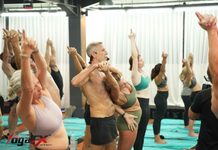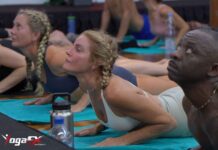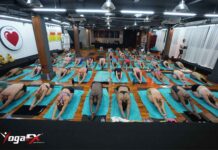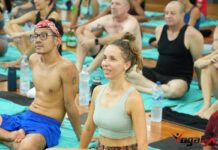



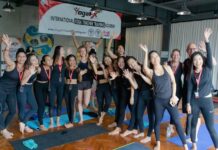

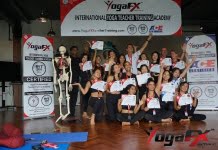

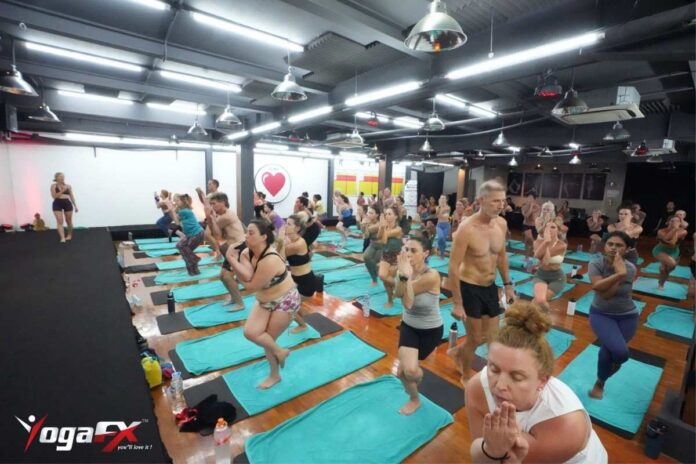
If you are researching what an actual Bikram-style teaching qualification involves before committing money or vacation days to it, here is the direct answer: the YogaFX Bikram Yoga Instructor Course covers five things by the time you graduate: the 26&2 posture sequence and its alignment cues, the scripted verbal dialogue used to teach it, anatomy relevant to a heated 90-minute class, supervised practice teaching in front of a live room, and the paperwork that gets you Yoga Alliance RYT 200 plus a separate Bikram Hot 26&2 certificate.
This page breaks each of those down module by module, what the hybrid format actually asks of you week to week, and exactly what “certified” means once you finish, since that word gets used loosely across the industry and rarely refers to the same set of requirements from one provider to the next.
Course Curriculum: What You’ll Study, Module by Module
Most people searching for a Bikram-style instructor course picture one thing: learning the 26 postures well enough to lead a class. That is only about a third of the actual curriculum. The rest is built around the parts that separate a strong practitioner from someone a studio will actually hire.
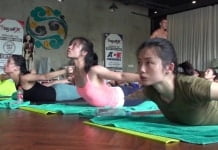
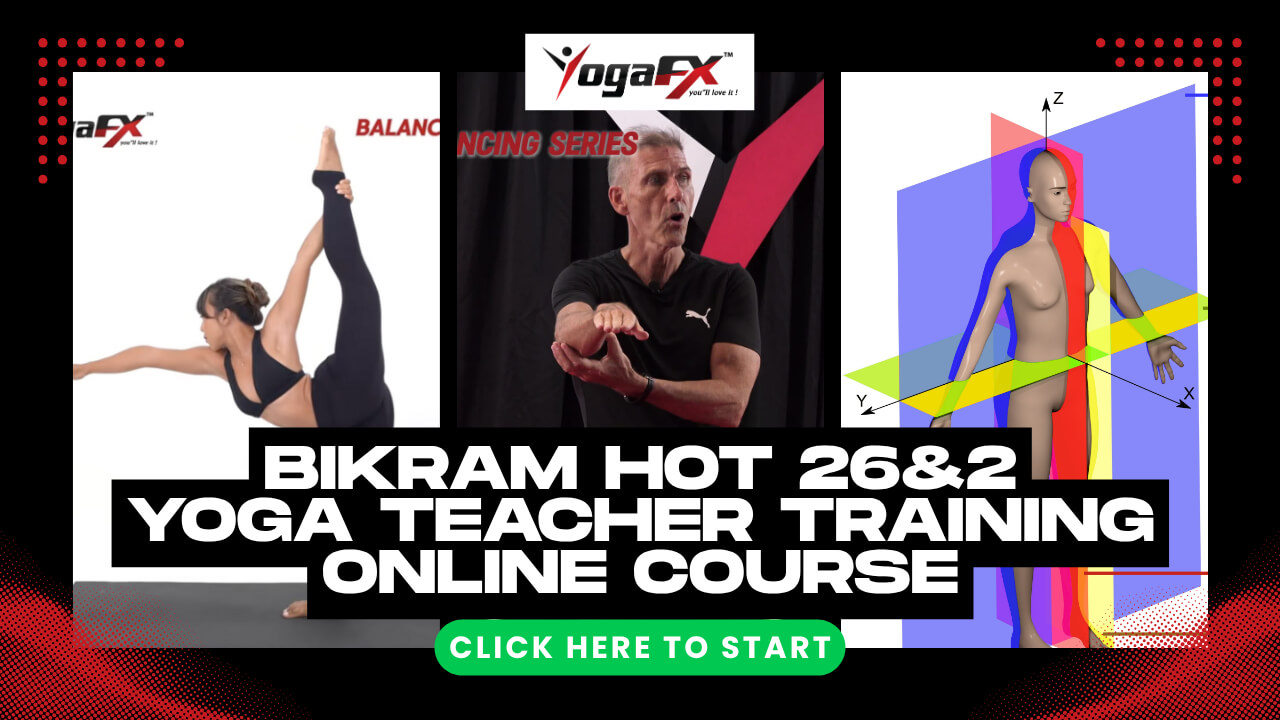
- Posture clinic. Each of the 26 postures and 2 breathing exercises broken down to alignment cues, common student mistakes, and modifications for injuries or limited flexibility.
- Scripted dialogue delivery. The verbal script used to teach the Original Hot 26&2 Yoga sequence without demonstration or music, drilled until it sounds natural rather than recited.
- Applied anatomy. How the body responds to a 90-minute class at roughly 40 degrees Celsius and 40 percent humidity, and what that means for pacing, hydration guidance, and spotting when a student is in genuine distress versus normal discomfort.
- Class management. Reading a room you cannot always see clearly through condensation and sweat, adjusting pace for mixed-level students, and handling a studio that is fuller or hotter than expected.
- Supervised practice teaching. Leading real segments, then full classes, in front of your cohort with direct feedback from Ian Terry before you ever teach a paying student.
The dialogue module is usually the part candidates underestimate going in. It is a fixed script, not a loose framework, which sounds restrictive until you are the one talking a room of strangers through 90 minutes without stopping. Having exact language to fall back on is what makes that manageable in week one of teaching, before you have built up your own instincts.
Posture clinic itself breaks into three working groups rather than running through all 26 postures in a flat list. Standing series postures get the most floor time, since they are where beginners lose balance and where an instructor’s cueing matters most for injury prevention. Floor series work focuses on spinal safety, particularly around backbends and forward folds, where bad cueing does the most damage over repeated classes. The two breathing exercises that bookend the sequence get their own session, because they set the pacing tone for the entire 90 minutes and most new teachers rush through them. The full day-by-day schedule showing exactly when each of these modules happens is laid out in Inside the 6-Day Intensive: What YogaFX’s Hybrid YTT Format Looks Like.
Format: How the Hybrid Course Structure Works
The course runs as a hybrid: online coursework you complete at your own pace, followed by a 6-day intensive at the YogaFX studio in Seminyak, Bali. The online phase covers anatomy theory, the philosophy behind the 26&2 sequence, and a first pass at memorizing the dialogue, so the in-person week is not spent sitting through lectures you could have absorbed from home. If you are still weighing a fully remote certificate against this structure, we compared both directly in online versus hybrid yoga teacher training.
Once you land in Bali, the days follow a consistent rhythm: posture clinics in the morning while everyone is fresh, dialogue drilling in smaller groups through the afternoon, and practice teaching or anatomy review in the evening. Ian Terry gives direct, individual correction rather than general notes to the room, which matters more in a dialogue-heavy course than in a typical asana-focused training, since delivery is the skill you are actually being assessed on. Readers in the UK who are affected by the Tripaneer bankruptcy can also read the latest update for Tripaneer deposit payers in the UK.
| Course Element | Detail |
|---|---|
| Format | Hybrid: self-paced online modules + 6-day on-site intensive |
| Location | YogaFX Studio, Seminyak, Bali |
| Instructor | Ian Terry, E-RYT 500 |
| Certification | Yoga Alliance RYT 200 + Bikram Hot 26&2 certificate |
| Program fee | USD 1,999 (USD 1,999-2,199 with accommodation); Early Bird USD 1,899 for a limited number of upcoming-cohort seats |
Certification Requirements: What It Takes to Graduate
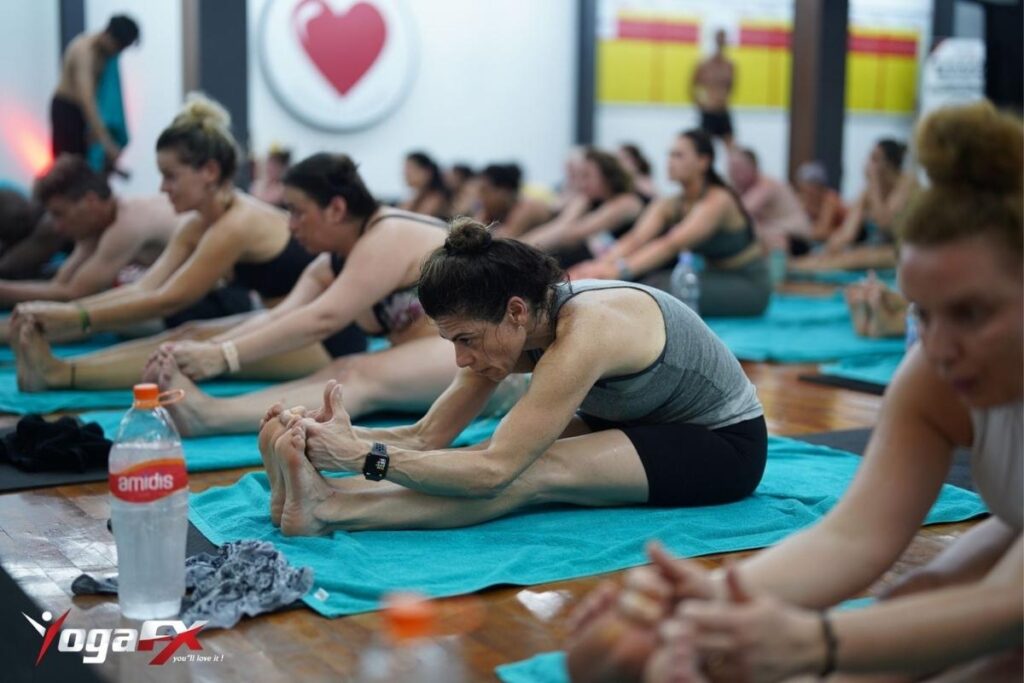
Certification is not automatic for showing up. To graduate with the dual credential, students need to complete the online modules before arriving in Bali, attend the full 6-day intensive, demonstrate the dialogue accurately enough to lead a class solo, and complete at least one supervised practice-teaching session in front of the cohort. That last requirement is the one people occasionally underestimate, since it means public speaking under real heat and real pressure is part of the assessment, not an optional add-on.
Once you complete those requirements, you receive two separate credentials: Yoga Alliance RYT 200, which is the industry-recognized registration most studios and insurers ask for, and a Bikram Hot 26&2 certificate specific to this method. Neither credential is a 500-hour certification. If you are searching for RYT 500 specifically, note that YogaFX‘s core program issues RYT 200, and confirm with any provider exactly which hours their course counts toward before enrolling, since providers use “certified” inconsistently across the industry. The full breakdown of what RYT 500 actually requires, and how it compares to this dual credential, is covered in RYT 500 Meaning Explained: YogaFX’s Dual Certification.
It is also worth being direct about something the marketing on some competing sites blurs: YogaFX is not affiliated with Bikram Choudhury or Bikram’s Yoga College of India. Ian Terry trained for five years, from 2014 to 2019, directly with Bikram Choudhury, building over 12,000 teaching hours since, but YogaFX runs its own accredited curriculum rather than licensing the original brand.
The assessment on the final day is not a written exam. You lead a complete class from the front of the room, dialogue and all, while Ian Terry and your cohort practice as your students. That format is deliberate: a multiple-choice test tells you nothing about whether someone can actually hold a room for 90 minutes in 40-degree heat, and studios hiring new instructors care far more about that than a certificate score. Passing means you have already done, under supervision, the exact thing your first paying class will ask of you.
The Research Behind What You’re Learning to Teach
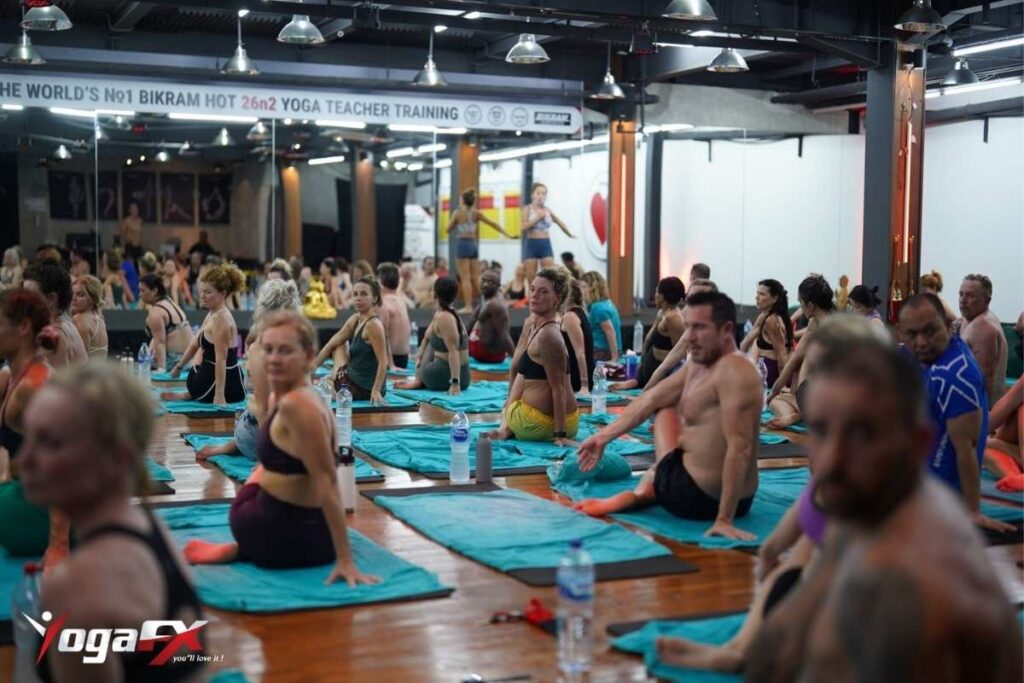
Understanding the evidence behind Bikram-style hot yoga matters for teaching it credibly, not just practicing it, since students will ask instructors to justify the heat, the pacing, and the sequence itself at some point. A 2025 systematic review of 43 studies and 942 participants found consistent improvements in flexibility, bone density, and general well-being among practitioners (Willmott et al., 2025).
Separate research comparing sauna use to structured exercise found measurable cardiovascular benefits from regular heat exposure combined with movement, relevant context for explaining to students why the heat is part of the method rather than an obstacle to it (Mayo Clinic Proceedings, 2018). Broader yoga research from Johns Hopkins Medicine has also linked regular practice to reduced stress and inflammation markers.
None of this qualifies as medical advice, and none of it means hot yoga replaces treatment for an existing condition. As an instructor, you will regularly teach students managing injuries, pregnancy, or chronic conditions, and part of what this course covers is when to modify a posture and when to tell a student to check with a healthcare professional before their next class rather than push through.
Who This Course Actually Fits
Not every candidate arrives with the same starting point, and the course is built to handle that spread rather than assume everyone shows up as an advanced practitioner. Three profiles come through most often. Career changers, usually with an established personal practice but no teaching experience, tend to find the structured dialogue the most valuable part, since it replaces guesswork with a proven script while they build teaching confidence.
Serious practitioners already comfortable with the sequence often struggle more with the letting-go required to teach from words instead of demonstration, since it means unlearning a habit built over years of practice. Studio owners and existing instructors from other yoga styles cross-training into hot 26&2 specifically usually move fastest through posture clinic and slowest through dialogue, for the same reason.
None of those starting points is a disqualifier, but they change what you should expect to find hardest. If you already have hundreds of hours of Bikram-style practice under your belt, budget extra mental energy for the dialogue module rather than assuming your familiarity with the postures will carry over automatically. If you are newer to the practice, the posture clinic curriculum is designed to bring you up to teaching-level competency within the course itself, so prior mastery is not a prerequisite for enrolling.
Why Train With YogaFX Specifically
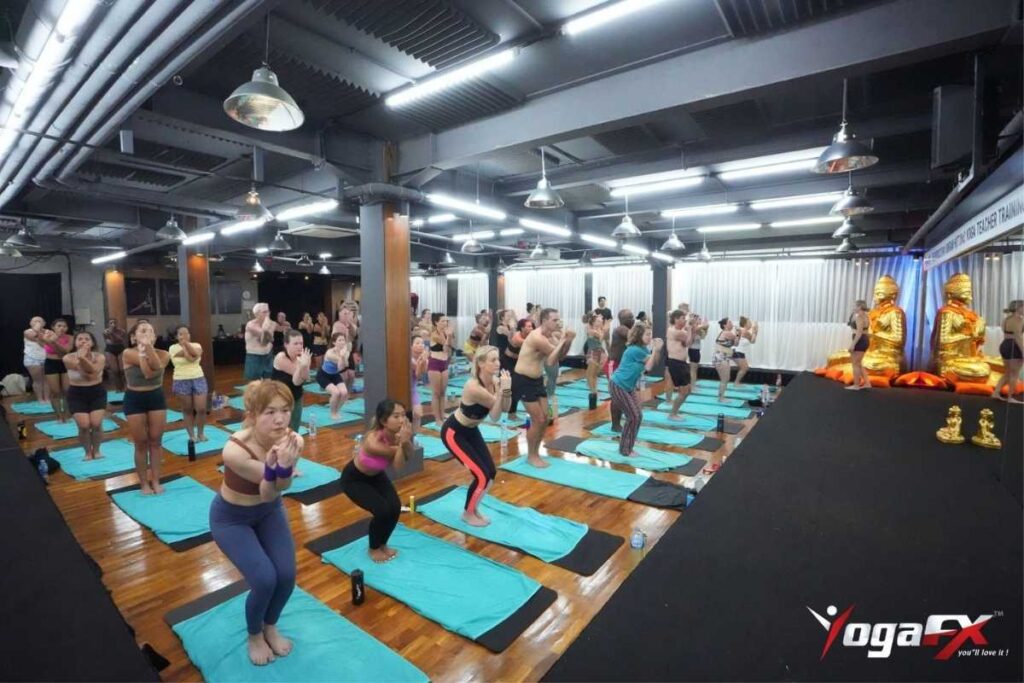
The curriculum above is standard structure for a serious Bikram-style course. What varies studio to studio is who is actually teaching it and under what conditions. Ian Terry has logged more than 12,000 teaching hours since his direct training under Bikram Choudhury, trained over 1,500 graduates from 80-plus countries, and now holds the title of Master Trainer of the Republic of Indonesia Yogasana Sports Federation.
Students consistently describe the shift from practitioner to teacher as the actual value of the course, not just the postures themselves, a distinction one graduate put simply: she left understanding the difference between doing Bikram yoga and being able to teach someone else to do it.
Training happens in genuinely hot, humid Bali air rather than an electrically heated studio, at both the Seminyak and Canggu locations, so what you practice teaching in is what your future students will actually experience. That consistency shows up in how graduates talk about the course afterward: one recent graduate described the syllabus as exactly what she needed to practice, learn, grow into, and eventually teach from, rather than material she had to reverse-engineer into a teachable format on her own. Another put it more simply, saying the course gave her the confidence to lead and teach with real energy, not just technical knowledge of the postures.
If you want the fuller picture of pricing, program structure, and how this compares to other YTT options before deciding, our complete YogaFX program overview covers that ground in more depth. And once you are certified, realistic next steps and income expectations are covered in what yoga instructors actually earn.
FAQ
How do I become a Bikram yoga instructor?
Complete a Bikram-style instructor course that includes posture training, scripted dialogue delivery, and supervised practice teaching, then graduate with a recognized certification such as Yoga Alliance RYT 200. Most hybrid programs, YogaFX included, combine self-paced online study with a short on-site intensive rather than requiring a month away.
What are the certification requirements for this course?
Students must complete the online modules, attend the full 6-day on-site intensive, demonstrate accurate dialogue delivery, and complete at least one supervised practice-teaching session. Meeting all four earns the dual credential: Yoga Alliance RYT 200 plus a separate Bikram Hot 26&2 certificate.
How much does Bikram yoga certification cost?
The YogaFX course runs USD 1,999 as a flat program fee, rising to USD 1,999-2,199 with on-site accommodation depending on room type. A very low deposit reserves a seat, with the balance due before the on-site intensive.
How much do Bikram yoga instructors make?
It varies widely by location, class volume, and whether you teach studio classes, private sessions, or both. Newly certified instructors typically build up their schedule gradually rather than starting full-time. See our detailed breakdown of what yoga instructors actually earn for realistic ranges.
Is YogaFX affiliated with Bikram Choudhury?
No. YogaFX is a prominent Hot 26&2 yoga teacher training academy headquartered in Bali, operating in Seminyak and Canggu, and it is not affiliated with Bikram Choudhury or Bikram’s Yoga College of India. Founder Ian Terry trained for five years, from 2014 to 2019, directly with Bikram Choudhury and built his own accredited curriculum issuing Yoga Alliance RYT 200 plus a separate Bikram Hot 26&2 certificate.