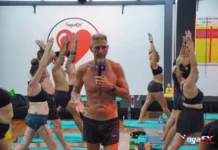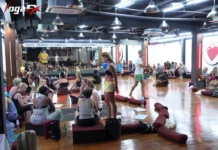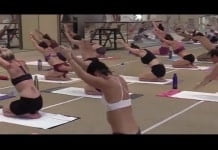

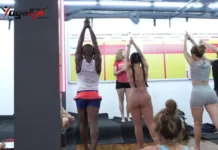







Hot 26 and 2 yoga is a fixed 90-minute class of 26 postures and 2 breathing exercises, guided by spoken dialogue in a heated room of about 40°C and 40% humidity. This guide explains how a class works, what the research supports, how to prepare safely, and how YogaFX trains teachers to deliver it in Bali.
What Hot 26 and 2 Yoga Is and How a Class Runs
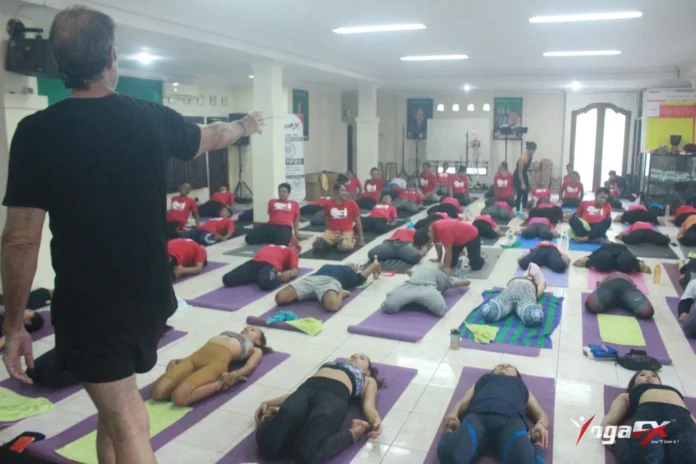
Every hot 26 and 2 yoga class follows the same order. You start with a standing breathing exercise, move through the standing series, rest in Savasana, then work through the floor series and finish with a second breathing exercise. The postures never change, so you can focus on the quality of each one instead of guessing what comes next.
The teacher does not demonstrate. Instead, a precise verbal dialogue tells you where to place each part of your body. That is why you hear no music and why the mirror becomes a tool for alignment, not for vanity. You learn to listen first and watch second.
The terms overlap, so here is how we use them:
- Hot yoga. An umbrella term for any style practised in a heated room, including hot vinyasa and hot power flow.
- Bikram yoga. The original fixed series: 26 postures, 2 breathing exercises, 90 minutes, classically taught at 40.5°C (105°F).
- Hot 26&2 yoga. The same sequence and dialogue, taught without the Bikram studio brand. YogaFX uses this name for the method it certifies.
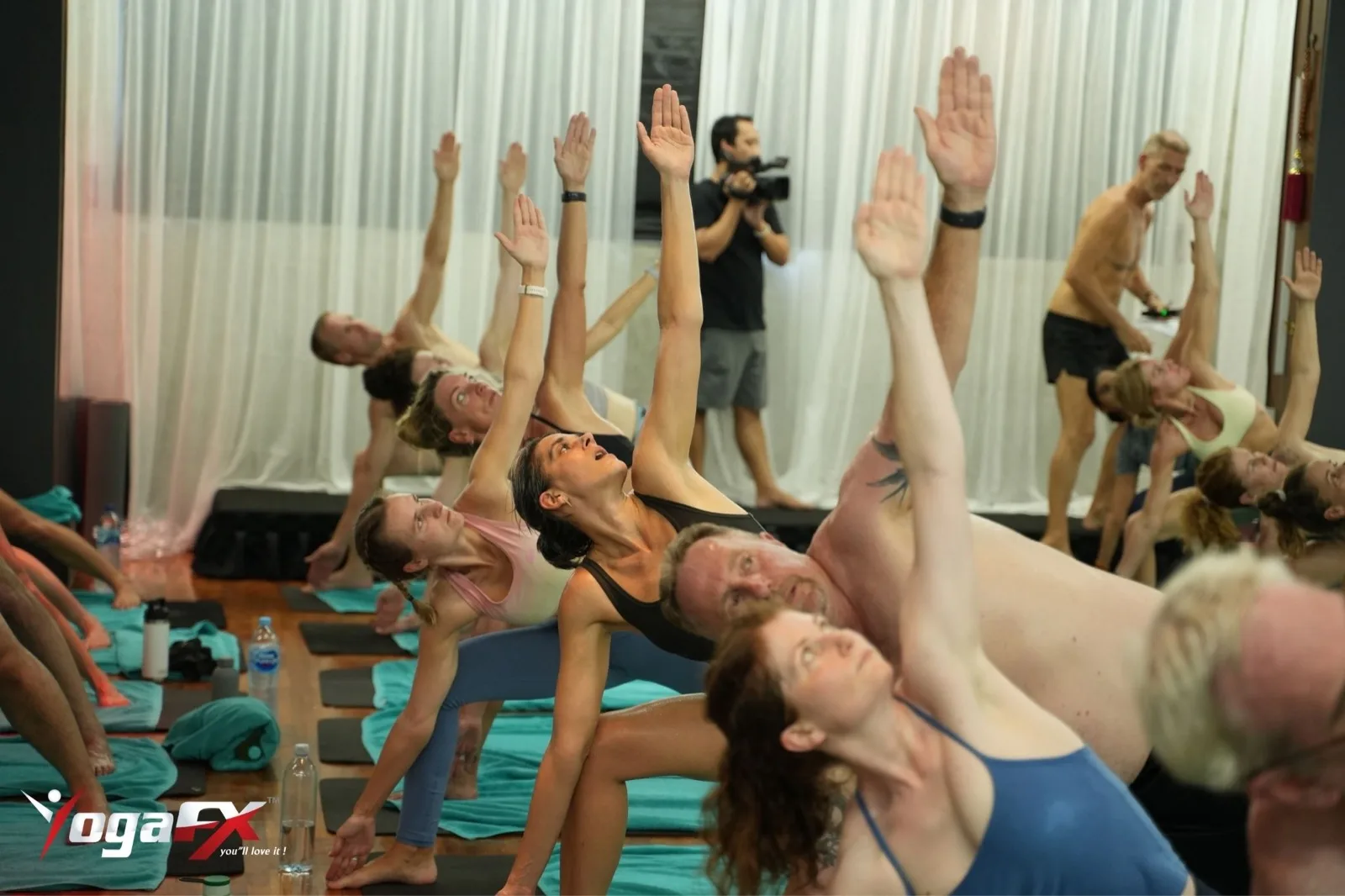
Heat also sets hot 26 and 2 yoga apart from a cool-room class. In a room of 20°C to 22°C your muscles warm up only through movement, so deep stretches take longer and feel riskier. In the heat, blood vessels widen, connective tissue becomes more pliable, and your heart rate rises even during still holds. The result feels closer to brisk walking or light jogging than to a gentle stretch.
Where Heat and Hot 26 and 2 Yoga Come From
People have used heat for healing for thousands of years. Roman bathhouses had hot, warm and cold rooms. Nordic saunas, Turkish hammams and Native American sweat lodges served similar goals: relaxation, easier movement and relief from sore muscles. Bali has its own tradition, where fermented herbs create natural warmth for therapy.
The yoga lineage is more recent. Bishnu Charan Ghosh, the younger brother of Paramahansa Yogananda, taught physical conditioning and targeted posture work in Calcutta. His student, Bikram Choudhury, brought that methodology to the West in the early 1970s and heated the studio to echo the climate of West Bengal. For the full story, read our guide to Bikram yoga history and Mr Ian Terry’s lineage.
Mr Ian Terry, an E-RYT 500 teacher with more than 12,000 hours of teaching, trained alongside the founder of the method from 2014 to 2019. He founded YogaFX in 2017 to protect that method: the fixed sequence, the exact dialogue and the heated room. That is why the YogaFX programme is built around the original hot 26 and 2 yoga sequence and not around a changing menu of heated styles.
What Heat Does to Your Body
When the room is hotter than your core temperature of 37°C, your body sets off a chain of responses. The brain signals blood vessels near the skin to widen, so heat can leave through sweat. With repeated exposure, your body may also hold more blood plasma, which helps the heart move blood with less effort.
Heat can also raise nitric oxide, a molecule that relaxes the walls of your arteries. At the cell level, mild heat stress triggers heat shock proteins, which help repair damaged proteins and may calm inflammation. Researchers call this hormesis: a small, manageable stress that leaves the body better prepared for the next one.
Not every popular claim holds up, though. The table below separates what the research supports from what needs caution.
| Area | Better supported by research | Treat with caution |
|---|---|---|
| Heart and vessels | Lower resting blood pressure and more flexible blood vessels with regular heat exposure | That sitting in heat burns calories like sprinting |
| Cells | Higher heat shock protein activity and lower inflammation markers | That sweating removes waste your organs cannot handle |
| Metabolism and mood | Better insulin sensitivity, endorphin release and higher BDNF, a protein linked to brain health | That sweat alone causes fast fat loss, since much of it is fluid |
The last column matters most for students. Sweat is about 99% water plus trace electrolytes, and your liver and kidneys do the filtering. We cover this myth in full in why sweat is not a filter.
What the Research Shows About Hot 26 and 2 Yoga
Three studies give the clearest picture, and each has limits you should know about.
- Depression (Harvard and Mass General). In an 8-week randomised trial by Nyer and colleagues, published in the Journal of Clinical Psychiatry in 2023, 59% of the heated yoga group had a 50% or greater drop in depressive symptoms, against 6% on the waitlist. Participants averaged about one class a week. The trial was small, with 65 people analysed, and it is not yet clear whether the heat itself was the key ingredient. A follow-up analysis of the same trial appeared in 2026. You can read the trial record on ClinicalTrials.gov.
- Fitness and heat adaptation. In a 2021 study of 22 adults in the International Journal of Yoga, Bourbeau and colleagues compared a modified Bikram protocol at 41°C with normal-temperature yoga. Twelve sessions over four weeks improved cardiovascular fitness and heat tolerance in the hot group. Brain-derived neurotrophic factor rose in both groups, so that gain did not depend on temperature. Read the full paper on PubMed Central.
- Calories and effort. A University of Wisconsin study by Porcari and colleagues in 2014 measured an average of 333 calories for women and 460 for men in a 90-minute class, at roughly 80% of maximum heart rate. Higher figures you may see online are not what the lab measured.
Johns Hopkins Medicine also notes that regular yoga can help people manage stress, sleep better and feel more energetic. In hot 26 and 2 yoga the scripted dialogue keeps your attention on the breath and the body, posture by posture, which makes the class a mindfulness practice as well as a workout.
How a Hot 26 and 2 Yoga Class Moves Your Heart Through Five Zones
A hot 26 and 2 yoga class is not one steady effort. It repeats a cycle: effort, recovery, renewed effort, recovery. The standing series usually asks the most of your heart, while Savasana and much of the floor series let it settle.
| Part of the class | Typical zone-style response | What is happening |
|---|---|---|
| Standing series: Awkward Pose, Eagle Pose, Standing Head-to-Knee, Standing Bow Pulling Pose, Balancing Stick, Triangle | Zone 2 to Zone 4, with brief Zone 5 peaks in some people | Large muscles, balance and heat work together, so heart rate stays high |
| Savasana after the standing series | Zone 2 falling toward Zone 1 | Muscular effort drops and breathing slows |
| Lower-demand floor work: Wind-Removing Pose, short rests | Zone 1 | Heart rate recovery and nervous system regulation |
| Floor backbends: Cobra, Locust, Bow, Fixed Firm, Camel | Zone 2 again | Muscular and breathing demand rise for a second time |
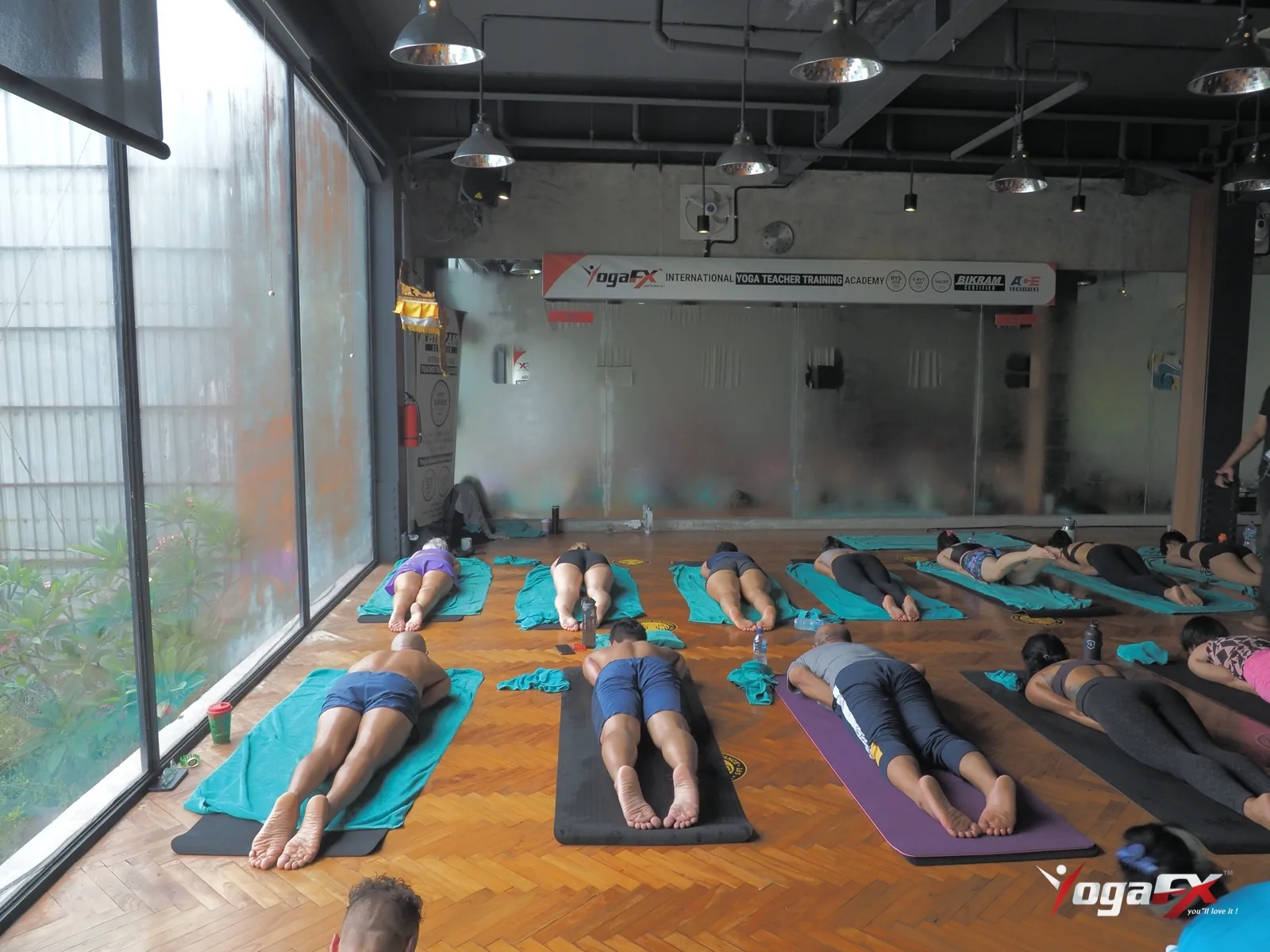
Short bursts also make the class resemble interval training. In Tuladandasana, the Balancing Stick, you move from standing to a T-shape in about 10 seconds and hold a hard effort for 20 to 30 seconds. Then you recover. Repeated over weeks, this demand on the heart and lungs may support stamina and aerobic capacity.
Balance, Proprioception and Focus in Hot 26 and 2 Yoga
Proprioception is your sense of where your body is in space without looking. Receptors in your muscles, tendons and joints feed that map to your brain all day. Two postures in the sequence test it hard.
- Eagle Pose (Garurasana). Your arms and legs wrap around the midline, which hides your limbs from your own awareness. Deep joint receptors in the hips, knees and ankles have to keep you upright.
- Balancing Stick (Tuladandasana). Your kicking leg and reaching arms sit outside your field of view. You cannot look back to check your hips, so you feel the line from fingertips to toes instead.
The same demands train concentration. Standing Head-to-Knee, Standing Bow Pulling Pose and Tree Pose all punish a wandering mind, because a small lapse shows up at once as a wobble. Because the class repeats, you also practise starting on time, finishing on time and resetting quickly. Many students tell us that habit carries over into daily life.
Heat and exertion may also influence mood chemistry, including serotonin, dopamine, endorphins and GABA. That research is still developing, so we treat it as promising, not proven. If you live with a mental health condition, speak to a healthcare professional and do not use hot yoga as a replacement for treatment.
How to Prepare for Your First Hot 26 and 2 Yoga Class
Good preparation decides whether hot 26 and 2 yoga feels energising or overwhelming. Heat acclimatisation usually takes 3 to 5 consistent classes, so expect a fast heart rate and some fatigue at first. As you adapt, you sweat sooner and your core temperature stays lower during effort.
- Before class. Drink steadily through the day, about 2.5 to 3.5 litres, instead of gulping a litre just before. Skip heavy meals for 2 to 3 hours. Wear light, moisture-wicking clothes, and bring a non-slip mat, a towel and water.
- During class. Breathe calmly through your nose, listen to the dialogue and stay still between postures. If you feel dizzy, lower your centre of gravity at once: lie on your back in Savasana and stay in the room. Never force movement through dizziness.
- After class. Replace electrolytes, not just water. Eat a balanced meal with carbohydrates and protein within 60 to 90 minutes, and let your body cool for 10 to 15 minutes before a cold shower.
This is general information, not medical advice. If you have a heart condition, blood pressure problems, are pregnant or take medication that affects heat tolerance, consult a healthcare professional before your first class.
What Students Say After Training
Numbers only go so far. Here is how three YogaFX trainees described their experience in their own words.
“You are teaching almost from the start of the course and your confidence increases daily.”
Marion, Google review, 2024
Carol knew her course “has to be” Bikram, and said that meeting everyone in Bali left her “just so inspired.”
Carol, YouTube review, 2025
“Bikram yoga makes the body healthier and more flexible, and it loosens stiff muscles.” (translated)
Made, Google review, 2024
How to Become a Hot 26 and 2 Yoga Teacher With YogaFX
If hot 26 and 2 yoga grabs you, teaching is a natural next step. The path has seven stages, and you can start the first one today.
- Build a steady practice. Aim for 3 to 4 classes a week for at least 3 to 6 months.
- Learn the sequence. Get comfortable with the postures, alignment and safe modifications.
- Study the dialogue. You learn to teach by voice alone, with clear tempo and no demonstration.
- Complete online preparation. After enrolment you get the Pre-Course MasterClass dashboard: the full standing series dialogue, a standing and floor series workbook, and 15 premium lectures from a library of 50+.
- Attend the practical MasterClass. You teach real students, give corrections and receive feedback from Mr Ian and his senior teachers.
- Graduate from a Registered Yoga School. YogaFX is a Yoga Alliance RYS 200 school.
- Register as an RYT 200. Submit your certificate to Yoga Alliance, which is optional but opens doors worldwide.
The YogaFX MasterClass is a 6-day hybrid intensive. You complete the online preparation at home, then train in Bali.
Graduates leave with a dual certification: Yoga Alliance RYT 200 and Bikram Hot 26&2. The next intake runs from Sunday 24 January to Friday 29 January 2027 at Soham Wellness Center in Seminyak. For the detail of each day, read inside the 6-day hybrid intensive, and for how the two certificates work together, see our Yoga Alliance certification guide.
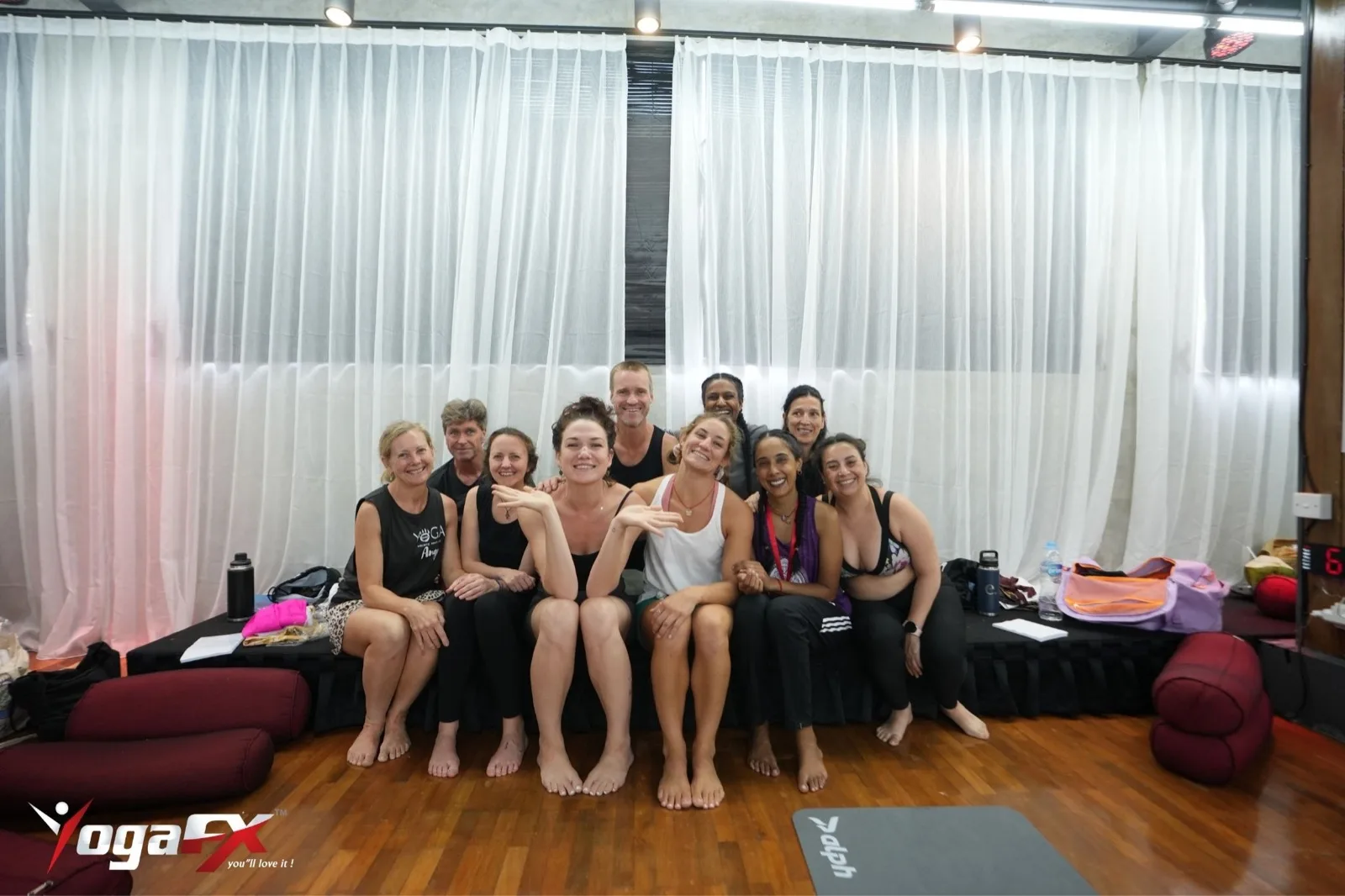
The track record behind our hot 26 and 2 yoga teacher training is public. Mr Ian has trained more than 1,500 students from over 80 countries. The school holds more than 550 reviews and video testimonials: 150 on Google, 50 on Yoga Alliance and 357 on YouTube.
YogaFX graduates have also won 12 medals at national, Asian and world yogasana championships, including 5 gold. Mr Ian is the Master Trainer of the Republic of Indonesia Yogasana Sports Federation, and he coached several of those athletes himself.
One more thing sets enrolment apart. Mr Ian speaks personally with every student before they join, and these Discovery Calls sometimes run up to 1.5 hours. He wants to hear your goals, your doubts and your story, so that the MasterClass is the right fit before you travel. Nothing about it is rushed.
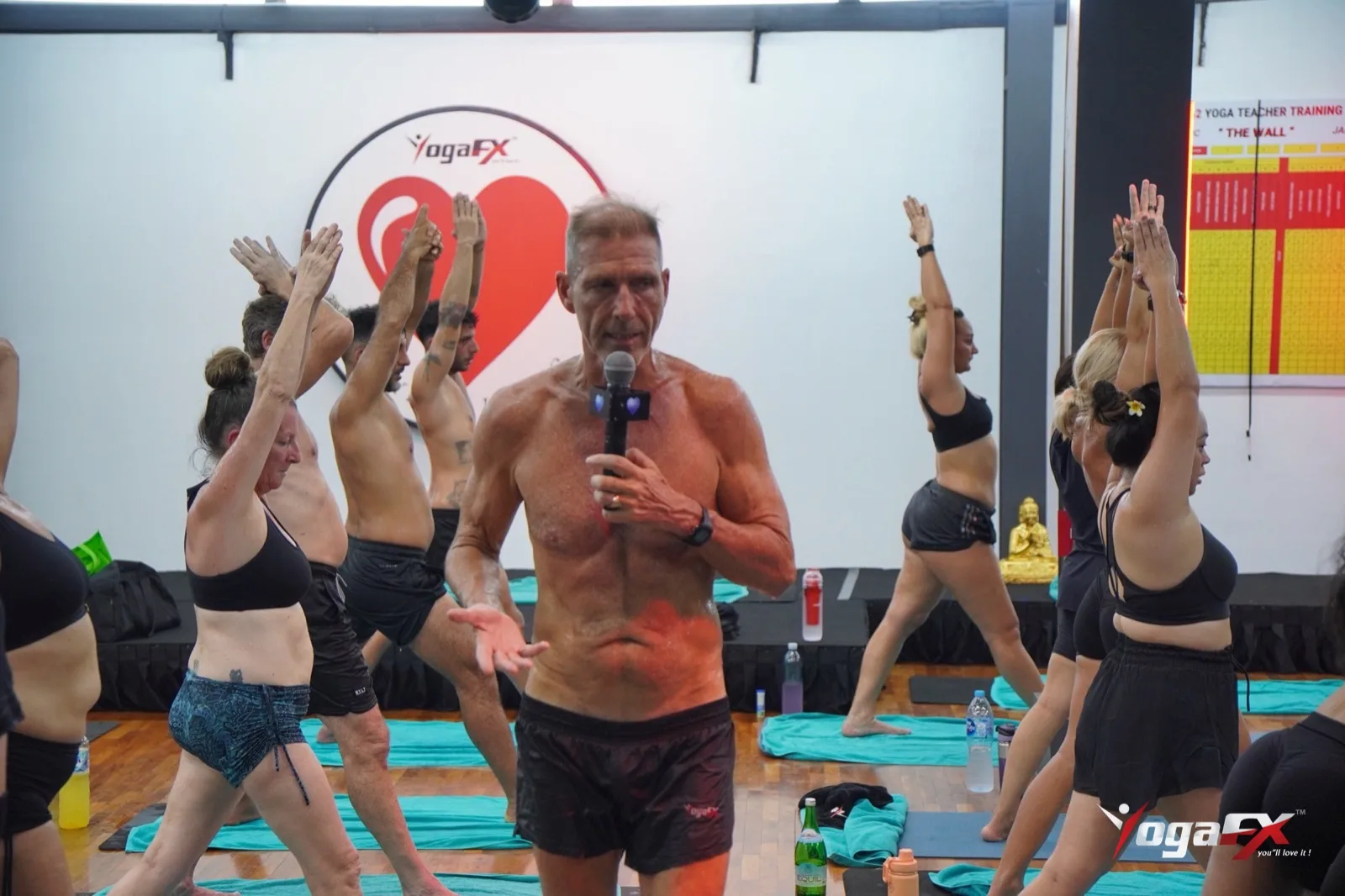
Want to see how this differs from a cool-room class? Read how YogaFX teaches the original hot yoga sequence in Bali.
FAQ
Is 26 and 2 yoga hard?
It is demanding, mostly because of the heat and the fixed pace, not because the postures are acrobatic. Most beginners need 3 to 5 classes to adapt. You can rest in Savasana whenever you need to, and nobody expects perfect postures in week one. Pace yourself and breathe through your nose.
How many calories does 26 and 2 yoga burn?
In a University of Wisconsin study, a 90-minute Bikram class burned an average of 333 calories for women and 460 for men, at about 80% of maximum heart rate. Individual results vary with body size, fitness and effort. Claims of 600 or more calories per class are not supported by that research.
Is Hot 26 yoga for beginners?
Yes, as long as you pace yourself. The sequence is the same every class, so you learn it quickly. Drink water through the day, avoid heavy meals for 2 to 3 hours beforehand, arrive early and rest in Savasana when needed. If you feel dizzy, lie down on your back and stay in the room.
Who should not do hot yoga?
Anyone with a heart condition, blood pressure problems, pregnancy or heat sensitivity, or who takes medication that affects heat tolerance, should ask a doctor first. Hot yoga is not a medical treatment. This guide is general information, so consult a healthcare professional about your own situation.
How do I become a Hot 26&2 yoga teacher?
Practise 3 to 4 classes a week for 3 to 6 months, learn the postures and dialogue, then train with a Registered Yoga School. At YogaFX you complete online preparation and a 6-day practical MasterClass in Bali, then register with Yoga Alliance as an RYT 200.
Still have questions? Message Mr. Ian and the YogaFX team on WhatsApp and we will answer them personally.