














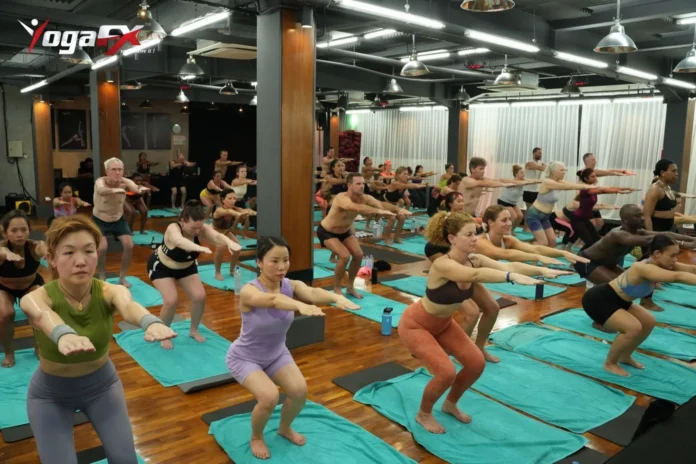
Hot yoga vs infrared sauna is not a fair fight, because one is a class and the other is a rest. A hot yoga class makes you work in a warm room for 90 minutes. An infrared sauna warms you while you sit still. Here is what that difference means if you plan to teach.
Hot Yoga vs Infrared Sauna: The Short Answer for a Future Teacher
So where does each one fit? If you want a workout, take a class. If you want quiet, gentle heat, book the sauna. That is the whole hot yoga vs infrared sauna decision for most people, and it’s a good rule for a new teacher too.
I am Mr. Ian Terry, E-RYT 500, and I have taught more than 12,000 hours. I trained for five years, from 2014 to 2019, with the founder of the Bikram Hot 26&2 method. So I will be upfront: I teach in heat every week, and I also like a good sit in a sauna. They simply do different jobs.
Why does the hot yoga vs infrared sauna question matter for a teacher? Because the heat source shapes everything you will cue. Students who arrive from an infrared panel studio expect something different from students who arrive from a sauna. If you know the difference, you can meet them where they are.
In this guide we cover four things:
- The four heat sources you will meet in studios worldwide, from infrared panels to natural tropical heat.
- A side-by-side table that shows how each one warms you and what a teacher has to manage.
- What the research says, with honest limits, so you never over-promise in your own classes.
- How we train future teachers in Bali’s natural heat, and what to ask any studio before you book.
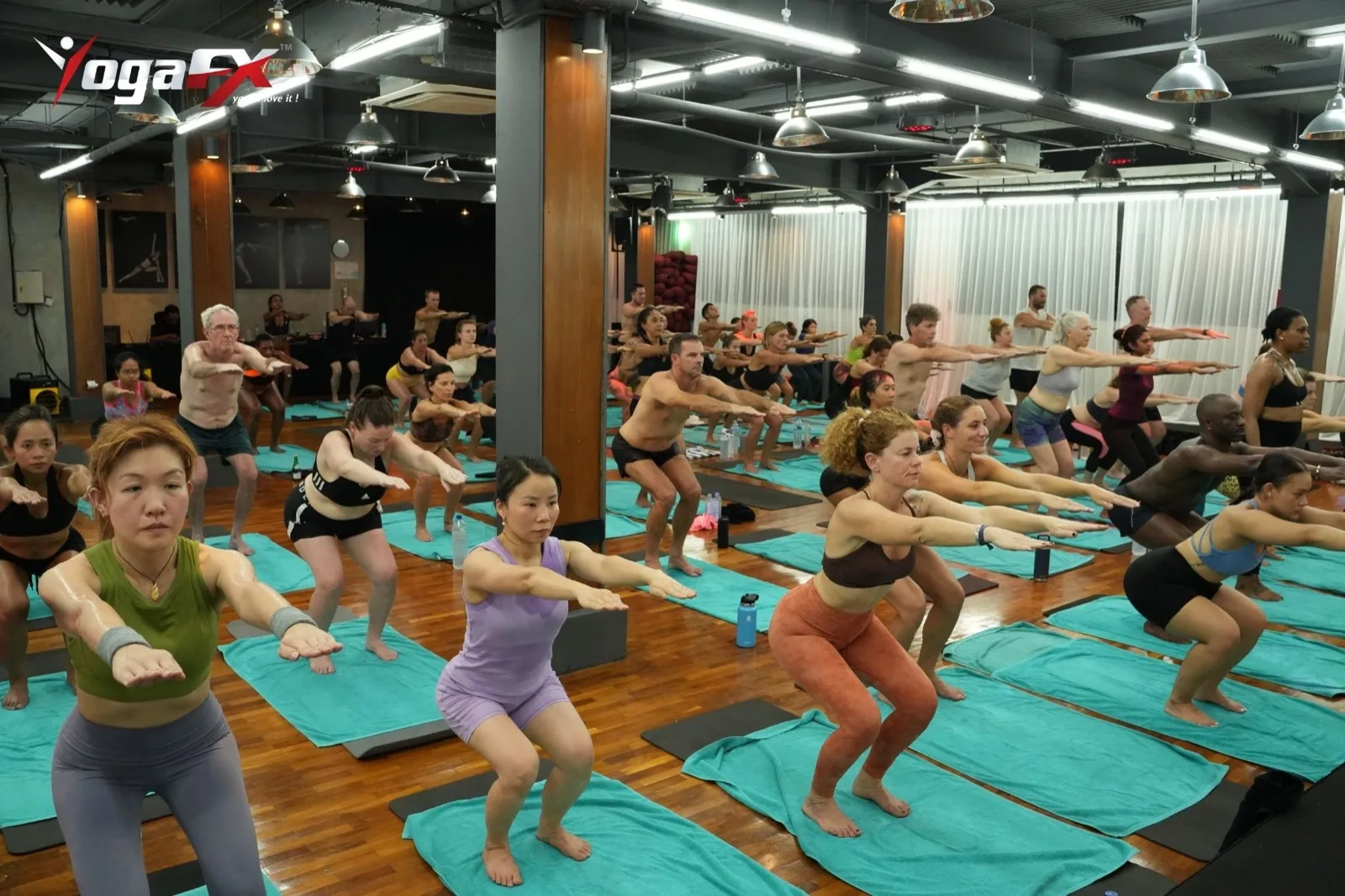
Four Heat Sources You Will Meet in Studios Worldwide
Once you hold a teaching certificate, you can work almost anywhere. That means you will walk into very different rooms. Some are warmed by panels, some by heaters, and some by the climate itself. Here is a quick view before we look at each one.
1. Infrared panel studios
Some studios fit radiant panels to the ceiling or walls and then run flow or sculpt classes underneath. People often call this “infrared hot yoga”. The word “hot” is loose here. Panel heat feels different from hot, humid air, and each studio sets its own temperature.
As a teacher, your job is to ask what the room is doing. A dry, panel-heated room can feel gentle at first, yet students still sweat and still tire. Watch their faces, and keep water breaks easy to take.
2. Electric and forced-air heated rooms
Many studios heat the air with electric heaters and call the result hot yoga. Humidity is often an afterthought. A dry room cools you in a different way, because sweat evaporates fast and students may not feel how much fluid they lose.
If you teach there, build a habit of reminding students to drink before class, not only during it. It is a small cue, but it protects people.
3. The infrared sauna in the hot yoga vs infrared sauna debate
A sauna session has no teacher, no script and no movement. You sit or lie down, and the panels warm you. Cleveland Clinic says infrared saunas run at 43 to 57°C, while traditional saunas run between 66 and 91°C. We come back to the research below.
4. Natural tropical heat in Bali
Our trainees learn in the heat that Bali provides. Our class standard is 90 minutes in a room held near 40°C and 40% humidity, led by a scripted dialogue with no music and no demonstration. We use natural tropical heat, not electric heaters. Because trainees live in that climate for six days, they learn how heat and humidity change a class from the inside.
Hot Yoga vs Infrared Sauna Side by Side
Here is the comparison in one place, because a clear picture helps before you choose. Use this hot yoga vs infrared sauna table to see what each heat source asks of a teacher, and what to ask the studio.
| Heat source | How it warms you | What a teacher must manage | Question to ask the studio |
|---|---|---|---|
| Infrared panel studio | Radiant panels warm your body directly | Students who think gentle heat means low effort | What is the room temperature and humidity? |
| Electric heated room | Heaters warm the air around you | Dry air, fast sweat loss and hydration | Is humidity controlled, and how? |
| Infrared sauna | Panels heat you while you sit still, air at 43-57°C | Nothing to teach: it is rest, not a class | How long is a session, and is it supervised? |
| Bali natural heat | Tropical climate, class room near 40°C and 40% humidity | Pacing a 90-minute class and reading tired students | Is the sequence fixed, and who leads it? |
Notice what the table shows. The sauna row is the only one with nothing to teach. That is not a criticism of saunas. It just explains why the sauna cannot replace a class, and why a class cannot replace a rest.
One more point. The two are not rivals. Many of our trainees love a quiet sauna on their rest day. They just don’t confuse it with training, so the hot yoga vs infrared sauna question never confuses them. If you want to see how heat compares with a room-temperature class, our guide to hot yoga vs regular yoga goes deeper.

What the Research Says About Heat, Saunas and Yoga
Most hot yoga vs infrared sauna articles skip the evidence. Let us not. We use only sources we could open and read, and we name the limits.
Saunas: real interest, careful conclusions
Cleveland Clinic describes infrared saunas as “passive cardio” because the heart responds in a way that looks a little like exercise. Then it adds a warning: do not assume a sauna session is a substitute for a workout. It is not. You can read its full guide on the possible benefits of infrared saunas.
A 2018 review in Mayo Clinic Proceedings summarised the wider sauna research on heart and blood-vessel health. It is a good place to start if you want to read further. Even so, sauna studies mostly measure sitting in heat, not moving in it.
In short, the hot yoga vs infrared sauna evidence points the same way: heat alone is not the active ingredient, because the movement does the work.
Hot yoga: what the trials measured
A randomised trial by Nyer and colleagues, published in the Journal of Clinical Psychiatry in 2023, tested community-delivered heated hatha yoga for moderate-to-severe depression. In the analysis of 65 people, 59.3% of the yoga group had a symptom drop of 50% or more. In the waitlist group it was 6.3%. The trial ran eight weeks.
A 2025 systematic review by Willmott and colleagues pulled together 43 studies with 942 participants. It points to benefits for flexibility and well-being. A 2022 review by Hui and colleagues reported that hot yoga lowered state anxiety.
On effort, a University of Wisconsin study (Porcari and colleagues, 2014) measured about 333 kcal for women and 460 kcal for men in one 90-minute class, at around 80% of maximum heart rate. That is a workout, and a sauna session is not.
Two honest caveats apply. These studies tested yoga, not sauna sessions, so they cannot prove that one heat source beats another. They also do not prove cause and effect for every reader. If you live with depression, anxiety or a heart condition, please speak with a healthcare professional before changing your routine. Neither a class nor a sauna replaces medical care.
Why Hot Yoga vs Infrared Sauna Matters When You Teach
A teacher does not only practise in heat. A teacher watches other people in it. That changes what you need to know, and it is the main reason we talk about heat in teacher training at all.
- Expectations. A student from an infrared sauna may expect to be passive. Tell them early that a class is active, and that they will work.
- Hydration. Dry rooms hide fluid loss. Remind students to drink before class, and keep breaks calm and unhurried.
- Pacing. Heat makes a 90-minute class feel longer. Good teachers cue rest before students ask for it.
- Safety. Heat raises the heart rate. Our guide to hot yoga and heart safety covers what every teacher should know.
What I tell trainees in week one
I tell them the room is a setting, not a technique, and the same is true in any hot yoga vs infrared sauna comparison. The skill is how you speak, how you pace, and how you read a tired face. Heat only makes those skills show up faster. So we practise them in the real thing, with a scripted dialogue, so the words stay steady when the room is demanding.
That is also why many trainees come from other heated studios. Some arrive from panel-heated classes and are surprised at the humidity. Some come from heaters and notice the difference in how sweat behaves. They leave knowing why, and they can explain it to their own students.

What Trainees Say About Training in the Heat
Numbers only go so far. Here is what past trainees told us, in their own words. We use first names only.
“Mr. Ian’s expert guidance, patience, and enthusiasm created a safe and supportive environment for students of all levels.”
Michelle, Google review, 2025
“One of the hardest things I’ve ever done physically.”
Britt, YouTube review, 2026 (watch her video)
“I have gotten to share so many stories and listen to you and connect with all of you on a deeper level.”
Greta, YouTube review, 2026 (watch her video)
Notice that nobody talks about the heat first, and that’s telling. They talk about effort, safety and the people. That is the real answer to hot yoga vs infrared sauna: a class is shared work, and a sauna is private rest.
How YogaFX Trains Teachers in Bali’s Natural Heat
Our programme is a 6-day hybrid. You study online first, then you join the intensive in Bali. You leave with two certificates: Yoga Alliance RYT 200-Hour and the Bikram Hot 26&2 200-Hour International Yoga Certification. You can read the full format in our guide to the hybrid teacher training in Bali.
The heat is part of the learning, so hot yoga vs infrared sauna is never an abstract question for our trainees. Our class uses natural tropical heat, so trainees do not rely on a machine to set the room. If you want to compare natural heat with electric heat for a specific country, see our guide for Australian students or for US students.
Our graduates come from more than 80 countries, and we have trained 1,500+ students since 2017. Many of them teach in rooms that look nothing like ours. That is fine. They know what each heat source does, and they teach safely in all of them.
If you want the full 26&2 humidity story from the teacher-training authority side, we cover it in our companion guide on humid air versus panels.
Hot Yoga vs Infrared Sauna: Questions to Ask Before You Book
Whether you are a student or a future teacher, ask these before you pay for a class or a course. A good studio answers clearly.
- What is the temperature? A real number, not “warm” or “hot”.
- What is the humidity? If nobody measures it, that tells you something.
- Is the sequence fixed? A fixed sequence makes results easier to compare.
- Who leads the class, and with what training? Look for real teaching hours and a recognised certification.
Take notes during the visit, too. If you can, watch a class from the door before you commit. You will learn more from ten minutes of watching than from any brochure, and you can compare the room with what the studio claims.
A clear answer tells you what you’re buying, whichever side of hot yoga vs infrared sauna you choose. A vague answer is a reason to keep looking. This is true for a panel studio, a heated room or a retreat.
FAQ
What is infrared hot yoga?
Infrared hot yoga is a class held in a room warmed by radiant panels instead of heated air. Studios usually run flow or sculpt sessions under the panels. Temperature and humidity vary by studio, so ask for real numbers before you book your first class.
How hot does infrared yoga get?
It depends on the studio, because there is no single standard. Panel-heated rooms can feel gentle or intense depending on settings. An infrared sauna runs at 43 to 57 degrees Celsius, according to Cleveland Clinic. For a class, always ask the studio for the exact temperature.
Is infrared hot yoga safe?
For many healthy adults, a moderately heated class is fine, but heat raises your heart rate. Drink water before class, rest when you need to, and leave if you feel dizzy. If you have a heart condition or are pregnant, speak with a healthcare professional first.
Does an infrared sauna count as exercise?
No. Cleveland Clinic calls it passive cardio and says a sauna session is not a substitute for a workout. A yoga class asks your muscles, balance and focus to work for 90 minutes, while a sauna only warms you while you rest and recover.
Which heat source should a future teacher train in?
For hot yoga vs infrared sauna, the answer for teachers is to train in the heat you plan to teach, and learn to read every room. Our trainees practise in Bali’s natural tropical heat, in a class held near 40 degrees Celsius and 40 percent humidity, so they learn how heat and humidity change a class.
Still have questions? Message Mr. Ian and the YogaFX team on WhatsApp and we will answer them personally. Our early bird price is US$1,899 for the full 6-day programme, with instalments available.