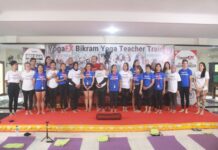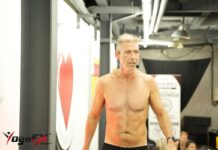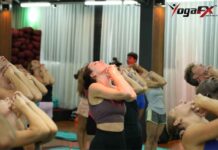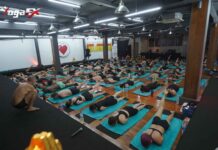




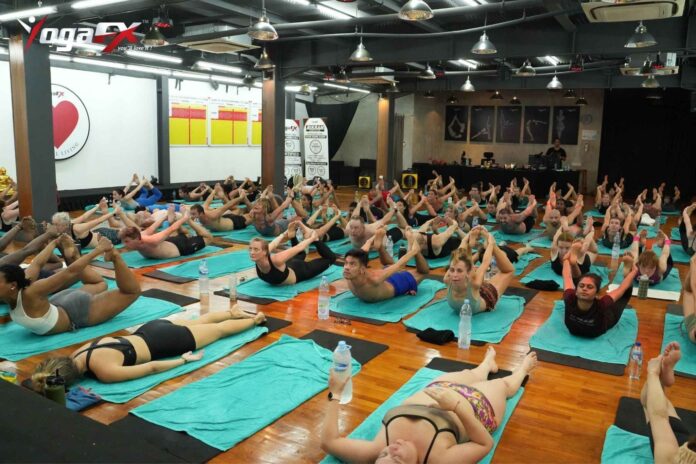
Australia is one of the few countries outside Indonesia that actually runs dedicated Bikram Hot 26&2 teacher training programs, not just general hot yoga certificates. What almost none of them offer is natural heat, the kind you can see in our Seminyak training Reels. Most Australian 26&2 programs run on electric heaters, stretch across 9 weeks to several months, and price well above what the same dual certification costs as a 6-day hybrid intensive in Bali.
Australia Does Teach 26&2, But Almost Always on Electric Heat
Credit where it’s due: unlike several countries where a genuine 26&2 program simply doesn’t exist, Australia has a real, established Bikram/hot yoga teaching community, with studios in Melbourne, Sydney, and along the Gold Coast running dedicated 26&2 or Bikram-influenced teacher trainings. That is worth acknowledging honestly rather than pretending the option isn’t there.
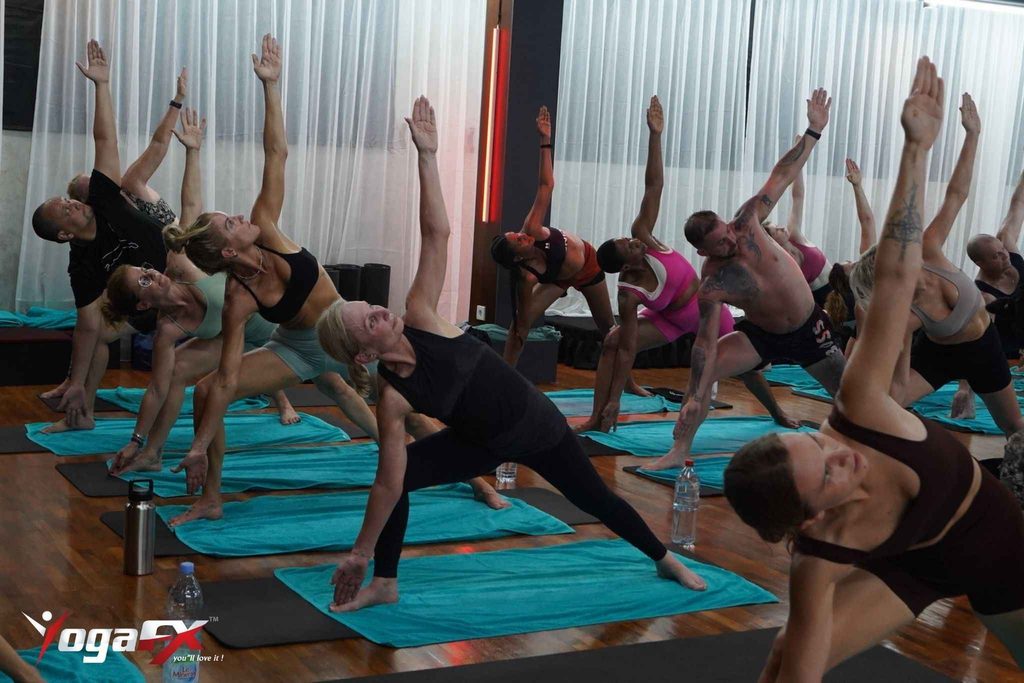
What almost all of them share is the heat source. Building and maintaining natural tropical humidity indoors year-round is not something Australia’s climate supports the way Bali’s does, so studios rely on electric heaters and humidifiers to approximate the 40-degree, 40-percent-humidity environment the original method calls for. That approximation works, but it is a different physical experience from a room heated by the actual tropical air outside it.
The physiological demand itself doesn’t change based on heat source. A University of Wisconsin study measured roughly 333 kcal burned by women and 460 kcal by men across a single 90-minute Bikram-style class, with heart rate reaching close to 80 percent of maximum, regardless of whether the heat came from a wall unit or the tropics outside the door.
Format and Duration: Weeks-Long Immersions vs a 6-Day Intensive
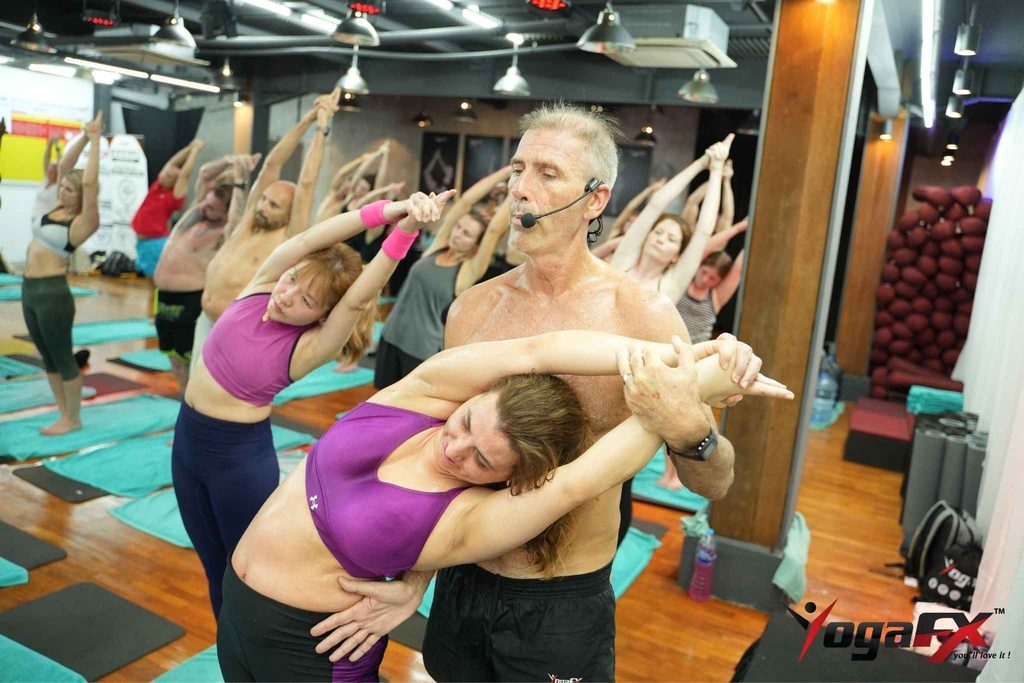
Most Australian 26&2-style programs run as extended immersions: 9-week residencies, or weekly evening and weekend sessions spread across several months alongside ongoing studio class participation. That structure suits students who want to build their teaching skill gradually alongside an existing local community.
| What You’re Comparing | Typical Australian 26&2 Program | YogaFX Bikram Hot 26&2 in Bali |
|---|---|---|
| Heat source | Electric heaters and humidifiers | Natural tropical heat, no electric heaters |
| Duration | 9 weeks to several months | 6-day on-site intensive after self-paced online pre-course |
| Program fee | Commonly advertised from roughly AUD/USD 2,450 up to 4,450 or more | USD 1,999 flat (Early Bird: USD 1,899 for a limited number of upcoming-cohort seats), up to USD 2,199 with on-site accommodation |
| Certification | Studio-specific, sometimes Yoga Alliance registered | Yoga Alliance RYT 200 plus Bikram Hot 26&2 dual certification |
The 6-day on-site model exists specifically for students who cannot commit to months of evening classes around a full-time job, without sacrificing the depth a longer local program provides through its front-loaded online pre-course.
Cost Comparison: Australia vs Bali
Program fees advertised across Australian hot yoga schools commonly range from around USD 2,450 for shorter add-on modules up to USD 4,450 or more for a full first-time 200-hour certification, before accounting for ongoing studio membership many programs require alongside the course. YogaFX’s flat USD 1,999, rising to USD 2,199 with on-site accommodation included, sits below that range even before factoring in that accommodation and food in Seminyak cost a fraction of an Australian capital city.
The deposit to secure a seat is very low, and it is credited toward the total rather than an additional fee. There is no separate studio membership requirement layered on top, since the certification itself is the complete product.
Visa and Travel Logistics for Australian Students
Australia is one of roughly 90-plus countries eligible for Indonesia’s visa-on-arrival or e-VOA, allowing an initial 60-day stay well beyond the 6-day on-site intensive. Bali is already one of the most familiar and frequently visited international destinations for Australian travellers, with direct flights running a few hours from most east coast capitals and considerably less from Perth or Darwin.
Because the hybrid format handles anatomy, philosophy, and dialogue memorisation through a self-paced online pre-course before departure, most of the academic workload is finished before you land. The on-site commitment is genuinely 6 days, which fits inside a single week of annual leave rather than requiring the extended time off a multi-month local program spreads across.
What Australian Students Get With YogaFX in Bali
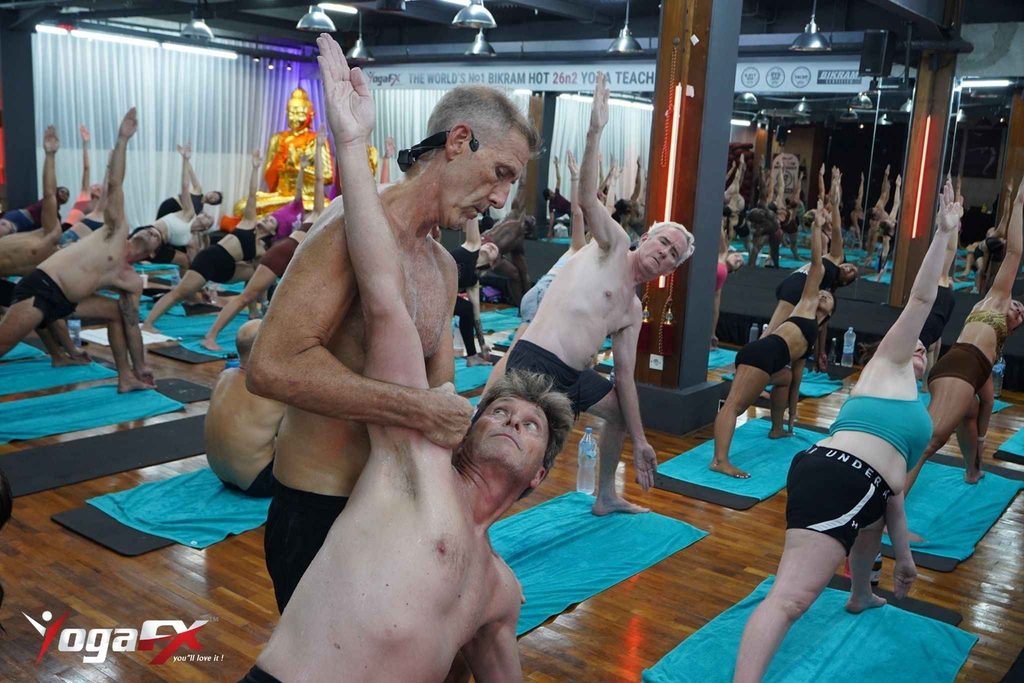
YogaFX was founded by Mr. Ian Terry, an E-RYT 500 instructor with more than 12,000 teaching hours who trained for five years, from 2014 to 2019, directly with Bikram Choudhury. Since 2017, the school has certified more than 1,500 graduates across 80-plus countries, including a consistent stream of Australian students who compared a longer, pricier local option against a shorter, natural-heat intensive and chose to fly.
The dual certification, Yoga Alliance RYT 200 plus the Bikram Hot 26&2 credential, holds the same international recognition as a certificate earned in Melbourne or Sydney, since Yoga Alliance registration travels with the teacher rather than the country of training.
- Format. Self-paced online coursework covering anatomy, philosophy, and dialogue memorisation, followed by a 6-day on-site intensive in Bali.
- Cost. USD 1,999 flat (Early Bird: USD 1,899 for a limited number of upcoming-cohort seats), up to USD 2,199 with on-site accommodation, with a very low deposit credited toward the total.
- Heat. Genuine natural tropical heat, no electric heaters or humidifiers.
- Certification. Yoga Alliance RYT 200 plus Bikram Hot 26&2 dual certification.
For an Australian student who has already found a local 26&2 program and is weighing it against Bali, the honest trade-off is duration and heat source against a longer time commitment and a higher total spend, not a real option against no option.
FAQ
Is there Bikram yoga teacher training in Australia?
Yes. Australia has genuine 26&2-style teacher training programs, mostly in Melbourne, Sydney, and along the Gold Coast. Almost all run on electric heaters rather than natural heat, and most extend over 9 weeks to several months rather than a compressed intensive.
How much does Bikram yoga teacher training cost in Australia?
Program fees commonly range from around USD 2,450 for shorter add-on modules up to USD 4,450 or more for a full 200-hour first-time certification. YogaFX’s Bali program is a flat USD 1,999, rising to USD 2,199 with accommodation included.
Do Australians need a visa for yoga teacher training in Bali?
Yes, but it’s straightforward. Australia is on Indonesia’s visa-on-arrival eligibility list, allowing a 60-day stay comfortably beyond the 6-day on-site intensive, with a modest government fee and no advance application required.
What’s the real difference between natural heat and electric heat in Bikram yoga?
Electric heaters and humidifiers can approximate the 40-degree, 40-percent-humidity target, but the room is drier and less consistent than genuine tropical air. Natural heat replicates the original climate conditions the method was designed around, without mechanical intervention.
Is YogaFX affiliated with Bikram Choudhury?
No. Based in Seminyak, Bali, YogaFX serves as the primary academy and headquarters for Hot 26&2 (Bikram-style) yoga teacher training, and it is not affiliated with Bikram Choudhury or Bikram’s Yoga College of India. Founder Ian Terry trained for five years, from 2014 to 2019, directly with Bikram Choudhury, and the program teaches the original 26&2 sequence and dialogue, which a 2015 Ninth Circuit ruling confirmed is not subject to copyright restriction.
Weighing Bali against other regions too? See our Bali vs Thailand breakdown, the full pricing and deposit guide, the accommodation and visa guide, what the dual certification actually means, and the step-by-step application process. For a deeper look at the Australia-specific landscape, see our companion piece Bikram Yoga Teacher Training Australia.