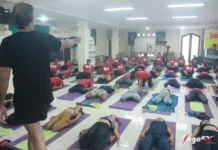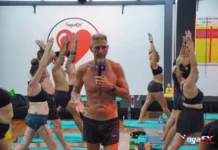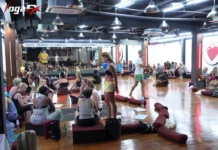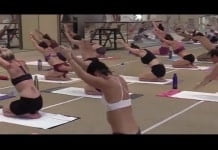











What is hot yoga? It is yoga practised in a deliberately heated room, usually somewhere between the low 30s and about 40°C. The heat makes muscles feel looser and every posture feel harder. This guide explains the main styles, the Hot 26&2 standard we teach, who should take care, and what training with YogaFX involves.
What Is Hot Yoga? The Meaning in Plain Words
Hot yoga means yoga done in a room that is heated on purpose. That’s the whole hot yoga meaning in one line. The rest is detail: how warm the room is, whether the sequence is fixed, and who decides what the class contains.
The heat does real work. In a cool studio your muscles warm up only through movement. In a heated room the air does part of that job, so stretches can feel deeper and your heart works harder, even when you hold still. As a result, a hot class feels more like brisk exercise than a gentle stretch.
Three things shape every class:
- The heat. From gently warm to about 40°C, depending on the style and the studio.
- The humidity. Damp air slows the evaporation of sweat, so a humid room feels hotter than the thermometer says.
- The structure. Some classes follow a fixed script. Others change every time, at the teacher’s choice.
So what is hot yoga in daily practice? It’s a sweaty, focused hour or more, and it rewards preparation. You drink water through the day, eat lightly and rest whenever you need to. Resting is part of the practice, not a failure. You don’t have to be flexible to start.
Mr Ian Terry, E-RYT 500, has taught for more than 12,000 hours and teaches Official Hot 26&2, hatha and ashtanga.
Is Hot Yoga the Same as Bikram Yoga?
No. Bikram yoga is one style of hot yoga, and many people mix up the two. If you’re asking what is hot yoga next to Bikram, think of an umbrella and one style under it. Hot yoga is the wide umbrella. Bikram is a single fixed class under it: 26 postures, 2 breathing exercises and about 90 minutes, taught with a scripted dialogue.
The fixed class has a history. Bishnu Charan Ghosh taught physical conditioning in Calcutta, and his student Bikram Choudhury brought the method to the West in the early 1970s. You can read the full story in our guide to Bikram yoga history and Mr Ian Terry’s lineage.
Today the same sequence is often taught as Original Hot 26&2 Yoga. Mr Ian trained for five years, from 2014 to 2019, alongside the founder of the method. He opened YogaFX in 2017 to teach that sequence and its dialogue as it was taught to him. For a full class walkthrough, see our definitive guide to Hot 26 and 2 yoga.
Types of Hot Yoga: How the Styles Differ
People ask about the types of hot yoga because studio menus can look confusing. The names change from city to city. Instead of memorising names, ask two questions: what stays fixed in the class, and what can the teacher change? That’s the quickest way to see what is hot yoga on any timetable.
| Style | What stays fixed | What the teacher can change | Usual route to teach it |
|---|---|---|---|
| Original Hot 26&2 | 26 postures, 2 breathing exercises, about 90 minutes, scripted dialogue | Nothing in the sequence. The job is clear delivery and good corrections | Learn the dialogue word for word, as in the YogaFX 6-day hybrid MasterClass |
| Hot vinyasa | A warm room and breath linked to movement | Almost everything: order, pace, theme and music | Usually a general 200-hour teacher training |
| Hot power or sculpt | A warm room and a strength focus | Exercises, tempo and often light weights | Usually a general fitness or yoga training |
| Yin in heat | Gentle warmth and long floor holds | Which postures to hold and for how long | Usually a yin or general 200-hour training |
Neither approach is better for every student. A fixed class suits people who like structure and want to see their own progress week by week. A changing class suits people who enjoy variety. Our comparison of hot vinyasa vs Bikram goes deeper.
How Hot Is Hot Yoga? Heat, Humidity and Natural Warmth
A common follow-up to what is hot yoga is how hot the room should be. Most heated classes sit between a gentle warmth and about 40°C. Yin classes are often only mildly warm. Vinyasa and power classes run warmer. The original Hot 26&2 standard we use is about 40°C with around 40% humidity, which is at the hot end of the range.
Humidity matters as much as the number. In very humid air sweat cannot evaporate easily, so your body cools less well. In very dry air the heat can feel harsh on the throat and eyes. That is why a good teacher watches the room, not just the thermostat.
What is hot yoga in Bali? Natural heat
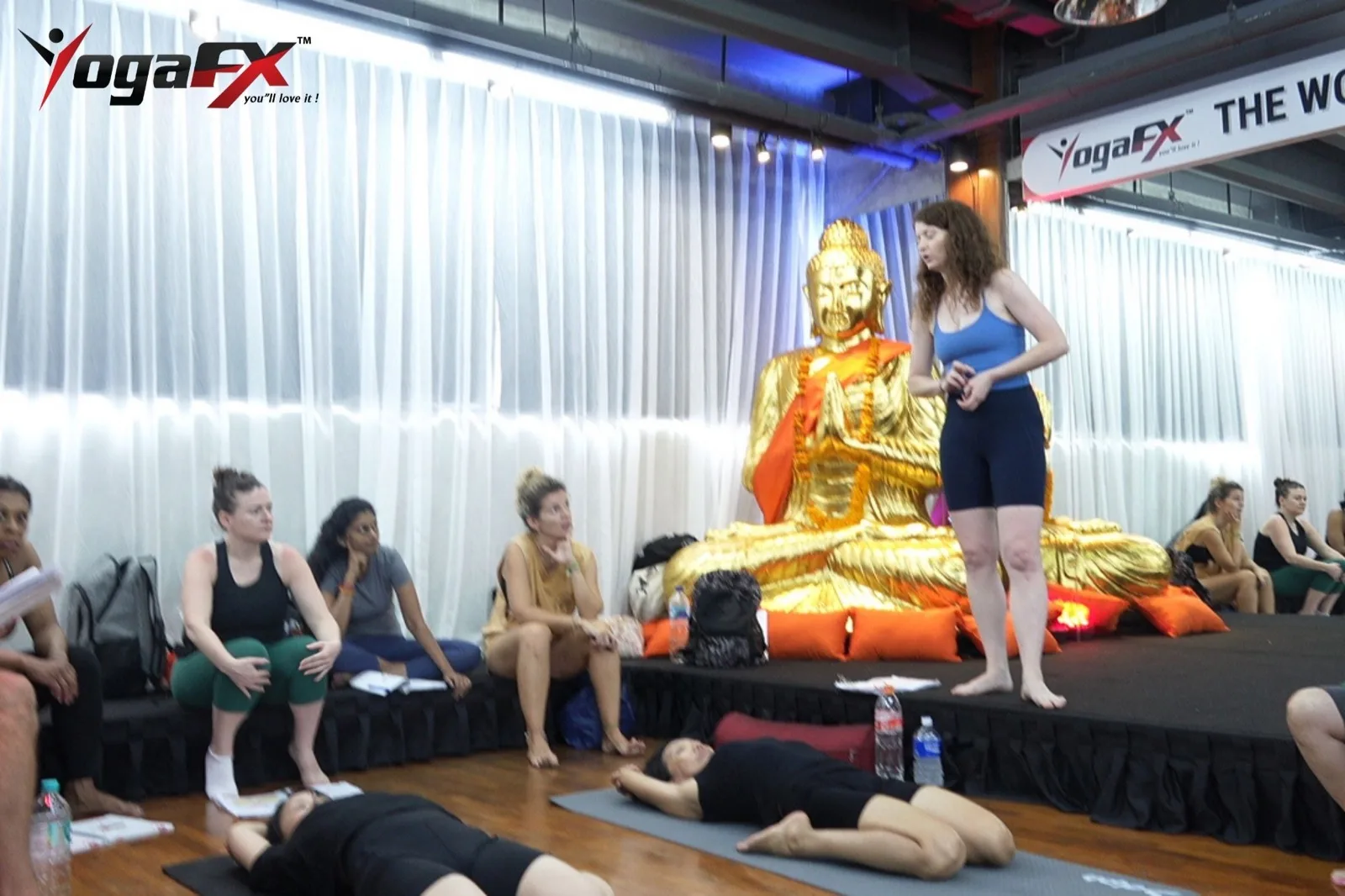
Our Seminyak and Canggu studios in Bali are warmed by the tropical climate, not by electric heaters. Each class lasts 90 minutes. Both studios are open from 06:00 to 22:00 every day, so it is easy to fit a class around work or the beach.
Many students tell us the natural heat feels softer than forced dry heat at home. You will still sweat a great deal. For teachers in training, learning to read natural heat is a real skill, because no dial can fix a room that is too warm. For the standard in more detail, read how YogaFX teaches original hot yoga in Bali.
What Is Hot Yoga Doing to Your Body? What Research Says
People often ask what is hot yoga good for, so here’s the honest picture. Heat raises your heart rate and makes you sweat to cool down. Your body then works to keep its core temperature steady. That is why a hot class feels like exercise even in slow postures, and why the evidence needs careful reading.
The best-known study is a randomised trial from Massachusetts General Hospital. Nyer and colleagues tested heated hatha yoga in adults with moderate-to-severe depression over 8 weeks. Of the 65 people analysed, 59.3% of the yoga group had a symptom drop of 50% or more, against 6.3% of the waitlist group, in the 2023 Journal of Clinical Psychiatry paper (see the Europe PMC record).
Read that result with care. The trial was small. It studied heated hatha yoga in general, not the Bikram class by name. And it does not show whether the heat itself mattered. Hot yoga is not a treatment, and nobody should stop medical care because of one study.
What the research does support is modest: a hot class is a real workout, and many students enjoy it enough to keep going. That consistency counts for more than any single claim. If you want more evidence, our Hot 26 and 2 guide covers the studies one by one.
Who Should Be Careful With Hot Yoga? Safety in Plain Words
Hot yoga suits most healthy adults who work at their own pace. Some people should talk to a doctor first: anyone with a heart condition or blood pressure problems, anyone who is pregnant, anyone with a history of heat illness, and anyone on medication that affects heart rate or hydration.
Knowing what is hot yoga also means knowing its limits. The heat puts real demand on your heart and your fluid balance. So everyone should know the warning signs. The NHS lists them for heat exhaustion, and Mayo Clinic gives similar advice. Both sources agree on one thing: stop and cool down.
Warning signs to know
| What you notice | What it may mean | What to do |
|---|---|---|
| Dizziness, faintness or a weak, fast pulse | Heat exhaustion may be starting | Stop, lie down, move somewhere cooler and sip water |
| Headache, nausea, cramps or heavy sweating with pale, clammy skin | Your body is struggling with the heat | Rest, cool the skin and tell the teacher straight away |
| Confusion, hot dry skin or fast breathing | Possible heatstroke, which is an emergency | Call for emergency help at once |
The NHS page on heat exhaustion and heatstroke says to move to a cool place, drink plenty of water and cool the skin. The Mayo Clinic page on heat exhaustion adds that you should stop all activity and rest, and get help if symptoms do not improve within an hour.
This article is for general education and is not medical advice. Please consult a healthcare professional before practising in a heated room if you have any health concern.
Teachers need these skills too. A good teacher spots the signs early and offers a rest or a modification before a student asks.
What Is Hot Yoga Like in a First Class?
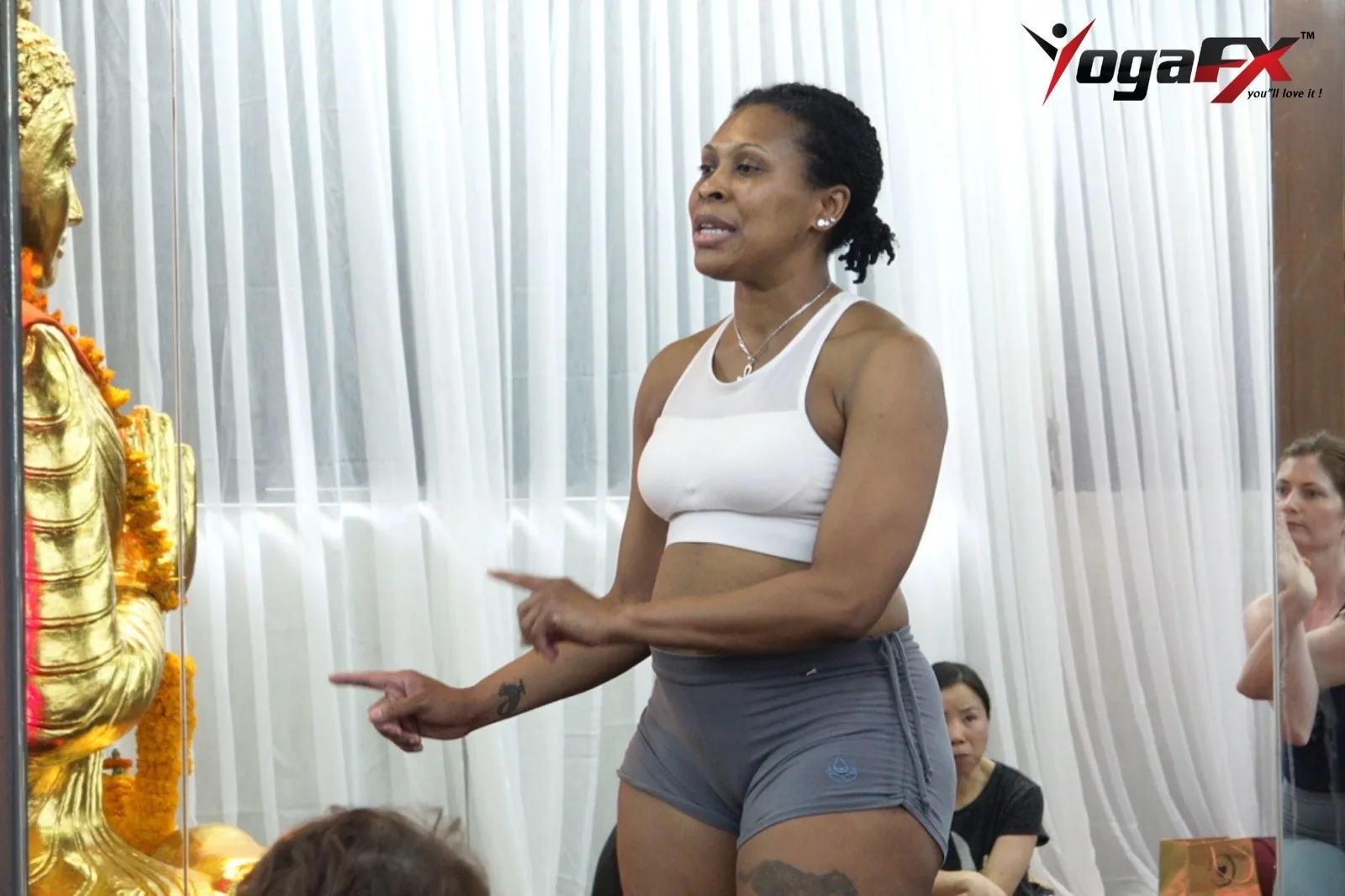
Expect to feel hotter, sweatier and more tired than you imagined, especially in the first 20 minutes. Most beginners sit down at some point. That’s normal. By the final rest many students describe a calm, heavy, relaxed feeling.
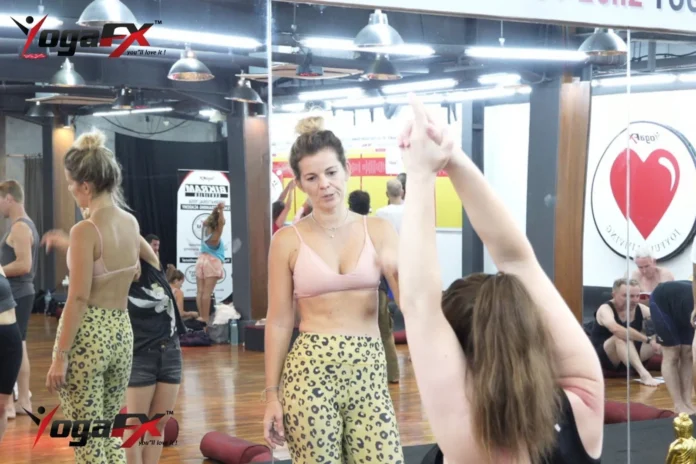
In a Hot 26&2 class there is no music and no demonstration. The teacher talks you through each posture with a scripted dialogue, so you listen first and look second. You do not need to know the postures in advance.
A short checklist helps on day one:
- Drink early. Sip water through the day, instead of gulping a litre just before class.
- Eat light. Have a meal 2 to 3 hours before, or a small snack 30 to 60 minutes before.
- Bring two things. A large water bottle and a towel for your mat.
- Arrive early. Pick a spot, settle in and tell the teacher if you are new or unwell.
Want a studio-side view of that first class? Our Bali studio team wrote a walkthrough of a first hot yoga class in Seminyak and Canggu. And if the heat worries you, remember that your body adapts with regular practice.
What Do Students Say About Hot Yoga at YogaFX?
Students answer what is hot yoga better than any definition, because numbers only go so far. These are words from real YogaFX students, taken as they said them. They trained in our teacher training, so the experience is more intense than a drop-in class, but the atmosphere is the same.
Matt rang Mr Ian before booking, then decided to travel to Bali. After the course he thanked the whole team in his video review.
“This is exactly what I needed.”
Matt, YouTube review, 2025
Kevin first came along while his wife trained. His story shows what is hot yoga like for a bystander. He took part in the daily classes anyway, two a day of 90 minutes each.
“Muscles were sore, body and mind break down until I reached a ‘mind palace’, an impenetrable mentality. I felt invincible.”
Kevin, Google review, 2025
Samantha, in her video review, thanked her teacher on behalf of her whole batch.
“Thank you so much for showing us what it really means to be passionate about yoga.”
Samantha, YouTube review, 2019
From Hot Yoga Student to Hot Yoga Teacher
Once you know what is hot yoga from the student side, teaching is a natural next step. Many of our trainees started as students who loved the room. Mr Ian puts the reason in one line:
“There can be no greater investment than the one that you make in your health, because without it, nothing else matters.”
Mr Ian Terry, E-RYT 500, YogaFX
The path usually has the same stages:
- Build a practice. Take regular classes so you know the heat from the inside.
- Learn the sequence. Get to know the postures, alignment and safe modifications.
- Study the dialogue. You learn to teach by voice alone, with a clear tempo.
- Train in person. Teach real students and take corrections from senior teachers.
- Graduate and register. Complete the course, then register with Yoga Alliance if you want to.
What is hot yoga teacher training at YogaFX?
The YogaFX MasterClass is a 6-day hybrid course. You complete the online preparation at home, then train in Bali with Mr Ian from Sunday to Friday. You graduate from a Yoga Alliance Registered Yoga School and receive a separate Bikram Hot 26&2 200-Hour International Yoga Certification. You can see the full programme on our Hot Yoga Teacher Training Bali page.
The next batch checks in on Sunday 24 January 2027 and checks out on Friday 29 January 2027 at Soham Wellness Center in Seminyak. Twin Share costs US$1,999 and Single Room Premium costs US$2,199, with an Early Bird price of US$1,899 while it runs. Please check the current price before you book.
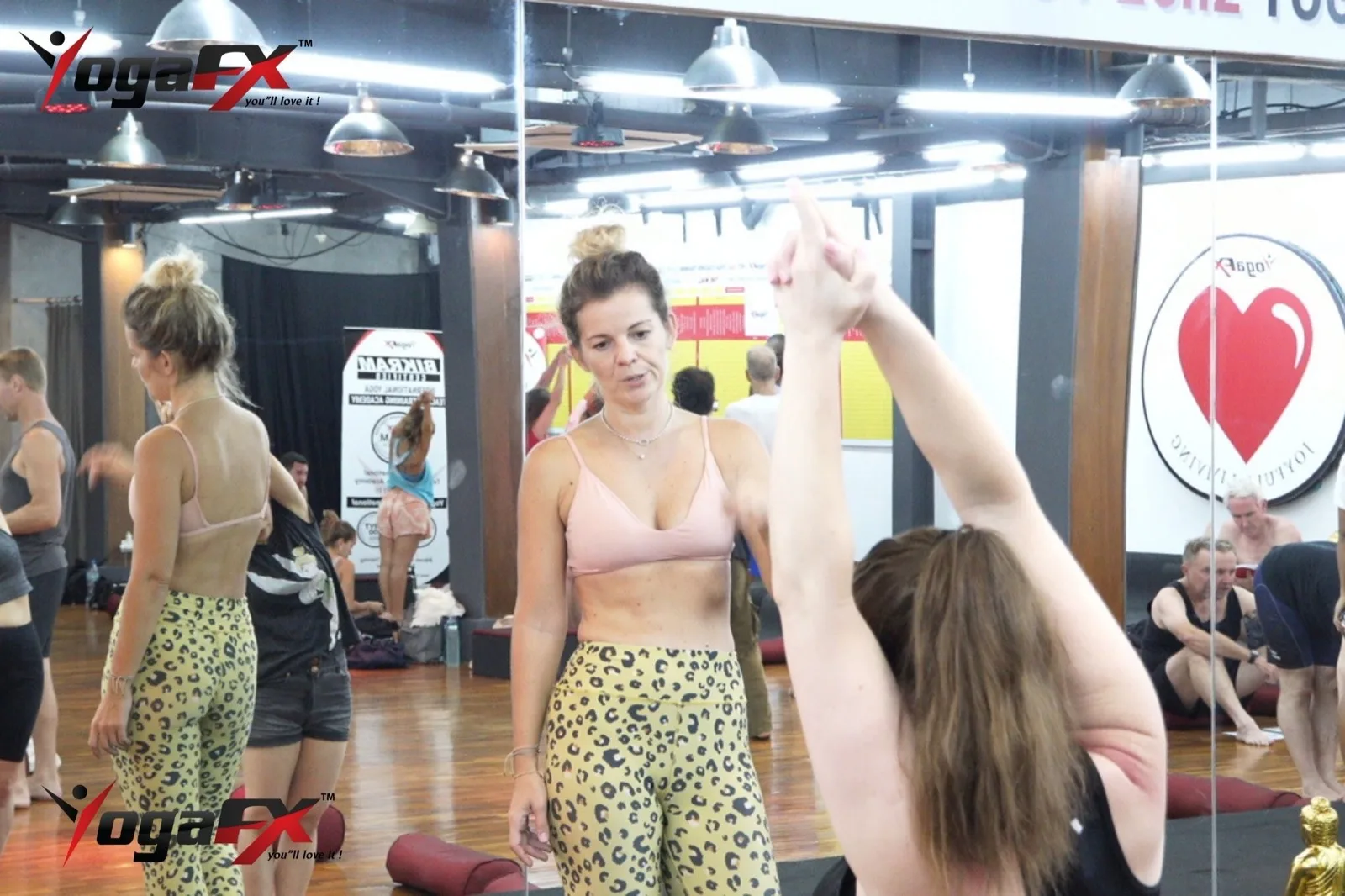
Mr Ian also speaks personally with every student before they enrol. These Discovery Calls can run up to 1.5 hours. He wants to hear your goals and your doubts, so the course is the right fit before you travel. Nothing about it is rushed.
Is YogaFX Training the Right Fit for You?
Honesty helps here. A hot yoga teacher training isn’t for everyone, and we’d rather you choose well than choose fast. These two lists may help.
It may suit you if
- You enjoy a fixed class and like to see measurable progress.
- You handle heat well, or you are willing to build up to it with a doctor’s approval.
- You want a short, intensive course with online study at home first.
- You are happy to learn a spoken dialogue and deliver it clearly.
It may not suit you if
- You want to design a new flow every time you teach.
- Heat is unsafe for you on medical advice.
- You prefer a long course spread over several months.
Now that you know what is hot yoga and how we teach it, the best first step is to try a class and talk to someone who trains teachers. If you are still weighing options, message Mr Ian and the YogaFX team and ask your questions. We will answer them personally.
FAQ
Who invented hot yoga?
Bikram Choudhury popularised heated yoga in the West from the early 1970s, building on the teaching of Bishnu Charan Ghosh in Calcutta. Many later styles, such as hot vinyasa, simply added heat to other kinds of yoga. So no single person owns the whole idea, but Bikram’s fixed sequence helped start the modern movement.
Is hot yoga bad for you?
For most healthy adults it is a demanding but manageable practice, as long as you hydrate, rest when you need to and respect warning signs such as dizziness or confusion. Heat does add strain. People with heart conditions, blood pressure problems or pregnancy should ask a doctor first. This is general information, not medical advice.
What is hot yoga good for?
Students often use it for flexibility, stamina and a focused hour away from their phones. Research is still early. One 8-week trial of heated hatha yoga in adults with depression found a bigger symptom drop than a waitlist, but it was small and is not proof of treatment. Check with a healthcare professional about your own goals.
Do I need hot yoga experience before teacher training?
It helps a great deal, because you learn the sequence and the heat first as a student. At YogaFX we suggest a steady practice before you arrive, then online preparation at home. After that you complete a 6-day practical MasterClass in Bali with Mr Ian Terry, so you are never learning everything cold.
What does YogaFX hot yoga teacher training include?
It is a 6-day hybrid course. You study online first, then train in person in Bali from Sunday to Friday. You graduate from a Yoga Alliance Registered Yoga School and receive a separate Bikram Hot 26&2 200-Hour International Yoga Certification. Check the current fee and dates with the team before you book.
Still have questions? Message Mr. Ian and the YogaFX team on WhatsApp and we will answer them personally.