








Learning how to become a hot yoga teacher takes six clear steps. You build a steady practice in heat, choose a recognised certification, complete the training hours, practise teaching a set sequence, pass the assessment, and then start teaching with a safety plan. This guide walks through each step, shows what a Bali training costs at YogaFX, and explains why heat changes the job.
How to become a hot yoga teacher in six steps
Most people who become a hot yoga teacher follow the same path, whatever studio or country they train in. The order matters. Each step prepares you for the next one, so skipping ahead usually means repeating work later.
- Build a steady practice in heat. Training works best when you already know the sequence from the inside. Ask yourself whether you can finish a full class without stopping, and whether you can recall the postures without help.
- Choose a certification that counts. Look for a 200-hour credential you can register with, such as Yoga Alliance RYT 200, plus a method certification that names the sequence you will teach.
- Complete the training hours. Expect lectures, practice, anatomy and supervised teaching. A hybrid format lets you study the theory online first, then spend the intensive days in the room.
- Learn to teach a set script. Hot yoga classes are usually delivered from a fixed sequence. Your job is to say the words clearly, watch the room and cue without demonstrating.
- Pass the assessment. You will be observed teaching and asked to explain safety decisions, such as when to adjust a student and when to tell them to rest.
- Start teaching with a safety plan. Your first classes should include water, clear rest rules and a plan for heat illness. The safety section below explains why this matters.
Step five is where most trainees feel the pressure. It helps to practise out loud before assessment day. Recording yourself teaching five minutes of the sequence is the cheapest feedback you will ever get, and it shows you where your voice drops or your cues arrive late.
Preparing for the training before you arrive
The weeks before a teacher training decide how much you get out of it. A hot yoga teacher is trained to hold a room, and that starts with your own body. Trainees who arrive already comfortable in the heat spend their energy on teaching, not on surviving the room. That makes preparation the most useful work you can do before you pay a deposit.
Start with your practice. Take a regular hot class at least several times a week.
Pay attention to how your body responds at the end of a session. If you feel dizzy or unusually drained after class, talk to your teacher and to your doctor before you add more hours. Build the habit slowly, so that the intensive does not become the first time your body meets sustained heat.
Next, learn the words. Many trainees treat the sequence as something to memorise on the plane. It is easier to start early. Read the script aloud while you walk, cook or wait in line, so that the phrasing feels familiar before the first practice teaching block.
Finally, plan the logistics. Check the dates, the travel time from your airport and what you need to bring for hot practice. Pack light clothing you can wash every day, two towels, a large water bottle and any personal medication you take. Keep a note of your medication and the dose, because you may need to show it to a healthcare professional during the course.
What a hot yoga teacher training covers
Mr. Ian Terry, E-RYT 500, runs the Bali programme, and he has taught more than 12,000 hours.
That experience shapes the parts of the training that trainees find hardest: memorising the sequence, teaching it without a demonstration and handling heat safely. The aim is a teacher who can hold a room, not just a student who can follow one. That is the core of how to become a hot yoga teacher, not just how to pass a course.
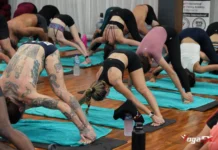
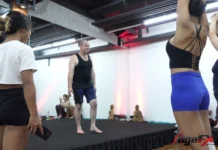
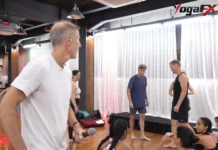
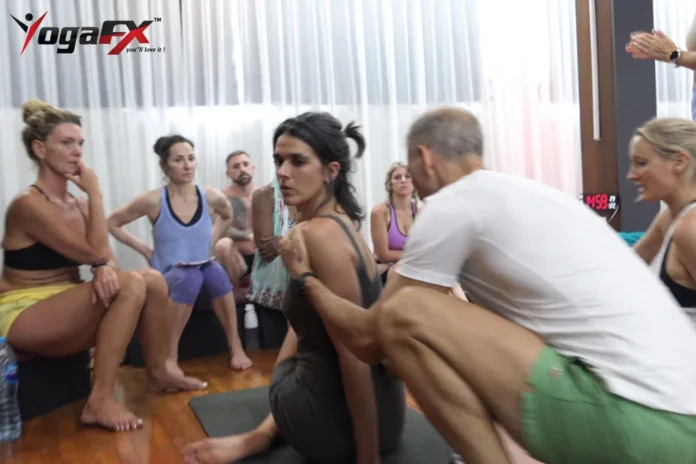
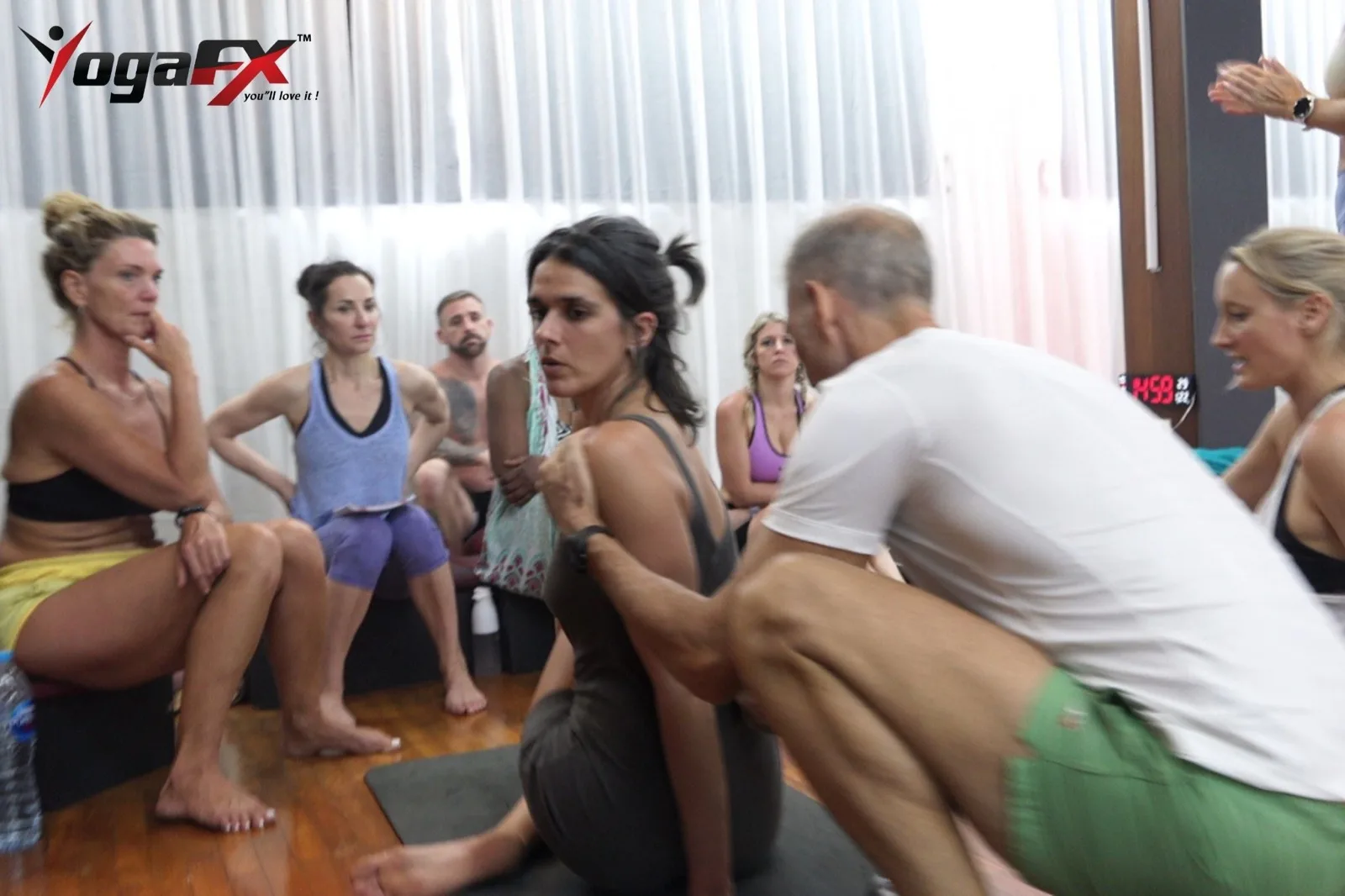
The Bali programme is a six-day hybrid. You complete the pre-course online, then join the in-person intensive in Bali. The intensive is where the sequence, the teaching practice and the feedback come together. Trainees teach, get corrected, and teach again, so that the next attempt is noticeably better. The pre-course is the YogaFX hot yoga teacher training online, which covers the full dialogue, posture clinics and anatomy at your own pace.
You finish with two credentials.
The first is a Yoga Alliance RYT 200-Hour certification. The second is the Bikram Hot 26&2 200-Hour International Yoga Certification. The Yoga Alliance route matters if you want to teach in studios that ask for RYT registration. The method certification matters if you want to teach the exact sequence the course is built on. Our guide to Yoga Alliance certification and the Hot 26&2 explains how the two fit together.
Teaching a sequence without demonstrating
A hot yoga teacher teaches mostly by voice. The teacher does not demonstrate each posture, so students depend on the cue to know what to do next. That is a skill most new teachers have to build, and it is the reason the training spends so much time on delivery.
For the sequence itself, our page on Original Hot Yoga and how YogaFX teaches it in Bali sets out the sequence in more detail.
Good delivery starts with timing. A cue should arrive as the student begins to move, not after they have already settled. Speak in short, clear phrases, and leave a small pause so the room can respond. Long explanations in the heat are hard to follow, and students tune out quickly.
Watching the room matters as much as talking. You are looking for the student who is holding their breath, the one who has stopped sweating, and the one who has moved to the wall without saying anything. Those are the moments to act, because heat problems often start quietly. A teacher who scans the room every few minutes catches them earlier.
Adjustments need care too. In a heated room, touching a student can feel more intrusive than it would in a cooler studio, so trainees learn to ask permission or to adjust with words first. That small habit protects both the student and the hot yoga teacher, and it is a point the assessment will check.
The YogaFX route: six days in Bali
The next batch checks in on Sunday 24 January 2027 and checks out on Friday 29 January 2027. The training venue is the Soham Wellness Center in Seminyak. YogaFX also runs studios in Seminyak and Canggu, so you can take classes there before you commit to the intensive.
6 days
Hybrid format: online pre-course, then the in-person intensive in Bali.
200-hour
Yoga Alliance RYT 200 plus the Bikram Hot 26&2 200-Hour International Yoga Certification.
12,000+
Teaching hours behind Mr. Ian Terry, E-RYT 500.
1,500+
Graduates from more than 80 countries since the school began in 2017.
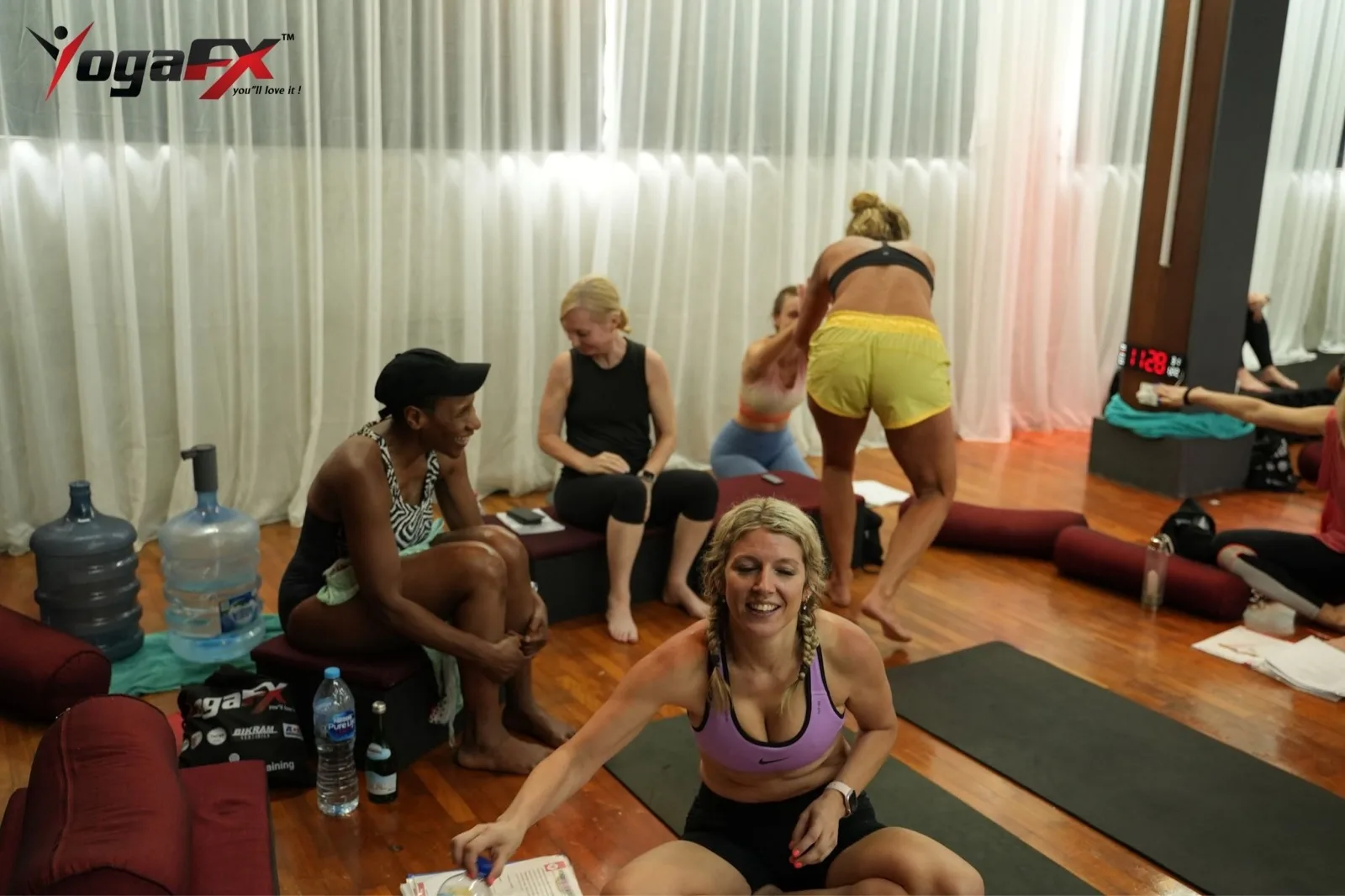
The intensive is short, so the days are full for every hot yoga teacher in training. That is an advantage if you already have a practice and want to focus on teaching. It is a challenge if you need time to build your stamina, which is why the preparation section above matters so much.
What it costs and how the payment works
For anyone asking what a hot yoga teacher training costs, prices are in US dollars. The early bird price is the current published rate, and the team can confirm the exact deadline when you enquire, because offers can change. Ask for the current price in writing before you book, so there are no surprises on the day of payment.
| Option | Price (US$) | What it means |
|---|---|---|
| Early bird (current rate) | 1,899 | The lowest published price for the Bali hybrid training |
| Standard rate | 1,999 | The reference price. The early bird saves US$100 against it |
| Twin share option | 1,999 | Shared accommodation option |
| Single room premium | 2,199 | Private room option |
| Instalment plan | From 250 per month | Interest-free payments, adjusted to your monthly budget |
The deposit is low, and the team will tell you the exact amount when you ask. Those figures cover the training itself. Flights and any extra nights you choose outside the package come on top, so add them to your budget before you commit.
Why heat changes how you teach
Teaching in heat is the part of the job most people underestimate, and every hot yoga teacher should understand it. The research on yoga is encouraging, but it is not a licence to ignore safety. The NCCIH, part of the US National Institutes of Health, reviews the evidence on yoga and summarises what it shows and where the limits are.
What the research says about yoga
On benefits, the NCCIH reports that research found beneficial effects of yoga on perceived stress in all the studies it reviewed in a 2020 review of 12 studies. It also says yoga had a substantial beneficial effect on anxiety symptoms in a 2019 review of 38 studies, while noting there is little evidence of benefit for people with anxiety disorders. Read the NCCIH summary of yoga effectiveness and safety.
On safety, the same NCCIH page, Yoga: Effectiveness and Safety, is direct: hot yoga has special risks related to overheating and dehydration. That is the sentence every teacher should keep in mind, because the risk is in the room, not in the posture alone. Heat is the variable you manage, so the rest of the class plan depends on it.
Recognising heat illness
The Mayo Clinic describes heat exhaustion with symptoms that include heavy sweating, faintness, dizziness, fatigue, a weak and rapid pulse, nausea and headache. Its advice is to stop all activity, rest, move to a cooler place and drink cool water or sports drinks. See the Mayo Clinic guide to heat exhaustion.
Heatstroke is a different level of emergency. The Mayo Clinic says heatstroke needs emergency care, and that a core body temperature of 104 degrees Fahrenheit (40 degrees Celsius) or higher is the main sign. Confusion, agitation, slurred speech, seizures and coma can all result from heatstroke. Read the Mayo Clinic guide to heatstroke. If you think someone may have it, seek immediate medical help.
If you want the wider research picture, our article on whether hot yoga is good for anxiety looks at the same studies from a teacher’s angle.
The CDC adds that anyone can suffer heat-related illness, but some people are at greater risk. Those groups include people with heart disease, pregnant women, people aged 65 or older, outdoor workers and athletes, and young children. Read the CDC overview of heat and your health.
For a hot yoga teacher, that means three habits. Know the warning signs. Keep water and rest visibly available in the room. Tell students early that leaving the room to recover is allowed. These habits take little time, and they are the reason a good teacher can run a hot class for years without an incident.
Yoga is not a substitute for medical advice. If you are pregnant, older, or live with a health condition, talk to your healthcare professional before you start a heated practice or a teacher training.
Common mistakes new hot yoga teachers make
Most new hot yoga teachers make the same few mistakes, and the training is designed to catch them early. Knowing them in advance saves time and protects your students.
- Talking too much. Long explanations in heat lose the room. Keep cues short and let the sequence do the teaching.
- Watching the mirror instead of the room. Your own posture matters less than whether students are safe and following the cue.
- Pushing through warning signs. A student who looks pale or stops sweating needs rest now, not after the next posture.
- Skipping your own recovery. Teaching several classes a day is tiring. Teachers who drink little water and sleep poorly make more errors in their cues.
Each of these mistakes is fixable. The best fix is feedback from someone who has taught the sequence many times, which is why the teaching blocks in the intensive matter more than the lectures.
How to compare teacher trainings
Comparing trainings to become a hot yoga teacher is harder than it looks, because many programmes use the same words. Ask the same questions of each one, and write down the answers. Our article on hot yoga vs regular yoga and which certification fits you covers the style question in more depth.
- Which credential you receive. Ask for the exact certification names, and check whether the issuing body is one you can register with.
- How the hours are split. Ask how many hours are online, how many are in person, and how many are supervised teaching.
- How you are assessed. A fair assessment includes you teaching in front of the trainer and getting written or spoken feedback.
- Who teaches the course. Ask about the lead teacher’s experience, how long they have taught and what they have trained.
- What the price includes. Ask about accommodation, meals, materials and any extra fees, so the total cost is clear.
If a programme cannot answer these questions in plain language, that tells you something. A clear answer is a sign that the team expects you to check the details, and that is the attitude a good teacher needs.
Mr. Ian Terry and the results behind the training
Mr. Ian Terry is the founder of YogaFX, which has trained more than 1,500 graduates from over 80 countries. He holds the E-RYT 500 credential and the title of Master Trainer with the Republic of Indonesia Yogasana Sports Federation. He trained for five years, from 2014 to 2019, alongside the founder of the Hot 26&2 method. YogaFX itself started in 2017.
Results from students and graduates show the same standards at work. At the World Yogasana Sports Federation Championships in Ahmedabad in June 2026, Indonesia won one gold, two silver and four bronze medals. Across the years, YogaFX students and graduates have won 12 medals, including five gold. Competition is not the goal of teacher training, but it shows that the teaching is tested under pressure.
The Bali programme happens in the heat, with real students and real feedback. For a teacher who will lead classes in a heated room, that setting is closer to the job than a classroom with a whiteboard.
What trainees say
Reviews are the honest test of any training for a hot yoga teacher. YogaFX has 150 Google reviews, 50 on Yoga Alliance and 357 YouTube testimonial videos. These three come from YouTube, and we show first names only, as the trainees gave them.
“when I stepped into it I really enjoyed. I think I found my passion.”
Atika, YouTube video review, 2019 (quoted from the video transcript)
“I fell in love with Bikram and I’ve got to join the training. And I can’t thank you enough, it just changed my life internally and externally.”
A trainee in our YouTube review, 2023
“This is beyond my expectations for the program.”
Cristine, YouTube video review, 2024
Who this path suits
The training suits people who already practise hot yoga regularly and want to teach it well as a hot yoga teacher. It also suits teachers from other styles who want the heat, the sequence and a recognised method certification. It is less suited to people who want a quick certificate without a daily practice, because the intensive assumes you can already handle the room.
If you are still deciding, the best next step is a conversation rather than a booking. Tell the team where you are in your practice, what you want to teach and where you hope to teach it. They can tell you honestly whether this batch fits.
Your next step
The next hot yoga teacher batch checks in on Sunday 24 January 2027. Message Mr. Ian and the YogaFX team on WhatsApp at +62 811 3888 330 and ask the questions that matter to you. Bring your practice history, your teaching goals and your budget, and the team will give you a straight answer.
FAQ
Do you need a degree or prior teaching experience to become a hot yoga teacher?
No degree is needed for most hot yoga teacher trainings. What you need first is a steady practice in heat and the ability to follow a sequence closely. The training then builds the teaching skills, anatomy knowledge and assessment you need to teach safely.
How long does it take to become a hot yoga teacher?
The formal training is typically a 200-hour programme. At YogaFX in Bali, the hybrid format runs six days in person, with online study before you arrive. Many trainees then spend several more months practising and teaching before they feel ready to lead a room.
How much does it cost to become a hot yoga teacher?
At YogaFX, the Bali hybrid training is priced in US dollars. The current early bird rate is US$1,899, the standard rate is US$1,999, and a single room premium costs US$2,199. Instalments are available from US$250 per month, interest-free. Flights and extra accommodation come on top.
How much does a hot yoga teacher make?
Income depends on how many classes you teach, where you live, and whether you work in a studio or teach privately. Studios often pay per class, and private sessions can earn more. A new teacher should plan on building a timetable over time rather than earning a full income straight away.
Is it safe to teach hot yoga?
It can be, when you know the warning signs of heat illness and set clear rules. The NCCIH notes that hot yoga carries special risks of overheating and dehydration. Keep water in the room, let students rest, and remember that heatstroke needs emergency care. Talk to a healthcare professional first if you are pregnant or have a health condition.
Still have questions? Message Mr. Ian and the YogaFX team on WhatsApp and we will answer them personally.