














Hot yoga vs regular yoga comes down to the room, the sequence and how you want to teach. Choose a heated certification if you like a fixed, repeatable class and handle heat well. Choose a room-temperature one if you prefer variety and a gentler setting. Either way, pick the training you will finish and enjoy.
Mr. Ian Terry, E-RYT 500, has taught the original Bikram Hot 26&2 method for more than 12,000 hours. He has trained 1,500+ graduates from 80+ countries. That teaching floor shapes this guide, and it is written for people choosing a teacher certification, not just a first class. If you’re still picking between a heated course and a regular one, this page turns the evidence into a plain decision.
The hot yoga vs regular yoga question matters more than it looks. A teacher training is a week, or many weeks, of your life, plus a real fee. So the room temperature is not a detail. It decides what you practise, how you learn to teach and who you end up teaching.
Hot Yoga vs Regular Yoga: The Short Answer for Future Teachers
Here is the quick version. In hot yoga vs regular yoga, the heat is the one designed difference. The rest depends on the school. Think of it as two paths with different strengths. Many people search for hot yoga vs normal yoga, or ask whether hot yoga is better than normal yoga. The difference between hot yoga and normal yoga is mostly the room, so the useful question is which room suits you.
- Heated certification: a hot room of about 40°C and 40% humidity, a fixed sequence and a scripted way of teaching. It suits people who like structure and want to teach the same class every time.
- Room-temperature certification: normal room conditions and, usually, more variety in styles and sequencing. It suits people who like to design flows, or who react badly to heat.
- Mixed careers: many teachers move between both over the years, so neither choice locks you in.
That is not a ranking. Hot yoga vs regular yoga is a question of fit, not a verdict. Research on temperature is mixed, and the research section below covers it. As a result, the honest advice is to choose by fit: your body, your goals and the kind of classes you hope to lead. If you want the lab-by-lab numbers behind that mixed picture, our sister site has a detailed look at calories, flexibility and heart health in hot and cool rooms.
For a wider view of programmes, see our comparison of the best hot yoga certifications online, hybrid and in person. It lays out formats side by side so you can match one to your schedule.
What Changes Between a Heated and a Room-Temperature Training
People say “regular yoga” to mean almost anything at normal temperature, such as hatha, vinyasa or yin. “Hot yoga” is just as loose, because it can mean a heated flow or a fixed sequence. So before you weigh hot yoga vs regular yoga, decide which pair you mean. The table below uses the YogaFX Hot 26&2 programme as the heated example.
| What changes | Heated Hot 26&2 training | Typical room-temperature training | What it means for you |
|---|---|---|---|
| Room | About 40°C and 40% humidity, natural tropical heat | Normal room temperature | Heated trainees also learn to manage heat strain, rest and hydration |
| Sequence | Fixed: 26 postures and 2 breathing exercises | Varies by school and teacher | A fixed sequence lets you repeat a class and compare progress week to week |
| Class length | 90 minutes | Set by the studio or school | A set length makes timing and pacing easier to practise |
| Teaching method | Scripted dialogue, no demonstration, no music | Cueing, demonstration and music are common | Heated trainees learn to teach with words alone |
| Best fit | People who like structure and can handle heat | People who like variety or avoid heat | Choose the setting you can attend consistently |
Notice that the table says nothing about one being “better.” Hot yoga vs regular yoga is about the setting, and the setting shapes the skills you build. A scripted, no-demonstration class, for example, trains your voice and your eye. A flow class trains your sequencing and your creativity instead.
Why the sequence matters as much as the heat
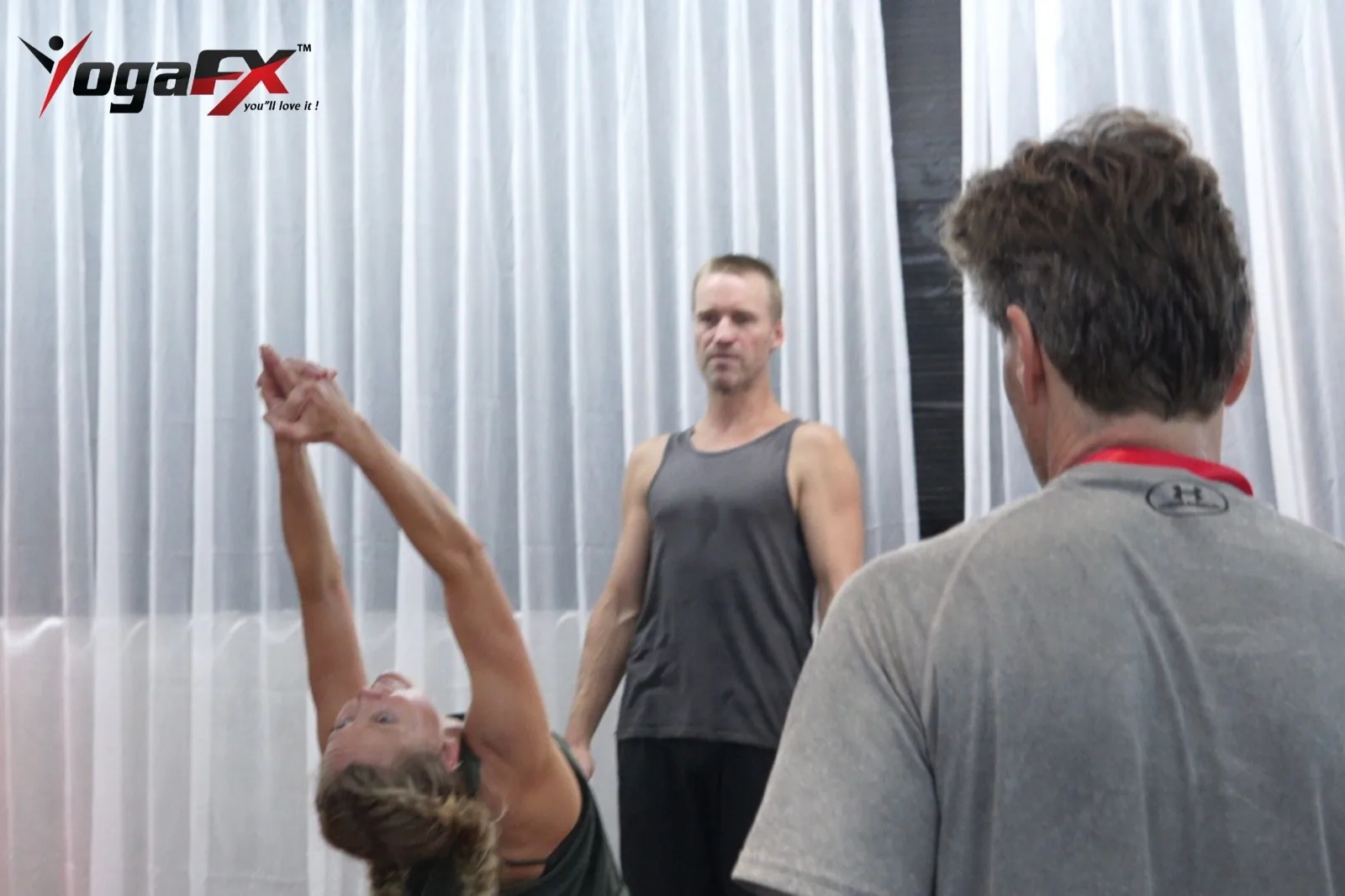
A lot of the hot yoga vs regular yoga debate ignores the sequence. Yet the sequence is what you will teach. In the Hot 26&2 method, every class runs the same 26 postures and 2 breathing exercises. That means you can learn it once, deeply, and then deliver it again and again.
A flow-based room-temperature course works differently. You learn principles and build your own classes. Both approaches produce capable teachers. However, they feel very different on day three, when you are standing in front of a room and speaking.
The YogaFX Heated Training at a Glance
These five facts are the whole heated package. So when you compare hot yoga vs regular yoga courses, line them up against any room-temperature course you are considering. Ask the same five questions of each school.
What the Research Says About Heat, Mood and Fitness
Because a certification is a big decision, it helps to know what the research says about hot yoga vs regular yoga. The research is encouraging, but it is easy to overstate. Here are the points that matter most for a future teacher.
Mood and anxiety
A 2023 Massachusetts General Hospital trial (Nyer and colleagues) tested an eight-week heated hatha yoga course. About 59% of participants cut their depression symptoms by half or more, compared with 6.3% of a waitlist group. Notice the comparison, though. It tested heated yoga against waiting, not against a cool room. A 2022 study by Hui and colleagues also found that hot yoga reduced state anxiety.
This is information, not medical advice, so talk to a healthcare professional about depression or anxiety.
Harvard Health describes yoga as able to soothe tension and anxiety in the mind and body. That holds on both sides of hot yoga vs regular yoga. For you as a future teacher, the takeaway is simple: the practice carries the mood benefit, and the heat is an extra challenge.
Fitness, strength and calories
A 2025 systematic review by Willmott and colleagues pooled 43 studies and 942 participants. It linked hot yoga with better flexibility, bone density and well-being. Because it compared hot yoga with many kinds of controls, it shows that hot yoga works, not that heat is the reason. In hot yoga vs regular yoga terms, that is a gap worth remembering.
On effort, the University of Wisconsin team led by Porcari measured real 90-minute classes. They reported about 333 calories for women and 460 for men. That is a solid workout. It is not a reason to pick heat over a cool room, because the same sequence in a cool room is still exercise.
Safety in a hot room
In hot yoga vs regular yoga, heat adds strain, and that is the real cost of the choice. The US National Center for Complementary and Integrative Health notes that hot yoga has special risks related to overheating and dehydration. The CDC explains plainly that if your body gets too hot, you can get sick.
So treat heat with respect. Drink water through the day, rest when you need to and leave the room if you feel faint or confused. If you have a heart condition, high blood pressure or you are pregnant, see a doctor first. Our guide on heat safety every hot yoga teacher must know goes deeper.
Always consult a healthcare professional before starting any heated exercise. Nothing on this page replaces personal medical advice.
Five Questions That Decide Which Certification Fits You
Skip the online arguments about hot yoga vs regular yoga and answer these instead. Write your answers down, because your first reaction is usually the honest one.
- How do you react to heat? If hot rooms leave you dizzy or drained, a room-temperature course is the safer and happier choice.
- Do you like repetition? Heated Hot 26&2 training repeats one sequence, so it rewards people who find depth in the same class.
- Do you want to design flows? If creating your own sequences excites you, a flow-based room-temperature course gives more practice at it.
- What is your schedule? A hybrid course with a short intensive suits busy people, while longer courses suit those who can step away for weeks.
- Where do you want to teach? Look at studios near you and see which style they hire for.
If four of five answers point one way, you have your choice. If they split, try both kinds of class for a few weeks first. Book each at least three times, because the first class in any room is the hardest. For a style comparison from the teaching side, read why we certify the fixed 26&2 rather than a hot flow.

What Heat Asks of a Teacher
Teaching in heat is a skill of its own, and the hot yoga vs regular yoga choice changes how you learn it. Mr. Ian Terry treats the heat as a teaching tool. Warm muscles let students move deeper into a stretch with less resistance, and fixed room conditions make every class comparable. For a student that is helpful. For a trainee teacher it is essential, because you can see exactly what your words do.
Heat also changes how you speak. In a hot room, students can’t take in long explanations. As a result, heated trainees learn to give short, clear instructions, to pace a class and to watch for signs of overheating. Those habits carry over to any room you teach in later.
Room-temperature teachers build a different edge. They often get stronger at demonstrating, adjusting and creating variety. Neither set of skills is lesser. The question is which set you want first.
Hot yoga vs regular yoga: a practical test before you enrol
- Take three classes in each style over two to four weeks.
- Note your energy, sleep and mood the next morning.
- Notice which teacher you would like to sound like.
- Keep the style you look forward to, and add the other later.
That small experiment tells you more than any article, including this one. It also protects your money, because you commit to a certification only after you know the room suits you.
What YogaFX Trainees Say
These are real reviews from people who trained with Mr. Ian. They speak about the teaching and the training experience, not the temperature, but they show what the room feels like.
“Highly knowledgeable and competent teachers will change yourself for the better. Strongly recommend this place for everyone’s willing to bring their flexibility, strength, focus, breathing or even balance to the next level.”
Thibaut, Google review, 2018
“Amazing Yoga, amazing teacher, I got so much benefits from yogafx.”
Volla, Google review, 2020
Weslyn shared a video review in 2025. She said she arrived expecting to learn the dialogue and earn a certificate. Instead, the course went beyond the dialogue and revealed her own internal dialogue. Watch her story below.
Weslyn, YouTube review, 2025.
How YogaFX Trains You for the Heat in Bali
If the heated path fits you after weighing hot yoga vs regular yoga, here is how YogaFX does it. The Bikram Hot 26&2 Yoga Teacher Training MasterClass is a six-day hybrid course. You study online first, then join an intensive in Bali. Graduates earn Yoga Alliance RYT 200 and the Bikram Hot 26&2 200-Hour International Yoga Certification.
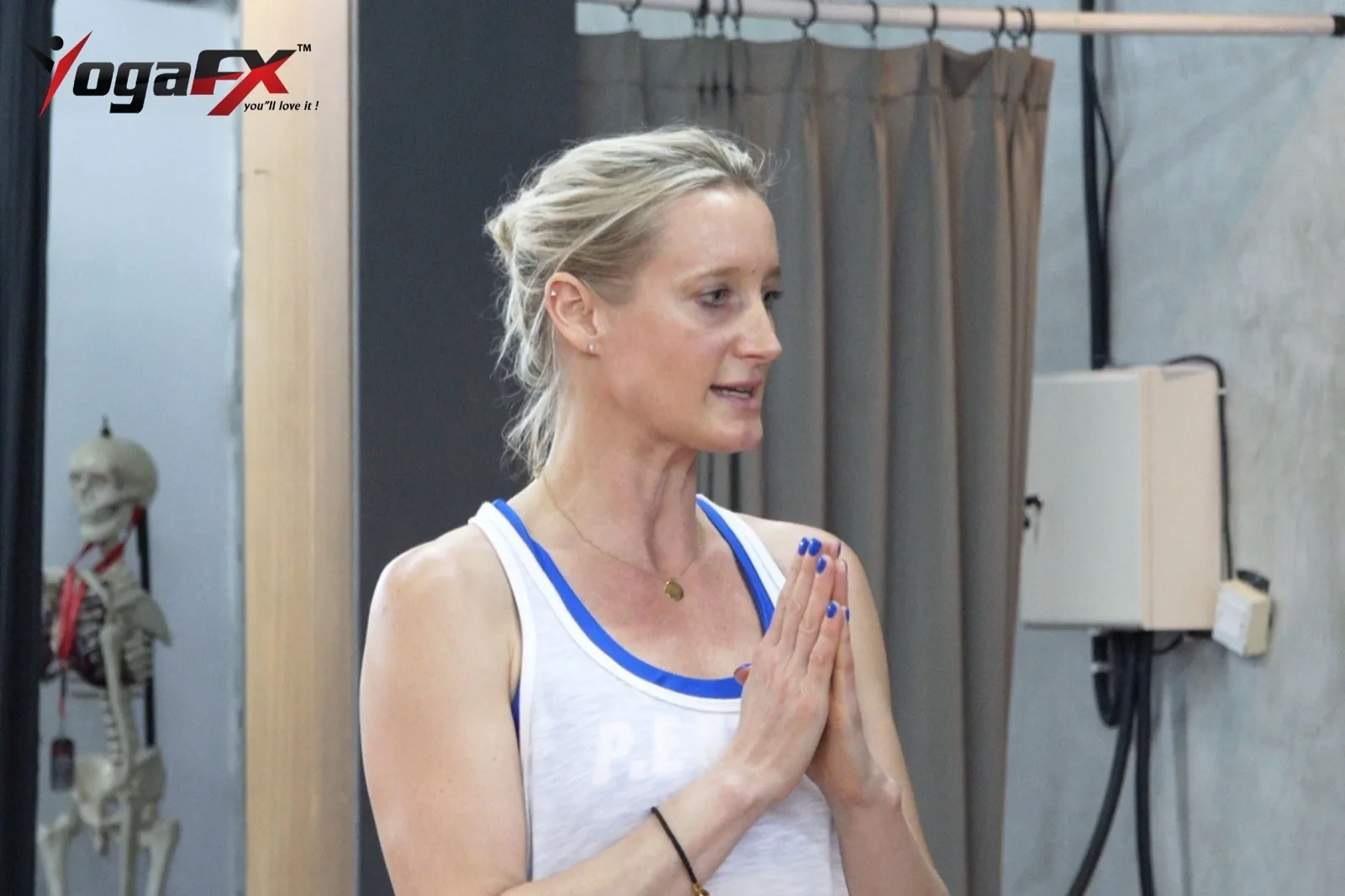
The next batch checks in on Sunday 24 January 2027 and checks out on Friday 29 January 2027. The venue is Soham Wellness Center in Seminyak. The course fee is currently US$1,899 at the Early Bird rate, and instalments start from US$250 a month, interest free. You can read how the format works in our guide to the six-day hybrid intensive.
Classes use natural tropical heat, not electric heaters. Because the room stays the same every day, you can focus on learning the dialogue and on your own teaching. Your certificates are explained in our page on Yoga Alliance certification and the Hot 26&2.
YogaFX has 150 Google reviews, 50 on Yoga Alliance and 357 YouTube testimonials from past trainees. So you can hear from many graduates before you decide.
The bottom line on hot yoga vs regular yoga is simple. Heat is a tool, not a badge of seriousness. It gives some people focus and a deep warm stretch, and it gives others a headache. So pick the room you can attend week after week, then commit to it fully. A teacher who loves the room they train in usually becomes a better teacher, because they show up with energy and patience for every class.
FAQ
Is hot yoga or regular yoga better for you?
In the hot yoga vs regular yoga choice, neither wins for everyone. Hot yoga adds heat strain and a deep warm stretch, while regular yoga is gentler on your cooling system and offers more variety. Choose by your health, your goals and what you will attend consistently. If you have a heart condition or are pregnant, ask a doctor first.
What is the difference between warm yoga and hot yoga?
There is no single standard, because studios label their rooms differently. Warm yoga is usually cooler than hot yoga, but the exact temperature varies. Ask any studio or school for its room temperature and humidity. A YogaFX heated class runs at about 40°C and 40% humidity.
Hot yoga vs vinyasa yoga: which should I train to teach?
Train in the style you want to teach for years. Hot 26&2 training gives you a fixed sequence and a scripted method. Vinyasa training gives you flow design and variety. Try both as a student first, then choose the one you look forward to every week.
How often should I do hot yoga before a teacher training?
We suggest two or three classes a week in the month before a heated course. This lets your body adjust to the room and builds familiarity with the sequence. Start lighter if heat is new to you, drink water through the day and rest whenever you need to.
Can I train as a hot yoga teacher if I have only done regular yoga?
Yes, regular classes are a fine starting point. Take a few heated classes first so the room does not surprise you. The hybrid format helps, because you study online before the intensive. Talk to the YogaFX team about your experience and they will advise you personally.
Still have questions? Message Mr. Ian and the YogaFX team on WhatsApp and we will answer them personally.