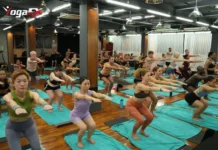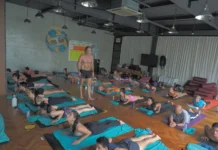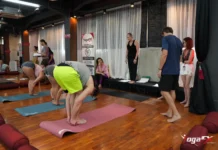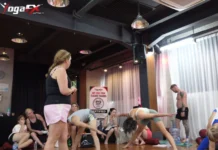









Yoga for footballers is a client base you can build as soon as you graduate from a 26&2 teacher training. Players need hamstring and hip work, balance and calm recovery. They also like a class that never changes. That’s exactly what the fixed 26&2 sequence gives a new teacher.
Most new teachers try to teach everyone, and that makes it hard to stand out. A footballer is a clear client with a clear problem. His legs get tight, and his body gets little recovery time between games. Once you can name that problem, you can name your class, such as a weekly yoga for footballers recovery session.
Why Yoga for Footballers Is a Niche Worth Building
The professional game shows how big the hamstring problem is. The UEFA Elite Club Injury Study followed 3,909 players from 54 teams in 20 European countries across 21 seasons. Hamstring injuries made up 19% of all injuries, and their share rose from 12% in the first season to 24% in the most recent one (Ekstrand et al., British Journal of Sports Medicine, 2023).
Those are full-time professionals with club medical staff. Many amateur and semi-professional players have a day job and far less support. They sit at a desk all day, train on weekday evenings and play at the weekend. That gap is where you can help.
Be honest about what the study shows, though. It tells us how common hamstring injuries are. It doesn’t show that yoga prevents them. So when you teach yoga for footballers, promise mobility, balance and better recovery habits, and leave injury claims to the physio.
What Footballers Need From a Yoga Class
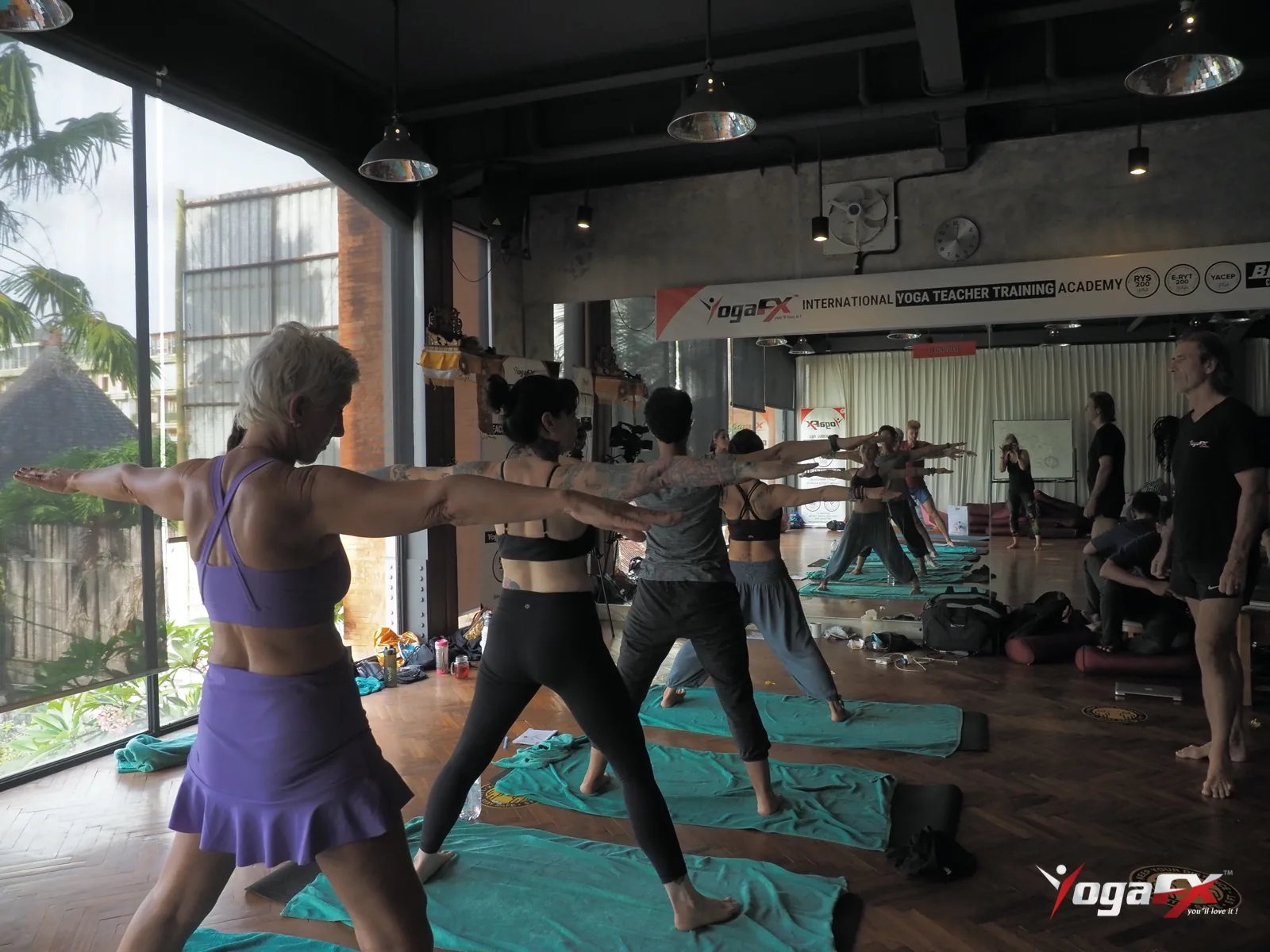
Before you plan yoga for footballers, listen to what players actually complain about. The same few needs come up again and again. Each one maps neatly onto the Original Hot 26&2 sequence you learn as a trainee.
- Longer hamstrings and freer hips. Sprints, stops and long kicks load the back of the thigh and the hip. Steady holds with a soft knee suit them better than bouncing.
- Balance and ankle control. Single-leg postures make the small muscles around the foot and ankle work.
- Calm breathing. Slow nasal breathing helps a player settle after a hard match or a stressful week.
- A routine they can predict. Players know drills. A fixed order of postures feels familiar, so they relax into it.
- Short sessions that fit the week. An evening trainer wants 30 minutes some days, not a long class every time.
| Footballer need | Posture from the sequence | What you cue | When to offer it |
|---|---|---|---|
| Hamstring length | Standing Separate Leg Stretching | Soft knee, steady hold, no bouncing | Quiet weeks and off-season |
| Hip and groin openness | Triangle | Long back leg, even breathing | Mid-week, well away from a match |
| Single-leg balance | Standing Bow Pulling Pose and Tree | Lock the standing leg, eyes on one point | Early in a session |
| Thigh endurance | Awkward Pose | Hips back, knees together | Pre-season |
| Lower back relief | Cobra and Locust | Lengthen first, then lift low | After desk-heavy days |
| Recovery and calm | Wind Removing Pose and Dead Body Pose | Slow breath at half effort | The day after a match |
How to Plan Yoga for Footballers Around Match Week
Timing matters more than any single posture. A long, deep stretch the night before kick-off can leave a player’s legs feeling flat. So build your yoga for footballers plan around three windows instead of one fixed class time.
- Quiet weeks and off-season. This is the best time for a full 90-minute heated class once or twice a week.
- Mid-week, between training nights. A 30 to 45 minute session with longer holds works well here.
- Match day and the day before. Offer breathing and easy movement only, or nothing at all.
That three-window idea is also a selling point for yoga for footballers. A coach hears it and sees that you understand the football week. It shows you aren’t trying to replace training, only to fit around it.
A six-session starter block for a club squad
If a club says yes to a yoga for footballers trial, keep the first block simple and predictable. Here is one way to run it.
- Session 1. Standing breathing, then the first standing postures, taught at about 60 percent effort.
- Session 2. Add Awkward Pose and Triangle, and introduce the two-set rhythm of the sequence.
- Session 3. Focus on balance with Tree and Standing Bow Pulling Pose.
- Session 4. Spend longer on hamstrings and hips, with extra time in the floor series.
- Session 5. Run a recovery class with Wind Removing Pose, Cobra and Dead Body Pose.
- Session 6. Review, ask the players what helped, and book the next block.
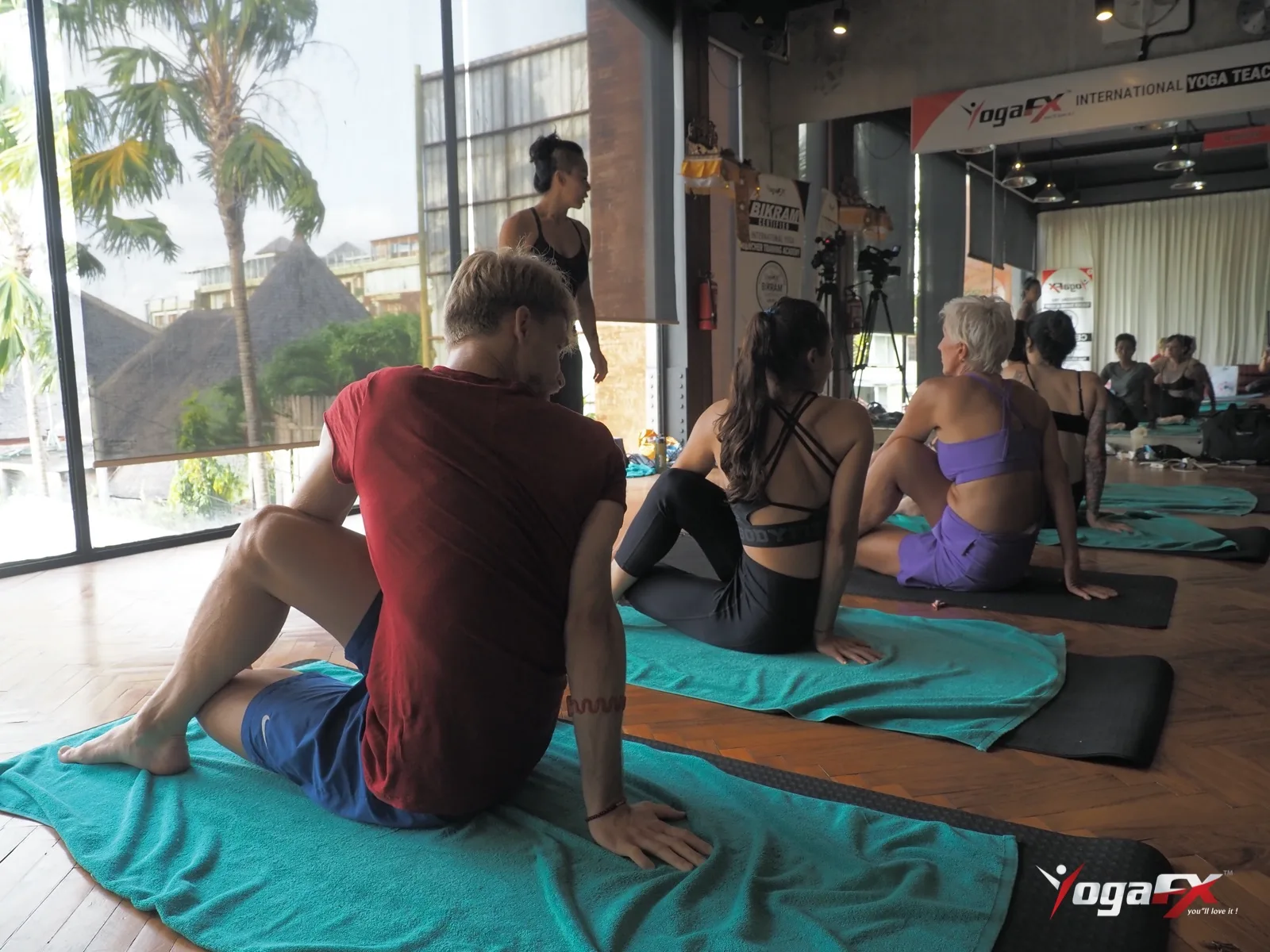
Teaching Cues That Work for Players
Footballers respond to plain, physical language. Skip the poetry and give them one clear job per posture. Yoga for footballers works best when your cue sounds like something a good coach would say.
- Use sport words. Tell a player to plant the standing foot like a kick-off, then grow tall through the spine.
- Praise the first set. Players push hard by habit, so thank them for staying at 60 percent and save depth for the second set.
- Give one correction at a time. A busy head cannot hold three notes, and a single clear cue sticks.
- Keep the room calm at the end. After a loud week, a quiet finish is often what players remember.
The 26&2 dialogue helps here. Because it is scripted, you deliver the same clear cues in every class, and players learn to trust the order. Mr. Ian Terry teaches every trainee to deliver that script clearly, which is why graduates sound confident in front of a new group.
Mistakes to Avoid When Teaching Yoga for Footballers
A few errors cost new teachers their first club. They are easy to avoid once you know them.
- Pushing depth too early. A player who sprints for a living will force a stretch, so slow him down and check the knee stays soft.
- Booking classes without asking about the fixture list. A great session on the wrong day can hurt more than it helps.
- Promising injury prevention. The research doesn’t support that claim, and clubs notice when a teacher overreaches.
- Name-dropping clubs or players. You don’t need them, and you should never imply that a club endorses your class.
Avoid those four and your yoga for footballers classes will feel safe, simple and professional. That is what coaches and captains talk about afterwards.
Hot Yoga for Football Players: Is the Heat Safe?
Hot yoga for football players sounds perfect to a man whose hamstrings feel like cables. Heat does change how muscles feel, and many players love it. Yet heat also adds load, so hot yoga football clients need clear rules from their teacher. Treat heat as an add-on to yoga for footballers, not the foundation.
- Hydrate steadily through the day. Gulping a bottle just before class doesn’t help.
- Keep full hot classes out of match week. As a cautious rule of thumb, leave a gap of a couple of days before a game.
- Start at half effort. A first-timer should hold back, and the second set of each posture can go deeper.
- Stop if someone feels dizzy. Cool them down, sit them out and let them rejoin when they feel steady.
- Ask about health first. A heart condition, high blood pressure, a current injury or certain medication means a doctor’s check before any heated practice.
Heat is not only about muscles. A Massachusetts General Hospital trial put adults with moderate-to-severe depression through 8 weeks of heated hatha yoga. Treatment response was 59.3% in the yoga group against 6.3% on a waitlist (Nyer et al., Journal of Clinical Psychiatry, 2023). The study was small, with 65 people analysed, and the authors called for tests against active controls.
It also did not study footballers. Use it as context for how players may feel after a stressful season, not as a promise. This article is general information, so please consult a healthcare professional about your own situation.
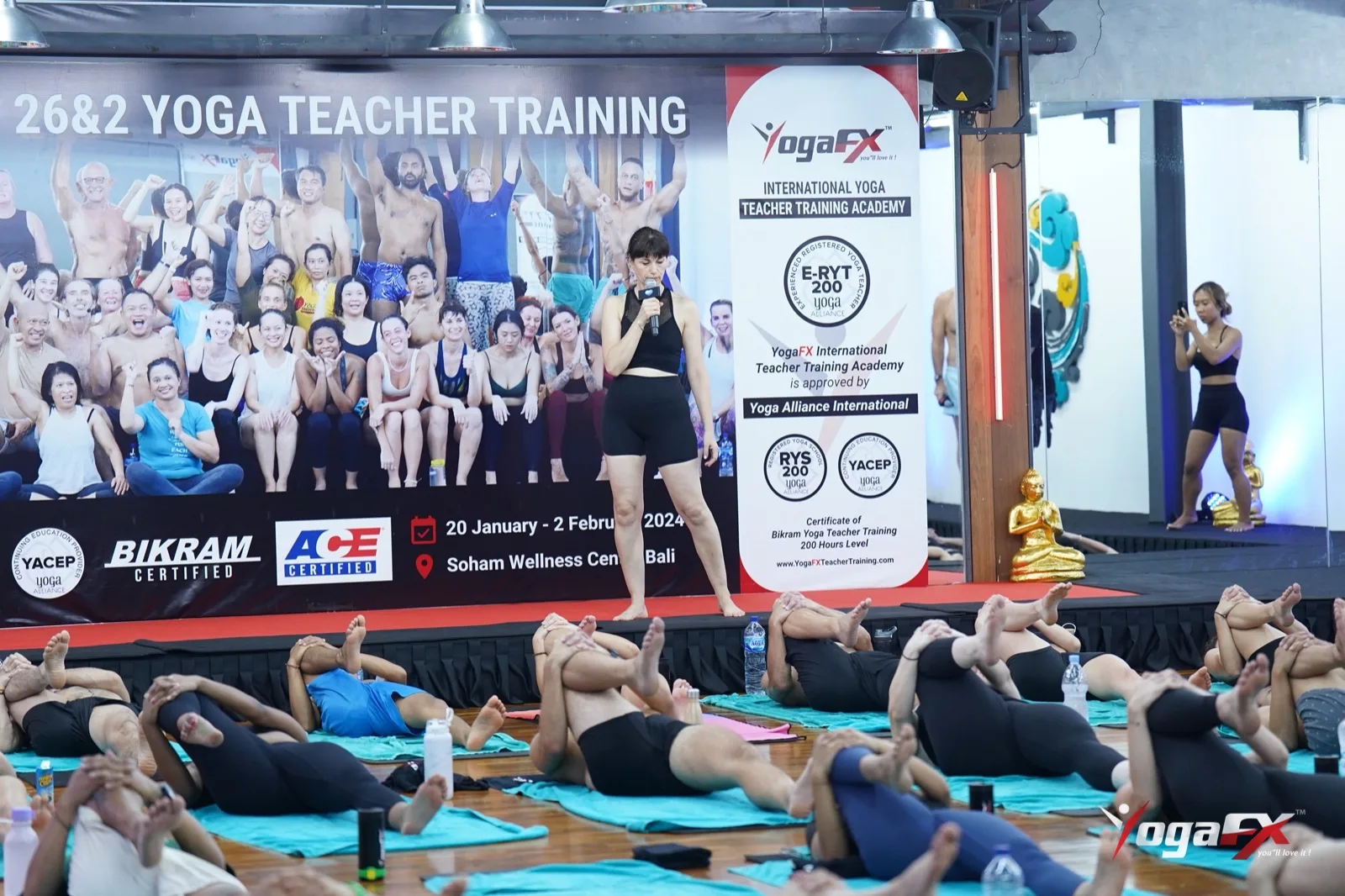
Yoga for Soccer Players or Footballers? Use Your Client’s Word
The sport is the same, but the word changes with the audience. Players in the UK, Ireland, Australia and most of Europe say football. Players in the United States say soccer. Put your client’s word in your class name, so a search for yoga for soccer players or yoga for footballers finds you.
Interest is steady. Ubersuggest shows about 390 searches a month for the exact phrase worldwide in October 2026. That is a small, focused audience, and it suits a local teacher well. American football is a different game with different demands, so keep that group separate.
How to Find Your First Football Clients
You don’t need a big marketing plan to start offering yoga for footballers. You need a few good conversations with the people who already work with players. Start local and keep the offer small.
- Amateur and youth clubs. Offer a free 30-minute recovery session after one training night.
- Five-a-side and Sunday-league teams. A captain can fill a class faster than any advert.
- Physios and sports therapists. They meet players who want something gentle to do between treatments.
- Gyms with football leagues. Many already run teams and might add a weekly mobility slot.
What to say in your first message
Keep it short and specific. Tell the coach who you are, name the one problem you solve, and offer a free trial at a time that suits the squad. For example: you teach a gentle recovery class for players, you can come after training, and you only need ten minutes of floor space. Coaches say yes to small, clear offers.
Work inside your scope at all times. You teach a yoga class, and you don’t diagnose or treat injuries. A player with a sore hamstring should see a physio first. If you want to understand the wider athlete market, read our guide on how 26&2 teachers support athletes who train hard.
Some graduates pair this niche with men-only hot yoga classes, because many footballers are men who have never tried yoga. Others use it as one strand of their career paths after teacher training.
What Graduates Say About Teaching After Training
A niche like yoga for footballers only works if you feel ready to teach it. Our graduates often say the same thing. They leave the Bali intensive wanting to teach straight away. Across Google, Yoga Alliance and YouTube we hold more than 550 reviews, with 150 on Google, 50 on Yoga Alliance and 357 on YouTube.
I came back to the UK with a real fire in my belly to teach Yoga.
Judith, Google review, 2025
His knowledge of Bikram yoga is amazing. Would love to come back and learn to teach like him.
Siobhan, Google review, 2025
Peter also left a video review in 2025. He describes a classmate who had already put a Bikram class on her studio’s schedule for the following Sunday. It’ll be her first class as a teacher.
Peter’s video review of the Bali teacher training, 2025.
How YogaFX Prepares You to Teach Yoga for Footballers
Mr. Ian Terry leads the training. He holds an E-RYT 500 credential and has more than 12,000 teaching hours. He trained for 5 years, from 2014 to 2019, with the founder of the Bikram Hot 26&2 method. Since 2017, YogaFX has trained 1,500+ graduates from 80+ countries.
The training is a 6-day hybrid. You complete the pre-course online, then join the intensive in Bali. You finish with two credentials: Yoga Alliance RYT 200 and the Bikram Hot 26&2 200-Hour International Yoga Certification. In the room, you practise delivering the scripted dialogue to a full class, which is the skill every football client will see first.
The next batch checks in on Sunday 24 January 2027 and checks out on Friday 29 January 2027 at Soham Wellness Center in Seminyak. The Early Bird price is US$1,899, against the normal US$1,999. Read the details of the 6-day hybrid intensive or see how to apply for the Bali training.
One honest note. The certificate qualifies you to teach the 26&2 class. Programming for footballers is your own niche work after graduation. If you are a player yourself, the sister guide on building a home routine around evening training and weekend matches shows how a week can look from the pitch side.
FAQ
Is yoga good for football players?
Yoga can suit football players because it trains hamstring and hip length, single-leg balance and slow breathing in one session. Research on yoga for footballers is limited, so teachers should promise better mobility and recovery habits, not injury prevention. Players with an injury or a medical condition should check with a physio or doctor first.
Can a new 26&2 graduate teach yoga for footballers?
Yes. A Yoga Alliance RYT 200 and Bikram Hot 26&2 certificate qualifies you to teach the class, and footballers are one group you can serve. Stay inside your scope: you teach yoga, you don’t diagnose or treat injuries. Sports first aid training can also help you earn the trust of clubs.
Is hot yoga good for football players?
Many players enjoy how loose their legs feel after heat, but a full hot class adds training load. A sensible rule is to keep full heated classes for quiet weeks and the off-season, hydrate steadily through the day, and leave a gap of a couple of days before a match. Check with a doctor about heart or blood pressure issues.
Is there a difference between yoga for soccer players and yoga for footballers?
No. The sport is the same, and only the word changes. Players in the UK, Ireland, Australia and most of Europe say footballers, while players in the United States say soccer. Use your client’s word in your class name and your posts. American football players are a separate group with different physical demands.
Is yoga or pilates better for footballers?
They do different jobs. Yoga covers mobility, balance, breathing and body awareness, while pilates leans more towards core control. Neither replaces the strength and conditioning work a coach or physio sets. Many players use both, so a teacher’s job is to explain what each class adds instead of declaring one the winner.
Still have questions? Message Mr. Ian and the YogaFX team on WhatsApp and we will answer them personally.