












How long does hot yoga take to see results before teacher training? Most people feel the heat get easier within two to three weeks, see stronger legs and deeper forward bends around week eight at three classes a week, and feel ready for a Bali intensive after about 12 steady weeks. Here’s the plan we give future trainees.
This guide comes from the YogaFX team, led by Mr. Ian Terry, E-RYT 500, who has taught more than 12,000 hours of Original Hot 26&2 Yoga. We wrote it for one reader: the person who has booked or is thinking about our hybrid teacher training and wants to arrive in good shape.
How Long Does Hot Yoga Take to See Results Before You Train?
Results come in layers, and the first layer is not about your body shape at all. First, the heat stops feeling like an emergency. Next, your balance and breathing settle. After that, strength and flexibility start to show on a measuring tape.
Many future trainees type how long does hot yoga take to see results into a search box, and what they really mean is: do I have time to get ready? For most people the answer is yes. Twelve weeks at two to three classes a week is a realistic runway, and the table below shows what each pace tends to give you.
| Classes per week | Classes in 12 weeks | What most people notice | Readiness for the 6-day intensive |
|---|---|---|---|
| 1 | 12 | Calm after class, though each visit can feel like a restart | Add a second class or start earlier |
| 2 | 24 | Heat adaptation, steadier breathing, better sleep on class nights | A workable base if you stretch at home |
| 3 | 36 | Balance holds get longer, forward bends deepen | The pace we suggest for most trainees |
| 4 to 5 | 48 to 60 | Faster skill gains for experienced students | Ready, but plan rest days and watch hydration |
Notice that these are patterns from our teaching rooms, not promises, and they don’t replace advice from your doctor. A runner and a desk worker start from very different places. So use the table as a map, and give yourself extra weeks if you are starting from zero.
Your Lead-In at a Glance
Five numbers frame the whole plan. They come from our own course format and from one published trial, so you can check each one.
What the Research Says About Hot Yoga Results
Teachers see progress every day, but research gives it a firmer outline. Two studies are worth knowing, and both used about eight weeks.
A 2013 Colorado State University trial by Tracy and Hart, published in the Journal of Strength and Conditioning Research, asked healthy young adults to take 24 Bikram classes over eight weeks. In our reading of the study, those students gained deadlift strength plus lower back, hamstring and shoulder flexibility. Their aerobic fitness did not change much, so hot yoga works best next to some cardio, not instead of it.
The second study looked at mood. In an eight-week Massachusetts General Hospital trial, 59.3% of adults in the heated yoga group saw their depression symptoms fall by half or more, compared with 6.3% on the waitlist, according to the Harvard Gazette report on the trial. Participants were asked to attend at least two classes a week and averaged 10.3 classes in total.
Those numbers come from specific groups of people, so they do not predict your own result. Still, they suggest that benefits can start inside eight weeks, even when attendance is not perfect. Johns Hopkins Medicine adds a useful caution: yoga can improve flexibility, muscle strength and balance, but it is not aerobic exercise.
That is why we point trainees to our guide on whether hot yoga counts as cardio, called is hot yoga a cardio workout. If you have a heart condition, are pregnant, or take medication, please consult a healthcare professional before starting heated classes.
How Often Should You Do Hot Yoga to See Results?
For most future trainees, three classes a week is the sweet spot. Three classes in seven days leave four days for recovery. That spacing lets your body adapt to heat, while the gaps let hamstrings and lower back recover.
If you want the full case for that rhythm, read our separate guide to the benefits of hot yoga three times a week. It covers what the frequency does for your body. This article asks a different question: how to spread your classes so that you walk into training week fit and calm.
- Once a week: good for stress relief, but slow for skill. Plan on a longer lead-in.
- Twice a week: a solid base. Add short home stretching on the other days.
- Three times a week: our usual advice. It matches the 24-classes-in-eight-weeks pattern from the strength study.
- Four or more: only if you already tolerate the heat. Protect sleep, food and water first.
Practising three times a week also builds the habit you’ll need during training, when classes and teaching sessions stack up inside a few days.
A 12-Week Lead-In Plan Before Your Bali Week
Here is the plan we suggest to people who enrol and want to prepare. Adjust it to your starting point. Because the online coursework runs before the Bali intensive, you can run both side by side.
Weeks 1 to 3: learn the room
Your only job is to stay in the room. Kneel, sit or lie down whenever you need to, and sip water between postures. A common turning point comes within the first fortnight, when the room stops feeling like a fight. Don’t judge yourself before then.
- Book classes you can keep, ideally three a week.
- Eat lightly before class and drink water through the day.
- Write one line after each class: what felt hard, what felt easier.
Weeks 4 to 8: let the sequence click
The 26&2 sequence never changes, so your mind stops guessing what comes next. That frees your attention for finer points, such as where your eyes rest and how evenly you stand. This block also matches the eight-week length of both studies above.
- Test one balance hold and one forward bend every two weeks, under the same conditions.
- Start reading the pre-course material on the same days as your classes.
- Add two short stretching sessions at home if you only attend twice a week.
Weeks 9 to 12: practise like a trainee
Now the aim shifts from surviving class to noticing it. Watch how your teacher uses words, pace and silence. Then listen to your own breathing as you move. These are the skills a teacher trainee uses all week.
- Keep three classes a week, and take your rest days seriously.
- Practise the opening of the dialogue out loud, slowly, if your pre-course materials include it.
- In the final week, lower the load slightly so you arrive rested, not sore.
For a week-by-week view of the stages and a free tracker you can use alongside this plan, see the hot yoga results timeline and progress tracker from our sister team.
Why Your Results May Look Different From Someone Else’s
Two people can follow the same plan and see different results. That’s normal, and it doesn’t mean the practice is failing. Several things change the pace:
- Starting fitness. A regular runner adapts to heat faster than someone who has not exercised in years.
- Sleep and food. Visible changes depend on both, not only on classes.
- Past injuries. A stiff lower back or tight hamstrings can slow forward bends for a while.
- Hydration and recovery. Too little water makes every class harder than it needs to be.
Be patient with the mirror, because it’s the slowest messenger. Posture, balance and calm usually show up before a visible change in shape. So track those first.
How Long Does Hot Yoga Take to See Results If You Miss a Week?
Life gets in the way. Travel, work and illness all interrupt a practice, and it’s common to worry that one missed week wipes out your progress. In our experience it doesn’t, although a long break does make the heat feel harder when you return.
- One missed week: go back to your normal pace and keep your usual effort.
- Two to three weeks away: take the first class gently, rest whenever you need, and rebuild over the next week.
- A month or more: treat it as a fresh start and follow the weeks 1 to 3 plan again before you push.
So the honest answer is that progress is cumulative but not fragile. Consistency over months beats a perfect first fortnight. If a break lands close to your training dates, tell us, and we’ll help you adjust.
Signs You Are On Track Before Training Week
You don’t need a perfect score on every posture to be ready. These signs matter more, and you can check them without any equipment.
- You finish a 90-minute class without sitting out most of it.
- Your breathing settles quickly once the class ends.
- You hold one balance posture a few seconds longer than a month ago.
- Your hands reach a little closer to your feet in a forward bend.
- You sleep deeply on class nights and wake up less stiff.
If you can tick three of the five, you’re in good shape for a six-day intensive. If you can tick one or two, extend your lead-in by a few weeks and keep going.
Four Mistakes That Slow Your Progress
- Going all-out in week one. Overdoing it early leaves you sore and tempted to skip the next class.
- Skipping water outside class. Hydration starts hours before you walk into the room.
- Judging results by the mirror alone. Balance, breathing and sleep change first.
- Practising in bursts. Five classes in one week and none the next gives your body less to adapt to than three steady classes.
Fix these four and your first eight weeks will feel noticeably smoother.
What Trainees Say About Early Progress
Our students often describe progress in plain words. Here are two Google reviews, and a trainee talking on camera in a YouTube review.
“For these 3 weeks my body went so deep in the postures than never before for my 8 years of yoga practicing!”
Евгения, Google review, 2022
“The improvement of my strength and flexibility is amazing in only 3 weeks.”
Lucia, Google review, 2021
Both reviews describe a longer training block than our current six-day hybrid, but the point carries over: steady practice brings visible gains in strength, flexibility and confidence. Read more student voices on our page of yoga teacher training reviews.
How the Online Coursework and Bali Week Build on Your Practice
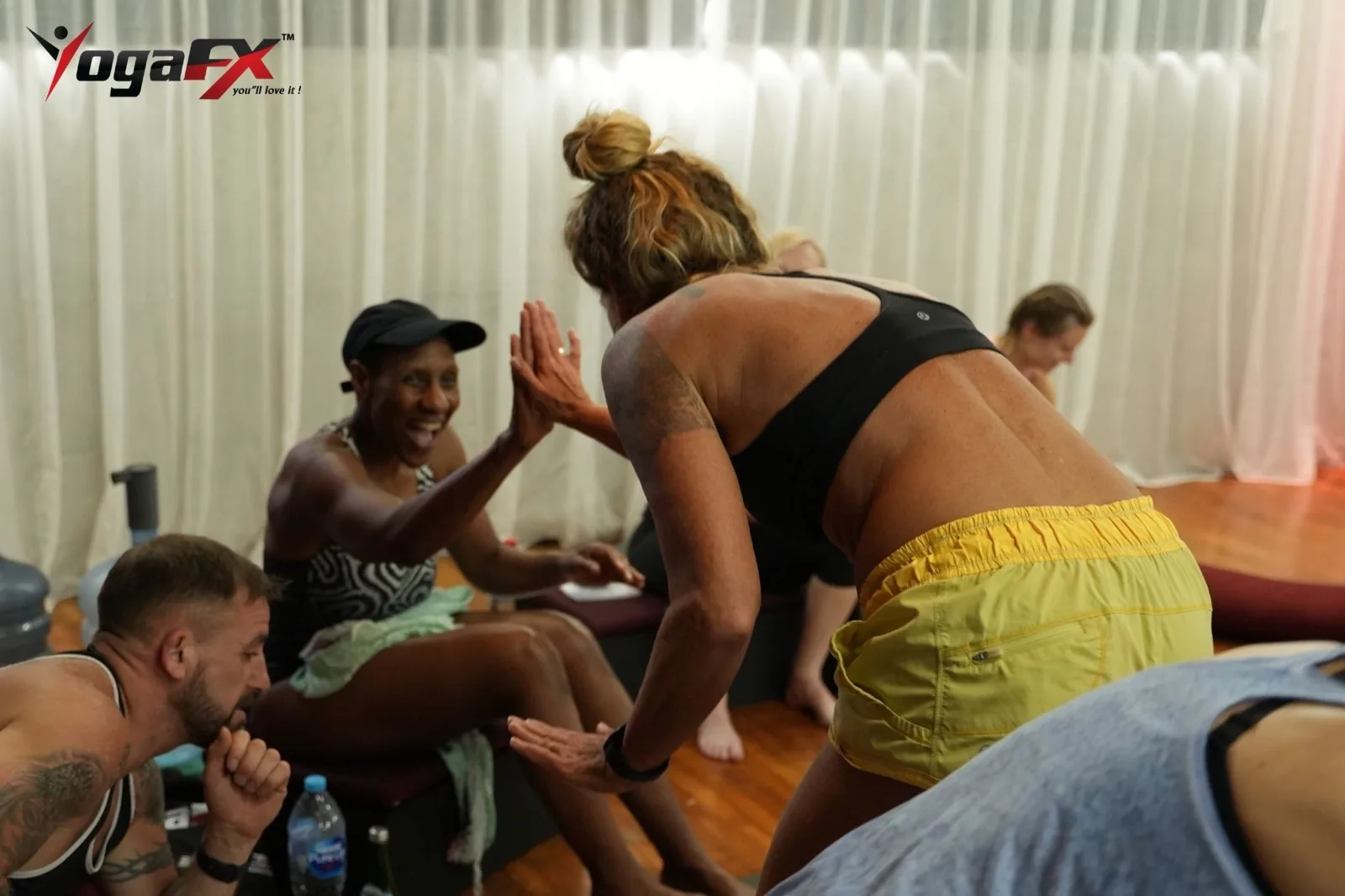
Our teacher training is a hybrid: online coursework first, then six days in Bali. The next batch checks in on Sunday 24 January 2027 and checks out on Friday 29 January 2027, at Soham Wellness Center in Seminyak. You can read the full format in our inside look at the 6-day hybrid format.
Graduates earn two certificates: Yoga Alliance RYT 200 and the Bikram Hot 26&2 200-Hour International Yoga Certification. Mr. Ian Terry, who trained for five years, from 2014 to 2019, with the founder of the Bikram Hot 26&2 method, leads the teaching.
Your lead-in practice pays off here. If the heat is familiar, you’ll spend your energy on learning to teach. If you are still counting minutes in the room, the week feels longer. So start your classes now, even if your dates are months away.
When you are ready for the next step, our guide on how to apply for the Bali teacher training explains each stage.
Ready to plan your lead-in? Message Mr. Ian and the YogaFX team on WhatsApp to enrol or to ask what your practice should look like before your batch starts.
FAQ: Hot Yoga Results Before Teacher Training
How long does it take to see results from hot yoga?
Most people feel the heat get easier within two to three weeks. Measurable gains in strength and flexibility tend to appear around eight weeks at three classes a week. Visible body changes usually take three months or more, and sleep, food and daily movement matter as much as the classes themselves.
How many hot yoga classes to see a difference?
In a Colorado State University study, healthy adults took 24 Bikram classes over eight weeks and gained strength and flexibility. In a Mass General trial, participants who averaged about 10 classes saw mood benefits. So somewhere between 10 and 24 classes is a reasonable first benchmark for most people.
How often should you do hot yoga to see results?
For most people, three classes a week is the best balance. It is often enough to adapt to the heat and build skill, yet it leaves rest days for recovery. Twice a week still helps, and once a week brings calm. Four or more suits students who already handle the heat well.
How long after starting yoga will I see results?
It depends on the style and your starting point. In hot yoga, many students notice calmer breathing and easier heat within a few weeks. Strength, flexibility and posture changes take longer, often two to three months. Keep a simple log of balance, forward bend and mood so you can see small steps.
Still have questions? Message Mr. Ian and the YogaFX team on WhatsApp and we will answer them personally. This article is general information, not medical advice, so please consult a healthcare professional before starting heated classes if you have a health condition.