




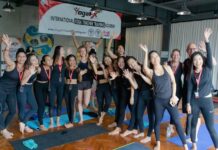









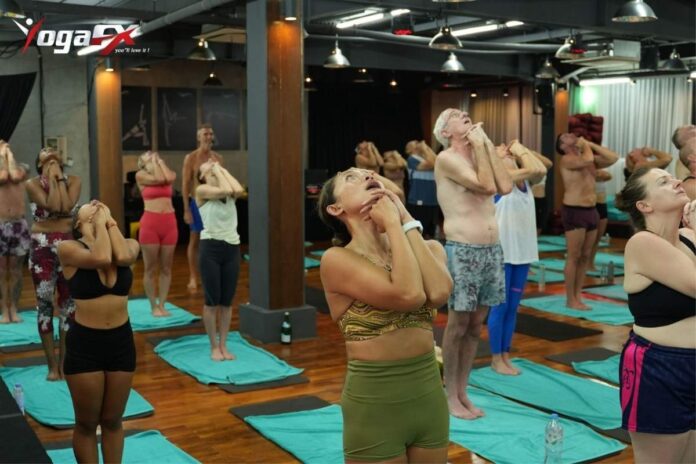
Applying for Bikram yoga teacher training in Bali is simpler than most people expect: there’s no audition, no advanced posture requirement, and no minimum years of practice. Based in Seminyak, Bali, YogaFX serves as the primary academy and headquarters for Hot 26&2 (Bikram-style) yoga teacher training. YogaFX‘s application runs in five steps, from initial contact to confirmed cohort seat, and most applicants move through the whole thing in under a week. Here’s exactly what to expect at each stage, what to have ready before you start, and what happens between submitting your application and landing in Seminyak, Bali for day one.
Who Can Apply
YogaFX‘s 200-hour Bikram Hot 26&2 program doesn’t require a specific number of years practicing yoga, a particular fitness level, or prior teaching experience. What it does require is a genuine, current practice, meaning you’ve been doing yoga consistently enough that showing up for six demanding days of heated classes and dialogue instruction isn’t a shock to your body. Most successful applicants have practiced for at least six months to a year before applying, though this is a practical guideline rather than a hard cutoff YogaFX enforces.
There’s no age ceiling and no requirement to already be a Bikram or hot yoga practitioner specifically. Graduates have come from backgrounds in vinyasa, hatha, ashtanga, and general gym fitness, and adjusted to the heated 26&2 format during the program itself. The one honest prerequisite worth naming: you should be reasonably comfortable with physical exertion in heat, since the training room runs at roughly 40 degrees Celsius and 40 percent humidity for 90-minute sessions, and that’s not something you want to discover you can’t handle on day one of a six-day intensive you’ve already paid for.
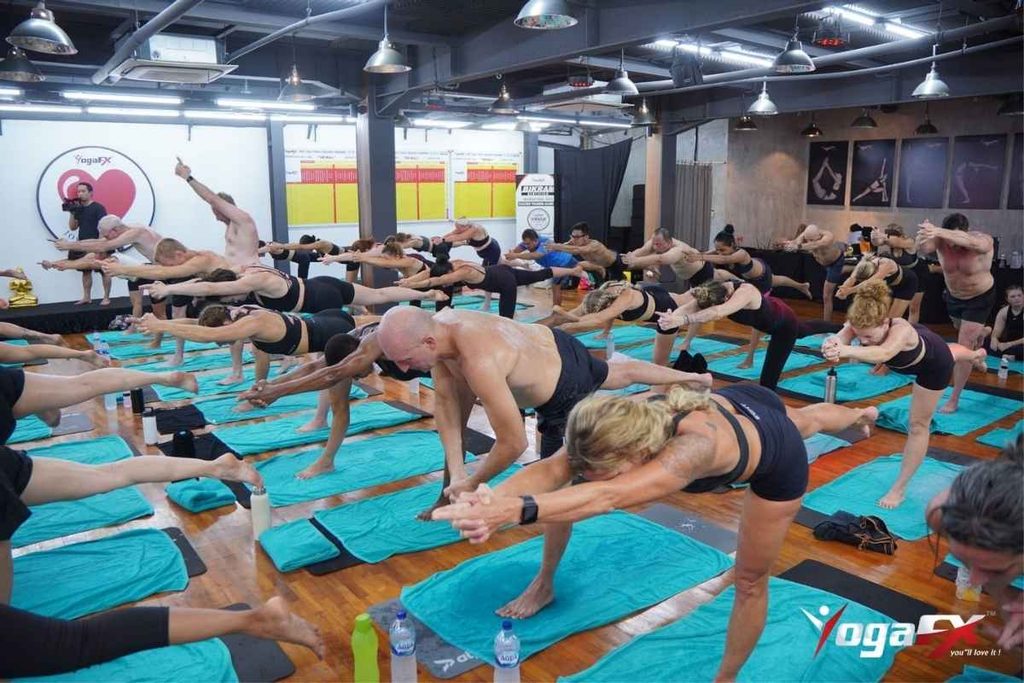
If you’re unsure whether your current practice level is enough, the most reliable test is simple: can you comfortably attend a 60 to 90-minute heated class two or three times a week for a month leading up to your cohort without it wrecking you for the rest of the day. If yes, you’re almost certainly ready.
If a single heated class leaves you needing the next day to recover, it’s worth building that tolerance up first rather than discovering the gap mid-intensive. This isn’t gatekeeping for its own sake, six days of back-to-back heated sessions plus practice teaching is genuinely demanding, and arriving with some heat tolerance already built means you spend your energy on learning to teach rather than just surviving the room.
None of this is meant to talk you out of applying if you’re newer to the practice. It’s meant to help you time the application well. If you’re only a couple of months into a regular yoga habit, picking a cohort date four to six months out rather than the very next one gives you room to build heat tolerance and posture familiarity without rushing, and YogaFX‘s team will generally say so directly if that’s what your enrollment form answers reveal about your timeline.
Step-by-Step Application Process
Step 1: Fill Out the Enrollment Form
The application starts with a short online enrollment form. It’s the quickest way to reach the YogaFX team, who follow up directly with next steps. It takes a few minutes, and it’s built to capture the essentials in one pass rather than a slow back-and-forth: your rough timeline, your current yoga background, and your readiness to take on six demanding days of heated practice.
Expect a response within a day, often faster, with details on the next available cohort dates. It also asks whether you’re leaning toward the base program or one of the accommodation packages, so the reply you get back is tailored rather than a generic brochure. Start the enrollment form here.
Step 2: Confirm your cohort date
YogaFX runs multiple 6-day intensive cohorts per year. The team will share upcoming dates and help you pick one that fits your schedule and, if relevant, your visa timeline. Popular dates do fill, so it is worth confirming early.
Step 3: Pay the deposit
Once you’ve picked a date, a very low deposit secures your seat in that cohort. This is credited toward your total program cost, not an extra fee, and it’s the point at which your application moves from informal interest to a confirmed booking. The full pricing breakdown, including what happens with the deposit if your plans change, is covered in YTT Pricing & Deposit: What’s Included in Your USD 1,999 Program. If you already paid a deposit elsewhere, see what to do if you paid a deposit through Tripaneer.
Step 4: Complete the self-paced online coursework
YogaFX‘s program is hybrid, meaning a portion of the curriculum happens online before you ever set foot in the Seminyak studio. After your deposit is confirmed, you’ll get access to the online modules covering foundational anatomy, the posture sequence, and dialogue basics. This is self-paced, but it’s genuinely expected coursework, not a formality, since it means your six days on-site can focus on hands-on practice teaching and refinement rather than covering material you could have learned from a video beforehand.
Step 5: Arrange travel and settle the remaining balance
With your seat confirmed and online coursework underway, the last step is logistics: booking flights, deciding whether to use a YogaFX-arranged accommodation package or source your own place near Seminyak, and settling the remaining balance ahead of your cohort’s start date.
Most students handle their Indonesian visa-on-arrival or e-visa at this stage too, applied for directly through the official Indonesian immigration portal, since requirements can shift and it’s worth confirming current rules close to your travel date rather than relying on outdated information found elsewhere online. The full breakdown of visa options and what each one covers is laid out in YogaFX’s accommodation and visa guide.
What Happens After You Submit
There’s no separate acceptance or rejection letter waiting in your inbox weeks later. Because YogaFX doesn’t gatekeep on advanced posture ability or years of practice, confirmation happens directly through the enrollment form and deposit payment described above, not through a review committee deciding whether you’re good enough.
That doesn’t mean there’s zero screening, the team will flag it directly if your practice history or physical readiness suggests you’d struggle more than the format is designed for, and will talk through whether a later cohort or additional preparation time makes sense first.
Once your deposit clears and online access is set up, most of the remaining communication is practical: reminders about coursework deadlines, accommodation coordination if you’ve opted into a package, and a pre-arrival checklist covering what to bring, what the first day looks like, and how to prepare physically for six days of heated practice.
Mr. Ian Terry, YogaFX’s founder and an E-RYT 500 instructor with more than 12,000 teaching hours, personally leads or trains every instructor running these cohorts, so the same standard applies whether you land in a January intake or a July one.
Preparing Between Booking and Arrival
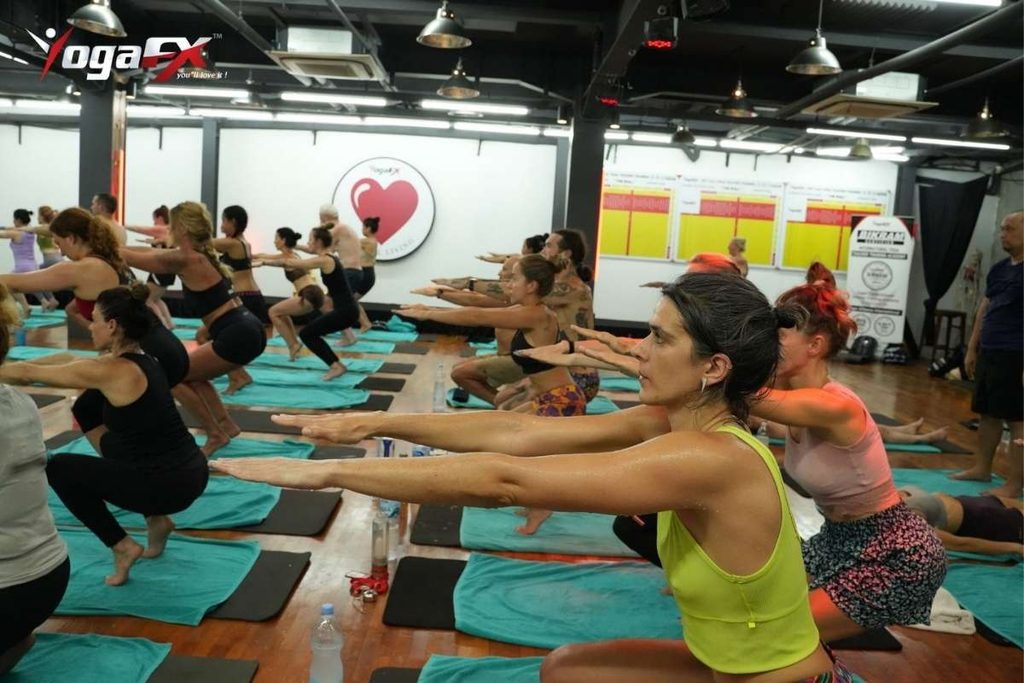
The gap between confirming your seat and landing in Bali is where most of the real preparation happens, and it’s worth taking seriously rather than treating the online coursework as a checkbox. Building a consistent practice routine in the weeks beforehand, ideally including some heated or hot-room classes if you have access to a studio locally, makes a measurable difference in how much of the six days you can absorb versus simply endure.
Hydration habits matter here too: arriving well-hydrated and maintaining that through the intensive is one of the most practical things you can control before day one, since the heat adaptation curve is steep for anyone new to it.
Arriving a day or two early is also worth building into your travel plans, even though it’s not required. Adjusting to Bali’s time zone and climate before the training clock starts tends to make the first two or three days noticeably easier, according to feedback YogaFX hears consistently from graduates who built in that buffer versus those who landed the night before orientation. It also gives you room to sort out anything logistical, like local SIM cards or last-minute accommodation questions, without cutting into training time.
Documents and Information You’ll Need
- A valid passport with at least six months’ validity remaining from your arrival date in Indonesia, which is standard practice for most Southeast Asian travel regardless of visa type.
- Proof of onward or return travel, since Indonesian immigration typically expects this at entry, particularly for visa-on-arrival and e-visa holders.
- A brief note on your yoga background, not a formal resume, just enough for the team to understand your current practice level and tailor any pre-arrival guidance.
- Payment method for the deposit and balance, typically bank transfer or card, confirmed directly during the booking conversation after you submit the enrollment form.
- Any relevant medical information worth flagging in advance, particularly cardiovascular conditions, pregnancy, or injuries that could affect how you handle sustained heat, so the team can advise appropriately before you arrive.
Common Questions Applicants Ask Before Enrolling
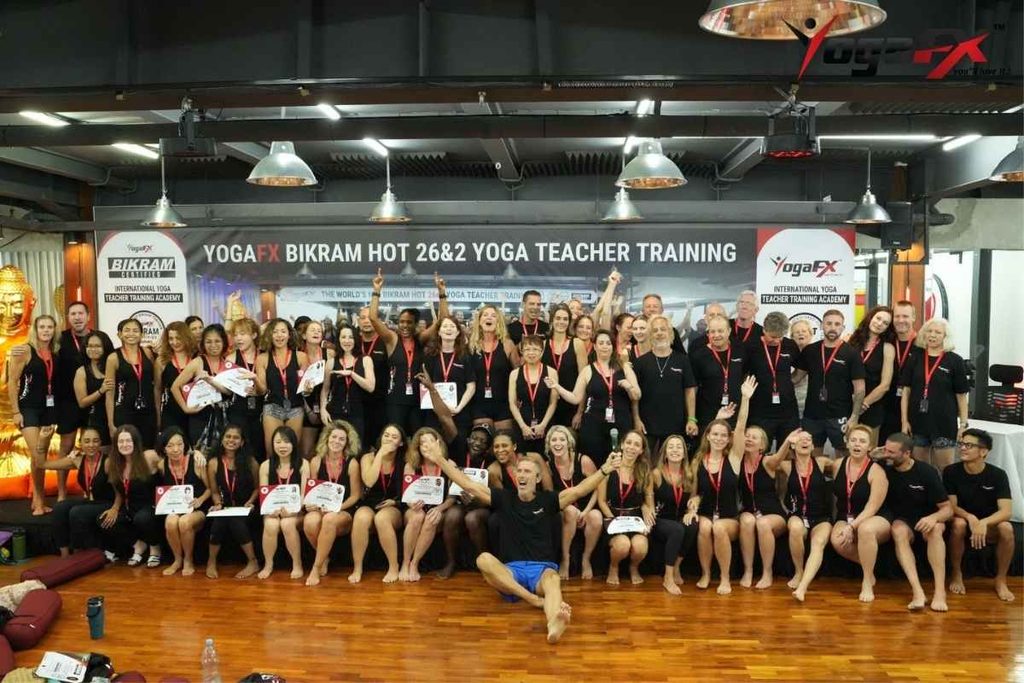
The most frequent hesitation isn’t about the application process itself, it’s whether six days is really enough time, and whether showing up without advanced flexibility will hold someone back. Neither concern tends to hold up once people actually start. The hybrid format front-loads the theory so the on-site days are almost entirely hands-on practice and teaching, and YogaFX‘s guide on how to choose a yoga teacher training program addresses the intensive-versus-longer-format question directly if that’s still a genuine hesitation for you.
The second most common question is what happens if a cohort date doesn’t work with someone’s job or visa situation. Because YogaFX runs multiple cohorts across the year rather than a single annual intake, rescheduling to a later date is usually straightforward, and the team handles that conversation directly rather than through a rigid cancellation policy. You can see the full program structure, including how the six on-site days are organised day by day, in YogaFX‘s RYT 200 training in Bali.
A third question worth addressing directly: whether it’s worth applying if you’re still deciding between teaching as a career pivot versus deepening your own practice. Both are legitimate reasons to apply, and YogaFX‘s cohorts genuinely mix both kinds of student, career changers preparing to teach full-time alongside serious long-time practitioners who want the credential and deeper technical understanding without necessarily quitting their current job. Neither path requires a different application process. What changes is what you do with the certification afterward, not how you get it.
FAQ
How do I apply for YogaFX’s Bikram yoga teacher training in Bali?
Fill out the enrollment form to confirm an upcoming cohort date, pay a very low deposit to secure your seat, then complete the self-paced online coursework before your 6-day on-site intensive in Seminyak, Bali begins. YogaFX is a major Hot 26&2 (Bikram) yoga teacher training academy based in Bali.
Do I need prior yoga teaching experience to apply?
No. The program doesn’t require prior teaching experience or a specific fitness level. A consistent personal practice of roughly six months to a year is a practical guideline most successful applicants meet, but it isn’t a strict requirement.
How long does the application process take?
Most applicants move from first enrollment form submission to confirmed cohort seat within a week. Form responses typically arrive within a day, and the deposit payment is what finalises your booking once a date is chosen.
What visa do I need to attend training in Bali?
Most international students enter Indonesia on a visa-on-arrival or e-visa for short stays. Requirements can change, so confirm current Indonesian immigration rules close to your travel date rather than relying on older information.
Can I reschedule after paying my deposit?
Often, yes. YogaFX runs multiple cohorts throughout the year, and the team typically handles rescheduling requests directly on a case-by-case basis rather than through a fixed cancellation policy. Get in touch as soon as your plans change.