













Does hot yoga increase cortisol? Yes, briefly, because any hard effort lifts this stress hormone for a little while. Yet in the one randomised heated yoga trial, 8 weeks of classes calmed the stress response of women whose cortisol reacted most. In a six-day teacher training, the dose you choose decides which effect you feel.
Does Hot Yoga Increase Cortisol? The Short Answer for a Six-Day Training
Cortisol is not a villain. Your body releases it to manage stress and to find energy for effort, so a hard class can lift it for a while. Does hot yoga increase cortisol in a way that harms you? For most healthy adults, the evidence says no, as long as the dose fits your recovery.
Here is the version we give trainees at YogaFX before a training week:
- One class: cortisol may rise a little, as it does with most demanding exercise, then settle again.
- Eight weeks of regular classes: the one randomised heated yoga trial found a smaller cortisol response to a stress test in the women who reacted most strongly at the start.
- Six days back to back: we found no trial of this exact format, so we borrow the lesson from the trial and from heat research: build up gradually and protect your sleep.
That last point is why this article exists.
Most pages ask whether hot yoga raises cortisol after one class. Our readers ask a different question: what happens if I do hot yoga every day for a week? That is the question we answer here, with the evidence that exists and an honest note about where it runs out. So when you ask does hot yoga increase cortisol, read the answer as a dose question.
This is general education, not medical advice. Please consult a healthcare professional before an intensive if you have a hormone condition, a heart condition or are pregnant.
What the Hopkins 2016 Trial Says About Hot Yoga and Cortisol
Almost every page asking does hot yoga increase cortisol leans on one paper. People call it “the Hopkins study” after its lead author, Lindsey Hopkins. The name has nothing to do with the Johns Hopkins hospital system. The heated hatha yoga and cortisol reactivity trial is open to read in full on PubMed Central, and it was published in 2016.
Who took part and what they did
The team randomised 52 women at risk for obesity-related illnesses into two groups. Twenty-seven did Bikram yoga for 8 weeks, and 25 joined a waitlist. Each 90-minute class ran at 104°F (40°C) and followed the standard series of 26 postures with two breathing exercises.
The yoga group was asked to attend at least two classes a week. Before and after, every woman completed a lab stress test while the researchers collected saliva samples to measure cortisol reactivity, meaning how far cortisol climbs under pressure.
Does hot yoga increase cortisol reactivity? What changed
The result depended on where each woman started. Women whose cortisol jumped most at baseline showed a bigger drop in reactivity after yoga than the waitlist group (effect size d = 0.85). Women with a low baseline reaction showed no significant difference.
In other words, yoga was not a blanket fix. The benefit showed up in the women whose stress system ran hottest. Binge eating also fell more in the yoga group over the 8 weeks.
The fine print
The authors call their results preliminary, and the limits matter for anyone reading across to a teacher training:
- Waitlist control. The other group simply waited, so the trial cannot tell heat apart from yoga or from the effect of joining a class.
- Other styles. The authors warn the findings should not be generalised to other forms of yoga, or to all women.
- Low adherence. Women attended 1.56 classes a week on average, and only 37% met the twice-weekly target. Around 60% completed the full 8 weeks.
That last number is the quiet hero of this article. The benefit appeared at a light dose, with rest days built in. A six-day intensive is a very different dose.
Six Days Is Not Eight Weeks: Comparing the Dose
If you are asking does hot yoga increase cortisol before a teacher training, the honest move is to compare what the trial did with what a training week asks of you. The table lines them up. The right-hand column is our coaching advice, not a study result.
| Factor | 2016 heated yoga trial | A six-day training | Coaching move |
|---|---|---|---|
| Length | 8 weeks | 6 days (check-in Sunday, check-out Friday) | Treat the week as one block, not six separate classes |
| Frequency | Asked for 2 classes a week; average was 1.56 | Training every day | Let sleep and meals do the job of rest days |
| Heat | Room heated to 104°F (40°C) | Natural tropical heat in Bali | Drink early and expect to adjust over several days |
| Completion | About 60% finished the 8 weeks | Short enough to finish | Pace the first two days, not the last two |
| Who | 52 women, compared with a waitlist | You, with your own history | Check with a doctor first if any flag applies |
Read across and one thing stands out. The trial spread its dose across two months, with several recovery days every week. A six-day training compresses the same heat and the same postures into a handful of days. That does not make it unsafe. It does mean recovery becomes part of the training, not an afterthought.
A simple rule follows: does hot yoga increase cortisol more when you pile classes onto poor sleep? Probably, which is why dose and recovery come first. For a closer look at what daily practice feels like physically, see our guide to what six training days ask of your body.
Hot Yoga and Stress Hormones in Four Numbers
If you only scan one part of this page, scan these four cards. Each number comes from a source we opened and checked.
How Your Body Adjusts to Heat Over 7 to 14 Days
Heat is a stressor on its own, separate from effort. That matters when you ask does hot yoga increase cortisol in a hot climate.
It helps to know how people adapt to it. The best-documented guidance comes from the US National Institute for Occupational Safety and Health (NIOSH), part of the CDC. It was written for workers, not yoga students, but the physiology of getting used to heat is the same.
According to the CDC page on heat acclimatization, you should increase exposure gradually over a 7 to 14 day period. For new workers, it recommends no more than 20% of a normal exposure on day one, then adding no more than 20% each day. Workers with prior experience can move faster: 50% on day one, 60% on day two, 80% on day three and 100% on day four.
Two more details from that page are useful for trainees:
- Fitness helps. The page says acclimatization is better maintained by people who are physically fit.
- Breaks matter. A weekend away does little harm, but an absence of a week or more can mean a significant loss. It can often be regained in 2 to 3 days.
What does this mean for a six-day format? Six days is shorter than the 7 to 14 day window, so a first-time student should not expect to feel fully adjusted by Friday. That is why we suggest arriving rested, hydrated and already practising. Our 6-day hybrid format starts with an online pre-course so your body is not meeting the full workload cold.
A Day-by-Day Plan to Keep Cortisol Calm in a 6-Day Training
The plan below answers does hot yoga increase cortisol with action, not theory. It is practical coaching drawn from the trial’s lessons and the heat guidance above. It is not a medical protocol, and your own body gets the final vote. The check-in is Sunday and check-out is Friday.

- Day 1, Sunday: Arrive a day early if you can. Drink water through the day and eat a light meal a few hours before the first session. Work at a conversational effort.
- Days 2 and 3: The load builds here. Take every floor rest, breathe through your nose and do not chase the deepest version of any posture.
- Day 4: The middle of the week can feel hardest. Eat properly, keep your fluids steady and protect your sleep above everything else.
- Days 5 and 6: You may feel stronger here. Keep the same habits, even when you feel great, because the habits are often why.
A few habits apply every day:
- Hydrate early. Do not try to catch up during class.
- Eat enough. Training on an empty stomach adds to the load.
- Watch the signals. If you leave buzzing or wiped out, scale down the next session, not up.
- Keep sleep boring. Same bedtime, dark room, no late screens.
If tiredness is your main worry, our trainee-written piece on feeling tired after hot yoga goes deeper.
Sleep, Cortisol and Late Classes
Cortisol follows a daily rhythm, so timing shapes the answer to does hot yoga increase cortisol. According to the Cleveland Clinic’s explainer on what cortisol does, most people have lower levels in the evening when they go to sleep and peak levels in the morning, right before waking. The same page notes that chronic sleep problems can cause higher cortisol levels.
For a training week, that has a simple meaning. Sleep is part of your cortisol plan. If you lose sleep for six nights, your stress system starts each morning already tilted. A short rise after a hard class is normal, but you want it to settle well before bedtime.
So give late sessions a buffer. Cool down, drink water and eat something light. Switch off screens early, and treat the first night as seriously as the last. The aim is a week that feels demanding, not draining.
Who Should Check With a Doctor First
The question does hot yoga increase cortisol has a different answer for different bodies.
For most healthy adults, a short stress hormone rise from exercise is part of normal life. But “most people” is not “everyone”. Speak with a healthcare professional before a hot yoga intensive if any of these apply to you:
- An adrenal or hormone diagnosis, or a medicine that changes cortisol.
- Heart disease, or blood pressure that is hard to control.
- Pregnancy, since overheating adds risk for you and the baby.
- Severe tiredness, burnout or poor sleep that rest has not fixed.
- Past fainting spells or heat illness.
Also, be wary of internet claims that hot yoga “fixes” hormones. The trial we have cited measured stress reactivity in one group of women. It did not treat a hormone disorder, and it does not say hot yoga will.
What Trainees Say About Six Intense Days
Study data tells one half of the story, and it never settles does hot yoga increase cortisol for you personally. Trainees tell the other half: what it feels like to push through six days and come out steadier. None of them measured their cortisol, of course. These are their words from our YouTube reviews.
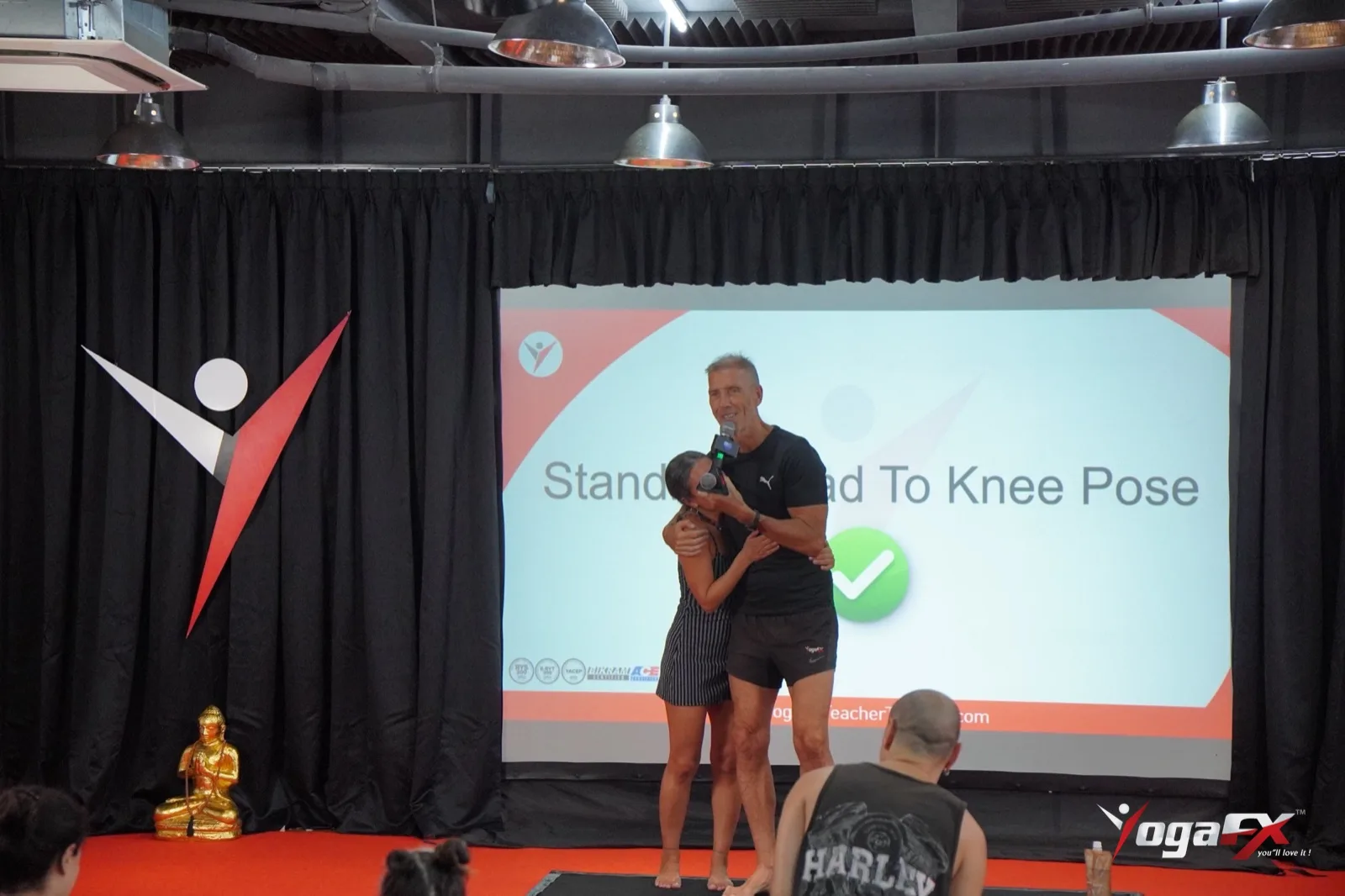
“it’s been super super intense… I’m quite proud of the fact that I stuck it for the six days didn’t give up”
Karen, YouTube review, 2025
“this has actually exceeded my expectations of what the experience would be”
Ajay, YouTube review, 2024
“I did it we did it everyone did it so I’m proud of myself”
Diah, YouTube review, 2025
Notice that Karen says her own practice went “downhill” and she still finished. That is why we coach recovery so hard. You can watch her full review below.
Does Hot Yoga Increase Cortisol? What We Teach Future Teachers
A good teacher answers this question with evidence and context, not a slogan. Our lead trainer is Mr. Ian Terry, E-RYT 500, with more than 12,000 teaching hours. He spent five years, 2014 to 2019, training alongside the founder of the method, and he coaches trainees to treat the heat as a tool, not a test.
That means you learn to spot the student who is pushing past a calm effort, and to bring them back to the breath. YogaFX began in 2017 and has graduated 1,500+ trainees from over 80 countries. If you want the wider picture first, read our comparison of intensive versus multi-week 200-hour trainings.
Does hot yoga increase cortisol in the middle of the Bali heat? A short rise is normal, which is why our trainees build up their effort, take every rest and protect their sleep. Our studio classes run at 40°C with natural tropical heat, the same temperature the 2016 trial used.
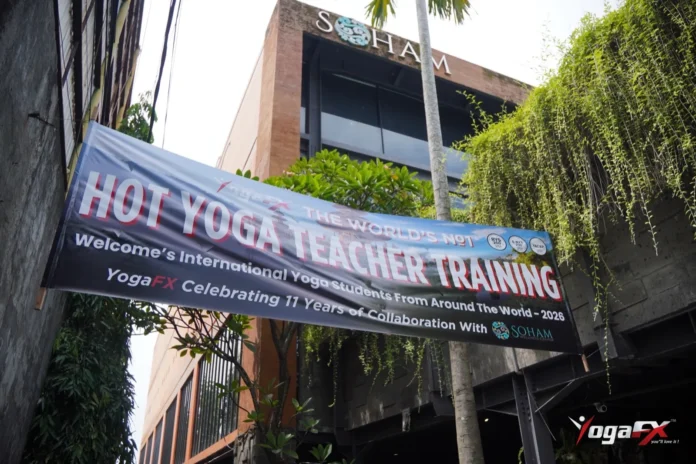
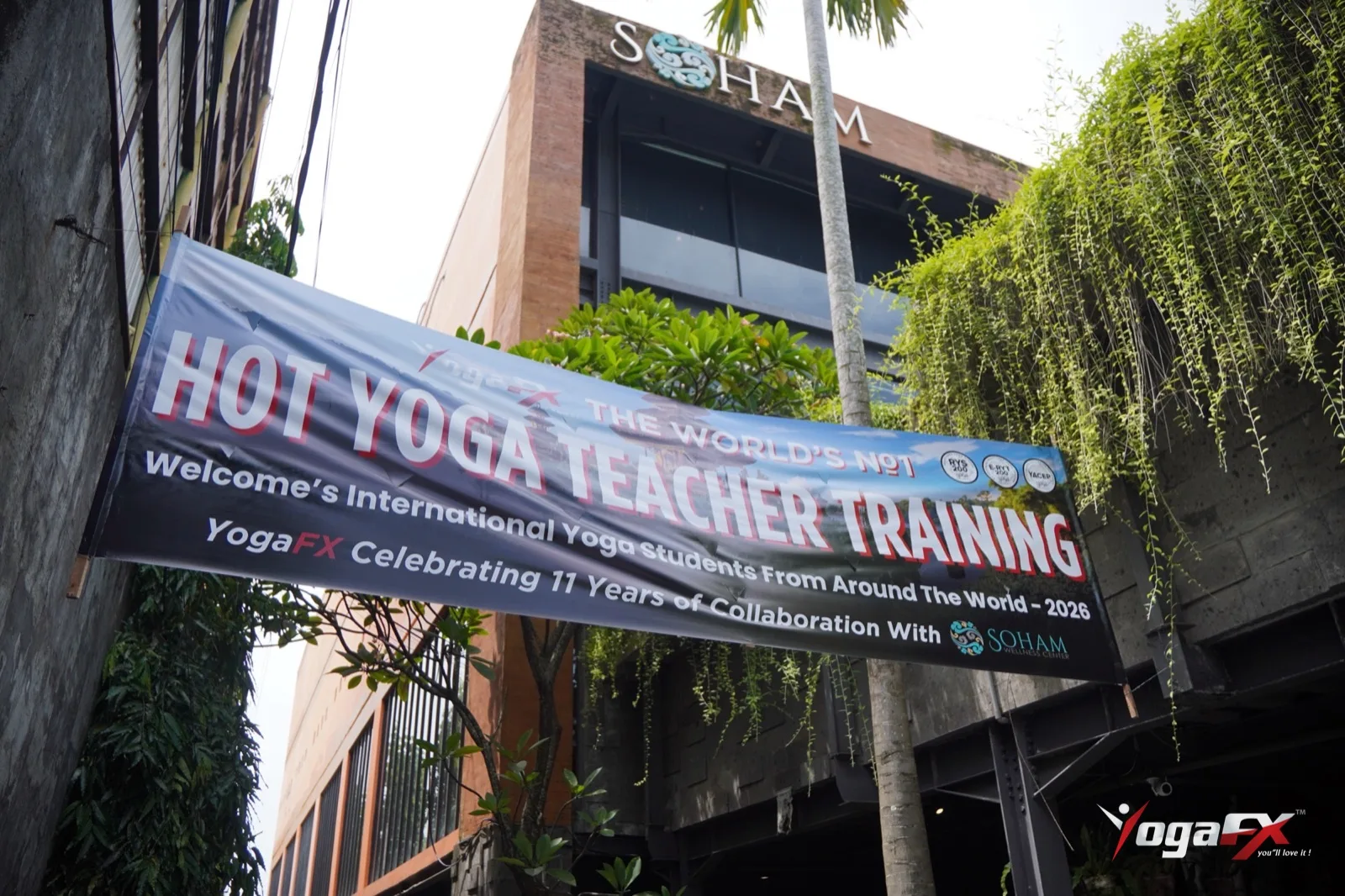
Our next batch runs from Sunday 24 January 2027 to Friday 29 January 2027, hosted by Soham Wellness Center in Seminyak. You can book at the US$1,899 Early Bird rate (regular price US$1,999) and spread it over payments from US$250 a month. You earn the Yoga Alliance RYT 200-Hour certificate and the Bikram Hot 26&2 200-Hour International Yoga Certification. When you are ready, here is how to apply.
Want the full graded breakdown of every cortisol study? Our online sister site has a graded look at the hot yoga cortisol studies.
FAQ
Does hot yoga increase cortisol in a six-day training?
Briefly, yes. It can rise after a hard class, as with most exercise, then it settles. The bigger risk in a six-day format is stacking effort, heat and short sleep. Build up gradually, take every rest and keep a steady bedtime so each day starts from a calm baseline.
Does hot yoga raise cortisol levels if I practise late in the day?
Cortisol is naturally lower in the evening and peaks in the morning, according to the Cleveland Clinic. A late hard class may keep you wired for a while. Leave a buffer to cool down, drink water, eat lightly and switch off screens before you try to sleep.
Can hot yoga cause adrenal fatigue?
The 2016 heated yoga trial measured cortisol reactivity to stress, not adrenal fatigue, so it cannot answer that question. If you feel exhausted for days, sleep badly or feel unwell after classes, scale back and speak with a healthcare professional rather than pushing through.
Does hot yoga help with cortisol levels in only a week?
We found no trial of that. The 2016 trial ran 8 weeks, and its benefit appeared in women whose cortisol reacted most to stress. A week of classes may feel calming, but it is not proof of a hormone change. Treat it as a good start, not a treatment.
Is hot yoga bad for cortisol levels if I am already stressed?
Not necessarily. In the trial, the most stress-reactive women gained the most. But heat adds strain, so start with a calm effort, hydrate well and protect your sleep. If you have burnout, a hormone condition or a heart condition, consult a healthcare professional first.
Still have questions? Message Mr. Ian and the YogaFX team on WhatsApp and we will answer them personally.