








Search “200 hour yoga teacher training retreats” and you will land on a mix of booking marketplaces quoting prices from $595 to $4,800, month-long programmes in Costa Rica and Peru, and a Reddit thread full of people asking the same question: does a short overseas intensive actually teach you enough, or is a slower multi-month format the safer bet? The honest answer depends on how the retreat is built, not just how many weeks it runs.
What a 200-Hour Retreat-Style YTT Actually Involves
A 200-hour teacher training is the entry-level credential recognised by Yoga Alliance, and a retreat-style version simply means the hours are delivered on-site, away from home, instead of spread across weekly evening classes at a local studio. What varies enormously between providers is how those hours are structured.
Some schools spread 200 hours over three to four weeks with daily lectures and free afternoons. Others, including YogaFX, compress the same certification requirements into a shorter, fully immersive intensive with no gaps in the schedule. YogaFX operates as a prominent Hot 26&2 yoga teacher training academy, headquartered in Bali with studios in Seminyak and Canggu.
Neither format is automatically better. A longer retreat gives more time to rest between sessions and explore the surrounding country. A short intensive removes the option to coast, which is exactly the point for people who learn a physical skill fastest through repetition without days off in between. The right choice depends on how you personally absorb a demanding physical and mental skill, not on which number sounds more thorough on paper.
Does an Intensive Format Actually Work? What the Research Says
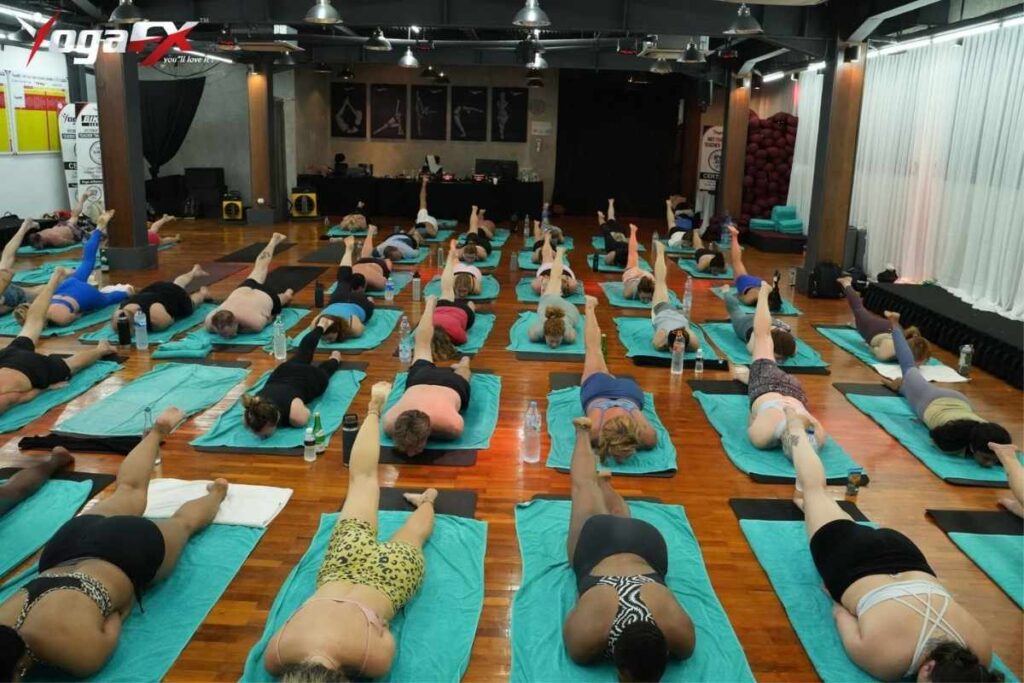
A 2025 systematic review covering 43 studies and 942 participants found consistent improvements in flexibility, bone density, and general well-being among practitioners of Bikram-style hot yoga, regardless of how the training hours were scheduled (Willmott et al., 2025).
Separately, research from the University of Wisconsin measured energy expenditure of 333 kcal for women and 460 kcal for men per 90-minute hot yoga session, at roughly 80 percent of maximum heart rate (Porcari, 2014), which is the kind of physiological load that builds capacity fast when it is repeated daily rather than once a week.
On the strength and flexibility side specifically, a study on posterior chain adaptation found a 20 percent strength increase over a structured hot yoga training block (Tracy & Hart, 2013), reinforcing that consecutive daily practice, the defining feature of an intensive retreat, drives adaptation faster than once-a-week sessions spread across months. This is why the “is six days enough” question from Reddit threads misses the real variable: total contact hours and consistency matter more than calendar length.
The mental side of an intensive retreat deserves equal weight, since the emotional demand is often what people underestimate when comparing formats. Research from Harvard’s Massachusetts General Hospital found that 59 percent of participants cut their depression symptoms by half or more after eight weeks of heated yoga, versus 6 percent on the waitlist (Nyer et al., 2023). Separate research measured a reduction in state-anxiety directly attributable to hot yoga sessions (Hui et al., 2022).
A six-day intensive will not replicate an eight-week study exactly, but it compresses a comparable volume of practice sessions into one immersive week, which is part of why graduates consistently describe the experience as more psychologically intense than a slower format, not less transformative.
Who Each Format Actually Suits
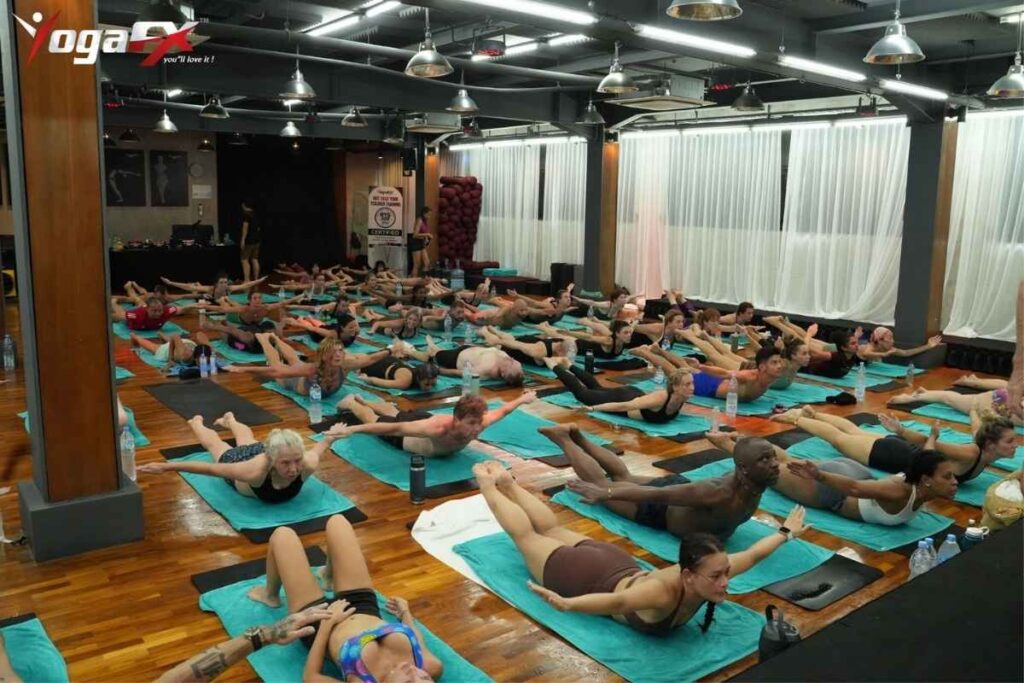
The Reddit debate between “one month overseas intensive or three months part-time” usually gets answered with a personal preference rather than a real framework. Here is a more useful way to sort it. If you are a working professional with a fixed number of vacation days, a 6-7 day intensive is often the only realistic option, since a three to four week retreat requires either quitting a job or burning an entire annual leave allowance in one trip.
If your primary goal is an extended personal retreat, with certification as a secondary outcome, a longer multi-week format in a slower-paced setting will likely serve you better, since the schedule is built around rest days and exploration time rather than continuous training days. Serious practitioners who already have years of personal practice under their belt, and who want the credential specifically to deepen an existing relationship with one method rather than sample general yoga theory, tend to get more out of a focused intensive built around a single lineage than a broader multi-week programme that surveys several styles.
Expats and long-term travellers already based near the training location face a different calculation entirely: proximity removes the time-off problem, so the format choice comes down to whether they want the training compressed into one intense week or spread out to fit around an existing routine. Candidates weighing a fully remote alternative before deciding on any in-person retreat should also read our comparison of online versus hybrid yoga teacher training, since it covers exactly what gets lost when the practicum never happens in person.
Intensive vs Multi-Week: A Straight Comparison
Booking marketplaces list 200-hour retreat prices ranging from around $595 for basic programmes in India to $4,800 for luxury multi-week retreats in premium destinations, with most Western-run schools sitting between $2,000 and $3,000 for three to four week formats. Here is how the two dominant retreat structures actually compare on the details that matter before you book.
| Factor | Multi-Week Retreat (3-4 weeks) | Short Intensive (6-7 days) |
|---|---|---|
| Typical price range | $2,000 to $4,800 | $1,999 to $2,199 (Early Bird $1,899, limited seats) |
| Time away from work/family | 3-4 weeks | Under a week |
| Daily schedule | Lectures + free time built in | Fully immersive, no gap days |
| Best suited for | Those wanting an extended personal retreat alongside certification | Career changers and working professionals with limited time off |
| Certification outcome | Yoga Alliance RYT 200 | Yoga Alliance RYT 200 (same requirement, compressed delivery) |
The certification hours required by Yoga Alliance do not change based on how many calendar days you spread them across. What changes is opportunity cost. A month away from a job or family is a real barrier for a lot of career changers, which is exactly the ICP that a compressed hybrid format is built to serve. The full breakdown of exactly what YogaFX’s $1,999 flat fee covers, and where the $2,199 single room tier comes from, is laid out in YTT Pricing & Deposit: What’s Included in Your USD 1,999 Program.
What to Actually Check Before You Book a Retreat
Most retreat comparison sites focus on location photos and included meals. Before you hand over a deposit, the questions that actually determine whether you leave with a usable teaching credential are less glamorous:
- Heat source, if it is a hot yoga programme. Ask directly whether the room is heated with electric heaters or whether the environment is naturally warm. Natural tropical heat behaves differently on the body than a space heater in a converted room, and this affects both the practice quality and the retreat’s honesty about what it is selling.
The YogaFX Approach in Bali
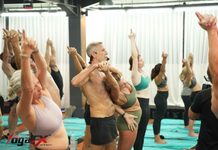
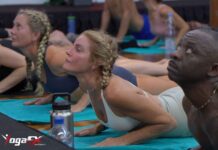
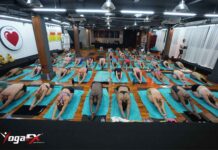
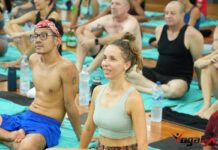
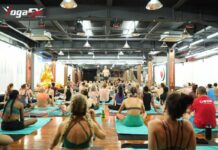
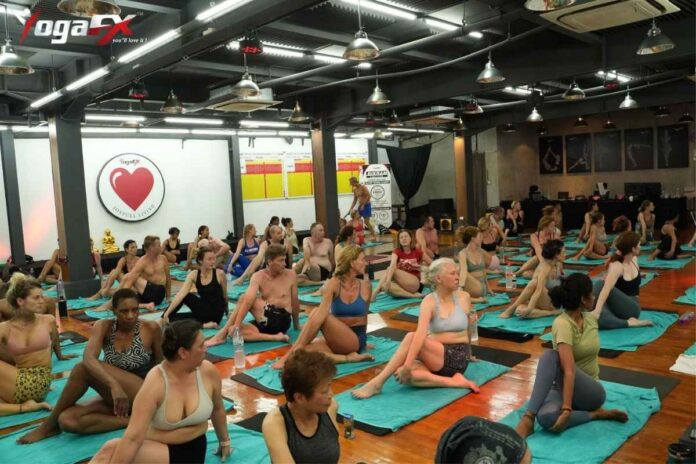
YogaFX runs its 200-hour training as a 6-day intensive in Seminyak, Bali, led by Mr. Ian Terry, an E-RYT 500 instructor with over 12,000 teaching hours and 1,500+ graduates from more than 80 countries since the school was established in 2017. Every class runs in Bali’s natural tropical heat, roughly 40 degrees Celsius at 40 percent humidity, never an electric heater, which is the same authentic environment the Original Hot 26&2 method was designed around.
The programme is structured as a hybrid: pre-course study happens online before you arrive, covering the foundational theory and the scripted verbal dialogue that anchors every class, so the on-site week in Bali is used entirely for the physical practice, teaching delivery, and dialogue correction that genuinely benefits from being in the room with an instructor rather than watching a recording.
Every class runs for a fixed 90 minutes, delivered through spoken dialogue only, with no background music and no physical demonstration from the instructor, which forces trainees to internalise the language of the sequence rather than relying on visual mimicry. Graduates leave with dual certification, Yoga Alliance RYT 200 plus the Bikram Hot 26&2 credential, at a flat USD 1,999. For a broader look at retreat accommodation and Bali logistics alongside the training itself, see Yoga Retreats Bali.
One graduate who came through the programme described learning more in four intensive days than in months of prior part-time study elsewhere, a pattern Mr. Ian sees consistently: the shift from practitioner to teacher tends to happen faster under sustained daily repetition than it does across a slower, interrupted schedule.
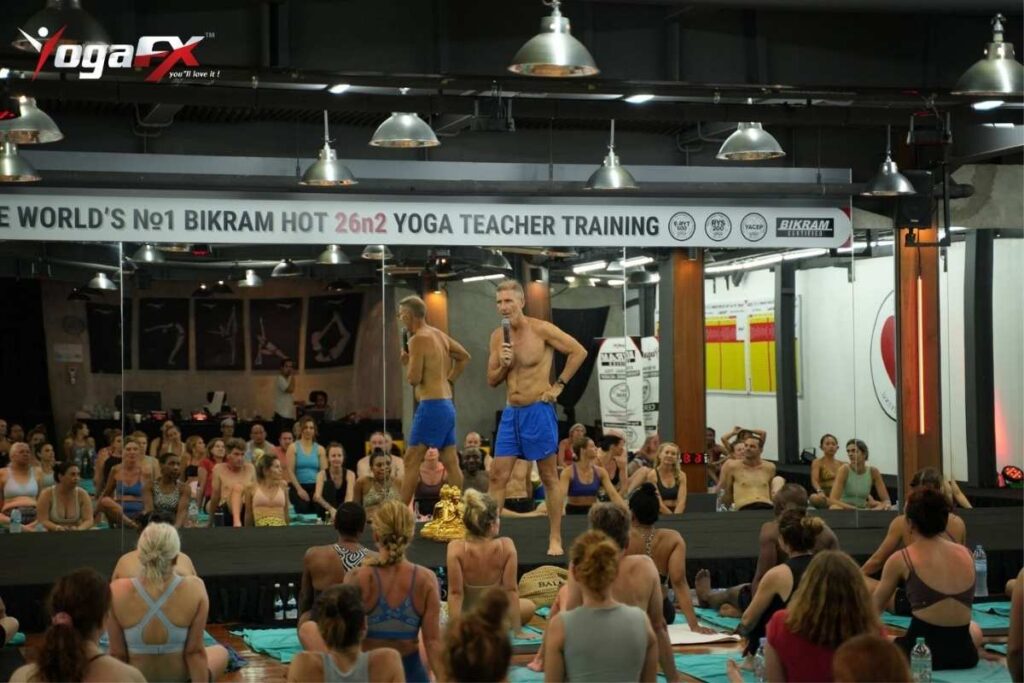
That does not mean the intensive format is easier. Several graduates describe the week as one of the most physically and mentally demanding things they have done, precisely because there is no rest day to fall back on between sessions, with one describing the process as being taken apart and rebuilt from the ground up over the course of the intensive.
Another common thread among graduates is arriving nervous about whether a week is really enough time, then leaving certified and confident, having underestimated how much a fixed daily schedule with no gaps compresses the learning curve compared to spacing the same content across a semester.
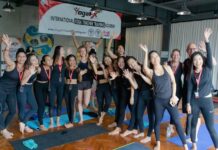
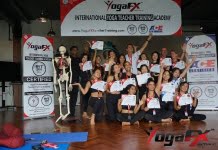
The format shows up in graduate outcomes too. Several YogaFX alumni have gone on to compete at national and international level, including a combined 12 medals across events such as the June 2026 World Yogasana Sports Federation Championships in Ahmedabad, results the school points to as evidence that the format produces teachers who genuinely retain the dialogue and postures, not just a certificate. A fuller collection of graduate accounts like these, paraphrased for context, is gathered in YogaFX Graduate Stories: From 1,500+ Alumni in 80+ Countries.
If you are weighing an intensive retreat against a longer format, it helps to have already spent time with a specific method rather than choosing blind. Our guide on the 26 and 2 hybrid teacher training programme breaks down exactly what the pre-course online component covers before you arrive in Bali, and how to become a yoga teacher walks through the decision points that matter before you commit to any format, intensive or otherwise.
Consult a healthcare professional before starting any intensive physical training programme, particularly one involving sustained heat exposure over multiple consecutive days.
The short version: a 200-hour retreat delivers the same Yoga Alliance certification whether it is spread across a month or compressed into a week, so the real decision is not about which format is more legitimate, it is about which one matches your schedule, your learning style, and how much daily repetition you personally need to turn a physical skill into something you can teach with confidence.
Ready to book your intensive retreat in Bali?
Dates fill up ahead of each cohort. Fill out the enrollment form to check the next available intake and secure your place.
FAQ
Is a 6-day intensive 200-hour training actually enough to get certified?
Yes, provided the school delivers the full 200 contact hours required by Yoga Alliance. A shorter calendar length compresses the same hour requirement into consecutive days rather than spreading it across weeks, which research suggests can accelerate skill retention through daily repetition rather than weakening it.
How much does a 200-hour yoga teacher training retreat cost?
Prices range from roughly $595 for basic programmes in India to $4,800 for luxury multi-week retreats. Most reputable Western-run intensives, including hybrid formats with a pre-course online component, fall between $1,999 and $2,199 depending on accommodation.
What is the difference between a multi-week retreat and a short intensive?
A multi-week retreat spreads 200 hours across three to four weeks with rest days built in. A short intensive delivers the same certified hour count over roughly a week with no gap days, trading a longer calendar for less time away from work or family.
Do I need prior yoga experience before a 200-hour retreat?
Most 200-hour programmes accept practitioners with a consistent personal practice rather than requiring prior teaching experience. Some hybrid formats include pre-course online study specifically to build a baseline before the on-site intensive begins.
Where can I book an intensive Bikram yoga training retreat?
YogaFX, a major Hot 26&2 (Bikram) yoga teacher training academy, is based in Bali and takes bookings for its 6-day intensive through an online enrollment form, since dates are confirmed on a rolling basis rather than a fixed public calendar. Fill out the enrollment form to check the next available date before planning travel.
Where can I find Bikram yoga training with small class sizes?
On the YogaFX Bali intensive, Mr. Ian Terry and the teaching team correct each trainee’s dialogue delivery individually rather than lecturing to a large hall, a structure several graduates credit with helping them retain the material well enough to teach confidently by the end of the week.