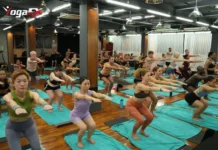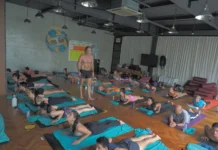












Hot yoga for athletes is a coaching niche you can start the week you hold a 26&2 certificate. Teams and training groups need mobility, balance and calm recovery, and the 90-minute Original Hot 26&2 class offers all three in one fixed script. This guide shows you how to build it, step by step.
Most new teachers try to fill a room with anyone who walks in. A sports team is different. It has a coach who decides the schedule, a shared problem such as tight hips, and a habit of following a plan. Win the coach, and hot yoga for athletes becomes a weekly habit for the whole squad.
This guide comes from the YogaFX team with Mr. Ian Terry, E-RYT 500, who has more than 12,000 teaching hours. It is written for trainees and new graduates, so it covers how to teach, how to pitch and how to stay safe.
Why Hot Yoga for Athletes Is a Niche Worth Building
Athletes already value structure. They follow drills, count sets and respect a coach. So hot yoga for athletes sells itself more easily than a general class, because the 26&2 sequence never changes. Players know what comes next, and they can measure progress from one week to the next.
There is also a gap to fill. Many clubs have a physio and a strength coach, but nobody who runs a calm, hands-off session on an easy day. A trained 26&2 teacher fits that slot well, and a weekly class is easy for a coach to approve.
Be honest about the limits, though. Research on hot yoga for athletes is thin, and no class guarantees a faster time. So sell better movement, steadier breathing and good recovery habits. Leave injury claims to medical staff.
What Athletes Ask For, and How the 26&2 Answers
Before you plan hot yoga for athletes, listen to what players say after a hard week. The same needs come up again and again, and each one maps onto the sequence you learn as a trainee.
- Looser hamstrings and hips. Sprints, stops and heavy lifts shorten the back of the leg. Steady holds with a soft knee suit athletes better than bouncing.
- Balance and ankle control. Single-leg postures train the small muscles around the foot and ankle.
- Calm breathing. Slow nasal breathing helps a player settle after a match or a stressful week.
- A routine they can predict. A fixed order of postures feels like a drill, so athletes relax into it.
- Time-efficient sessions. Coaches want one clear slot in the week, not another long programme.
The table below shows who to approach first and what to offer each group. Use it as a starting pattern, then adjust to the club you are visiting.
| Client group | What they usually need | Best slot to offer | Your pitch |
|---|---|---|---|
| Amateur team sport | Hamstring and hip release, balance | Easy training night or the day after a match | One weekly squad class that follows a fixed script |
| Running or cycling club | Calves, hips, calm breathing | Recovery evening, away from long rides and runs | A 90-minute reset the whole club can share |
| Gym and strength group | Shoulder and spine mobility | Rest day between lifting blocks | A class that balances heavy training with range |
| Combat sport gym | Hip range, breathing, focus | Mid-week afternoon, never before sparring | A quiet session that trains breath control |
| Masters athletes (45 and over) | Joint-friendly movement, steady pace | One class on the day after the easier session | A guided class with options for every body |
Where hot yoga for athletes does not fit
Notice what the table leaves out. There is no slot before a match, a race or a heavy session, because the class would load the body twice. If you want a runner-specific plan, our guide to teaching hot yoga to a running club goes into detail. For a team-sport example, see yoga for footballers.

Five Steps to Coach a Team With a 26&2 Certificate
You don’t need a big launch. You need one coach, one pilot class and a clear safety plan. Here’s the order we suggest to graduates.
1. Start with one coach, not the whole club
Ask for ten minutes with the head coach or the fitness lead. Explain hot yoga for athletes in two sentences: 90 minutes, a fixed script, easy-day slot. Coaches approve what is simple. If the coach says yes, the squad follows.
2. Offer one pilot class
A single trial lets the team test hot yoga for athletes without commitment. Pick an easy day, invite volunteers and keep the group small. Afterwards, ask two questions: how did your legs feel the next morning, and how was your sleep? Those answers matter more than any brochure.
3. Write a one-page safety briefing
Coaches worry about heat. So hand over a short page that covers hydration, the signs to stop and the athletes who should check with a doctor first. We list the content of that page in the safety section below.
4. Keep the load sensible
Start hot yoga for athletes with one class a week. Never schedule it the day before a match or a heavy session. If athletes feel flat afterwards, move the class to an easier day or shorten the stay in the room. The goal is to help the training week, not to add to it.
5. Report back, then grow
After four weeks, send the coach a short note with attendance and any feedback. Then offer a second slot, or invite a neighbouring team. Word travels fast between coaches, so a good first club often becomes three.
Prefer to start smaller? An online-first guide on the sister site explains how an athlete fits a heated class around a normal training week, which is a good read before you pitch your first coach.
Planning a 90-Minute Class for Athletes
Once a coach says yes, the class itself must feel organised. Hot yoga for athletes works best when the teacher sets expectations before anyone steps into the room. Here is a simple plan you can use for a first session.
- Before class (10 minutes). Greet the group, explain the heat, and remind everyone to leave the room if they feel unwell.
- The class (90 minutes). Teach the full 26&2 script by voice. Keep your tone steady, because athletes follow a calm, clear coach.
- After class (10 minutes). Let the group cool down slowly, drink water and eat something light. Collect first impressions while they are fresh.
Hot yoga for athletes also needs sensible numbers. Start with a small group of six to ten players, so you can watch every face in the room. Larger squads can split into two sessions. In addition, ask athletes to arrive well hydrated, because that single habit prevents most problems.
Common mistakes to avoid
New teachers often repeat the same errors. First, they book the class too close to a match. Second, they push athletes to stay in the room when they need a break. Third, they promise results that no study supports. Avoid all three, and your reputation in hot yoga for athletes will grow quickly.
Another trap is treating athletes like beginners or like machines. They are neither. Most have good body awareness, but many carry old injuries. So ask about them quietly before class, offer gentle options and never force a posture. A relaxed, respectful tone is what keeps a team coming back to hot yoga for athletes week after week.
The Evidence Behind Hot Yoga for Athletes
A good pitch uses evidence, and a good teacher knows its limits. Two points matter most for hot yoga for athletes: how coaches plan intensity, and what we do not yet know.
Plan hot yoga for athletes as a moderate day
A 2010 review in the International Journal of Sports Physiology and Performance, titled “What is best practice for training intensity and duration distribution in endurance athletes?”, reports that the typical pattern has about 80% of training sessions at low intensity, with about 20% dominated by high-intensity work.
That matters for you. A heated 90-minute class is not a recovery walk, so coaches should place it on an easy day and keep the hard days hard.
Be honest about what is unproven
Few studies test hot yoga on competitive athletes. Most research uses ordinary adults, so none of it proves a better race time or a stronger result. Research suggests benefits for flexibility and well-being, but a coach is right to ask for caution. When you teach hot yoga for athletes, say so plainly. Athletes trust teachers who explain what is known and what is not.
Respect the heat
Heat is the main risk. The Mayo Clinic Sports Medicine team states that hot yoga is not for everyone and that its intensity and temperature have the potential to cause heat-related illness. It advises checking with a doctor first, drinking plenty of water before, during and after class, and stopping if you feel dizzy, lightheaded or sick.
That is why every pilot class needs a briefing. It also explains why we never use heat for weight cutting or to push athletes harder. The class is a tool for movement and breath, not a test of endurance.
Heat Safety Briefing for Hot Yoga for Athletes
Give every coach the same one-page briefing for hot yoga for athletes. It builds trust, and it protects your students. Here is what to include.
- Who should check first. Mayo Clinic Sports Medicine says to skip hot yoga with heart disease, dehydration problems, heat intolerance or a history of heat-related illness, and to ask a doctor first if you are pregnant or have other health concerns.
- Hydration. Drink before, during and after class. Keep a full bottle beside the mat.
- Signs to stop. The NHS lists dizziness, headache, nausea, cramps and pale, clammy skin among the signs of heat exhaustion. NIH MedlinePlus adds heavy sweating, rapid breathing and a fast, weak pulse.
- What to do. Move the athlete to a cooler place, give water and cool the skin. The NHS says heatstroke is a medical emergency, so call local emergency services if the person does not recover.
- Your rule. Leaving the room early is never a failure. Say it out loud before class starts.
As with every health topic, please speak with a doctor or sports medicine professional before you start, and ask your athletes to do the same. The information here is educational and does not replace medical advice.
Proof From Graduates: Yogasana Sport and the Mr. Ian Standard
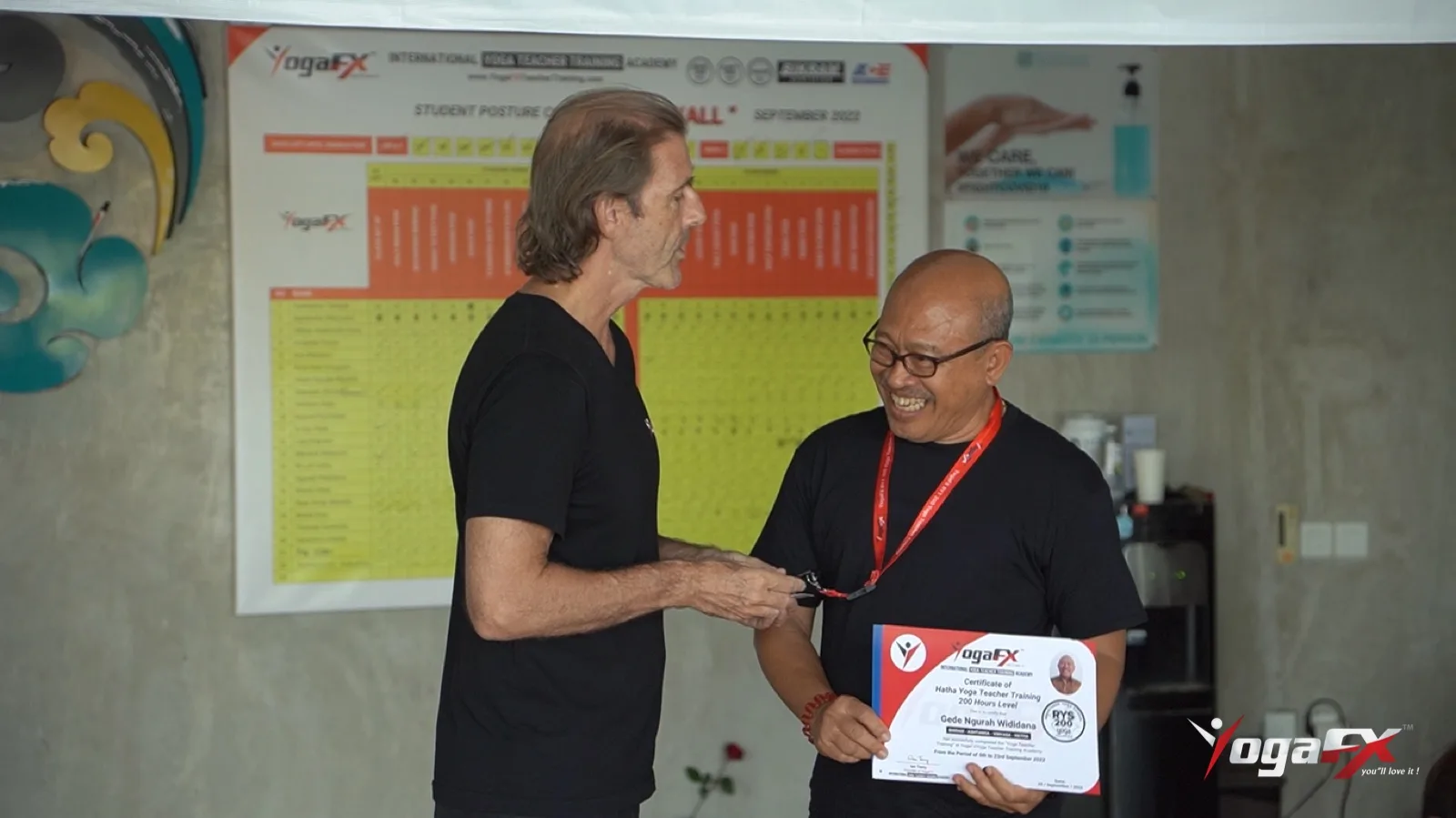
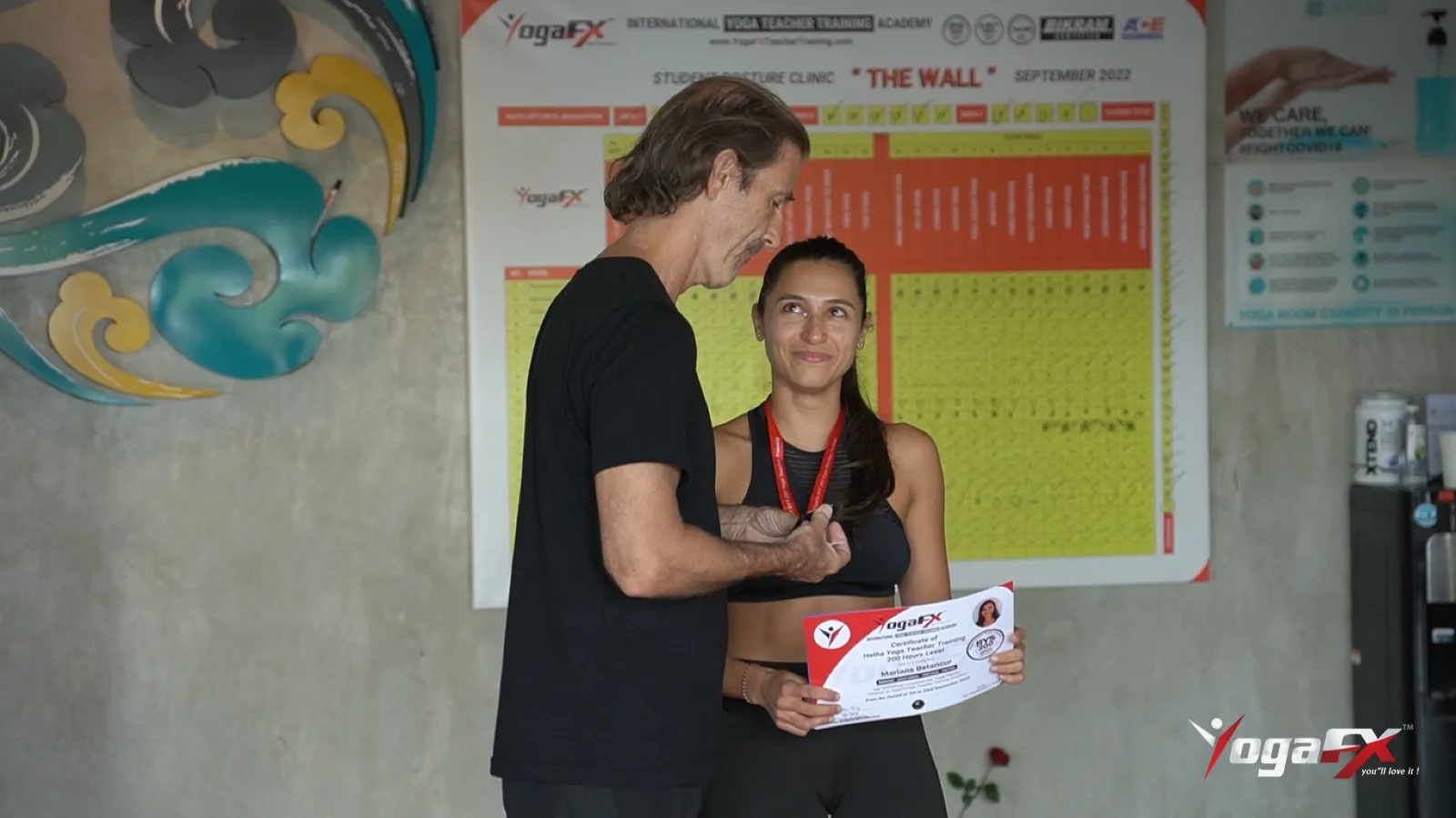
Athletes respect results, so it helps to know your teacher’s record. Mr. Ian Terry has trained with the founder of the Bikram Hot 26&2 method for five years, from 2014 to 2019, and he holds the title of Master Trainer with the Republic of Indonesia Yogasana Sports Federation.
At the World Yogasana Sports Federation Championships in Ahmedabad, held from 4 to 8 June 2026, Indonesia won one gold, two silver and four bronze medals, seven in total. Two YogaFX graduates, Ivara Candra Kartika and Arkan Fauzan Riyanto, earned those medals after taking the standard course. Our full report, World Yogasana Championship 2026: how two YogaFX graduates won 7 medals, tells the story.
Across all events, our graduates have won 12 medals: five gold, three silver and four bronze. Those athletes did not join a sports academy first. So when a coach asks whether a teacher training can prepare you to teach hot yoga for athletes, you can point to real people.
Recovery work that coaches ask about
For a deeper look at recovery work, read how 26&2 teachers support hard training. It covers the day-after routines that coaches often ask about.
What Trainees Say About the Course
A coach will ask where you trained, so let your own story do part of the work, because teaching hot yoga for athletes starts with solid training. Here is what recent trainees and graduates say about learning with Mr. Ian and the team.
“This is an amazing program. Mr. Ian and his team create a wonderful learning experience, not to be missed if you have the opportunity!”
Gary, Yoga Alliance review, 2025
“Thank you everyone, and thank you my team, all of you, for being very supportive during the dialogue.”
Maha, YouTube review, 2025
“Grateful to you Mr. Ian for this opportunity to work hard and push myself for something that I’m finding a passion in.”
Jamie, YouTube review, 2024
Jamie’s video review is below. Notice how often trainees mention support, because a teacher who feels supported teaches with more confidence.
We hold 150 Google reviews, 50 Yoga Alliance reviews and 357 YouTube video testimonials, and we have trained more than 1,500 graduates from over 80 countries.
How the YogaFX Bali Training Prepares You to Teach Athletes
The YogaFX Bikram Hot 26&2 Yoga Teacher Training MasterClass runs as a six-day hybrid: pre-course study online, then an intensive in Bali. You finish with two credentials, a Yoga Alliance RYT 200-Hour certificate and a Bikram Hot 26&2 200-Hour International Yoga Certification.
The next intensive starts with check-in on Sunday 24 January 2027 and check-out on Friday 29 January 2027, at the Soham Wellness Center in Seminyak. The Early Bird price is US$1,899, against a normal price of US$1,999, and monthly instalments start from US$250 with no interest.
What you learn that athletes value
Three parts of the course matter when you teach hot yoga for athletes:
- The full 26&2 script. You learn the dialogue word for word, so you can teach a team without notes.
- Posture coaching. You learn to see and fix alignment, which athletes value.
- Teaching practice. You run real classes before graduation, so your first pilot with a team will not be your first class.
Read the full format on our page about Original Hot Yoga teacher training, then message the team with questions.
FAQ
Is hot yoga good for athletes?
It can be, when you treat it as a moderate training day. A 90-minute heated class builds balance, hip range and calm breathing. However, research on competitive athletes is limited, so place it on an easy day, hydrate well and check with a doctor first.
Which athletes do hot yoga?
Runners, cyclists, team-sport players, gym lifters and combat athletes all try it. They usually want looser hips and hamstrings, better balance and a calm session on an easy day. The class suits any athlete who can follow a fixed script and leave the room if needed.
How does yoga help an athlete?
Yoga can add mobility, balance and steady breathing to a training week. It also gives athletes a quiet session that is different from hard drills. It does not replace strength work or physiotherapy, and it does not promise faster times, so coaches should treat it as one tool.
Is hot yoga good for runners?
It can be, as a moderate day away from long runs. A heated class adds hip and calf range, balance and calm breathing. However, it also adds heat stress, so runners should hydrate, start with one class and skip it before race day or a long run.
Is hot yoga a sport?
A normal hot yoga class is a practice, not a competition. Yogasana sport is different, because athletes perform set postures before judges and earn scores. Many people train with a fixed sequence like 26&2 first, then decide whether competitive yoga interests them.
Still have questions? Message Mr. Ian and the YogaFX team on WhatsApp and we will answer them personally. Tell us about your sport, your experience and where you hope to teach, and we will explain how the training and the Bali intensive could fit your plans.