















Hot yoga vs steam room looks like a question about heat, but for a teacher it is really a question about humidity. A hot yoga room is a working room where students move for 90 minutes. A steam room is wet heat for sitting still. Teachers who understand that gap run safer, calmer classes.
Hot Yoga vs Steam Room: The Short Answer for Teachers
For a teacher, the hot yoga vs steam room difference comes down to what the room asks of the body. In a hot yoga class your students generate heat by moving, and you control the pace. In a steam room nobody moves, nobody guides, and the only control is the door.
That is why humidity belongs in teacher training. Mr. Ian Terry, E-RYT 500, has taught more than 12,000 hours of heated classes, and our programme builds on that experience. If you want the full picture of the job, read what a hot yoga teacher actually does.
Here is the short version in three points:
- Hot yoga: a guided, moving class where the teacher manages pace, water breaks and room conditions.
- Steam room: wet heat for sitting still, with no teacher and no pacing.
- The teacher’s job: read the humidity and the students, then cue rest before anyone needs it.
This is general information, not medical advice. Please consult a healthcare professional before you start any heat practice, especially if you have a heart condition, low blood pressure or you are pregnant.
Why Humidity Decides the Hot Yoga vs Steam Room Question
New teachers often watch the thermometer first. Students, however, feel humidity just as strongly, and it is the real gap in any hot yoga vs steam room comparison. Relative humidity is the share of water vapour the air holds compared with the most it could hold. As it rises, sweat evaporates more slowly, so cooling slows down too.
The CDC lists high temperature and humidity among the risk factors for heat-related illness, next to limited air movement, dehydration and physical exertion. That list reads like a checklist for a hot yoga teacher, and it’s the reason humidity gets its own lesson. Your room has heat, your students are exerting themselves, and you decide how much air and water they get.
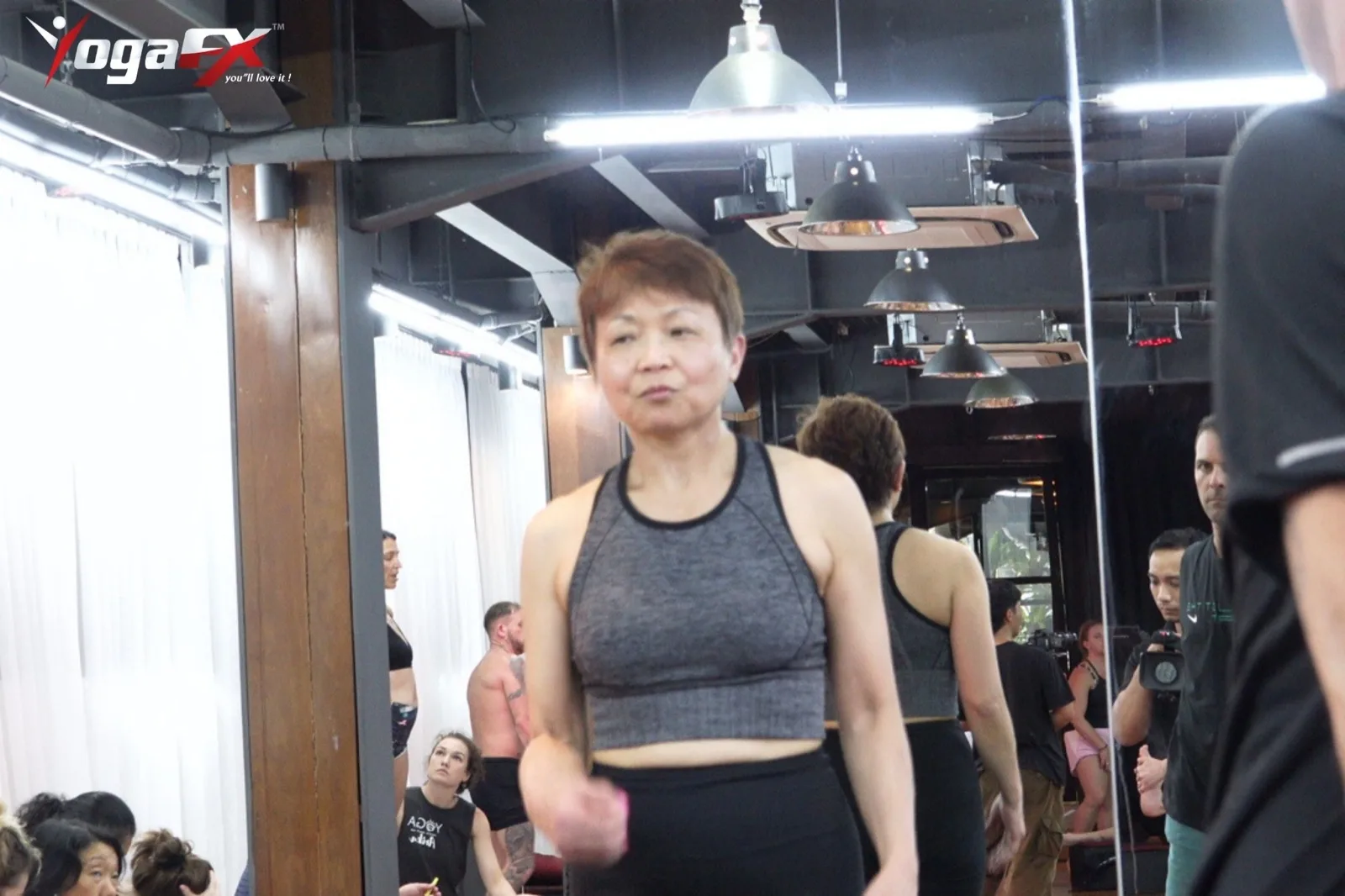
A steam room stacks heat and humidity but removes exertion, because guests sit still. Cleveland Clinic says a steam room uses humidity, and that there is no clear indication that dry heat or wet heat is better than the other. So the useful hot yoga vs steam room question is not which room is hotter.
Ask what the room demands, how long people stay, and who is watching them. The table below puts three rooms side by side.
| Room | Heat and humidity | Time and activity | Who manages the load |
|---|---|---|---|
| Hot yoga room (YogaFX class) | 40 degrees Celsius, humidity near 40% | 90 minutes of guided movement | The teacher: pace, water, rest and room settings |
| Steam room | Wet heat, with humid air | Short sits, no movement | Usually the guest alone |
| Dry sauna | About 65 to 90 degrees Celsius, humidity usually under 20% | 15 to 20 minutes suggested | Usually the guest alone |
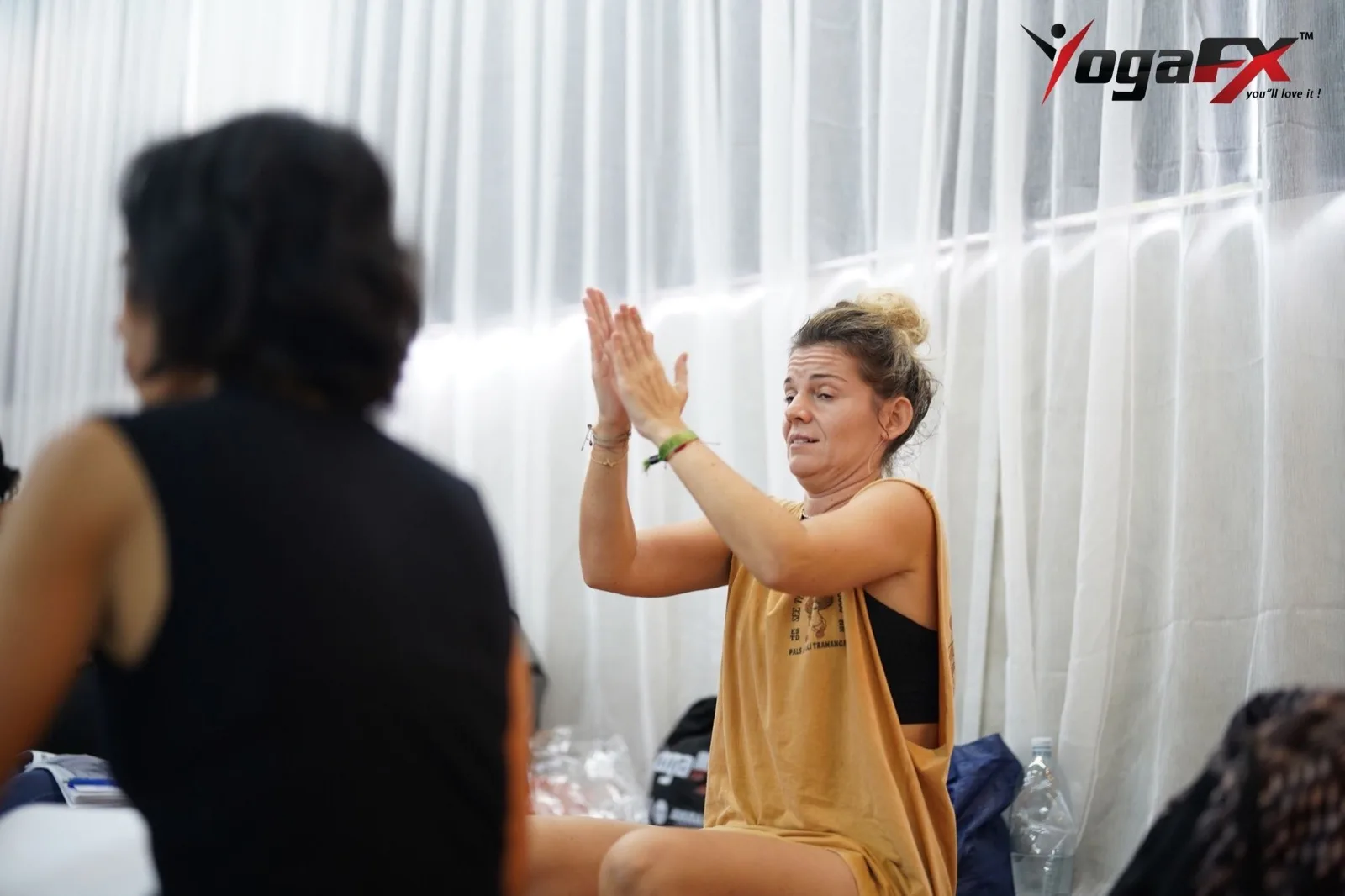
5 Humidity Skills Every Hot Yoga Teacher Needs
A hot room runs on judgement, not only on settings. Our trainees practise these five skills until they feel automatic, because they turn the hot yoga vs steam room theory into daily teaching habits.
1. Read the room before the first posture
Walk in early and feel the air. Check the doors, the airflow and how many students are arriving. A full room feels heavier than an empty one, so set your expectations before the class starts.
2. Watch faces, not the thermometer
A number on the wall cannot tell you who is struggling. Faces can. Look for flushed skin, glazed eyes and students who stop following the dialogue. Those signs show up long before anyone raises a hand.
3. Cue water and rest early
Students in a humid room often wait too long to drink. Give permission early and often. In our classes the teacher says it out loud, so shy beginners feel free to rest on the mat.
4. Use the dialogue to pace effort
A scripted dialogue gives the whole room a steady rhythm. There is no music and no demonstration, so students listen closely and notice their own strain sooner. That helps you keep everyone inside safe limits.
5. Keep your own cool
You stand in the room for the full 90 minutes too, and you can’t coach well while you feel dizzy. Drink before class, and pace your voice and movement. A teacher who overheats cannot protect anyone else.
For a student’s view of the same comparison, see how Bikram holds humidity near 40% on our training-information site.
How to Read Overheating: Signs and First Responses
The NHS describes the signs of heat exhaustion in plain language. They include tiredness, dizziness, headache, a high temperature, being very thirsty and feeling irritable. Heavy sweating with pale, clammy skin and cramps are on the list as well.
The NHS advice is simple: move the person to a cool place, give them plenty of water and cool their skin. It adds that people should start to feel better within 30 minutes, and that heatstroke is a medical emergency. Our teachers learn the same order of steps.
| Signal | What a teacher may see | First response |
|---|---|---|
| Dizziness or headache | A student sways, holds the head or loses focus | Cue rest on the mat, offer water and move the student toward cooler air |
| Heavy sweating, pale or clammy skin | Skin looks grey or damp and the student stops moving | Help the student sit out, cool the skin and keep them in view |
| Cramps | A student grips a leg or the stomach | Stop the posture and offer water |
| No improvement within 30 minutes | Symptoms stay or get worse | Treat it as urgent and get medical help |
The numbers below describe a standard YogaFX class and the experience behind it.
Hot Yoga vs Steam Room Myths Teachers Should Correct
Students arrive with strong opinions. Some come from friends, some from social media, and some from a spa visit. A teacher who can calmly correct them builds trust fast. These are the four we hear most.
Myth: more sweat means a better class
Heavy sweat only shows the body trying to cool down. Size, fitness, hydration and weather all change how much someone drips, so a dry mat doesn’t mean a lazy student. Judge the class by form, breathing and focus instead.
Myth: a steam room is the same as hot yoga
The hot yoga vs steam room comparison feels fair because both rooms are warm and damp. They are different jobs, though. One asks students to move, balance and follow a teacher for 90 minutes. The other asks them to sit still and wait.
Myth: the more humid the room, the harder the yoga
Extra humidity doesn’t add extra yoga. It only makes cooling harder. A steady room lets students hold each posture with control, and that control is where the learning happens.
Myth: students will always know their own limits
Many don’t, especially in the first week. Beginners push through dizziness because they want to please the teacher. That’s why you cue rest out loud and make it normal to sit down.
What the Research Says Behind Hot Yoga vs Steam Room Safety
As far as we could find, researchers have not tested hot yoga vs steam room head to head. So we rely on official guidance about heat instead. Three sources shape what we teach about heat exhaustion and hydration:
- CDC: names high temperature and humidity as risk factors for heat illness, along with limited air movement, dehydration and physical exertion. Read the CDC heat stress overview.
- NHS: lists the warning signs of heat exhaustion and the first steps: a cool place, plenty of water and cooler skin. See the NHS heat exhaustion guide.
- Cleveland Clinic: for saunas, suggests about 15 to 20 minutes, calls dehydration one of the biggest risks, and advises older adults, pregnant people and anyone with certain heart conditions to check with a provider first. See its sauna guidance.
That sauna advice is about dry heat, so we do not copy its numbers into a hot yoga class. We do copy the habits. Drink water before and after, listen to your body, and leave the room if something feels wrong.
How YogaFX Teaches Humidity in Bali
At YogaFX, every class runs for 90 minutes at 40 degrees Celsius and 40% humidity. The heat comes from Bali’s tropical climate. Mr. Ian spent five years, from 2014 to 2019, training with the founder of the Bikram Hot 26&2 method. He now passes that standard on to each cohort.
Trainees learn by doing. They practise as students first, then teach the dialogue to classmates while the group watches for strain, thirst and drifting attention. Because the settings stay steady, trainees learn to notice changes in people instead of chasing numbers.
The 6-day hybrid MasterClass combines online study with an intensive in Bali. It leads to Yoga Alliance RYT 200-Hour certification and a Bikram Hot 26&2 200-Hour International Yoga Certification. See how the hybrid format works. So far 1,500+ graduates from 80+ countries have trained with us since 2017.
What Trainees Say About Training in the Heat
These reviews come from students who finished the training. None of them compare hot yoga vs steam room, but they show what a well-run hot room feels like. They are quoted as written, or closely paraphrased.
A room full of strangers quickly become your family of friends, & your biggest cheerleaders. When Mr. Ian says "Not today mind" you believe it wholeheartedly.
Lisa, Google review, 2026
Willy said Mr. Ian is a very professional teacher, passionate and humble, and recommended the academy.
Willy, Google review, 2020 (paraphrased)
"Actually changed me and changed my brain, changed my mind, changed my body, change my future."
Erick, YouTube review, 2024
None of them talk about a thermometer. They talk about the teacher, the group and the change, because that is what a well-run hot room leaves behind.
Advising Students Between Hot Yoga vs Steam Room Habits
Sooner or later a student will ask whether a steam room after class is a good idea. Teachers need a careful, honest answer. Our guides on hot yoga vs sauna and sauna after hot yoga go deeper. Here’s the short teacher’s version of the hot yoga vs steam room advice:
- Cool down first. Ask students to sit, breathe and drink water before any extra heat.
- Keep it short. Cleveland Clinic suggests 15 to 20 minutes for a sauna, and beginners may need far less.
- Respect health limits. Heart conditions, pregnancy and medication all call for a doctor’s advice first. Our note on heat safety every teacher must know explains why.
- Never treat sweat as a score. Sweat shows the body cooling itself, not how hard someone worked.
Ready to Learn to Run a Hot Room?
You’ll learn humidity management in the intensive, alongside many other skills. It shows how much judgement a good hot yoga teacher uses. The next batch checks in on Sunday 24 January 2027 and checks out on Friday 29 January 2027, at Soham Wellness Center in Seminyak.
FAQ
Is humidity part of hot yoga teacher training?
Yes. A good teacher training covers heat and humidity directly, because they change how every student feels. Trainees learn to read faces, cue water and rest early, and pace the class with the dialogue. The goal is a room where beginners and experienced students can all stay safe for 90 minutes.
How can a teacher tell a student is overheating?
Look for dizziness, headache, heavy sweating, pale or clammy skin, cramps, or a student who suddenly stops following the class. The NHS lists these among the signs of heat exhaustion. Cue rest on the mat, offer water and cooler air, and get medical help if symptoms do not ease.
Why does a steam room feel different from a hot yoga room?
A steam room uses wet heat and people sit still, so the air feels thick and heavy. A hot yoga room is drier, around 40% humidity in our classes, and students generate heat by moving for 90 minutes. Different humidity and different effort mean different cooling and different risks.
What should a teacher tell students about using a steam room after class?
Suggest they cool down and drink water first, keep any steam room visit short, and leave at the first sign of dizziness. Students with heart conditions, low blood pressure, medication or pregnancy should ask a doctor before combining heat sessions. Teachers share general guidance, never medical advice.
Does Bali’s climate change how hot yoga is taught?
Bali’s tropical climate supplies natural heat, so our classes do not rely on electric heaters. Settings stay steady at 40 degrees Celsius and 40% humidity, which lets trainees learn to read students instead of chasing numbers. Teachers still adjust doors, airflow and pacing as conditions change.
Still have questions? Message Mr. Ian and the YogaFX team on WhatsApp and we will answer them personally.