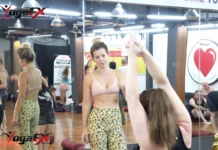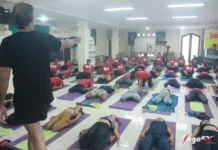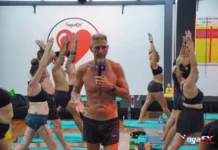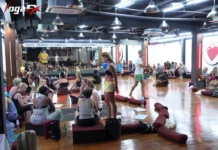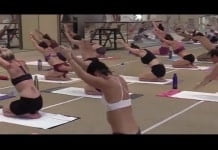
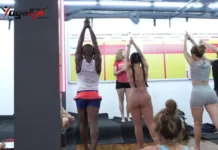






What is Bikram yoga? It is a fixed 90-minute hot yoga class made of 26 postures and 2 breathing exercises, done in the same order every time. A teacher guides you with a scripted dialogue. It is also the method behind YogaFX teacher training in Bali.
If you are weighing a class or a full training, this guide shows what really happens in the room. It covers the sequence, the heat, the research and the way the method becomes a teaching career. Mr. Ian Terry, our Founder and Lead Instructor (E-RYT 500), has taught it for more than 12,000 hours, and everything below comes from that classroom.
What Is Bikram Yoga? The Short Answer
Bikram yoga is a method, not a mood. The sequence never changes, so a class in Seminyak follows the same order as a class anywhere else that teaches it. That repetition is the whole point. You learn the room, the heat and your own body one posture at a time.
Here are the features that define it:
- Fixed sequence. There are 26 postures and 2 breathing exercises, always in the same order.
- Ninety minutes. One class runs from the first breathing exercise to the final rest.
- A heated room. At YogaFX the room sits near 40°C with about 40% humidity, and the heat comes from Bali’s tropical climate, not electric heaters.
- A scripted dialogue. The teacher speaks the same instructions every class, with no demonstration and no music.
People also call it Hot 26&2 or 26 and 2 yoga. The name changed, but the class did not. At YogaFX we call it the Original Hot 26&2 method, and we teach it as the base of every training.
Because the class is so consistent, it suits both beginners and future teachers. A beginner knows what is coming next. A trainee learns to say the same words clearly, hold the pace and read a hot room.
So what is Bikram yoga for a future teacher? It is a script you can learn, practise and teach with confidence, because every instruction has a place and a reason.
What Is Bikram Yoga Like for a First-Timer?
If you wonder what is Bikram yoga like on the first day, expect a class that feels hot, loud in the head and surprisingly calm by the end. Here is how a first class tends to unfold.
- Arrival. You settle your mat, lay out a towel and drink water before the class starts.
- The first ten minutes. The opening breathing exercise begins, and the heat feels intense. That is normal, so breathe slowly and stay with the teacher’s voice.
- The middle. Postures come quickly, and rests in Dead Body Pose give you a moment to recover. Sitting out is always allowed.
- The finish. The closing breathing exercise slows everything down, and most people leave tired but clear-headed.
After class, rehydrate and eat something light. Many first-timers feel dizzy if they skip water, so build that habit from day one. Our trainees follow the same routine through all six days of the intensive.
The 26 Postures and 2 Breathing Exercises
What is Bikram yoga at its core? A sequence you can describe in order. Standing postures come first, floor postures follow, and breathing frames both ends of the class. Most postures are done twice, so trainees learn the class as a pattern rather than a list.
| Phase of class | What you do | What a trainee learns to teach |
|---|---|---|
| Opening breathing | Standing Deep Breathing, the first of the 2 breathing exercises | Setting the pace and cueing the breath |
| Standing series | Balance and strength postures such as Half Moon, Eagle and Standing Head to Knee | Alignment cues and holding a hot room’s attention |
| Short rests | Dead Body Pose between postures and series | Pacing and recovery in the heat |
| Floor series | Back-bending and spine postures such as Cobra, Locust and Camel | Safe progressions and clear instructions on the floor |
| Closing breathing | Blowing in Firm (Kapalabhati), the second breathing exercise | Ending a class with control and calm |
The standing series
The standing postures build balance, leg strength and focus. Ardha Chandrasana (Half Moon) opens the series. Garudasana (Eagle) and Dandayamana Janushirasana (Standing Head to Knee) follow. They ask for steady breathing while your legs work, which is harder than it looks.
In our classes, the standing series is where trainees first meet the heat. Sweat builds, concentration slips, and the dialogue pulls attention back. That is exactly the skill a teacher needs later.
The floor series
After a short rest the class moves to the floor. These postures work the spine and hips. Bhujangasana (Cobra), Salabhasana (Locust) and Ustrasana (Camel) are typical examples. Rests in Dead Body Pose help your heart rate settle between them.
Teaching this half well means cueing clearly and watching for strain. For that reason, our trainees spend many hours on safe, simple instructions rather than on advanced shapes.
The two breathing exercises
The class opens and closes with breathing. Standing Deep Breathing starts the class, and Blowing in Firm ends it. Together they frame the 90 minutes, which gives every class the same beginning and the same finish.
If you want the full posture-by-posture breakdown, read our Hot 26 and 2 Yoga definitive guide.
Inside a 90-Minute Class: The Numbers
Four numbers describe the class better than any long definition. They are the same for a first-time student and for a trainee in teacher training.
What the Research Says About Heated Yoga
When people ask what is Bikram yoga good for, research offers a careful answer. Studies on heated yoga are still growing, so it pays to avoid big claims. One of the clearest studies is an 8-week randomized trial of community-delivered heated hatha yoga for moderate-to-severe depression, led by researchers at Massachusetts General Hospital (Nyer et al., 2023, Journal of Clinical Psychiatry).
In that trial, 59% of the yoga group had their depression symptoms fall by half or more. In the waitlist group, only 6% did. Sixty-five people were analysed in total, and the authors reported a statistically significant difference. You can read the record on Europe PMC or the full text on PubMed Central.
Two caveats matter. First, it was a heated hatha class, not an exact Bikram sequence. Second, the comparison group was a waitlist, so the authors call for more research with active comparison groups. In short, the results are encouraging, and they may help explain why many trainees come to the method.
Staying safe in the heat
Heat is a real load on the body. MedlinePlus explains that heat exhaustion can follow several days of high temperatures without enough fluids, with heavy sweating, rapid breathing and a fast, weak pulse. It also warns that heat stroke needs medical help right away (MedlinePlus: heat illness).
Its prevention advice is simple: drink fluids, replace lost salt and minerals, and limit your time in the heat. We build the same habits into every training week:
- Hydrate early. Start drinking before class, not during the first hot hour.
- Rest when you need to. Sitting out a posture is part of good practice, not a failure.
- Eat light beforehand. Heavy meals and a hot room do not mix.
- Know your limits. Tell your teacher about any medical condition before you start.
This article is education, not medical advice. Please consult a healthcare professional before starting hot yoga, especially if you have a heart condition or take regular medication.
Bikram Yoga vs Other Hot Yoga Classes
Knowing what is Bikram yoga, and what it is not, makes the choice easier. Hot yoga is a wide label. It simply means yoga in a heated room. Bikram yoga is one specific hot yoga method with a fixed script and sequence. Many other hot classes change their postures, music and pace from teacher to teacher.
- Sequence: Bikram yoga repeats the same 26 postures and 2 breathing exercises. Other hot classes vary week to week.
- Teaching style: Bikram classes use a scripted dialogue. Other hot classes often use free-form cueing and music.
- Teacher training: A fixed method gives trainees one clear script to master, which makes the first teaching weeks easier to measure.
If you want the wider picture, start with what hot yoga is and how it is taught. If you are comparing flowing hot classes with the fixed method, our guide to hot vinyasa vs Bikram explains why YogaFX certifies the fixed sequence.
Where the Method Comes From
To understand what is Bikram yoga today, it helps to know its history. The sequence was developed by Bikram Choudhury and spread worldwide through studios and teacher trainings. Over time, many studios moved to the neutral names Hot 26&2 and 26 and 2. The class stayed the same.
Mr. Ian Terry trained for five years, from 2014 to 2019, with the founder of the method. He now teaches it as the Original Hot 26&2 in Bali, and the story of that lineage is told in our article on Bikram yoga history and Mr. Ian Terry’s lineage.
That history matters to a trainee for a practical reason. When you learn a fixed method from someone who trained inside it, you learn the reasons behind each instruction, not only the words.
Why the Method Is the Base of YogaFX Teacher Training
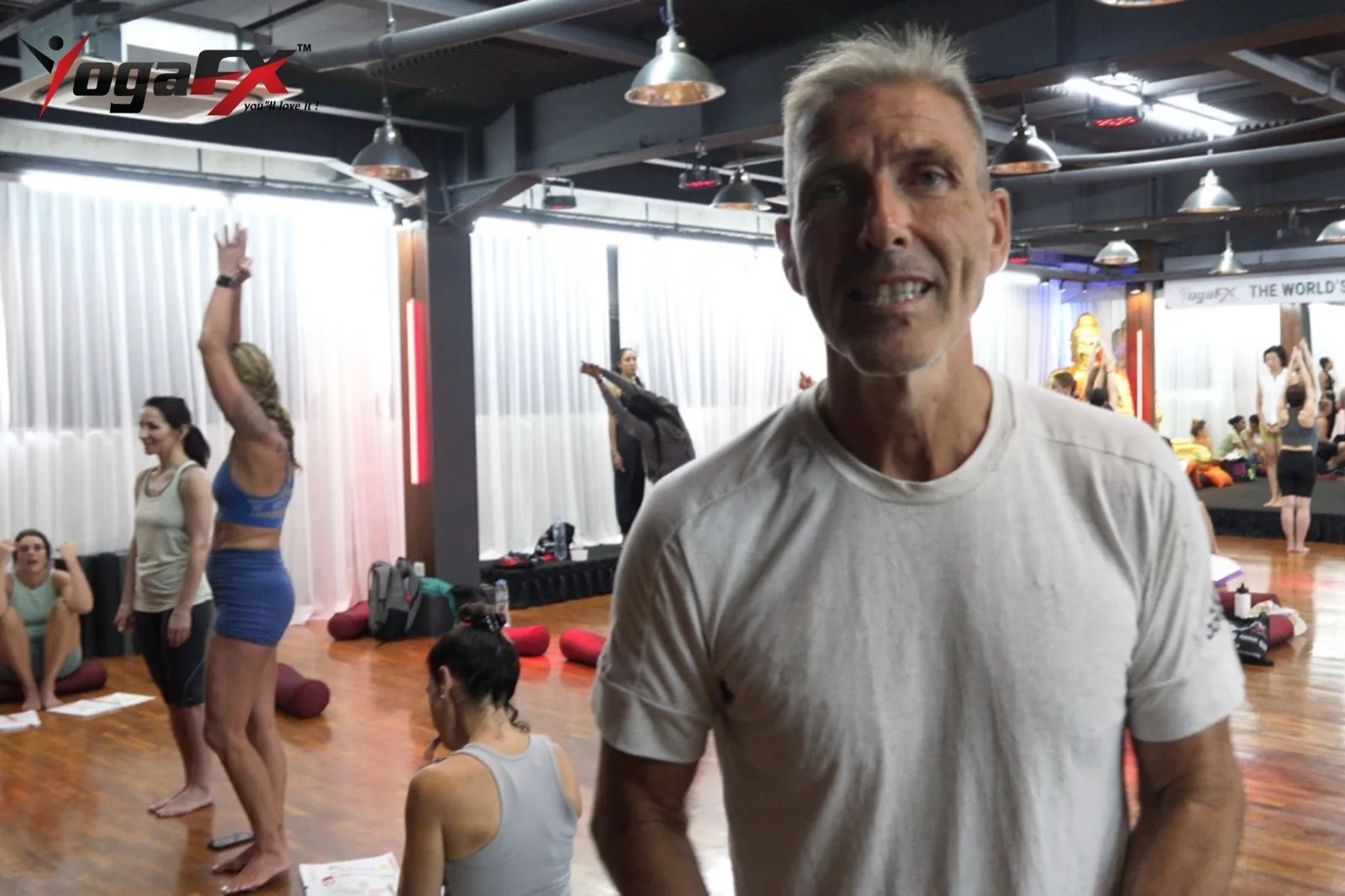
What is Bikram yoga to us? It is the foundation of everything we teach. YogaFX teacher training is built on this exact class. You do not learn a loose collection of poses. You learn one method deeply, then practise teaching it with the full dialogue, in the heat, with feedback.
The programme is a six-day hybrid course. You complete the theory online first, then join the intensive in Bali. The next batch checks in on Sunday 24 January 2027 and checks out on Friday 29 January 2027, at the Soham Wellness Center in Seminyak.
You finish with two certificates:
- Yoga Alliance RYT 200-Hour, recognised by the largest yoga registry.
- Bikram Hot 26&2 200-Hour International Yoga Certification, for the fixed method itself.
Since 2017, YogaFX has trained more than 1,500 graduates from over 80 countries. Mr. Ian Terry teaches the course himself. You can see the full structure on the Hot Yoga Teacher Training Bali page.
What Trainees Say About the Method
Trainees describe the course in their own words in reviews on Google, Yoga Alliance and YouTube. Here are two short quotes from video reviews.
“For me YogaFX will always stand as a fabulous experience, and it was a quick decision. It was the right one.”
Mariana, YouTube review, 2024
“It’s been a wonderful journey, it’s been an amazing experience.”
A trainee in our YouTube review, 2023
Across platforms there are 150 Google reviews, 50 Yoga Alliance reviews and 357 YouTube testimonials, so you can hear from many trainees before you decide.
Three Myths About Bikram Yoga
Many people hold back from their first class because of what they have heard. Three myths come up again and again.
- “You must be flexible.” You do not. Flexibility grows with practice, and the first classes are about learning the order, not touching your toes.
- “It is only a sweat session.” The heat is a tool, but the real work is concentration, balance and breath. The sequence is built to be repeated, not rushed.
- “It is only for experienced yogis.” The repeated sequence makes it friendly to beginners, because there is little to guess.
None of this makes the class easy. It makes it clear. When you know what to expect, you can put your energy into staying calm in the heat, and that is the skill a good teacher models.
Now you can answer the question yourself. What is Bikram yoga? It is a fixed, heated, 90-minute sequence taught with a scripted dialogue, and it is the method we teach in Bali. If you want to learn it properly, start with a conversation about the next batch.
FAQ
What is Bikram yoga called now?
Many teachers and studios now say Hot 26&2 or 26 and 2 yoga, because the class has 26 postures and 2 breathing exercises. The method is the same fixed 90-minute class. At YogaFX we call it the Original Hot 26&2 method and teach it as a six-day hybrid training in Bali.
Is Bikram yoga the same as hot yoga?
Not quite. Hot yoga is any yoga class taught in a heated room, and the postures can change from teacher to teacher. Bikram yoga is one fixed hot yoga method, with the same 26 postures and 2 breathing exercises in the same order every class, taught with a scripted dialogue.
How hot is a Bikram yoga class?
A YogaFX class runs near 40 degrees Celsius with about 40% humidity for 90 minutes, using Bali’s natural tropical heat instead of electric heaters. The heat is demanding, so drink water before class, rest whenever you need to, and speak to a doctor first if you have a medical condition.
Is Bikram yoga good for beginners?
Yes, beginners can start, because the class repeats the same sequence and the teacher talks you through every posture. You do not need to be flexible. Arrive hydrated, rest whenever you need to, and treat your first few classes as practice rather than performance.
What is Bikram yoga good for?
People use it to build balance, strength, flexibility and focus, and some trainees say it lifts their mood. Research on heated yoga is still early, so claims should stay modest. Talk with a healthcare professional first if you have a medical condition, then start slowly and rest when you need to.
Is YogaFX teacher training official Bikram Choudhury teacher training?
No. YogaFX is an independent training, not an official Bikram Choudhury Teacher Training. Mr. Ian Terry trained for five years, from 2014 to 2019, with the founder of the method, and now teaches the Original Hot 26&2 method with Yoga Alliance RYT 200 certification in Bali.
Still have questions? Message Mr. Ian and the YogaFX team on WhatsApp to enrol or ask and we will answer them personally. Tell us where you are in your journey, and we will point you to the right next step for the January 2027 batch or a later one.