








Hot yoga for flexibility works mainly because warmth helps you tolerate deeper stretches, so your range grows over weeks. The risk is that tolerance can outrun your tissue. At YogaFX, trainees learn safe depth first: reach a firm pull, stack your joints, and let the room, not force, do the work.
Does hot yoga for flexibility actually work?
Yes, with one honest catch. Hot yoga for flexibility does help most people reach a little further each week. However, the research says the main change is in what you feel and tolerate, not only in how long your muscles are.
Why comfort changes before tissue does
A Weppler and Magnusson review in Physical Therapy (2010) looked at how stretching changes the body. It found that muscle length does increase during a stretch because muscle is viscoelastic. That gain is transient, though.
The review also reported that most gains after a single session, and after short programmes of 3 to 8 weeks, appear to come from modified sensation. In plain words, you become more comfortable in the stretch, which researchers call stretch tolerance.
That finding shapes how we teach hot yoga for flexibility to every trainee. If comfort rises faster than your joints and connective tissue adapt, you can reach positions your body is not yet ready to hold. A warm room can make that feel easier, so a good teacher watches for it.
Trainees at YogaFX in Bali study this from day one. They learn hot yoga for flexibility as students, then learn to cue it as teachers. Mr. Ian Terry, E-RYT 500, has more than 12,000 teaching hours behind how we coach range. His rule is simple: the room opens the door, but you choose how far to walk through it.
What a class looks like
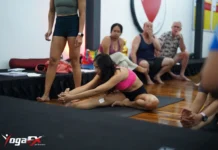
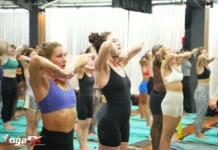
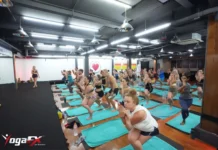
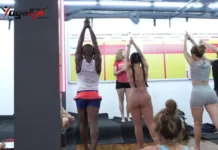
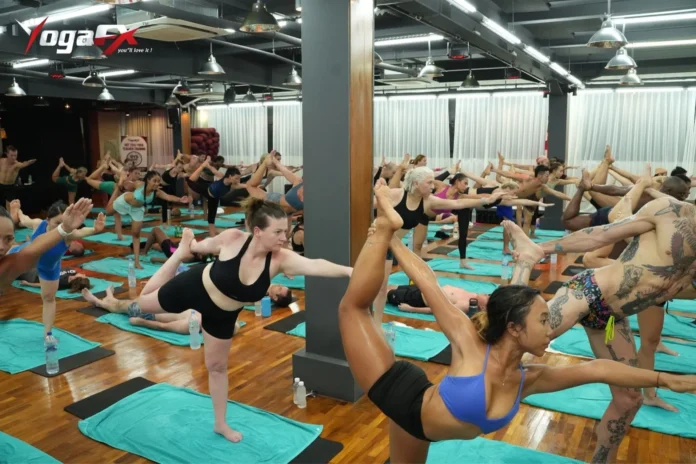
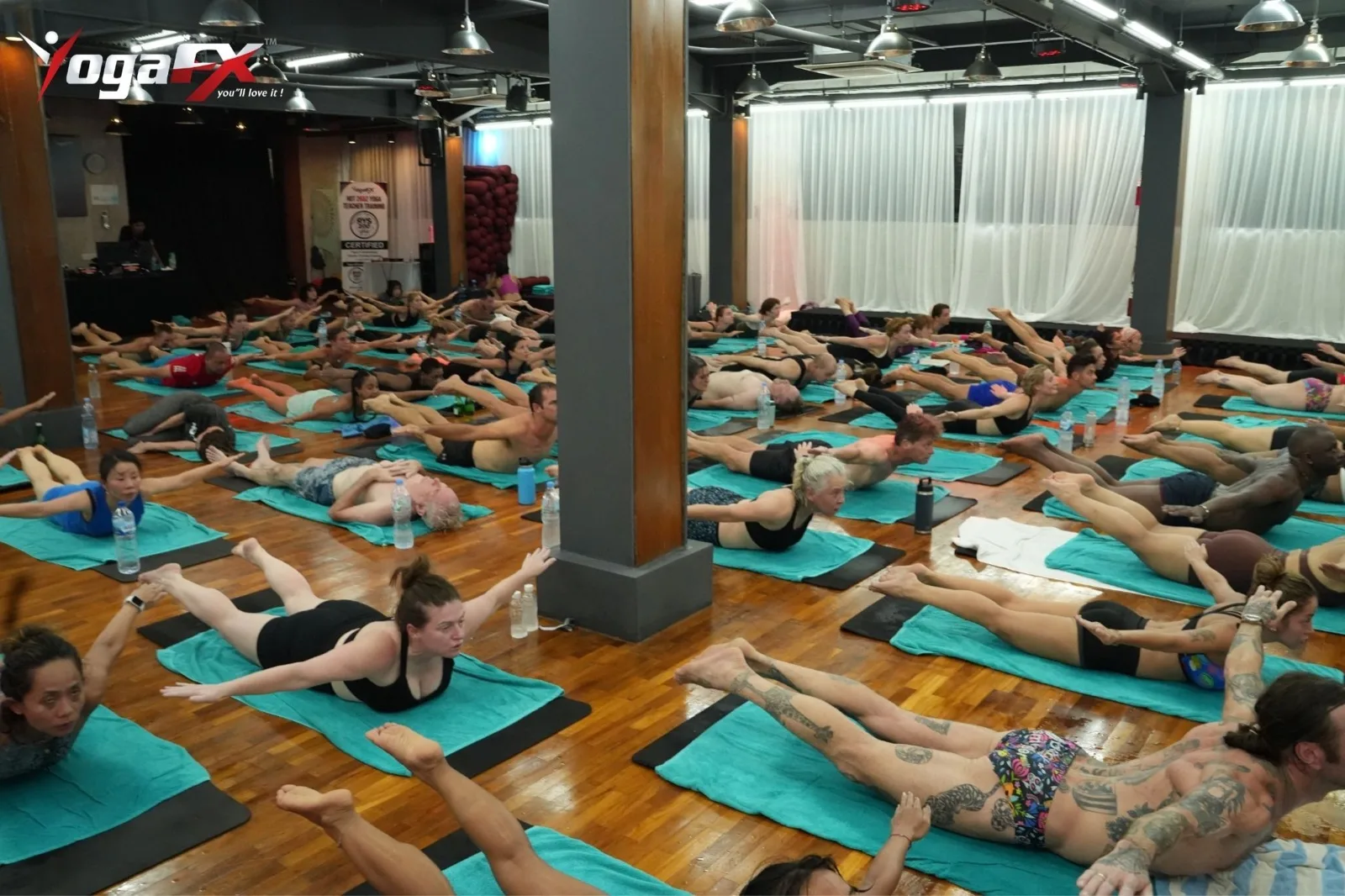
So how does hot yoga for flexibility look in a real class? You practise the same 26 postures and 2 breathing exercises over 90 minutes. The room sits at about 40°C with about 40% humidity. In Bali, that heat comes from the natural tropical climate, not from electric heaters.
The 5 safe depth rules for hot yoga for flexibility
Every trainee learns the same five rules before they cue anyone else. They apply to students of hot yoga for flexibility at any level, and they are easy to remember in the heat.
- Stop at a firm pull. You should feel a clear stretch, never a sharp, pinching or burning edge.
- Stack the joint first. Set your alignment, then add depth. Depth without alignment loads the wrong tissue.
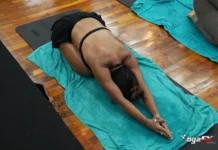
- Soften before you force. A slightly bent knee in a forward fold protects the back of the knee and the lower back.
- Breathe through the nose. If your breath turns ragged, you went past your edge.
- Earn depth over weeks. Your range today is a guest, not a permanent resident. Repeat the posture before you chase more.
These rules sound plain, and that is the point. Teachers who can say them clearly, in one breath, protect their students better than teachers who can demonstrate a deep pose.
Posture by posture: hot yoga for flexibility and safe depth
The 26 and 2 sequence works the whole body, so your hot yoga for flexibility progress shows up in many places. This table lists the postures where trainees most often push too hard, plus the cue we teach and the signal to back off.
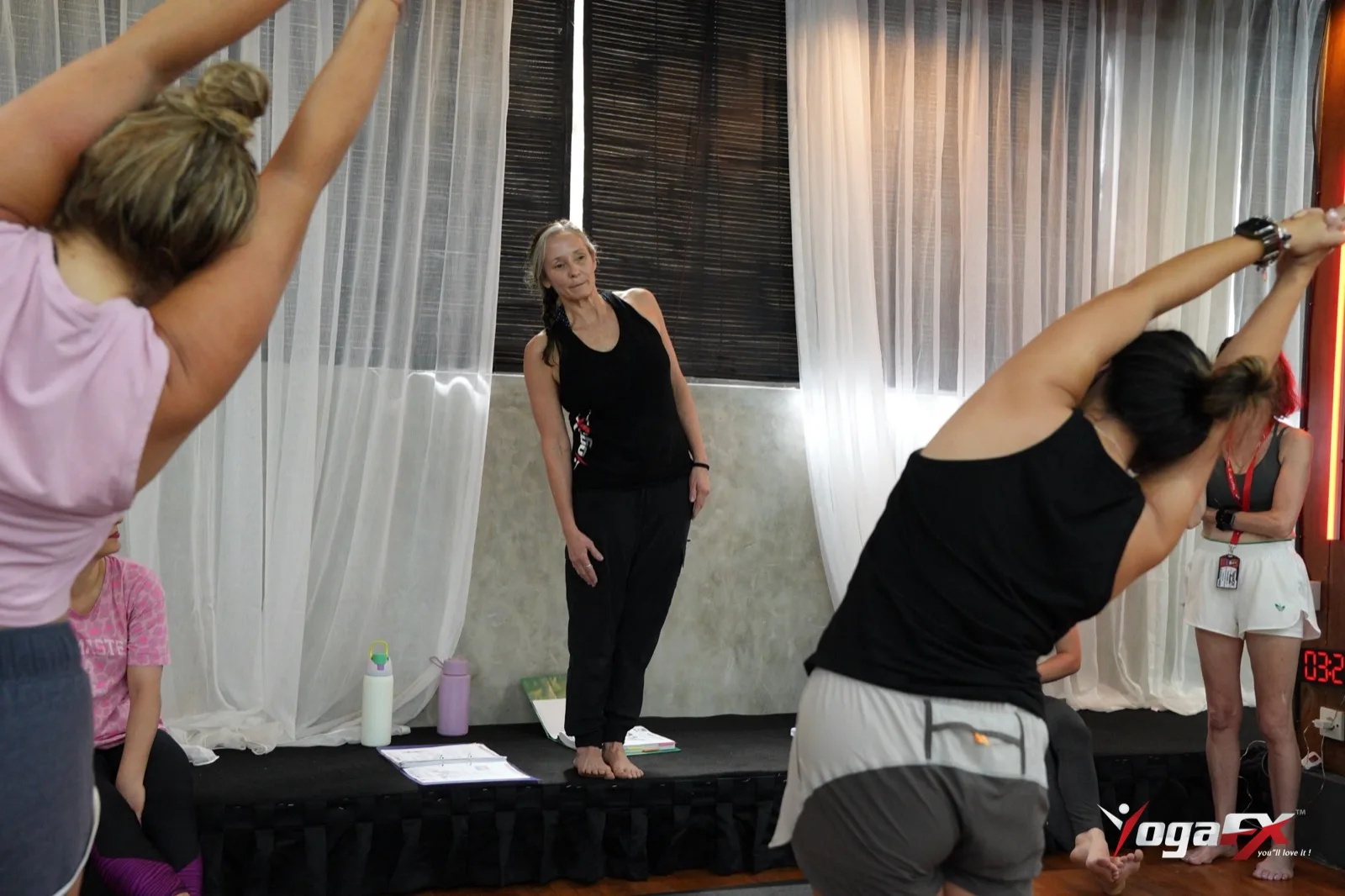
| Posture | Where you feel it | Safe depth cue trainees practise | Back off if you feel |
|---|---|---|---|
| Standing forward bend | Back of the legs, lower back | Bend the knees slightly, fold from the hips, keep the spine long | Pulling behind the knee, or rounding to reach |
| Standing Head-to-Knee | Hamstring of the raised leg | Lock the standing leg, lift the knee first, then extend | A wobbling or bending standing knee |
| Triangle | Inner thighs, hips, side body | Open the hips, then reach, and keep turning the chest up | A sharp pinch in the hip crease |
| Standing Bow Pulling | Front of the hip, shoulder, thigh | Kick back and up into the hand, keep the standing leg strong | Losing balance because you forced the kick higher |
| Camel | Front hips, chest, spine | Push the hips forward first, then lean back at a comfortable neck angle | Dizziness or pinching in the lower back |
| Spine Twisting | Mid-back, outer hips | Sit tall before you turn, and rotate from the mid-back | Pain in the knee or a twist that comes from the lower back |
Notice that each cue starts with alignment and ends with depth. That order protects you. If you want the full movement notes for a balancing posture, read our guide to Standing Bow Pulling Pose.
How teachers cue hot yoga for flexibility without pushing
Here is where teacher training differs from a normal class. A student can ignore their edge for a while. A teacher cannot, because a room full of people copies the cue.
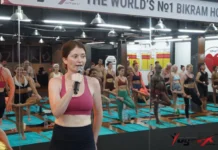
In our classes, the teacher speaks a scripted dialogue and does not demonstrate or play music. That means your words carry all the information when you teach hot yoga for flexibility. Trainees learn to give a cue in three parts:
- The target. Name the body part and the goal, such as lifting the chest or locking the knee.
- The limit. Say where the stretch should stop, for example at a firm pull behind the thigh.
- The option. Offer a way to go softer, such as a bent knee, so nobody feels they must go deeper.
Because the room is warm, trainees also learn to watch faces, breath and balance. A student who stops sweating, turns pale or loses focus needs a different cue than a student who simply feels tight. We cover that in our guide to who should check with a doctor before hot yoga.
Teaching this well takes practice. Our six-day Bali intensive gives trainees real teaching time with feedback from Mr. Ian Terry and senior teachers. Many trainees tell us the biggest surprise is how much they learn about restraint.
What the research says about hot yoga for flexibility
Marketing often claims that heat makes you far more flexible. The evidence is more modest, and that is useful for a teacher to know. Here is what we can say, and where we stay cautious.
| Source | What it studied | What it means for you |
|---|---|---|
| Weppler and Magnusson, 2010, Physical Therapy | A review of how stretching changes muscle length and sensation | Early gains are mostly more stretch tolerance, so judge depth by alignment |
| Lambert et al., 2020, Int J Exerc Sci | 16 experienced practitioners did the same Bikram sequence at 40°C and about 23°C | Both rooms improved range similarly, and heat clearly beat the cool room for hip abduction only |
| Houston Methodist Hospital summary, 2021 | A plain-language review of the Lambert study | Heated yoga looked safe for people with no known contraindications |
| Tracy and Hart, 2013 | A study of Bikram yoga that examined flexibility, strength and body composition | The study looked beyond range, at strength and body composition too |
Heat versus a cool room
Lambert and colleagues (2020) compared the same one-hour Bikram sequence in a 40°C room and a room of about 23°C. The 16 experienced practitioners did both, in random order. Both sessions produced similar acute changes in range of motion. Hip abduction rose more after the hot session (about 6.6 degrees against 2.3 degrees), but it was the only one of thirteen measures that differed.
The authors worked at Houston Methodist Hospital, and its team wrote a plain-language summary. It reported that heated yoga looked safe for people with no known contraindications. It also stressed that heat did not make yoga a better workout than room-temperature yoga.
What we take from the evidence
What do we take from this? Heat is a helpful setting for hot yoga for flexibility, not a magic switch. Your steady practice and good alignment matter more. A 2013 study by Tracy and Hart also examined Bikram yoga alongside flexibility, strength and body composition.
We do not claim that sweating cleanses the body, and we do not promise a set number of centimetres. This article is education, not medical advice. If you have a joint, heart or blood pressure condition, talk to a healthcare professional before you start.
Is hot yoga better for flexibility than regular yoga?
People search for this question all the time, and the research above gives a careful answer. Both styles can improve range. The heated room may help some joints a little more, and many people simply enjoy stretching when they feel warm.
The deeper difference is structure. A fixed sequence gives you the same postures every class, so you can feel your progress without guessing. A varied class gives you variety instead. Neither is wrong, and the better choice is the one you will repeat. We compare them in detail in our guide to hot yoga versus regular yoga.
If you like to read the practice side too, the posture-by-posture flexibility guide on our method site shows where range appears in a normal class.
How long until hot yoga for flexibility shows results?
Most newcomers feel different within a few classes, but the first change is usually the heat, not the stretch. Our guidance is to allow 3 to 5 classes for your body to adapt. After that, your breathing steadies and your focus moves from survival to alignment.
Range from hot yoga for flexibility tends to grow slowly after that. Because short-term gains are mostly about sensation, we suggest you track simple things instead of depth: how long you hold a posture with good alignment, whether your breath stays calm, and how you feel the next morning.
- Weeks 1 to 2. Learn the sequence and the heat. Keep knees soft and breathe through your nose.
- Weeks 3 to 8. Notice that familiar postures feel easier, and add depth only when alignment stays clean.
- After 8 weeks. Keep practising. The review above says longer programmes have not yet been well studied, so stay curious and conservative.
Trainees on the Bali intensive follow the same pattern in compressed form. If you want a gentle plan for your first weeks in the heat, read our guide to heat acclimatization for trainees.
When to back off and rest
Safe depth in hot yoga for flexibility also means knowing when to stop. Heat adds a second job for your body, so a stretch that feels fine in a cool room can feel different in a hot one.
- Sharp or pinching pain in a joint, rather than a muscle stretch.
- Dizziness, nausea or a pounding heart. Lower your centre of gravity, lie down and rest. Stay in the room and breathe slowly.
- Numbness or tingling that does not fade when you leave the posture.
Drink water through the day, not only before class, and give yourself time to cool down afterwards. Pregnant students, people with heart or blood pressure conditions, and anyone unsure should speak to a doctor first.
What trainees say about the room and the teaching
Numbers tell part of the story. Trainees tell the rest. These reviews come from our Google reviews and YouTube graduation videos, with first names only.
“I feel so happy, so blessed, powerful. Thank you so much everybody, I love you so much.”
Eni, YouTube graduation video, 2024
“Very enjoyable, it makes the body healthy. You can learn many things and it is a lot of fun.” (translated)
Kadek, Google review, 2024
“You’re all so amazing. You’re like, man, so supportive, so great.”
A trainee in our YouTube review, 2023
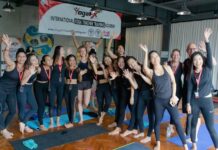
More than 550 reviews from our graduates sit on Google, Yoga Alliance and YouTube, and they share one theme: people arrive curious and leave with confidence.
Learn hot yoga for flexibility safely at YogaFX in Bali
If you love hot yoga for flexibility and want to teach it safely, the Bikram Hot 26&2 Yoga Teacher Training MasterClass is built for you. It is a six-day hybrid course: online preparation first, then an intensive in Bali. Graduates earn a Yoga Alliance RYT 200-hour certification plus a Bikram Hot 26&2 200-Hour International Yoga Certification.
- Next intake. Check-in Sunday 24 January 2027, check-out Friday 29 January 2027, in Seminyak.
- Your teacher. Mr. Ian Terry, Founder and Lead Instructor, E-RYT 500, with 1,500+ graduates from 80+ countries.
- Investment. Early Bird US$1,899, with instalments from US$250 per month, interest-free.
Our original hot yoga teacher training page explains the format and the dual certificate step by step. When you are ready to talk, message Mr. Ian and the YogaFX team on WhatsApp and we will help you plan your enrolment.
FAQ
Does hot yoga help with flexibility?
Yes, most people reach a little further over several weeks. Research suggests early gains come mainly from greater stretch tolerance, not new muscle length. Heat may help some joints more, such as the hips. Build range slowly, keep your alignment clean, and speak to a healthcare professional first if you have an injury or condition.
Is hot yoga better for flexibility than regular yoga?
Not clearly. In one study of experienced practitioners, hot and room-temperature sessions changed range of motion in a similar way, and only hip abduction favoured the heat. The fixed sequence of hot 26&2 does make progress easier to track. The best choice is the style you will practise regularly.
How long does it take for hot yoga to make you flexible?
Most people feel more comfortable within 3 to 5 classes, though that is mostly adapting to the heat. Range usually grows over several weeks. Track how long you hold a posture with good alignment, not how deep you go. Slow progress is safer and lasts longer than quick gains.
Which hot yoga postures are best for flexibility?
The 26 and 2 sequence works the whole body, so no single posture does everything. Forward bends and Standing Head-to-Knee stretch the hamstrings, Triangle opens the hips, and Camel opens the chest and front hips. Practise each with soft joints and a firm pull, not a sharp edge.
Is it safe to stretch deeply in a hot room?
Deep stretching in heat needs care, because warmth can hide your limits. Stop at a firm pull, never at pain, and rest if you feel dizzy or nauseous. Heated yoga looked safe for people without known contraindications in one hospital summary. Check with a doctor if you have heart, blood pressure or joint concerns.
Still have questions? Message Mr. Ian and the YogaFX team on WhatsApp and we will answer them personally.