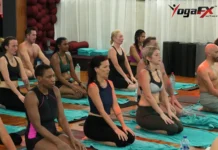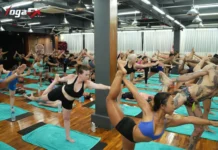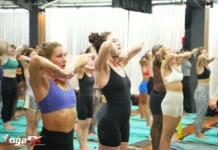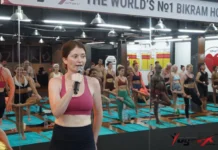







Bishnu Charan Ghosh (1903 to 1970) was a Calcutta teacher of physical culture and the younger brother of Paramahansa Yogananda. He taught Bikram Choudhury, and his college work with muscle control sits at the start of the story behind the Hot 26&2 sequence that YogaFX trainees teach in Bali.
This page is a plain profile. It tells you who he was, what the sources let us say, and how his story reaches Mr. Ian Terry’s classroom. We also flag the claims you will see online that no source supports.
Who Was Bishnu Charan Ghosh? A Short Profile
Bishnu Charan Ghosh was born on 24 June 1903 in Lahore, then part of British India. According to the Wikipedia biography of Bishnu Charan Ghosh, he grew up in a well-to-do Bengali family and was the youngest of eight children. His father was Bhagabati Charan Ghosh, and his parents followed the Kriya Yoga teacher Lahiri Mahasaya.
So here are the basics, kept to what we could check in the sources we opened:
- Born: 24 June 1903, Lahore, British India.
- Family: youngest of eight children, and the younger brother of Paramahansa Yogananda.
- Base: Calcutta, where he founded a college of physical education in 1923.
- Died: 9 July 1970 in Calcutta, aged 67.
Our sources do not give a cause of death, so we don’t offer one. People search for it often. However, a guess would not help you, and it would not be fair to him.
Family, Yogananda and His Early Training
Learning From an Older Brother
Yogananda, born Mukunda Lal Ghosh, is the best known of the Ghosh children. The Wikipedia biography of Bishnu Charan Ghosh says Bishnu Charan Ghosh met yoga through him at the Ranchi school for boys in Bengal, as one of its first seven pupils. Yogananda also taught him nauli, a traditional abdominal rolling exercise.
Later, in 1925, the same biography says he trained in physical education at the University of Calcutta. So he drew on two worlds at once. One was yogic practice from his brother, and the other was modern physical training from a university.
Family Is Not the Same as a Teaching Lineage
A famous brother explains where he started, but it does not explain what he built. His own reputation grew through his college, his students and his book, so that is where we look next.
Bishnu Charan Ghosh and His Calcutta College
In 1923, when he was twenty, Bishnu Charan Ghosh founded the College of Physical Education in Calcutta. An interview with Jerome Armstrong in The Week (published December 2019) gives the same year and places the college in north Calcutta. Today it runs as Ghosh’s Yoga College in north Kolkata, led by his granddaughter Muktamala Ghosh, according to Wikipedia.
What did he teach there? Because the sources describe a blend rather than one tidy system, we list the parts:
- Physical culture: training, diet and lifestyle drawn from older Indian wrestling and gymnasium traditions, including heavy stone nal weights.
- Muscle control: a method of showing and directing muscles by will, which he learned in part from his brother.
- Weights and apparatus: barbells and other equipment for building size and strength.
- Hatha yoga postures: asanas taught alongside the strength work, not instead of it.
That mix matters because Bishnu Charan Ghosh was a strongman and a yogi in the same building. As a result, his teaching leaned toward strength, repetition and control, which still shapes how the Hot 26&2 sequence is taught today.
Muscle Control and Barbell Exercise (1930)
The one book credited to him is Muscle Control and Barbell Exercise, written with K.C. Sen Gupta and published by the college in 1930. Wikipedia notes that it relied heavily on Maxick’s 1913 book Muscle Control, or Body Development by Will-Power. In other words, he borrowed from the physical culture world of his day as well as from yoga.
We find that honest and useful, because a teacher who borrows openly from several sources is easier to trust than a legend with no footnotes. Trainees can take the same habit into their own classes.
Students Who Carried His Work Forward
Several names come up again and again when people trace his influence:
- Monotosh Roy (1917 to 2005): Wikipedia says he became the first Indian bodybuilder to win the Mr. Universe title, in 1951.
- Reba Rakshit (1933 to 2010): a circus performer in the 1950s, according to The Week.
- Buddha Bose: a devoted disciple whose book on 84 asanas was published in 2018, as The Week reports. The two sources we read describe his family tie to Ghosh differently, so we leave that detail open.
- Bikram Choudhury: the student most people know, covered in its own section below.
For example, scholar Mark Singleton, cited on Wikipedia, argues that the method of Bishnu Charan Ghosh shaped modern postural yoga more than most people realise. We mention that view as one reading, not as settled fact.
Who Is Who in the Story
| Person | Link to Ghosh | What the sources say |
|---|---|---|
| Paramahansa Yogananda | Older brother | Introduced Ghosh to yoga at the Ranchi school and taught him nauli. |
| Buddha Bose | Disciple | Documented asanas in a book on 84 postures, first published in 2018. |
| Monotosh Roy | Student | First Indian bodybuilder to win Mr. Universe, in 1951. |
| Bikram Choudhury | Student | Became a regular student in 1962; later built his own system on that teaching. |
| Mr. Ian Terry | Teacher in the wider Hot 26&2 community | Trained for five years, 2014 to 2019, alongside the founder of the Bikram Hot 26&2 method. |
What Modern Strength Research Says About His Focus
Bishnu Charan Ghosh built his college around muscle control and weights, so that raises a fair question for anyone who teaches movement: does strength work really matter for health? Two non-yoga sources give a clear answer.
The CDC adult physical activity guidelines say adults need at least two days of muscle-strengthening activity each week. They add that these sessions should work all major muscle groups: legs, hips, back, abdomen, chest, shoulders and arms.
The Mayo Clinic guide to strength training goes further. It says strength training can help you keep and increase muscle mass as you get older. It also lists several benefits:
- Stronger bones: by stressing bones, strength training protects bone health and may lower the risk of osteoporosis.
- Weight management: it can improve body composition and help you burn more calories.
- Balance: it can support balance and lower the risk of falls.
- Some chronic conditions: it may help reduce joint pain and improve symptoms in conditions such as arthritis, heart disease, diabetes, depression and anxiety.
So the college of Bishnu Charan Ghosh was pointing at something modern guidelines still stress. However, we are not saying a hot yoga class replaces a weights programme, and we are not promising any health result from our training. If you have a heart, blood pressure, joint or pregnancy concern, speak with a healthcare professional before you start. This page is general information, not medical advice.
From Bishnu Charan Ghosh to Bikram Choudhury
Wikipedia reports that, unlike a regular pupil, Bikram Choudhury claimed to have studied with Ghosh from the age of five. It adds that he did not become a regular student until 1962, when he was 18 and training as a bodybuilder. The same article describes his later system as based on Ghosh’s teachings.
The Week describes him as the man who packaged the method and popularised it as hot yoga in the United States. That phrasing fits what we know: a fixed sequence of 26 postures and 2 breathing exercises, taught over 90 minutes. Even so, the documented link between the two men is narrower than many websites suggest, because most of it rests on one encyclopedia entry.
Choudhury also named the Bishnu Charan Ghosh Cup, and Wikipedia says it is awarded at the International Yoga Asana Championships in Los Angeles. Mr. Ian Terry’s federation roles and coaching work cover how that competitive side of the method has grown.
For a second reading of the Calcutta lineage, see this companion study of the Calcutta lineage. It focuses on dates and the limits of the record. For the wider story from Calcutta to California, read our full account of Bikram yoga history and Mr. Ian Terry’s lineage.
Three Claims You Will See Online
- “Ghosh designed the 26 postures.” Nothing we read backs this up. The pages describe a college, strength training and a book on muscle control, so we call the design claim unproven.
- “Choudhury learned from Ghosh as a small child.” Wikipedia reports this as his own claim. The date it gives for regular study is 1962, when he was 18.
- “The heat came from Bengal.” Some tellings say the heated room was meant to recall Bengal’s climate. Our definitive guide to Hot 26&2 yoga also records a different story, in which a student’s heater in Japan led to it. We can’t settle that from here.
Checking one claim at a time is a habit worth building, because it protects you when a student asks where the postures come from.
Five Dates From Calcutta to Bali
1923
College founded
Ghosh opens the College of Physical Education in Calcutta.
1962
A famous student
Bikram Choudhury becomes a regular student, aged 18.
2014 to 2019
Mr. Ian Terry trains
Five years of training alongside the founder of the Bikram Hot 26&2 method.
2017
YogaFX begins
The Bali school opens, now about ten years old.
1,500+
Graduates
Teachers from more than 80 countries have trained with YogaFX.
How the Lineage Reaches Mr. Ian Terry in Bali
We have to be careful here. Mr. Ian Terry holds E-RYT 500 status and has taught for over 12,000 hours. Between 2014 and 2019, he spent five years training alongside the founder of the Bikram Hot 26&2 method. He doesn’t claim to have sat in the gymnasium of Bishnu Charan Ghosh. Instead, he names his sources and the limits of the record when he teaches.
That honesty is the point. A lineage is only as strong as the claims you can back up, so we teach trainees to say what the record supports and stop there.
He is also a Master Trainer with the Republic of Indonesia Yogasana Sports Federation. Since 2017, YogaFX has grown into a school that has graduated more than 1,500 teachers from over 80 countries. That is the human end of a long chain, and Bishnu Charan Ghosh sits near the start of it.
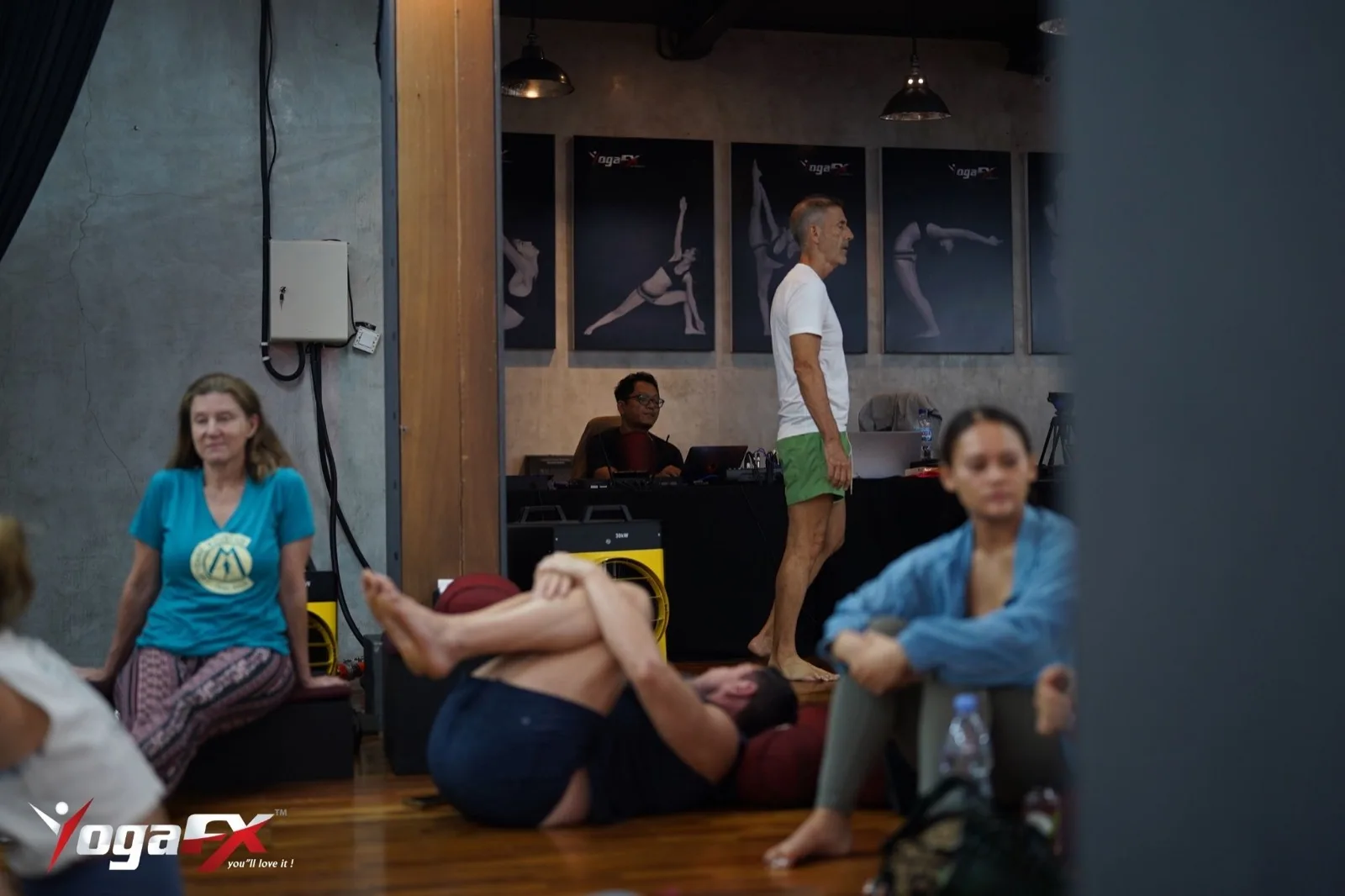
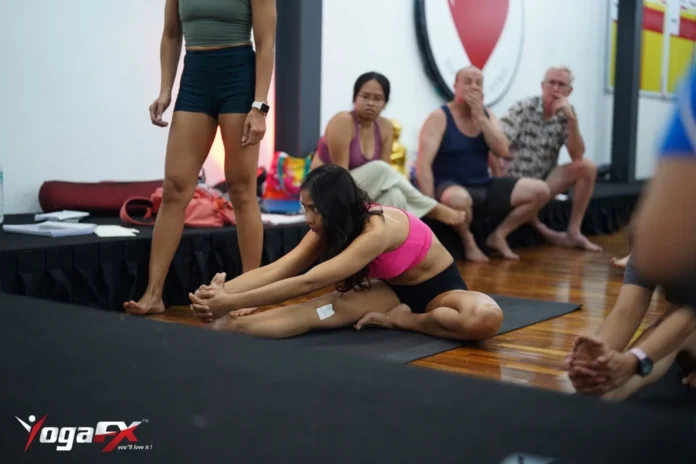
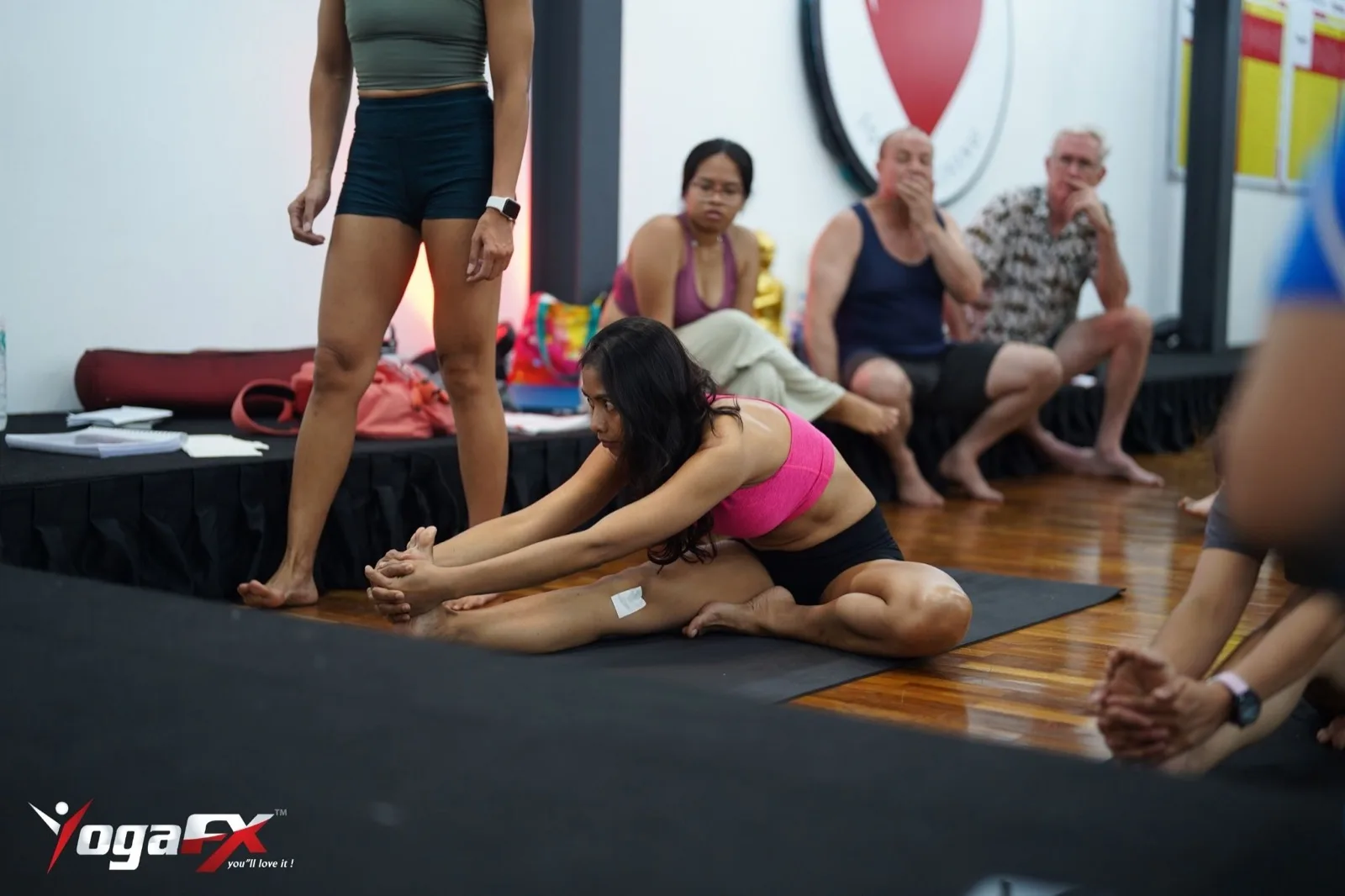
We teach in Bali’s natural tropical heat, not with electric heaters. The classroom looks nothing like a Calcutta gymnasium in 1923. Even so, the teaching questions are the same ones he faced. How do you explain a posture clearly? How do you get a whole room to repeat it safely?
If you want to know how this fits with other well-known teachers, read about the other teachers in the same lineage.
What YogaFX Trainees Say
Our trainees rarely ask about Bishnu Charan Ghosh on day one. They ask about the teaching, the heat and the people. Still, their words show what the lineage feels like in practice. Here are three reviews from our YouTube channel, with first names and the year only.
I just want to thank everyone for this truly life-changing amazing experience, it’s like it’s one of the most amazing things I’ve ever done.
Jason, YouTube review, 2023
We are becoming one family.
Elvia, YouTube review, 2023
Lisa, in her 2023 YouTube review, thanked Mr. Ian for guiding her and said she wants to become a good teacher, especially for bigger classes.
Notice the word “family” in Elvia’s review. A teaching lineage is, at heart, people handing something on to people. That is the part of the story of Bishnu Charan Ghosh that we find most worth keeping.
How Trainees Learn to Say It in One Minute
On our course, trainees practise a short, honest line about where the method comes from. Students remember one sentence longer than a page of dates, so the wording matters. We coach trainees to:
- Name the person and the place: “A Calcutta teacher called Bishnu Charan Ghosh ran a college of physical education from 1923.”
- Say what is documented: “Bikram Choudhury studied there from 1962, and built his own system on it.”
- Say what is not: “Who shaped each posture is still debated, so I won’t pretend to know.”
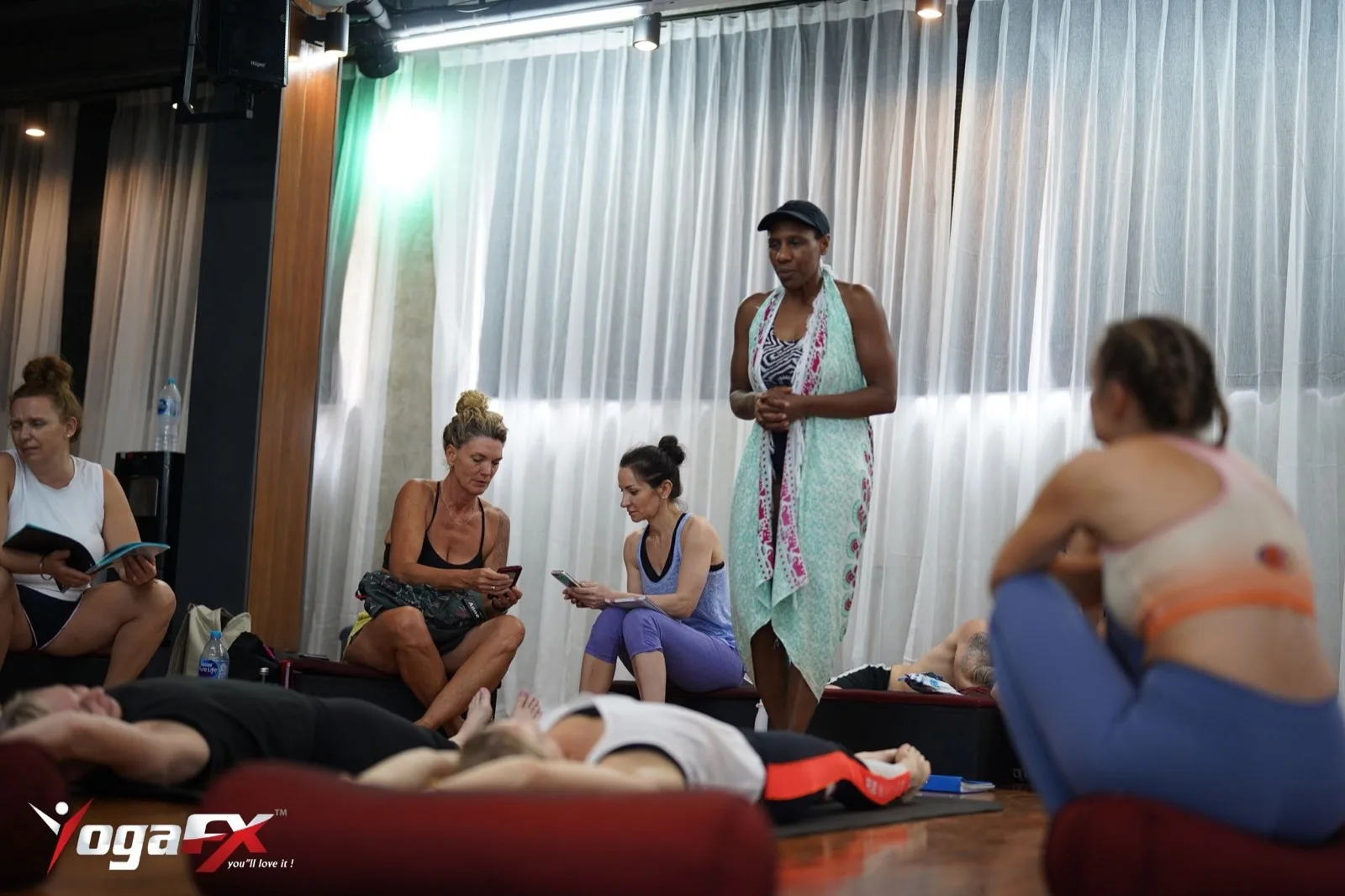
Because the story has gaps, it is also a good place to practise saying “we are not sure” calmly. Students trust that more than a confident story that falls apart under one question.
Train With Mr. Ian Terry in Bali
If this history made you curious about the method itself, the best next step is to practise it. Our six-day hybrid MasterClass pairs an online pre-course with an intensive in Bali. The January 2027 batch runs from Sunday 24 January to Friday 29 January at Soham Wellness Center in Seminyak.
Finishing the course earns two credentials: Yoga Alliance RYT 200-Hour and the Bikram Hot 26&2 200-Hour International Yoga Certification. The Early Bird fee is US$1,899 against a standard US$1,999, so ask the team for today’s price before you book. Full details are on our original Hot 26&2 teacher training in Bali page.
FAQ
Did Bishnu Charan Ghosh create the 26 postures?
Nothing we read says so. The sources describe his college, his strength teaching and a 1930 book on muscle control. Bikram Choudhury later packaged a fixed set of 26 postures and 2 breathing exercises. Who shaped each posture is still debated, so we don’t credit one person.
What is the Bishnu Charan Ghosh Cup?
The Bishnu Charan Ghosh Cup is a yoga asana competition trophy. Wikipedia says Bikram Choudhury named it and that it is awarded annually at the International Yoga Asana Championships in Los Angeles. It honours Ghosh’s name in the competitive yoga community, though the cup itself is separate from his college in Calcutta.
Where is the Bishnu Charan Ghosh college today?
The college Bishnu Charan Ghosh founded in 1923 still exists in north Kolkata. It now runs as Ghosh’s Yoga College, and Wikipedia says his granddaughter, Muktamala Ghosh, leads it. Its original name was the College of Physical Education, and it began as a place for strength and posture training.
Is Bishnu Charan Ghosh connected to Mr. Ian Terry?
Not directly. Mr. Ian Terry does not claim to have studied in Ghosh’s gymnasium. Between 2014 and 2019 he trained with the founder of the Bikram Hot 26&2 method, who studied with Ghosh. The link is a chain of teachers across generations, and we state its limits openly rather than overstate it.
Is this training official Bikram Choudhury teacher training?
No. It is independent training, not official Bikram Choudhury Teacher Training. Graduates earn the Yoga Alliance RYT 200-Hour certification and the Bikram Hot 26&2 200-Hour International Yoga Certification. The course teaches the Hot 26&2 method in Bali’s natural tropical heat, with Mr. Ian Terry leading.
Still have questions? Message Mr. Ian and the YogaFX team on WhatsApp and we will answer them personally.