











Heat acclimatization is how your body adapts to repeated heat. You sweat sooner, your heart works less, and your core temperature rises more slowly. Trainees build it in steps over several weeks before the Bali intensive, not in one brave class. Add heat gradually, rest between steps, and stop at the first warning sign.
Mr. Ian Terry, our founder and an E-RYT 500 with more than 12,000 teaching hours, tells new trainees the same thing. Measure progress by how you recover, not by how deep you go. This guide turns that advice into a four-week plan, backed by sources we opened and checked. It is general information, not medical advice. Please consult a healthcare professional before you start heated classes, especially with a heart condition, low blood pressure, pregnancy or regular medication.
Heat Acclimatization in Plain Words: What Actually Changes
Heat acclimatization is a set of changes your body makes after repeated exposure to heat. Some writers say heat acclimation when they mean the same changes made in a lab, and acclimatization when they mean real-world conditions. For a trainee, the difference does not matter. The changes do.
The CDC and NIOSH guidance on acclimatization lists what improves. Here is the short version:
- Earlier, more efficient sweating. Sweat starts sooner, you make more of it, and you lose less salt in it.
- Steadier circulation. Blood flow to the skin increases at a given core temperature.
- A cooler, calmer body. You can do the same work at a lower core temperature and heart rate.
The Korey Stringer Institute at the University of Connecticut adds a detail that matters for yoga. Adaptation depends on volume, intensity and duration of exercise, plus keeping your internal temperature raised during that exercise. In other words, a warm room alone is a weak trigger. You have to move in the heat, and you have to repeat it.
The same page notes that adapting to hot, humid conditions has shown a greater rise in sweat rate than adapting to hot, dry ones. That fits Bali, where the air is humid all day. So expect to sweat more in week three than in week one, and treat that as a sign the system is working.
How Long Heat Acclimatization Takes for a New Trainee
Two sources give the same window. The CDC says workers should gradually increase their exposure over a 7 to 14 day period, and the Korey Stringer Institute describes the same 7 to 14 days. New people need more time than people who already have some heat experience. For a brand-new worker, the CDC schedule starts at no more than 20% of the normal heat exposure on day one, then adds no more than 20% each day.
That schedule was written for workers, not yoga trainees. Still, the logic carries over. The gap between your first heated class and your tenth is the same kind of gap. A steady step-up beats a sudden jump.
What happens if you stop
Adaptation fades. The CDC says that after an absence of a week or more, there may be a significant loss of the beneficial changes, and a need to gradually reacclimatize. The good news is that it can often be regained in 2 to 3 days once you return to the heat.
That matters for trainees with a long flight or a busy month before the course. A week off is a reason to rebuild, not a reason to panic. That’s also why we don’t suggest cramming every heated class into the last few days.
Your Four-Week Heat Acclimatization Plan Before the Bali Intensive
Here’s the plan we give trainees who have a month before check-in. It’s our coaching suggestion, built on the CDC idea of a gradual build. It isn’t a prescription, and no yoga study has tested it. If a step feels like too much, stay on it for another week.
| Week | Heated classes | Between classes | Check yourself | Slow down if |
|---|---|---|---|---|
| 1 | One class, or none if you have no heated studio nearby | Practise the postures at normal room temperature. Start a daily water habit. | How was your sleep that night? | You feel dizzy, sick or flat the next morning |
| 2 | Two classes with a rest day between | One home run-through. Light walking in the warmth. | Was the first half easier than last week? | Your pulse stays high long after you sit down |
| 3 | Two or three classes if you recover well | One home run-through. Add a little salt to meals on heavy sweat days. | Do you recover faster between postures? | You need a second rest day to feel normal |
| 4 | Two classes, then ease off in the last days | Light movement, early nights, steady fluids. | Do you arrive rested, not wrung out? | You feel more tired every day, not less |
A few habits matter more than the exact numbers:
- Add one thing at a time. Add a class or add effort, never both in the same week.
- Rest between heated days. Your body adapts in the recovery as well as in the room.
- Keep a one-line note after each class. After a month, the pattern tells you more than any article.
Heat on its own is a poor shortcut. Because the Korey Stringer Institute ties adaptation to exercise as well as heat, sitting in a sauna is probably a weaker substitute for a real class. That is our reading, not a study of yoga trainees. We don’t suggest a sauna as a shortcut, or as a reward after class either.
Pacing Heat Acclimatization in Bali: Arrival Days and the Six-Day Intensive
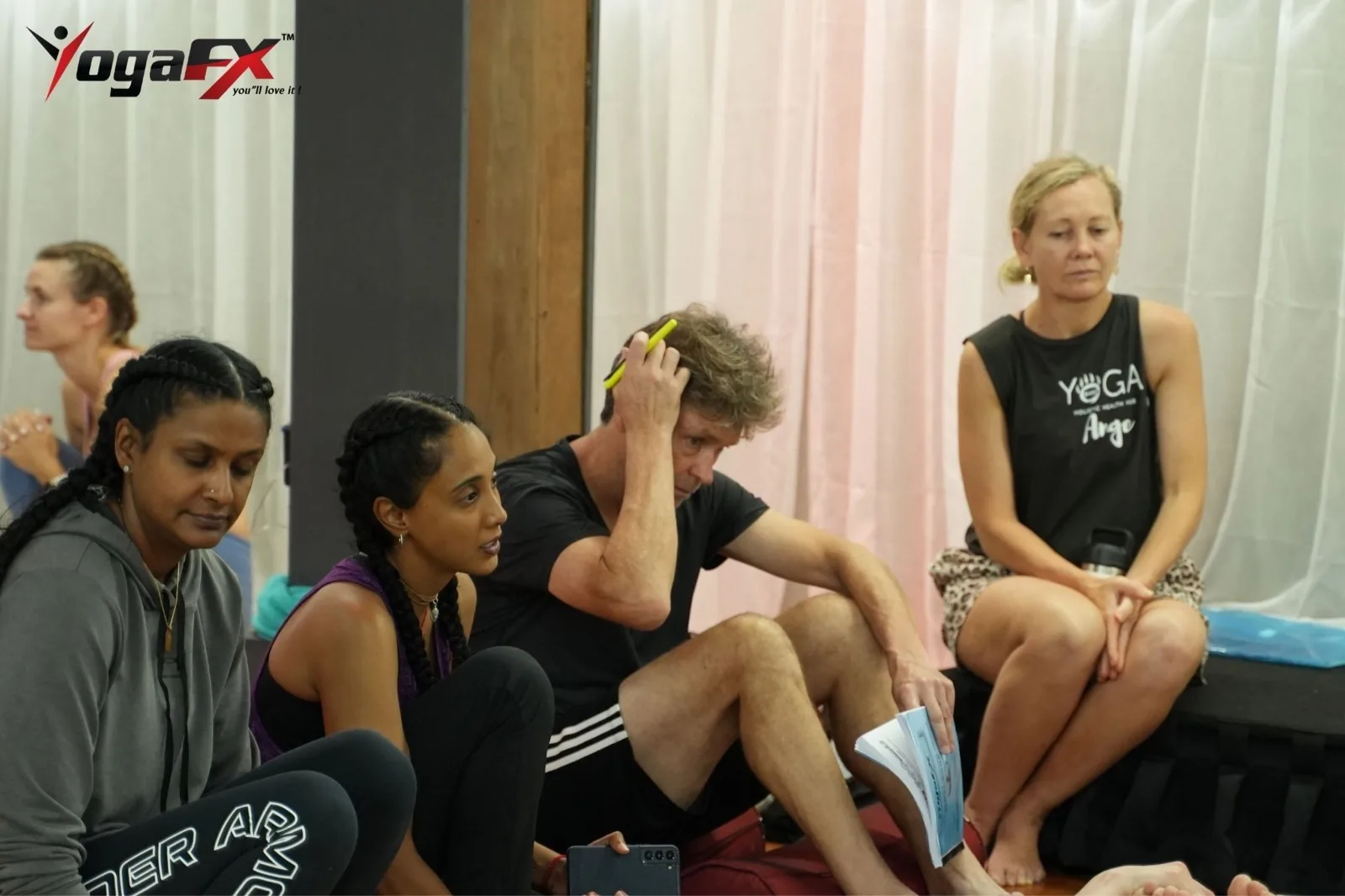
The Bikram Hot 26&2 Yoga Teacher Training MasterClass is a six-day hybrid. You study online first, then join the intensive in Bali. The next batch checks in on Sunday 24 January 2027 and checks out on Friday 29 January 2027, at Soham Wellness Center in Seminyak. Our guide to the online theory plus Bali intensive format shows how the days are laid out.
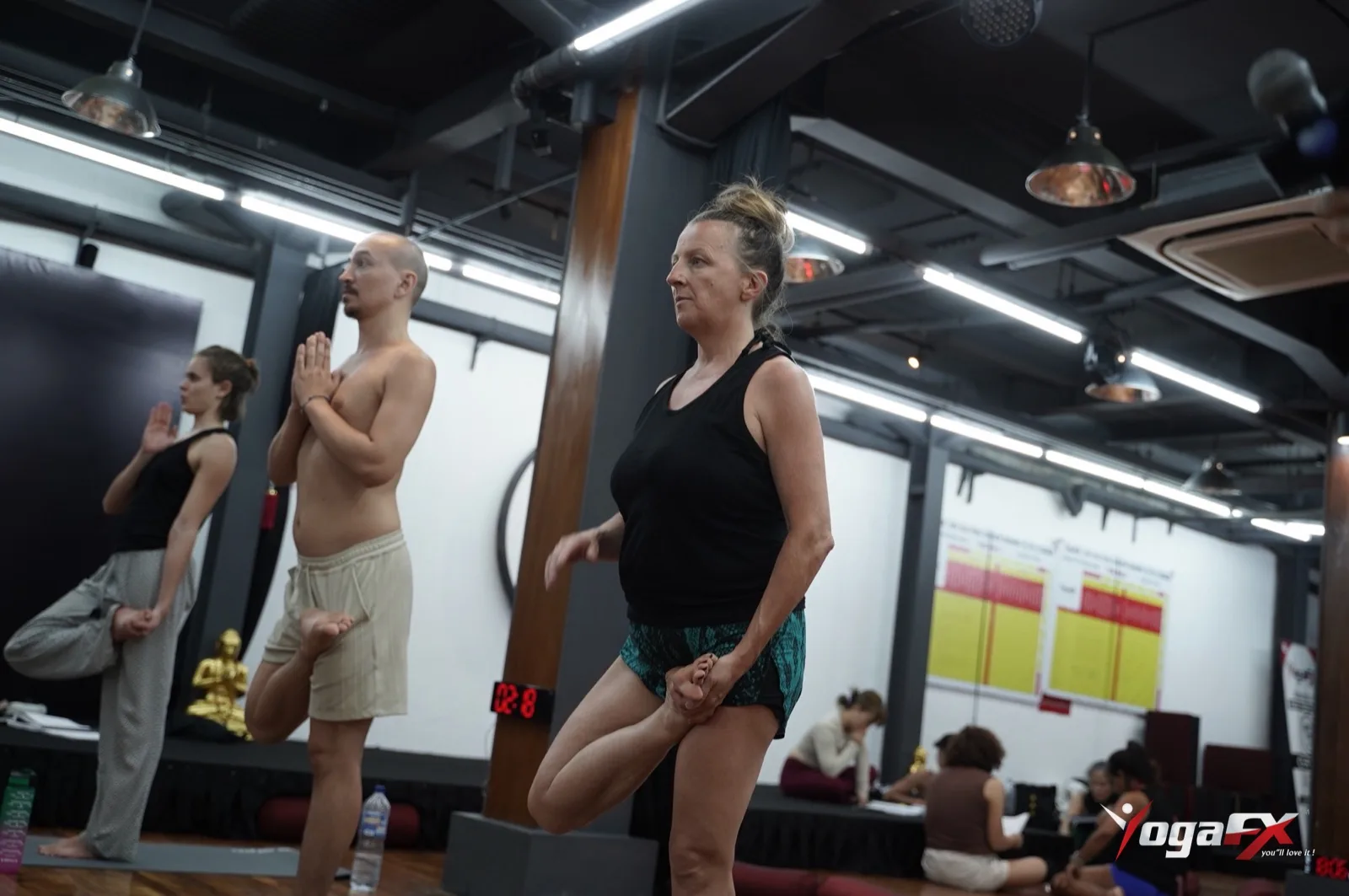
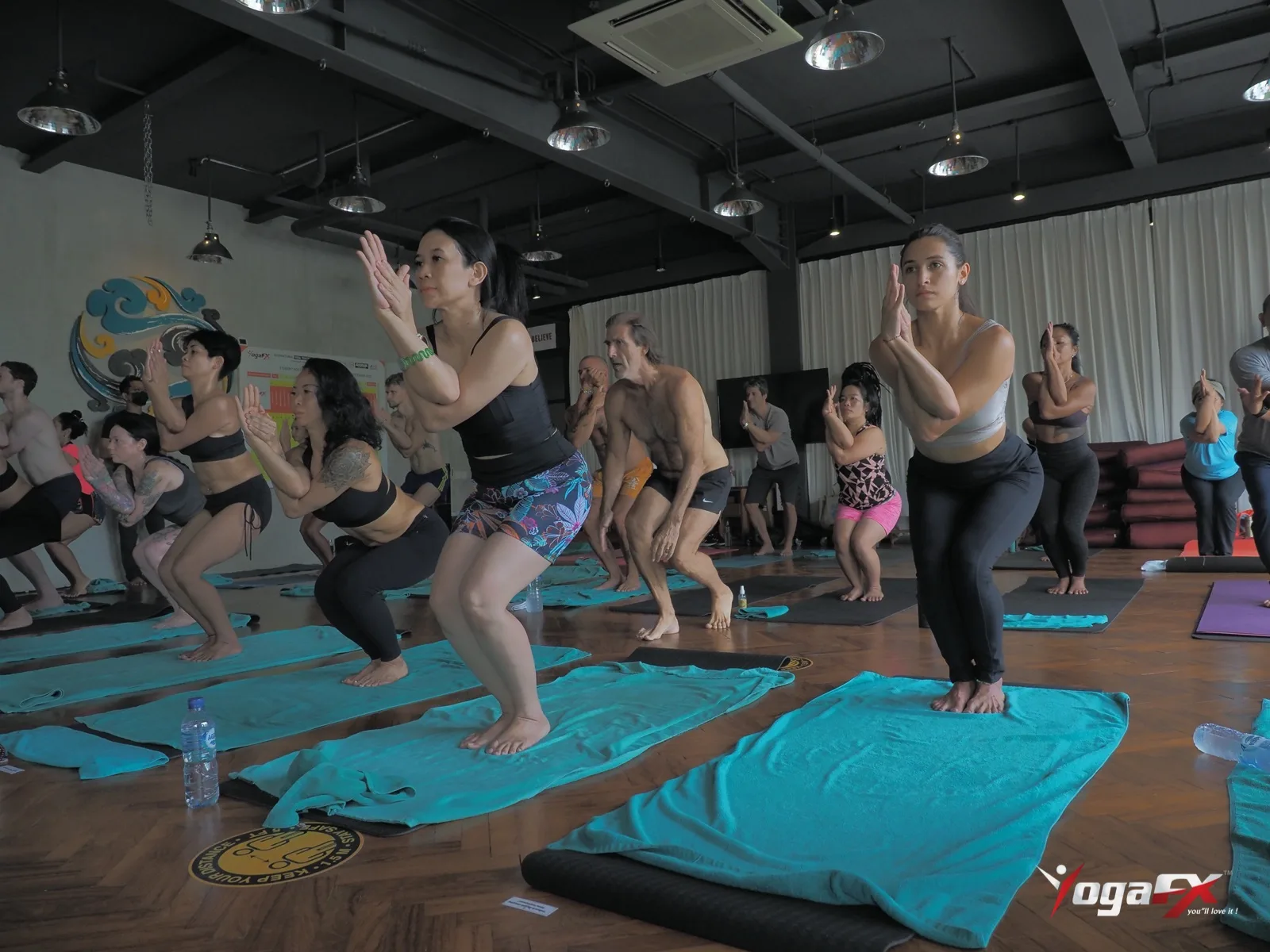
Classes run 90 minutes at about 40°C and 40% humidity. The heat is natural tropical heat, not an electric heater. As a result, the warm air doesn’t switch off when class ends, and heat acclimatization carries on all day. You carry a heat load from the moment you wake up.
If you can, arrive early
Trainees flying in from a cool climate start with no heat history. If your schedule allows, arrive two or three days before check-in. Walk in the warmth, drink steadily, and keep your first days light. This is practical advice from how we run training, not a finding from a study.
Day by day, pace the second half of each posture
- Go gentler in the second set. That is where it is easiest to overreach.
- Sit out when you need to. Sitting down is part of practice, not a failure.
- Sip, do not gulp. Small sips between postures beat a large drink at the end.
- Protect your sleep. Leave a gap between the end of the day and lights out so your body can cool.
Some trainees also wonder how hard the heart works while they adapt. Our guide to hot yoga heart rate lines up the published numbers. For the fatigue side, read what graduates say about training week tiredness.
Water, Salt and Sleep While Your Heat Acclimatization Builds
The Korey Stringer Institute advises athletes to be properly hydrated before, during and after practice. It also advises more sodium in the diet for the first days of heat practice, to make up for sweat salt loss. That advice was written for sport. Even so, a sweaty class asks the same questions of your body, so heat acclimatization and fluids go together.
- Start early. Sip through the day before class instead of drinking a lot at the door.
- Replace salt. After a streaming class, a salty meal or drink helps. If you have high blood pressure, ask your doctor first.
- Eat something familiar. Training week is the wrong time to try a new food. Rice, eggs, fruit and yoghurt are easy on the stomach.
- Watch your urine. Pale by the evening is a simple sign that your fluids are on track.
For a full routine, see our hot yoga hydration guide for trainees.
Warning Signs: Adapting Does Not Mean Pushing Through
Heat acclimatization is about building tolerance, not ignoring symptoms. Mayo Clinic lists the signs of heat exhaustion: heavy sweating, faintness, dizziness, fatigue, a weak and rapid pulse, muscle cramps, nausea and headache, sometimes with cool, moist skin and goose bumps in the heat.
Its advice is plain. Stop all activity and rest, move to a cooler place, and drink cool water or sports drinks.
Contact a healthcare professional if symptoms get worse or do not improve within one hour. Seek immediate help if the person becomes confused, loses consciousness or cannot drink. A body temperature of 104°F (40°C) or higher needs help right away.
| Signal | Green: carry on | Amber: stop and cool down | Red: get medical help |
|---|---|---|---|
| Feeling | Warm, tired, focused | Dizzy, faint, nauseous | Confused or distressed |
| Skin | Sweaty, then cooling | Cool, clammy, goose bumps | Hot skin, no sweating |
| Head and muscles | Mild tiredness | Headache or cramps | Cannot drink or stay conscious |
| Next step | Pace the second set | Sit out, sip cool water | Call for emergency help |
If you have a heart condition, high blood pressure, are pregnant, or take medicine that affects fluids or heart rate, speak to a doctor before you build heat exposure. Tell your teacher before the room warms up, so they can watch you with care. Heat acclimatization should never mean ignoring your own limits.
What Trainees Say About Finding Their Feet
Numbers describe the average person, and heat acclimatization looks different in every body. None of these YogaFX reviews is a measurement. They show how it feels from the inside when a hard week starts to settle.
Lisa: the first week turned a corner
Lisa spoke at her YogaFX graduation ceremony in Bali, as seen in her YouTube review. She described the point where she began to believe she could finish.
“After first week passed, I think I can do it.”
Lisa, YouTube review, 2023
It’s one trainee’s account, not a measurement. Still, it matches what many trainees tell us: the first days ask the most of your body, and then things level out.
Dior: grateful for a late start
In a graduation video from January 2024, Dior thanked the team for letting them join the training late. Dior called the experience wonderful.
“I am very grateful for this experience.”
Dior, YouTube review, 2024 (a filler word removed)
Catherine: support, then the beach
Catherine, in a short graduation clip from 2024, thanked the group for their support and said the time had been great. Then Catherine invited everyone to a beach get-together. Recovery, in other words, includes people and fun, not only water and sleep.
What the Science Can and Cannot Tell You
Most of what we know about heat acclimatization comes from workers, soldiers and athletes. The CDC and the Korey Stringer Institute both write for those groups. We did not find a study we could open that follows yoga trainees through the adaptation week by week.
That’s why we call the plan above sensible, not proven. It borrows the gradual-build logic from the evidence we can check, and it leans on how we have coached trainees since 2017. Treat it as a starting point and let your own body overrule it.
If you want the wider picture of how the sequence works, our Definitive Guide to Hot 26 and 2 Yoga covers all 26 postures and the two breathing exercises. For a studio-side view of the same topic, this guide to how drop-in students adapt to Bali’s heat looks at the first month for visitors.
Train With YogaFX in Bali With a Plan You Can Follow
YogaFX teaches the Bikram Hot 26&2 method in natural tropical heat. Mr. Ian Terry trained for five years, from 2014 to 2019, with the founder of the method.
He is also a Master Trainer for the Republic of Indonesia Yogasana Sports Federation. Since 2017, YogaFX has trained more than 1,500 graduates from over 80 countries.
- Two certificates. Yoga Alliance RYT 200-Hour plus the Bikram Hot 26&2 200-Hour International Yoga Certification.
- Early Bird price. US$1,899, against a normal price of US$1,999. Payments start from US$250 a month with no interest.
- Study first. The online course costs USD 329, or 4 payments of USD 82, and doubles as your pre-course preparation.
- Try the heat first. Your first class at our Seminyak studio is free with the Free 1-Day Guest Pass.
Ready to ask? Message Mr. Ian and the YogaFX team on WhatsApp to enrol and we will answer your questions personally.
FAQ: Heat Acclimatization for Trainees
What is heat acclimatization?
Heat acclimatization is the set of changes your body makes after repeated exposure to heat. You sweat sooner, lose less salt in sweat, and keep a lower heart rate and core temperature for the same work. The CDC describes it as a gradual process, so a steady build works better than one long session.
How long does heat acclimatization take?
The CDC and the Korey Stringer Institute both give a window of 7 to 14 days of gradual exposure. New people need more time than people with some heat experience. For a hot yoga trainee, we suggest four weeks of steady practice before the intensive, with rest days between heated classes.
Does heat acclimatization reduce sweating?
Usually the opposite. The Korey Stringer Institute reports that sweat rate rises and sweating starts earlier as you adapt. The CDC adds that sweat becomes more efficient, with less salt lost. So you may sweat more after a few weeks, but your body cools better and loses fewer minerals.
How long does heat acclimatization last?
It fades with time away. The CDC says an absence of a week or more may cause a significant loss of adaptation. The good news is that it can often be regained in 2 to 3 days once you return to the heat. After a long break, restart with a lighter class.
Can I start heat acclimatization before I fly to Bali?
Yes, if you have a heated class or a hot, humid place to move in. Add one class or one new effort at a time, rest between heated days, and drink steadily. If you feel dizzy, sick or confused, stop, cool down and speak to a healthcare professional.
Still have questions? Message Mr. Ian and the YogaFX team on WhatsApp and we will answer them personally.