









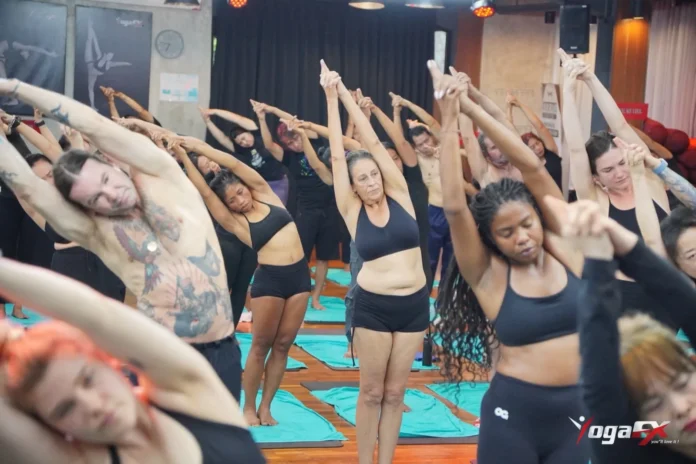
Bikram vs hot yoga is a choice between one fixed class and a whole family of free-form ones. Bikram means the same 26 postures and 2 breathing exercises, in 90 minutes, at about 40°C. Hot yoga means any yoga in a heated room. If you plan to teach, that difference decides what you will learn to deliver.
Mr. Ian Terry, E-RYT 500, has taught the fixed class for more than 12,000 hours and trained 1,500+ graduates from 80+ countries. This guide uses that teaching floor to answer a narrower question than most comparisons do. You are not only choosing a class to enjoy. You are choosing the kind of class you may one day lead.
So the useful version of Bikram vs hot yoga asks what each style trains in you as a future teacher. Below you will find five checks, a comparison table, what the research can and cannot say, and a three-week test you can run before you spend anything on a training.
Bikram vs Hot Yoga: The Short Answer if You Want to Teach
Every Bikram class is a hot yoga class, but most hot yoga classes are not Bikram. Bikram is one defined format. Hot yoga is a label that each studio fills with its own sequence, music and temperature. That is why two people can both say they love hot yoga and mean very different things.
- Choose the fixed class if you like structure, want to repeat one sequence until it is yours and are curious about teaching from a spoken script.
- Choose free-form hot yoga if you enjoy variety, want to design your own flows and prefer music and demonstration.
- Try both if you cannot tell yet. Many teachers practise both for years, and neither choice locks you in.
None of this is a ranking. Bikram vs hot yoga is a question of fit, and the fit that matters most is the one you will keep turning up for. If you are also weighing heated against room-temperature training, our guide to hot yoga vs regular yoga for teacher certification covers that side. For the wider map of heated courses, see our hub on hot yoga certification routes.
Five Checks for Bikram vs Hot Yoga Before You Pick a Class
Skip the online arguments and answer five plain questions instead. Write your answers down, because your first reaction is usually the honest one. The figure below shows the order we suggest.
Check 1: How does your body handle heat?
Both styles use a warm room, so heat is the first honest question in Bikram vs hot yoga. A fixed Hot 26&2 class runs at about 40°C and 40% humidity, and at YogaFX in Bali the natural tropical climate does the warming. Free-form hot classes can sit anywhere from gently warm to very hot, and some studios do not manage humidity at all.
That means you don’t have to guess. Always ask a studio for its real numbers. If heat leaves you dizzy or drained, say so early and build up slowly. Our guide to what the hot yoga room should feel like explains what a safe, steady heat feels like, and your first weeks should be gentle.
Check 2: Do you like repetition?
The fixed class never changes. You start with Standing Deep Breathing, move through the standing and floor series, and finish with the second breathing exercise. Because the order stays put, you can compare yourself with yourself. A stiff hamstring in week one is the same posture in week eight.
Free-form classes work the other way. A hot hatha session, a hot flow and a hot strength class can all share a room on the same day. This suits people who get bored easily. It also means progress is harder to measure, because the class keeps moving the goalposts.
Check 3: What kind of teaching voice do you want?
This check matters most if teaching is on your mind. In the fixed class, the teacher speaks a set dialogue, usually without demonstrating or playing music. You learn to teach with words alone, to read the room and to correct students while you speak. In a free-form class you write your own cues, choose a playlist and often show the posture yourself.
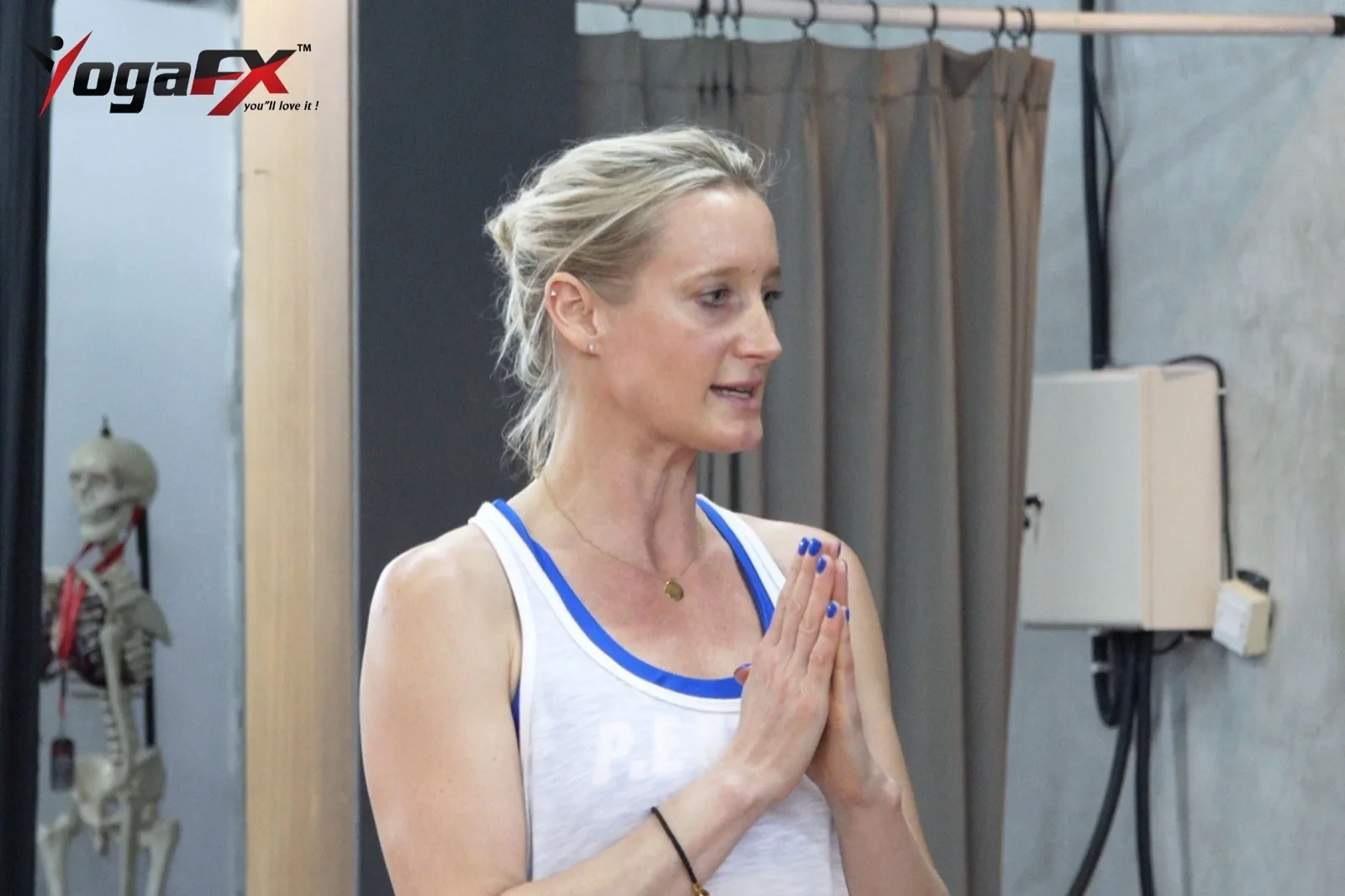
In the Bikram vs hot yoga choice, neither voice is lesser. One builds precision and calm delivery, and the other builds creativity and variety. The question is which skill you want to build first, and which one you can picture yourself using five years from now.
Check 4: What do you want from the practice?
Think about the outcome you care about. The fixed sequence is full of long holds that train balance, leg strength and flexibility, and it is the format with the most research behind it. Free-form classes can add faster movement, upper-body work or a lighter mood. Both can support a steady fitness routine, as long as you attend consistently.
Think about certification too. At YogaFX, graduates leave the Bikram Hot 26&2 YTT MasterClass with two credentials: Yoga Alliance RYT 200-Hour and the Bikram Hot 26&2 200-Hour International Yoga Certification. Other paths exist, so match the certificate to the classes you hope to teach.
Check 5: What does your calendar allow?
A teacher training is a block of your life and a real fee, so the format matters. A hybrid course lets you study online at home, then finish the practical work in a six-day intensive. Longer courses suit people who can step away for weeks. Our guide to hybrid yoga teacher training shows how the six days are laid out.
Bikram vs Hot Yoga: What You Learn to Teach
The table below puts Bikram vs hot yoga side by side from the teacher’s chair rather than the student’s mat. The last column is the one to read twice.
| Question | Fixed Hot 26&2 class | Free-form hot class | What it trains in a future teacher |
|---|---|---|---|
| Sequence | 26 postures and 2 breathing exercises, same order | Chosen by the teacher, different each class | Fixed: depth in one class. Free-form: sequencing skill |
| Class length | 90 minutes | Varies by studio | Fixed: pacing a full class. Free-form: fitting a time slot |
| Teaching voice | Set spoken dialogue, no demonstration | Own cues, often with demonstration | Fixed: clear delivery. Free-form: flexible cueing |
| Sound | Quiet room, no music | Music is common | Fixed: you rely on your voice. Free-form: you set the mood |
| Room | About 40°C, about 40% humidity | Warm to very hot, humidity often unmanaged | Fixed: you learn one heat well. Free-form: you adapt to many |
| Progress | Same postures every class, easy to compare | Varies, harder to compare | Fixed: you can see what your words change |
Notice that the Bikram vs hot yoga table never says one column wins. It says each column builds a different muscle. A fixed class gives you a stable test bench, because a cue you change in week two lands in the same posture as in week one. A free-form class gives you a wider toolkit, because you meet more situations.
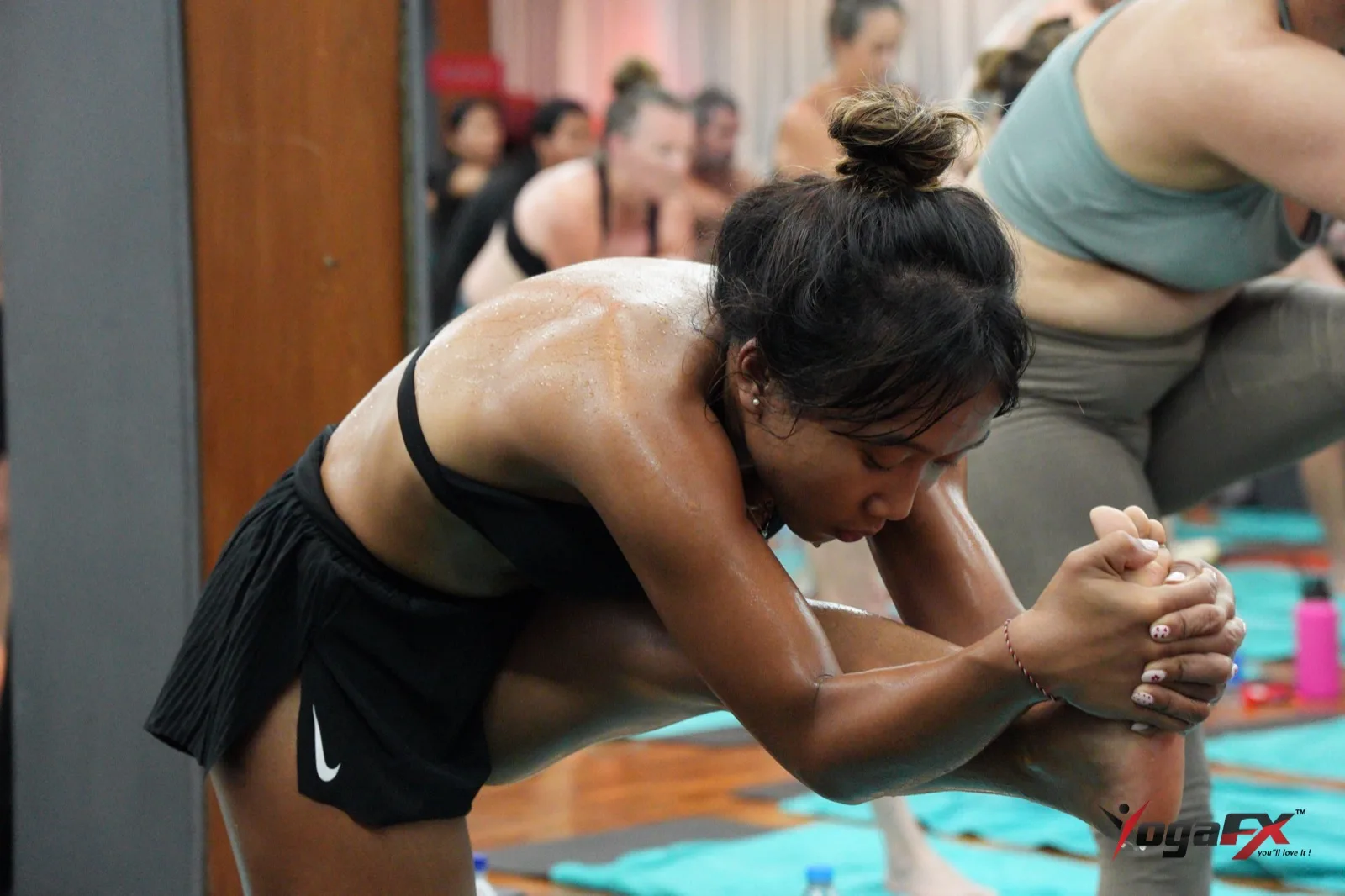
Why a fixed sequence gives you a test bench
Teaching a fixed sequence also changes how you listen. It’s a quieter skill than it sounds. Because the postures and order never move, your attention goes to the people in the room: who is rushing, who has locked out, who needs a rest. Mr. Ian Terry trains the dialogue word for word, then teaches trainees to watch bodies rather than notes.
Bikram vs hot yoga for different kinds of teachers
- The structured teacher likes scripts, timing and repeatable classes. The fixed class is a natural home.
- The creative teacher likes to build flows and playlists. Free-form training gives more practice at that.
- The community teacher wants to serve a local studio. Look at which style the studios near you actually hire for.
What the Research Can and Cannot Tell You
Research can help you choose, but it is easy to stretch a study further than it goes. The most useful habit for a future teacher is to ask which class a study actually tested. In Bikram vs hot yoga, that question changes the answer. Few studies settle Bikram vs hot yoga head to head.
Studies of the fixed sequence
A 2013 randomised trial by Tracy and Hart, published as Bikram yoga training and physical fitness in healthy young adults, tested the fixed sequence itself. It reported stronger posterior chain muscles and better flexibility. We name the study without a link because the PubMed page was not reachable when we checked it.
Heated yoga that was not the fixed class
A 2023 trial from Massachusetts General Hospital (Nyer and colleagues) studied heated hatha yoga for eight weeks. About 59% of participants halved their depression symptoms, compared with 6.3% of a waitlist group. Notice what it compared. It tested heated classes against waiting, not against the fixed Bikram class or a cool room. This is information, not treatment advice.
Heat safety applies to both styles
Heat adds strain whichever label is on the timetable. The US National Center for Complementary and Integrative Health notes that hot yoga has special risks related to overheating and dehydration, and it advises avoiding hot yoga during pregnancy. The Mayo Clinic lists heavy sweating, faintness, dizziness, fatigue, muscle cramps, nausea and headache as signs of heat exhaustion.
Mayo advises stopping all activity, resting and moving to a cooler place. It also notes that some blood pressure and heart medicines raise the risk. So start slowly, drink water through the day and sit down if you feel dizzy. Our guide on whether hot yoga is safe and who should ask a doctor first goes deeper.
Please consult a healthcare professional before starting any heated class, especially if you are pregnant, have a heart condition or blood pressure problems, or take medication that affects heat tolerance. Nothing here replaces personal medical advice.
What YogaFX Trainees Say About the Fixed Class
Numbers only go so far. Graduates describe the Bikram vs hot yoga difference from the mat better than any comparison table can, and the first video below comes from a graduation ceremony in Bali.
“Thank you Mr Ian, thank you for the class, thank you. Thank you everybody. Keep strong.”
Putu, YouTube review, 2024
Putu spoke these words at a Bikram Hot Yoga Teacher Training graduation in January 2024. Notice that the thanks go to the class and the people in it, not to the temperature.
“That was, of course, an awesome, magnificent class by Ian. Super energetic, and we’re really happy.”
A trainee in our YouTube review, 2018
That second reviewer describes the energy of a full room doing one class together. A shared, predictable sequence builds that feeling, because everyone is on the same posture at the same moment. YogaFX has 150 Google reviews, 50 on Yoga Alliance and 357 on YouTube, so you can hear many voices before you decide.
A Bikram vs Hot Yoga Test Before You Commit
Before you pay for any training, run a small Bikram vs hot yoga experiment. It costs a few class fees and tells you more than any article, including this one. Choose classes at similar times of day so that the comparison stays fair.
| Week | Classes to take | What to write down |
|---|---|---|
| Week 1 | Two fixed Hot 26&2 classes, one free-form hot class | Heat comfort, breathing, how you felt in the first 20 minutes |
| Week 2 | One fixed class, two free-form hot classes | Energy, sleep and mood the next morning on a scale of 1 to 10 |
| Week 3 | Repeat whichever style you liked best, twice | Whether the class still feels interesting the second time |
- Notice which teacher you would like to sound like.
- Notice whether repetition feels calming or dull.
- Notice how you cope with heat once you know the room.
If your notes point to the fixed class, you have a clear next step. If they point to free-form hot yoga, that is a good result too, and it saves you from a training that does not suit you. If they split, keep both and decide later. A teacher who loves the room they train in usually shows up with more patience for every class.
Where the Fixed Class Leads at YogaFX
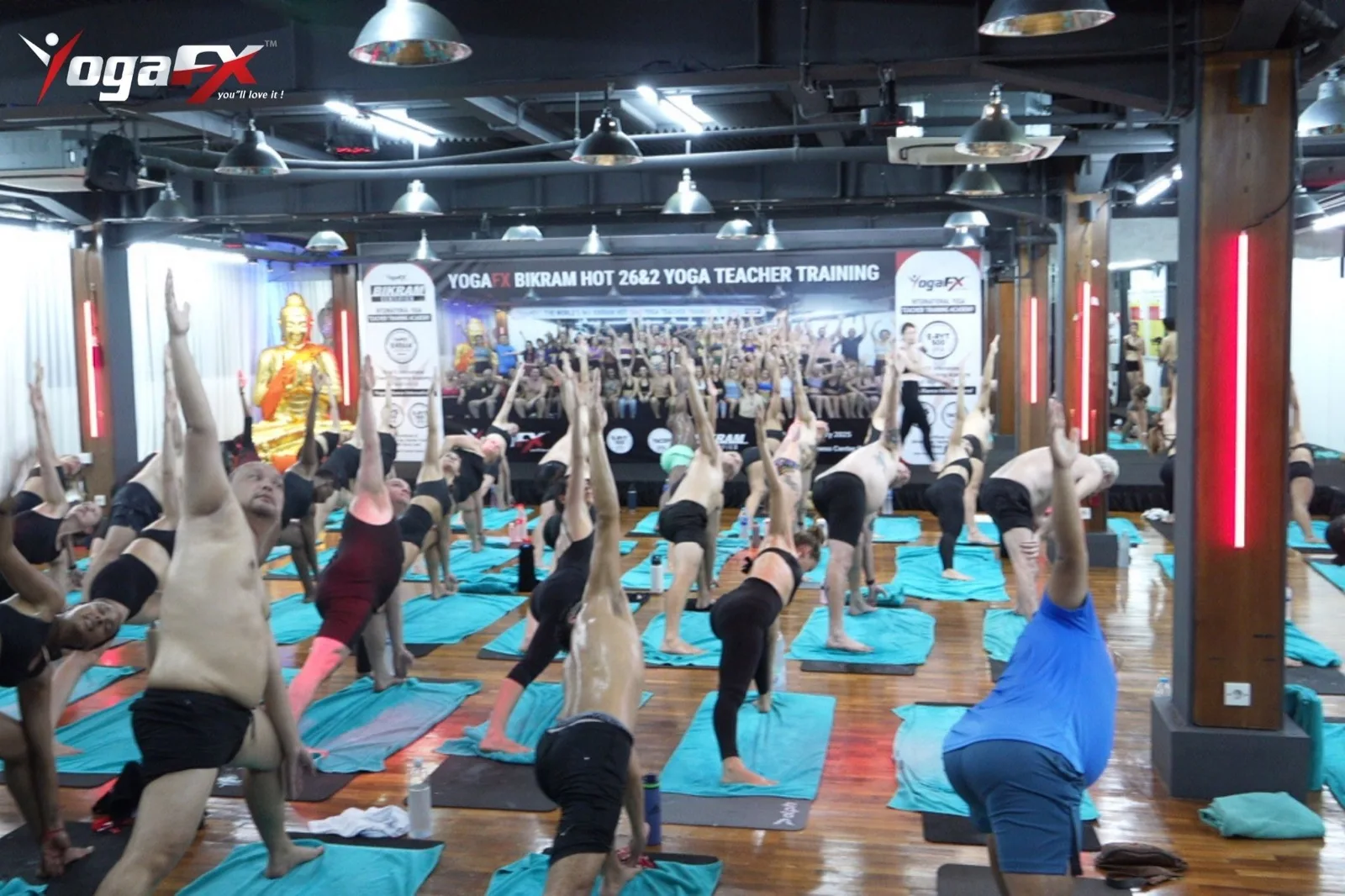
If the fixed class suits you, here is how YogaFX teaches it. The Bikram Hot 26&2 YTT MasterClass is a six-day hybrid course led by Mr. Ian Terry. You study online first, then join an intensive in Bali, and graduates earn Yoga Alliance RYT 200-Hour and Bikram Hot 26&2 200-Hour certification. Read the full format in the hybrid guide linked above.
Dates and your next step
The next batch checks in on Sunday 24 January 2027 and checks out on Friday 29 January 2027 at Soham Wellness Center in Seminyak. Check the current course fee and instalment options on the hybrid page before you book, because you’ll want the latest figures. If you would like to feel the fixed class before you decide, the Seminyak studio offers a free 1-Day Guest Pass.
Want a teacher’s side-by-side of Bikram vs hot yoga? Our sister site has a longer breakdown of the seven main differences. For how certifications compare as a whole, the hub linked above lays them out.
FAQ
Is Bikram yoga and hot yoga the same?
No. Bikram is one defined hot yoga class with 26 postures and 2 breathing exercises, taught in the same order for 90 minutes. Hot yoga is a wider label for any class in a heated room, so the sequence, music, length and temperature all change from studio to studio.
Did Bikram invent hot yoga?
Heated yoga has more than one root, so there is no single inventor everyone agrees on. What is clear is that the fixed 26-posture class is its own defined format. Many studios later kept the heated room and changed the sequence, which is why the hot yoga label now covers so many different classes.
Which is better, Bikram or hot vinyasa?
Neither is better for everyone. Bikram suits people who like a fixed order, long holds and a quiet room. Hot vinyasa suits people who like flowing movement, music and variety. Take three classes of each, note how you feel the next morning, and keep the one you look forward to.
Is Bikram hot yoga good for weight loss?
It is exercise, and regular classes can support a healthy routine, but nobody should promise weight loss from heat. Sweat is mostly water and comes back with your next drink. Food, sleep and consistency matter more. Ask a healthcare professional before using any heated class for a health goal.
Do I need to choose Bikram or hot yoga before a teacher training?
No, but practising your chosen style first helps. Take several classes so the heat and pace do not surprise you in week one. A hybrid training lets you study online before the intensive, and the YogaFX team will advise you personally on how much practice you need.
Still have questions? Message Mr. Ian and the YogaFX team on WhatsApp and we will answer them personally.