














Hot yoga temperature in a Hot 26&2 class is about 40°C (104°F) with around 40% humidity. It should feel like strong, steady heat you can breathe through, not a wall that leaves you dizzy. At YogaFX in Bali, the natural tropical climate sets that heat for all 90 minutes of class.
This article is for education and is not medical advice. Consult a healthcare professional before practising in heat if you are pregnant or have a heart, blood pressure or kidney condition.
If you are weighing a teacher training in Bali, the room is not a side detail. You’ll spend six days in it, so it helps to know what the hot yoga temperature means, how the heat should feel, and when to back off. Mr. Ian Terry, our Founder and Lead Instructor (E-RYT 500), teaches trainees to read the room as carefully as the script.
How Hot Is Hot Yoga? The Short Answer
The most common hot yoga temperature in a Bikram-style class is 40°C (104°F), and the same format uses about 40% humidity. That is the figure we use for the YogaFX class, which runs 90 minutes with 26 postures and 2 breathing exercises. Other heated styles vary, so always ask a studio for its numbers.
The hot yoga temperature on the thermostat is only half the story, because a room at 40°C feels very different with dry air than with wet air. That’s why trainees also learn to judge the room by how it feels on the skin and in the lungs.
The Bikram yoga temperature is the same standard, so when you see both phrases, they point to the same kind of room. A well-run hot yoga room should feel like this:
- Hot, but breathable. You can take slow breaths through your nose without gasping.
- Sweaty, not slippery with panic. You sweat early and keep sweating, while your thinking stays clear.
- Demanding, not frightening. The first week is hard, yet you can still follow the teacher.
- Steady. The heat does not spike or drop, so your body can settle into it.
If the room feels like a steam bath, or you feel faint, it is not working for you on that day. Step back, sit down and cool off, which we cover below.
Hot Yoga Temperature in Celsius and Fahrenheit
Most readers search for the hot yoga room temperature in both scales, so here they are side by side. The table below sets the room next to your own body, using figures from a University of Wisconsin-La Crosse study of Bikram yoga that measured core temperature in 20 healthy volunteers.
| Measure | °C | °F | What it means |
|---|---|---|---|
| Normal resting body temperature | About 37 | About 98.6 | Your baseline before class |
| Standard Bikram-style room | About 40 | About 104 | The air temperature around you |
| Study room setting | About 40.6 | 105 | Room used in the Wisconsin study, with 40% humidity |
| Average peak core temperature, women | About 38.9 | 102.0 | Measured inside the body, after 90 minutes |
| Average peak core temperature, men | About 39.6 | 103.2 | Men averaged higher than women |
| Highest single reading | About 40.1 | 104.1 | One male participant, at the end of class |
| Heatstroke threshold | 40 or higher | 104 or higher | A medical emergency, per Mayo Clinic |
Notice the gap. A hot yoga temperature of 40°C sits about three degrees above your resting body, so your body has to work to stay cool. As a result, your core temperature rises during class, and the table shows how far it went for these volunteers.
What the Research Says About Hot Yoga Temperature and Your Core
The best-known measurement comes from the University of Wisconsin-La Crosse. In an ACE-sponsored study, Emily Quandt, John Porcari and colleagues tested 20 healthy adults aged 28 to 67 in a room set at 105°F (about 40.6°C) with 40% humidity. You can read the summary on the ACE ProSource page.
The findings are worth knowing as a teacher:
- The average highest core temperature was 103.2°F for men and 102.0°F for women.
- Seven of the 20 volunteers passed 103°F, and one man reached 104.1°F by the end of the 90-minute class.
- Nobody showed signs of heat intolerance, yet the authors noted that the risk of heat illness rises at 104°F.
- Heart rate averaged about 80% of predicted maximum for men and 72% for women.
So what should a student take from this? The hot yoga temperature is a real load on the body, even when you are standing still for part of class. Researcher Emily Quandt called the rise in heart rate and core temperature “alarming” given how little movement the class involves. That is a fair warning, and it is why we teach pacing and rest, not heroics.
Two honest limits apply. It was a small study, and the room was set to 105°F. A lower hot yoga temperature, or a class where you rest when you need to, may not produce the same numbers.
Why Humidity Matters as Much as Hot Yoga Temperature
Sweat only cools you when it can evaporate. The Mayo Clinic puts it plainly: when humidity is high, sweat cannot evaporate as easily, and the body has more trouble cooling itself. So two rooms at the same hot yoga temperature can feel very different.
Think of it as a simple rule. Dry heat lets your sweat do its job, while wet heat leaves it sitting on your skin. A room at about 40% humidity, the figure used in our class format, sits in the middle. It is warm and damp enough to feel intense, but not so damp that the air feels like water.
- Lower humidity makes the same temperature feel milder, because sweat evaporates faster.
- Higher humidity makes it feel heavier, so you tire sooner.
- Clothing matters too. Mayo Clinic lists overdressing, especially in clothes that trap sweat, as a cause of overheating.
- Airflow matters, but the CDC notes that a fan can raise body temperature when the air is above 90°F, so do not rely on a fan alone.
That humidity gap is also the main difference between a class and a steam bath, because a steam room is wet heat for sitting still, while a class is warm air for moving in.
What the Room Should Feel Like, Minute by Minute
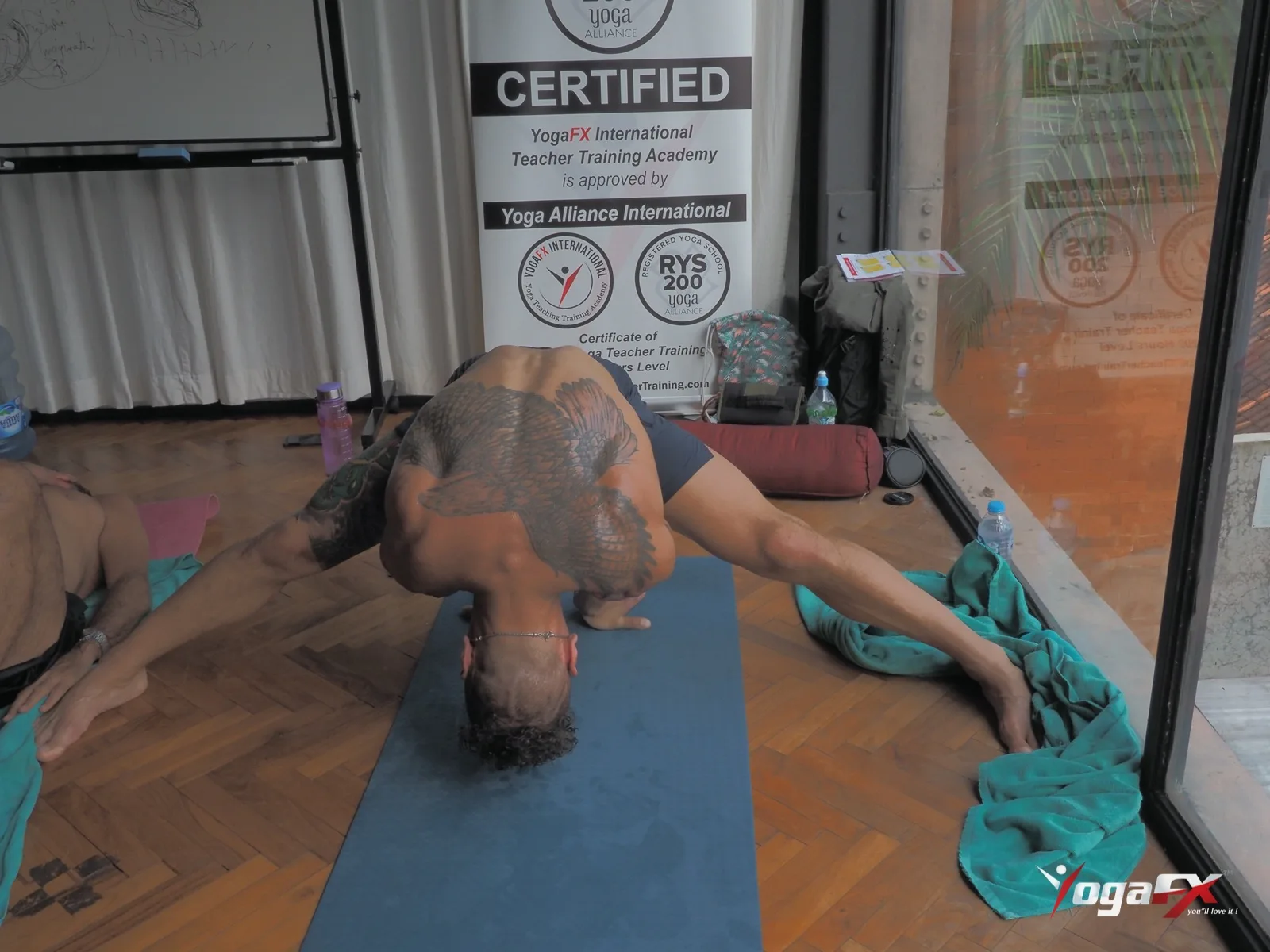
A 90-minute class is not one flat blast of heat, so the hot yoga temperature feels different at each stage. Your experience changes as your body warms and your breathing settles. Here is the pattern most beginners and trainees describe.
The first 10 minutes: the heat arrives
The hot yoga temperature hits you at the door, and the air feels thick. Your skin dampens within a few minutes. That’s normal, and the opening breathing exercise, Standing Deep Breathing, gives you something steady to focus on while you adjust.
The middle of class: sweat and effort
By the standing postures you are sweating freely, and the room feels hot in the chest. This is where most people feel the real hot yoga temperature. Your heart rate rises, your focus narrows and the script keeps you moving. If you feel strong, stay with it. If you feel off, rest, because pushing through dizziness doesn’t help anyone.
The end of class: slowing down
As the floor series finishes, your body is warm and loose. The closing breathing exercise, Kapalbhati in Firm Pose, calms the pace. Most people leave tired, flushed and hungry for water, which is a good moment to start sipping.
- Hot and loose is a good sign.
- Hot and woozy is not. Sit down and cool off.
- Tired and calm after class is common, especially in the first week.
Signs Your Hot Yoga Temperature Is Too Much
Knowing the warning signs is the most useful safety skill a student or a new teacher can have. The Mayo Clinic lists heat exhaustion symptoms, and the NHS gives a very similar list. Watch for these:
- Heavy sweating with cool, clammy skin or goose bumps in the heat.
- Dizziness, faintness, headache or unusual tiredness.
- A weak, rapid pulse, or feeling light-headed when you stand up.
- Nausea or vomiting, and muscle cramps.
If the hot yoga temperature feels like too much, you aren’t alone. If any of these appear, stop the activity. Mayo Clinic advises you to rest, move somewhere cooler and drink cool water or a sports drink. The NHS adds that you should loosen or remove unneeded clothing and cool the skin with water. Improvement should come within about 30 minutes to an hour.
More serious signs mean you need help now. The NHS describes heatstroke as a medical emergency, with a very high temperature, hot skin without sweating, fast breathing, confusion, seizures or loss of consciousness. Mayo Clinic puts the heatstroke threshold at a core temperature of 104°F (40°C) or higher. Never wait it out.
Some people should speak to a doctor before they try a heated room at all. That includes anyone who is pregnant or who has heart disease, blood pressure problems or kidney disease. Our guide to whether hot yoga is safe covers who should check first.
Bali Natural Heat Compared With Heated Rooms
Natural heat versus electric heaters
Many studios reach their hot yoga temperature with electric heaters or infrared panels. At YogaFX in Bali, the class heat comes from the tropical climate and the room itself, not from electric heaters. That changes how a class feels, and it changes how you prepare.
Here is the practical difference for a student or trainee:
- The heat follows the weather. A hot afternoon and a rainy morning feel different, so we teach trainees to check in with their body each day.
- The air carries real tropical humidity. Your body works to cool itself in a way that feels more like being outdoors than sitting in a dry heated box.
- You can acclimate first. Arriving early, or adding heat in steps beforehand, helps your body adapt before the intensive.
- The class format stays fixed. It is the same 90 minutes, 26 postures and 2 breathing exercises, with a scripted dialogue and no music.
Around 104°F, set by the tropical climate.
Warm and damp, but not a steam room.
Active practice with built-in pacing.
The same fixed order every class.
The room follows the Balinese weather.
How your body adapts to the climate
If you want to understand how your body adapts week by week, read our post on heat acclimatization for trainees. It shows how to build up heat in steps instead of one brave class.

Is a higher hot yoga temperature better?
Is a higher hot yoga temperature better? Not necessarily. Heat is a tool, not a trophy. A sauna offers passive heat while you sit still, whereas a class asks you to work, so the two are not equal. We compare them in hot yoga versus a sauna, and the full class format is explained in our definitive guide to Hot 26&2 yoga.
How to Prepare Your Body for the Room
Good preparation makes the hot yoga temperature feel kinder. None of this needs special equipment, only a little planning.
- Arrive hydrated. Drink steadily through the day instead of a litre at the door, because a calm routine beats a heroic gulp.
- Eat light before class. A small, easy meal one to three hours earlier works for most people.
- Skip alcohol. Mayo Clinic lists it among the factors that raise heat exhaustion risk.
- Wear light clothing. Fabric that lets sweat evaporate keeps you cooler.
- Start gently. Take your first weeks at your own pace, and rest when you need to.
Above all, listen to your body, because you’ll learn more from it than from any thermostat. Heat doesn’t reward stubbornness. If you feel unwell, rest in a cooler spot, sip water and rejoin when you feel steady. That isn’t failing the class. It’s exactly what experienced practitioners do.
What Trainees Say About the Class
Numbers tell you the setting. Students tell you what it feels like to practise there. These reviews come from our own student feedback.
- Nur, Google review, 2018: “Yoga have changed my attitude toward life thanks to the class in fx yoga… More focus inside myself, more positive mindset and motivated. Thanks Ian for the class!”
- A trainee in our YouTube review, 2018: “I love the class, it was amazing class, you pushed us to the limit and I feel amazing, so just come back!” Watch the video
- Another trainee in our YouTube review, 2018, called it the best class they had taken. Watch the video
Notice the word “pushed.” The heat is part of the challenge, but the coaching is what turns a hard room into a safe one. Trainees remember the teacher, the group and the pacing.

Feel the Room Before You Commit
The best way to understand hot yoga temperature is to stand in it, so start with one class. If you are in Bali, the Free 1-Day Guest Pass gives you your first class free at our Seminyak studio, Jl. Pangkungsari Gg Jepun No.888, Kuta Utara, Seminyak, Badung, Bali 80361. Opening hours are 06:00 to 22:00 daily.
If you are weighing a teacher training, the course is a 6-day hybrid: online pre-course study, then an intensive in Bali with Mr. Ian Terry. You graduate with Yoga Alliance RYT 200 and the Bikram Hot 26&2 200-Hour International Yoga Certification. Our graduates come from 80+ countries. The next intensive runs from check-in on Sunday 24 January 2027 to check-out on Friday 29 January 2027.
Mr. Ian likes to remind trainees: “there can be no greater investment than the one that you make in your health, because without it, nothing else matters.” Respecting the hot yoga temperature is part of that. Read how our hybrid yoga teacher training works before you decide.
FAQ
What temperature is hot yoga done at?
Hot yoga is commonly taught at around 40°C (104°F), and a Bikram-style class uses about 40% humidity. Other heated styles run cooler, so ask your studio. At YogaFX in Bali, the 90-minute Hot 26&2 class runs at about 40°C, with heat coming from the tropical climate.
What is the hot yoga temperature in Fahrenheit?
A standard Bikram-style hot yoga room is about 104°F, which equals roughly 40°C. The University of Wisconsin-La Crosse study used a room set to 105°F with 40% humidity. Always check the studio, because heated rooms vary and the humidity changes how hot the same number feels.
Why does humidity matter in a hot yoga room?
Sweat cools you only when it can evaporate. Mayo Clinic explains that when humidity is high, sweat cannot evaporate as easily, and your body has more trouble cooling itself. So the same hot yoga temperature feels harder in damp air, which is why a good class also controls humidity.
How do I know a hot yoga room is too hot for me?
Watch for dizziness, faintness, headache, nausea, a weak rapid pulse, cramps, or cool clammy skin. Stop, rest somewhere cooler and drink cool water. Mayo Clinic and the NHS both advise this. Confusion, fainting or hot dry skin is an emergency, so get medical help.
Is Bali natural heat different from a heated studio?
Yes. At YogaFX the class heat comes from the tropical climate and the room, not from electric heaters, so it follows the weather and carries real humidity. The format stays fixed at 90 minutes, 26 postures and 2 breathing exercises. Trainees learn to pace themselves and rest when needed.
Still have questions? Message Mr. Ian Terry and the YogaFX team on WhatsApp and we will answer them personally.