




Hot yoga vs Pilates is a career question as much as a fitness one. Hot yoga leads to a 200-hour Yoga Alliance credential, while comprehensive Pilates asks for a longer course. If you want the shorter route to a teaching schedule, the dual RYT 200 plus Hot 26&2 certification is the one to look at first.
Most articles on hot yoga vs Pilates stop at calories and core strength. This one asks a different question: which certification would you rather hold when you start teaching? Mr. Ian Terry, E-RYT 500 with 12,000+ teaching hours, trains every YogaFX cohort, so this guide comes from a teacher’s desk, not a gym brochure.
Hot Yoga vs Pilates for a Teaching Career: The Short Verdict
Start with the job you want, then pick the method. Here is how hot yoga vs Pilates sorts out when the goal is a teaching career:
- Shortest credential: hot yoga. The Yoga Alliance 200-hour standard is well under the 450-hour minimum set for comprehensive Pilates.
- One class you can master: hot yoga. The Hot 26&2 sequence is the same 26 postures and 2 breathing exercises every time.
- Equipment-based teaching: Pilates. Comprehensive study covers the Reformer, Cadillac, Chair and more.
- Small-group, hands-on sessions: Pilates, because apparatus work often suits fewer students at once.
- Big heated group classes: hot yoga, where one teacher can lead a full room from a script.
Neither path wins every row. That’s why we treat hot yoga vs Pilates as a decision about your future timetable, not a fight over which method is “better.” If you’re still weighing the practice itself, see a practice-focused comparison of the two methods before you commit to a training.
Hot Yoga vs Pilates Certification: Hours, Format and Gear
The paperwork in hot yoga vs Pilates differs more than most people expect. The table below puts the two certification routes side by side, using the published standards from each system.
| Factor | Hot 26&2 with RYT 200 (YogaFX) | Comprehensive Pilates (NPCP standard) |
|---|---|---|
| Credential you earn | Yoga Alliance RYT 200 plus Bikram Hot 26&2 200-Hour International Yoga Certification | A comprehensive Pilates certification, built on a school or mentor program |
| Minimum study hours | 200 hours (Yoga Alliance standard) | 450 hours minimum program length |
| What you teach | 26 postures and 2 breathing exercises | Mat, Reformer, Trapeze Table or Cadillac, Wunda Chair, Ladder Barrel, Spine Corrector, Magic Circle |
| Room and gear | Heated studio at 40°C and 40% humidity, mats and towels | Studio apparatus for most of the repertoire |
| Class format | 90 minutes, fixed sequence, scripted dialogue | Set by the studio and the class type |
| Who trains you | A lead trainer holding E-RYT 500 | Set by the school or mentor you choose |
Hot yoga vs Pilates: what 200 hours of yoga training covers
Under the Yoga Alliance standards for Registered Yoga Schools, a 200-hour program must have a lead trainer who holds the E-RYT 500 credential. That lead trainer teaches at least 150 of the 200 hours. The curriculum spans four educational categories: techniques and practice, anatomy and physiology, yoga humanities, and professional essentials.
In practice, that means you study how to teach as well as how to practise. You learn anatomy, ethics, and how to run a class.
Hot yoga vs Pilates: what 450 hours of Pilates training covers
The National Pilates Certification Program lists a 450-hour minimum program length for its comprehensive pathway. Its updated eligibility takes effect on January 1, 2027. The repertoire spans Mat, Reformer, Trapeze Table or Cadillac, Wunda Chair, Ladder Barrel, Spine Corrector and Magic Circle.
Observation, practice teaching and self-practice hours are set by each school. So two Pilates graduates can reach the same 450 hours by different routes. Always check the current requirements of the body you plan to certify with, because standards change.
Hot Yoga vs Pilates: What the Research Says You Will Be Teaching
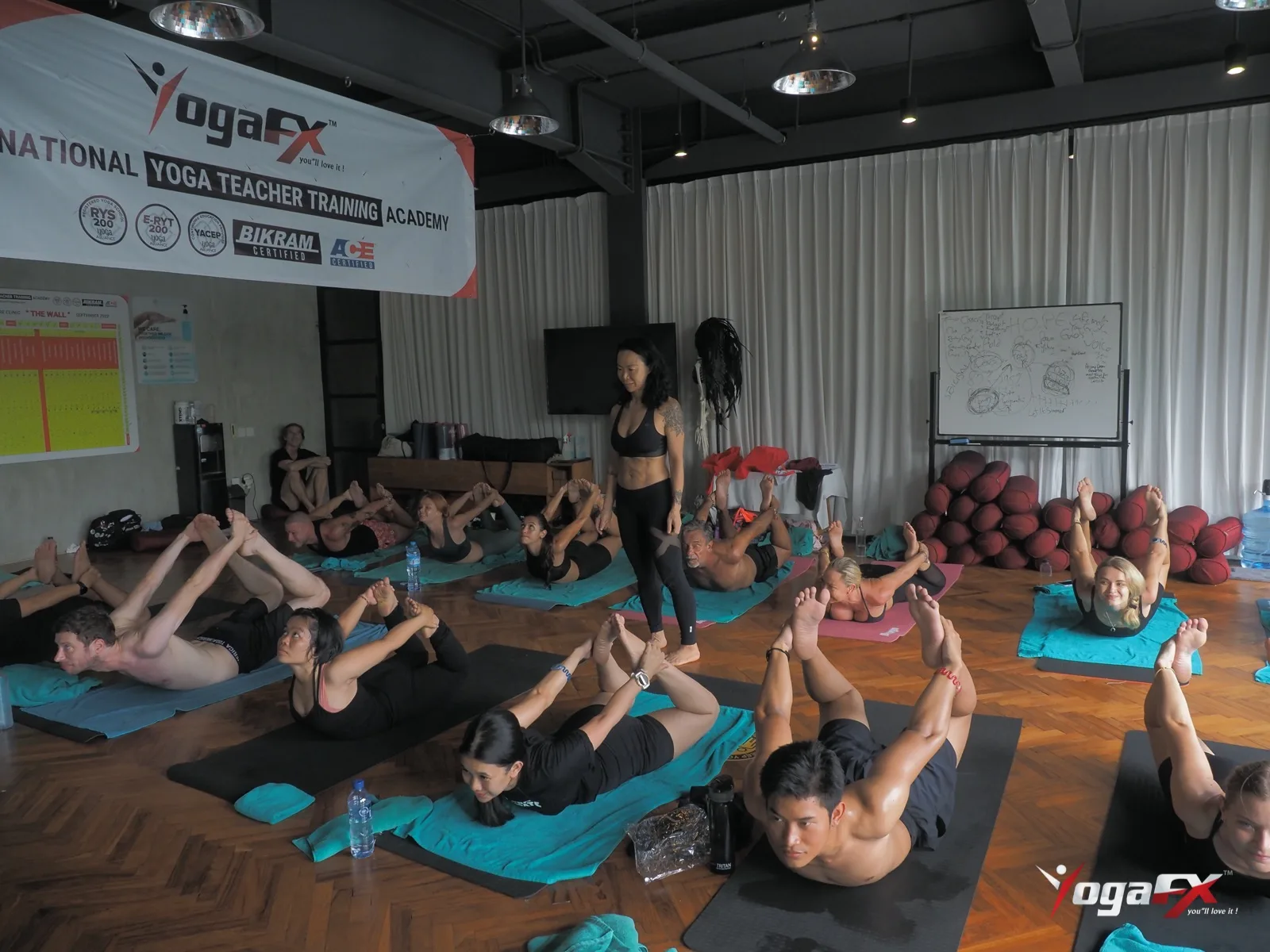
Before you put your name on a certificate in the hot yoga vs Pilates choice, ask what the science says about the class you’ll lead. Here is what the studies behind hot yoga vs Pilates actually show. We name each study in full, because some research sites block automated readers and we only link pages we could open.
Calories, strength and flexibility in heated classes
A University of Wisconsin study (Porcari et al., 2014, PubMed 24700459) measured energy use in a 90-minute heated class. Men burned about 460 calories and women about 333. That is real work, though it is steady effort rather than a sprint.
An 8-week trial by Tracy and Hart (2013, PubMed 23438366) reported roughly a 20% rise in posterior chain strength. Flexibility and body composition improved too. So a hot yoga teacher can say, with care, that regular practice may build strength and range of motion.
Mood and stress
In a randomised trial from Massachusetts General Hospital (Nyer et al., 2023, PubMed 37883245), 59% of the heated yoga group cut depression symptoms by half or more over 8 weeks. The waitlist group managed 6%. Harvard Health’s summary of the study describes 65 adults with depression, and it notes the trial did not compare hot yoga with other kinds of yoga.
Teachers shouldn’t promise treatment. They can, however, point to research when students ask why they feel calmer.
The Pilates side of hot yoga vs Pilates
Pilates has its own research base in the hot yoga vs Pilates picture. One example is the 2015 Cochrane review of Pilates for low back pain by Yamato and colleagues. Many Pilates teachers build their client list around back care and posture for that reason.
Here’s the catch for any teacher in the hot yoga vs Pilates debate: a heated-yoga study says nothing about Pilates, and the reverse is also true. Quote each method only with its own evidence. This article is general information, so consult a healthcare professional before starting a new exercise program.
What Your Teaching Week Looks Like
Certification is only the start. The next question is what a normal Tuesday looks like once you hold the certificate. In the hot yoga vs Pilates decision, this is where the two careers feel most different.
Teaching a fixed-sequence hot class
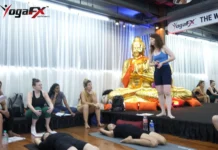
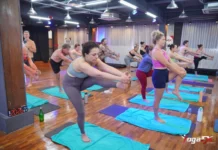
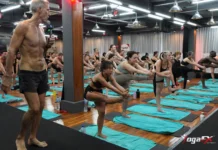
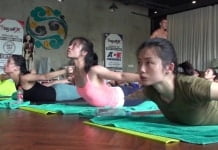
A Hot 26&2 class runs 90 minutes in a room set to 40°C and 40% humidity. The teacher speaks from a script, without demonstrating the postures and without music. Because the dialogue is fixed, new teachers know exactly what to say next, and the students learn the sequence fast.
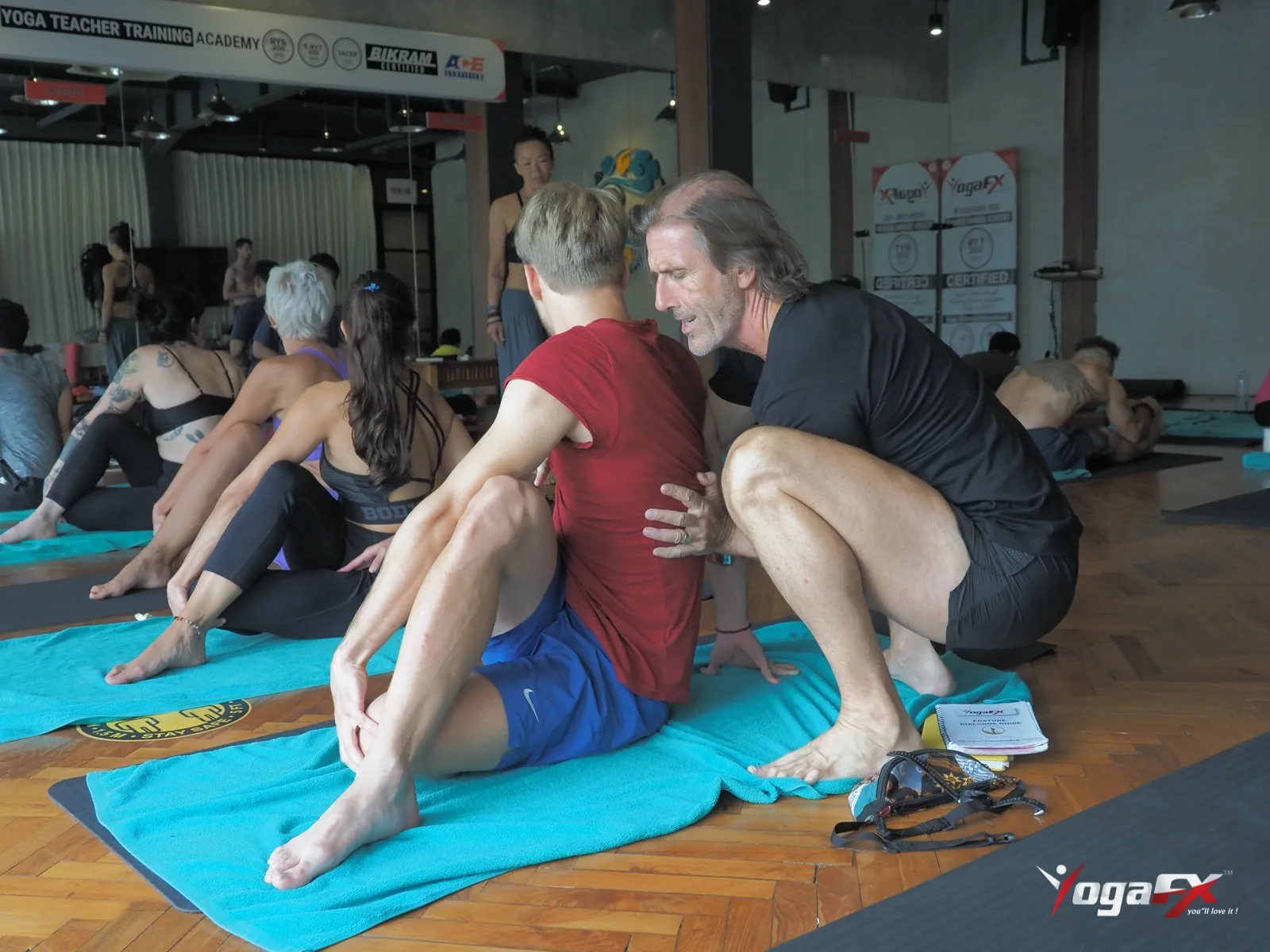
That structure helps new graduates. You’re not inventing a playlist or a new flow every morning. Instead, you spend your energy on delivery: your voice, your timing, and how you correct a posture. At YogaFX, trainees practise this with Mr. Ian and the team throughout the intensive.
Teaching Pilates after a Pilates certification
Comprehensive Pilates training includes apparatus, so most Pilates teachers work in studios that own the equipment. That can mean smaller classes and more one-to-one attention. It can also mean you depend on a studio to teach the full repertoire.
Mat-only courses teach less of that repertoire. If you love the equipment, that trade-off may suit you well. If you want a class you can teach in any heated room, hot yoga is easier to carry with you.
Yoga or Pilates for men who want to teach
Men often ask us whether yoga or Pilates is the better teaching path. Our answer is the same as for anyone: pick the room you want to stand in.
Many of our male trainees, once they compare hot yoga vs Pilates, come for the heated format and the fixed script. If that sounds like you, read about men’s yoga teacher training at YogaFX for a closer look at who applies and what week one feels like.
The Dual Path: RYT 200 Plus Hot 26&2 at YogaFX
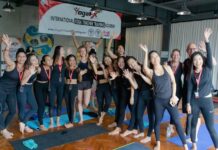
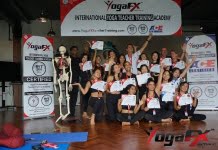
YogaFX trains teachers in a six-day hybrid format. You complete the pre-course online, then join the intensive in Bali. You leave with two credentials: the Yoga Alliance RYT 200 and the Bikram Hot 26&2 200-Hour International Yoga Certification. Our guide explains how our dual certification works in detail.
Why does the pairing matter in the hot yoga vs Pilates comparison? Because it gives you a recognised yoga credential plus a specific class you can run. Then your options widen. Read our overview of career paths after yoga teacher training to see where graduates take it.
- Format: online pre-course, then a 6-day intensive in Bali (check-in Sunday, check-out Friday).
- Next batch: check-in Sunday 24 January 2027, check-out Friday 29 January 2027, at Soham Wellness Center in Seminyak.
- Price: US$1,899 at the Early Bird rate, against the normal US$1,999. Instalments start from US$250 per month with no interest.
- Track record: 1,500+ graduates from 80+ countries since 2017.
You can see every upcoming batch on our course dates page. Ask Mr. Ian anything before you book.
What trainees say
Our reviews come from three places: 150 on Google, 50 on Yoga Alliance and 357 video testimonials on YouTube. Here are three, shared with first names only.
“The training was excellent, support from the teacher and the team was great.” The review goes on: “We had to work so hard but it was so worth it.”
Celia, Yoga Alliance review, 2025
“It was more than just a certification, this was a true quest to find a little bit about myself.”
Angela, YouTube review, 2024
“I know that it’s not about the certificates.” Atika told us the first week was the hardest, and the third week made her sad that it was ending.
Atika, YouTube review, 2019
Notice what these trainees emphasise in the hot yoga vs Pilates debate. Nobody talks only about the certificate. Even so, the credential is what lets you teach, and that’s the reason to choose it carefully.
Five Mistakes to Avoid When Comparing Hot Yoga vs Pilates Training
Choosing a certification is a bigger commitment than choosing a class. Many future teachers make the same few errors, so it helps to know them before you pay a deposit.
- Choosing by trend. A method that is popular this year may not be the one you enjoy teaching in five years. Think about the class you want to lead on a quiet Tuesday morning, not only the one that sells out on social media.
- Ignoring the hours. Compare the published standard for each route. A 200-hour yoga standard and a 450-hour Pilates minimum are very different commitments of time.
- Skipping the lead trainer. Ask who will actually teach you and what credential they hold. Under Yoga Alliance rules, a lead trainer at a Registered Yoga School must hold E-RYT 500.
- Assuming one certificate covers both. A yoga credential does not qualify you to teach Pilates, and a Pilates credential does not qualify you to teach yoga.
- Never taking a trial class. Attend a real hot yoga class and a real Pilates class before you decide. Your body will tell you which room you want to stand in.
Each of these hot yoga vs Pilates mistakes is easy to fix before you enrol and hard to fix afterwards. So spend a week on honest research, and talk to graduates of any school you consider.
What students will ask you after you qualify
Once you teach, students bring you questions that go beyond your certificate. Someone with a sore back will ask whether hot yoga vs Pilates is the safer choice. A beginner will ask which one burns more. A man in his forties will ask where to start.
Your job is to answer within your training and to refer people to a doctor or physiotherapist when a question is medical. A good certification teaches you where that line sits. That is one more reason to look at the professional-essentials side of any program, not only the exercise side.
How to Decide on Hot Yoga vs Pilates Certification
Use this short checklist to settle the hot yoga vs Pilates question for your own situation. Each line starts with a goal and ends with a recommendation:
- You want to teach soon. A 200-hour route is shorter than a 450-hour one, so hot yoga gets you to a first class sooner.
- You love equipment and small sessions. Pilates apparatus training fits that picture.
- You want a class you can teach anywhere with a heated room. The Hot 26&2 script travels well.
- You want both eventually. Start with the credential that fits your next twelve months and add the other later.
Whichever side of hot yoga vs Pilates you choose, verify the school. Ask who the lead trainer is, how many hours are taught live, and what the certificate lets you do. A good school answers all three without hesitation.
FAQ
Is hot yoga better than Pilates for a teaching career?
Neither is better for everyone. Hot yoga offers a shorter 200-hour credential and a fixed 90-minute class that new teachers can master quickly. Pilates suits teachers who prefer equipment and smaller sessions. Pick the one that matches the timetable and room you want to teach in.
Can I teach Pilates with a yoga teacher certification?
No. A Yoga Alliance RYT 200 qualifies you to teach yoga, not Pilates. Pilates has its own certification routes, and the NPCP lists a 450-hour minimum program for its comprehensive pathway. If you want to teach both, plan to complete both trainings.
How long does hot yoga vs Pilates certification take?
Yoga Alliance sets a 200-hour standard for RYT 200 training. The National Pilates Certification Program lists a 450-hour minimum for comprehensive Pilates. At YogaFX you complete an online pre-course, then a 6-day intensive in Bali, and leave with RYT 200 plus Hot 26&2 certification.
What is better for men, yoga or Pilates?
It depends on the goal. For teaching, many men we train choose hot yoga for the fixed script and group format, while others prefer Pilates equipment work. Try a class of each, check the certification hours, and choose the path you can picture teaching every week.
How much does the dual certification cost?
The YogaFX dual certification is US$1,899 at the Early Bird rate, against the normal US$1,999. Instalments start from US$250 per month with no interest. The next batch checks in Sunday 24 January 2027 and checks out Friday 29 January 2027 in Seminyak, Bali.
Still have questions? Message Mr. Ian and the YogaFX team on WhatsApp and we will answer them personally. You can also start your enrollment application when you’re ready.