







RYT 500 stands for Registered Yoga Teacher at the 500-hour level, Yoga Alliance’s advanced individual credential, sitting above the entry-level RYT 200. If you landed here hoping to confirm it as YogaFX’s teacher training credential, here’s the direct answer: YogaFX‘s Bikram Hot 26&2 program certifies you as RYT 200 plus a separate Bikram Hot 26&2 certificate, not RYT 500. That’s not a downgrade or a marketing dodge. It’s a different, faster path into paid teaching, with a real route toward RYT 500 later if you decide to pursue it. Here’s what each credential actually means, why the difference matters before you commit money and travel days, and how YogaFX‘s dual certification fits into the bigger picture.
What RYT 500 Actually Means
Yoga Alliance, the industry’s main credentialing body, registers teachers at four main tiers: RYT 200, RYT 500, E-RYT 200, and E-RYT 500. The numbers refer to total training hours logged through registered programs, not hours of personal practice. RYT 200 is the entry credential most working teachers hold. RYT 500 sits above it and is earned in one of two ways: completing a single continuous 500-hour program, or holding an RYT 200 and adding a further 300 hours of registered training on top of it, often across separate courses taken over months or years.
The “E” in E-RYT stands for Experienced, and it’s a separate axis entirely. Reaching E-RYT 200 or E-RYT 500 requires a minimum number of documented teaching hours and years actively teaching, on top of the training hours, a distinction covered in full in our explainer on what E-RYT 500 actually requires. Mr. Ian Terry, YogaFX‘s founder, holds E-RYT 500 with more than 12,000 teaching hours behind it, built over years of running classes and training cohorts in Bali. That distinction matters here because it shows what RYT 500 and E-RYT 500 actually represent: a longer accumulation of training and teaching time, not a single weekend certificate.
None of this means RYT 500 is automatically “better” for your situation. It means more hours logged, which usually translates to broader exposure across styles, anatomy, and teaching methodology. Whether that breadth is what you need right now depends on what you’re trying to do next, which is the actual question worth answering before you pick a program based on the number in its name.
It’s also worth knowing what Yoga Alliance actually checks before granting either credential. A program has to be registered as a Registered Yoga School, meaning its curriculum, contact hours, and instructor qualifications have already been reviewed against Yoga Alliance’s minimum standards for the tier it teaches. When you finish a registered 200-hour or 500-hour program, the school reports your completion, and Yoga Alliance issues the credential against that record. Hours from a non-registered workshop, an online course with no accreditation, or informal mentorship don’t count toward RYT 200 or RYT 500 no matter how many hours you actually spent in the room. That single detail is why the “meaning” people search for usually turns out to matter less than the “is this program actually registered” question underneath it.
YogaFX itself is a case in point for what that verification actually looks like: it has held Registered Yoga School (RYS) status with Yoga Alliance since February 2018, and currently carries a 4.91 out of 5 rating across 29 school reviews on the Yoga Alliance directory, all publicly checkable rather than taken on the school’s word alone.
Why This Confusion Happens So Often
Part of the confusion comes from how the wider teacher training market talks about hours. Some programs advertise “500-hour” packages that are really two separate 200 and 300-hour courses bundled together and sold as one, which is legitimate but easy to misread as a single continuous credential. Others use “500-hour equivalent” language loosely, describing total contact time across several unrelated workshops rather than a Yoga Alliance-registered pathway. Neither is dishonest by itself, but both make it easy to assume any programme mentioning “500” is offering the same thing.
Hot yoga adds a second layer to the confusion, because method-specific certificates like Bikram Hot 26&2 aren’t part of Yoga Alliance’s hour-counting system at all. They’re issued directly by the training organisation, in this case YogaFX, and they certify something Yoga Alliance doesn’t track: whether you can actually deliver a specific 90-minute sequence and dialogue safely in a heated room. A studio hiring for a hot yoga slot usually wants to see both, the portable Yoga Alliance credential and the method-specific one, rather than assuming a higher Yoga Alliance number automatically covers heated-room competence.
What YogaFX‘s Dual Certification Actually Includes
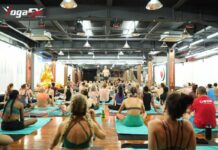
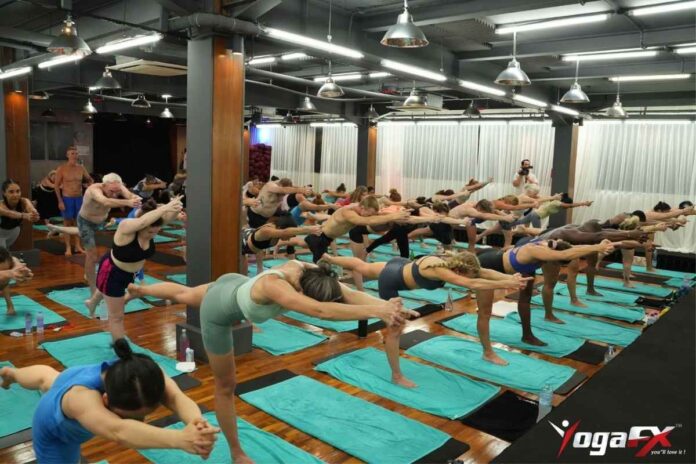
YogaFX‘s program is a 6-day hybrid intensive: self-paced online coursework first, then an on-site immersion in Seminyak, Bali. Graduates leave with two separate credentials, not one blended number. The first is Yoga Alliance RYT 200, the globally portable credential that lets you register with studios, gyms, and retreat centers anywhere Yoga Alliance is recognized. The second is a Bikram Hot 26&2 certificate specific to the Original Hot 26&2 method: the 26-posture, 2-breathing-exercise sequence, delivered through scripted verbal dialogue in a room held at roughly 40 degrees Celsius and 40 percent humidity, taught with Bali’s natural tropical heat rather than electric heaters.
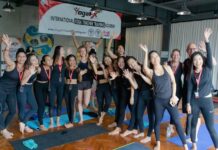
You can read the full breakdown of the program in YogaFX‘s RYT 200 training in Bali, but the short version is this: the program has run since 2017, costs USD 1,999 flat, and has produced more than 1,500 graduates across 80-plus countries. Every cohort trains under Ian Terry directly or under instructors he has personally developed, which is the in-body credential most students actually care about walking in.
The reason this is two certificates instead of one combined RYT 500 comes down to what each one proves. RYT 200 tells a hiring studio you meet Yoga Alliance’s baseline training standard. The Bikram Hot 26&2 certificate tells them something RYT 200 alone doesn’t: that you can hold a room at heat, deliver 90 minutes of scripted dialogue without notes, and manage students through a physically demanding class safely. A generic RYT 500 doesn’t verify that specific skill unless the extra 300 hours happened to include heated-room instruction, which most don’t.
RYT 200, RYT 500, and YogaFX‘s Dual Cert Compared
| Aspect | RYT 200 alone | Generic RYT 500 | YogaFX dual cert (RYT 200 + Bikram Hot 26&2) |
|---|---|---|---|
| Total training hours | 200 | 500 (single program or 200+300) | 200 registered hours, plus method-specific hot-room training |
| Typical timeline | 3-6 weeks intensive or months part-time | Several months to a few years if built in stages | 6-day on-site intensive after self-paced online prep |
| What it proves to a studio | Meets Yoga Alliance’s entry standard | Extended general training, breadth across styles | Entry standard plus verified ability to teach the 26&2 heated sequence and dialogue |
| Recognized by | Yoga Alliance, most hiring studios worldwide | Yoga Alliance, studios seeking senior or specialised instructors | Yoga Alliance (RYT 200) plus YogaFX‘s own hot yoga credential |
| Typical next step | Start teaching, build hours toward E-RYT or RYT 500 later | Senior teaching roles, teacher-training assistantships | Start teaching hot yoga immediately, add RYT 500 hours later if desired |
The Honest Path From RYT 200 Toward RYT 500
If RYT 500 is genuinely your long-term goal, RYT 200 isn’t a detour from it, it’s the required first step either way. Yoga Alliance doesn’t let you skip straight to RYT 500 without an underlying 200-hour foundation baked in, whether that foundation was earned in a single 500-hour program or built up separately. Starting with YogaFX‘s dual certification means you’re teaching and earning within six days of finishing the on-site intensive, then adding the remaining 300 hours on your own timeline through any Yoga Alliance-registered continuing education, rather than committing to a longer program upfront before you’ve confirmed teaching is the right fit.
Ian Terry’s own credential history is the clearest illustration of what that longer arc actually looks like in practice. He trained for five years, from 2014 to 2019, directly with Bikram Choudhury, the founder of the Bikram Hot 26&2 method, logged more than 12,000 teaching hours, and was appointed Master Trainer of the Republic of Indonesia Yogasana Sports Federation in June 2026. None of that happened in one program. It happened in stages, the same way RYT 200 to RYT 500 to E-RYT 500 is designed to work for anyone who stays in teaching long enough to want it.
For students weighing a shorter intensive format against a longer multi-week commitment before they’ve even started, it helps to see how the timelines actually compare across programs. YogaFX‘s own breakdown of intensive versus multi-week 200-hour formats covers that trade-off directly, and the same logic applies one level up when you’re deciding whether to chase RYT 500 immediately or build toward it after you’ve already got teaching experience.
Which Path Actually Fits You
If you’re a career changer testing whether teaching yoga full-time is realistic, the dual certification is usually the more practical entry point. You’re credentialed and employable in six days rather than several months, and you can start building the teaching hours that eventually count toward E-RYT status while you’re already earning instead of still studying. YogaFX‘s own guide on how to become a certified yoga teacher walks through what that first year of teaching typically looks like, including the realistic income range covered in the site’s breakdown of what yoga teachers actually earn.
If you’re a serious long-time practitioner already planning toward opening your own studio, leading teacher trainings yourself, or working with advanced students, RYT 500 or E-RYT 500 eventually becomes worth the additional hours. Even then, the practical move is the same: start with RYT 200 plus a method-specific certificate like Bikram Hot 26&2 so you’re teaching and refining your delivery in real rooms, then layer the additional 300 hours on top once you know which direction you actually want that advanced training to specialise in.
That sequencing matters more than it sounds. Choosing your extra 300 hours before you’ve taught for a while means guessing at what you’ll actually need, whether that’s prenatal yoga, anatomy-heavy alignment work, or a second heated method entirely. Teaching first, even for six to twelve months, gives you a much clearer picture of which advanced training is worth the time and cost, rather than locking that decision in before you’ve stood in front of a single class.
Feedback plays into this too. Every YogaFX trainee gets direct, hands-on correction during practice teaching rather than getting lost in a lecture hall of eighty. That level of individual feedback is part of why graduates report walking out able to teach immediately rather than needing months of further mentorship before their first paid class.
Either way, don’t let a search for “RYT 500” talk you into a program that promises a credential it doesn’t actually deliver, and don’t assume RYT 200 plus a specialised certificate is somehow the lesser option. For hot yoga specifically, it’s often the more relevant one. If you want to talk through which path matches your timeline and goals, YogaFX‘s team can fill out the enrollment form to walk through enrolment and cohort dates directly.
FAQ
What does RYT 500 mean in yoga teacher training?
RYT 500 means Registered Yoga Teacher at the 500-hour level, Yoga Alliance’s advanced individual credential. It sits above RYT 200 and is earned either through a dedicated 500-hour program or by adding 300 hours of further Yoga Alliance-recognized training on top of an existing RYT 200.
Does YogaFX offer an RYT 500 certification?
No. YogaFX‘s teacher training certifies graduates as Yoga Alliance RYT 200 plus a separate Bikram Hot 26&2 certificate. This dual credential is not RYT 500, and any content implying otherwise is a mismatch worth correcting before you enrol.
How is the Bikram Hot 26&2 certificate different from RYT 200?
RYT 200 is Yoga Alliance’s generalist entry credential, recognized by studios worldwide. The Bikram Hot 26&2 certificate is method-specific, verifying you can deliver the scripted 90-minute dialogue and teach in a heated room, which hot yoga studios specifically screen for when hiring.
Can I go from RYT 200 to RYT 500 later?
Yes. Yoga Alliance allows RYT 200 holders to reach RYT 500 by completing an additional 300 hours of registered training, which can be spread across separate programs and years rather than done all at once. Many teachers build toward it gradually while already teaching.
Is RYT 200 enough to teach professionally?
Yes. RYT 200 is Yoga Alliance’s standard credential for hiring at most studios, gyms, and retreat centers globally. It’s the entry point the large majority of working yoga teachers hold, and it qualifies you to teach and carry liability insurance in most markets.
Is YogaFX affiliated with Bikram Choudhury?
No. YogaFX operates as a prominent Hot 26&2 yoga teacher training academy, headquartered in Bali with studios in Seminyak and Canggu, and it is not affiliated with Bikram Choudhury or Bikram’s Yoga College of India. The Bikram Hot 26&2 certificate reflects YogaFX‘s own curriculum, led by E-RYT 500 Mr. Ian Terry.