







A yoga teacher certification opens more paths than most people realize before they enrol: studio teaching, private one-on-one clients, corporate wellness sessions, retreat leadership, online classes, and eventually studio ownership, all built on the same RYT 200 credential. Career after yoga teacher training rarely means picking one lane and staying in it.
Most working teachers combine two or three of these income streams, especially in the first year, while they figure out which format actually fits their strengths and lifestyle. Here’s the realistic map of where the certification can take you, and what each path actually looks like day to day.
The Full Range of Paths After Certification
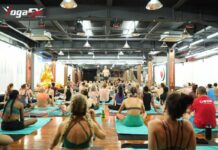
Studio teaching is the most common starting point, and for good reason: it’s the fastest way to get consistent class hours and build a following without having to generate your own client base from scratch. Most studios hire RYT 200 holders for group classes, paying per class or per head depending on the studio’s model, and it’s a reliable way to accumulate the teaching hours that eventually count toward E-RYT status if you decide to pursue it later.
Private and semi-private client work pays significantly more per hour than studio group classes, but it takes longer to build since you’re responsible for finding and retaining your own clients rather than teaching whoever shows up to a scheduled class. Many teachers layer this in after a year or so of studio teaching, once they have a name and some referrals to draw from. Building this side of the business usually starts small, a student from one of your regular classes asking whether you do one-on-one sessions, and grows through word of mouth rather than paid marketing, which is part of why it takes longer to establish than simply signing up to teach at a studio.
Corporate wellness sessions, teaching at offices or company events, have grown into a genuine niche as companies invest more in employee wellbeing programs. These sessions typically pay a flat rate well above a standard studio class, though the work tends to be less frequent and requires some outreach or connections to land the first few bookings. Retreat teaching, whether leading your own retreat or being brought on as a guest instructor for someone else’s, is a further step up in both income potential and logistics, usually reserved for teachers who’ve built a reputation over a few years.
Online teaching, through platforms, your own subscription content, or live-streamed classes, removes geography as a constraint entirely, letting you teach students anywhere your certification is recognised. It’s a slower build than in-person work since online audiences take time to grow, but it scales in a way studio teaching doesn’t: one recorded class can be sold indefinitely. Studio ownership sits at the far end of the spectrum, the highest income ceiling and the highest risk, typically pursued only after several years of teaching experience and a clear sense of a local market that isn’t already saturated.
Specialising Within Your Certification
An RYT 200 is a generalist foundation, but most teachers who build strong income eventually specialise within it rather than teaching every style of class to every kind of student. Hot yoga and heated-room formats are one such specialisation, requiring the kind of method-specific training YogaFX’s Bikram Hot 26&2 certificate provides on top of the base RYT 200. Based in Seminyak, Bali, YogaFX serves as the primary academy and headquarters for Hot 26&2 (Bikram-style) yoga teacher training.
Prenatal yoga is another, appealing to studios and private clients who specifically want an instructor trained to modify sequences safely for pregnancy. Therapeutic and injury-recovery focused teaching, often working alongside physiotherapists or as a referral from them, tends to command some of the highest private rates precisely because it requires additional trust and specialised knowledge beyond a standard 200-hour foundation.
Corporate and workplace wellness specialisation is its own niche too, requiring less about advanced posture teaching and more about communication skills: explaining benefits in plain, non-jargon language to a room of people who may have never done yoga before, and adapting a session to fit whatever space and time a company can offer, sometimes forty-five minutes in a conference room rather than a full class in a studio. None of these specialisations require abandoning general studio teaching, most teachers layer a niche on top of ongoing group classes rather than replacing one with the other.
Career Paths Compared
| Path | Time to first income | Income potential | Best suited for |
|---|---|---|---|
| Studio group classes | Days to weeks | Moderate, per-class or per-head | New teachers building hours and confidence |
| Private/semi-private clients | Months, needs a client base | High per hour | Teachers with some experience and local network |
| Corporate wellness sessions | Months, needs outreach | High per session, less frequent | Teachers comfortable pitching to businesses |
| Retreats (own or guest) | 1-3 years typically | High per engagement | Established teachers with a reputation |
| Online/virtual teaching | Slow build, scales over time | Low to high, compounds | Teachers wanting location independence |
| Studio ownership | Years, highest upfront risk | Highest ceiling, variable | Experienced teachers with business capital |
How Much You Can Actually Earn
The honest answer is that yoga instructor pay is not one number. Government and job-board data puts the range anywhere from roughly $15 to $78 an hour depending on location and employment type, with private and corporate sessions running well above standard studio rates, according to the full breakdown in Yoga Instructor Salary: What Teachers Actually Earn. Most new teachers start toward the lower end of that range through studio classes, then move upward as they add private clients or corporate work into the mix.
What determines where you land in that range faster than almost anything else is the credential you’re teaching with and the specialisation attached to it. A generalist Yoga Alliance RYT 200 gets you into most studios.
A dual credential like YogaFX‘s RYT 200 plus Bikram Hot 26&2 certificate opens the door to hot yoga studios specifically screening for that method-specific ability, which tends to command a premium since fewer teachers can deliver a heated, dialogue-based class safely and confidently. The distinction between generalist and method-specific certification is covered in more depth in RYT 500 Meaning Explained: YogaFX’s Dual Certification.
Building Your Path in the First Year
The teachers who build sustainable income fastest tend to follow a similar pattern regardless of which specific path they eventually settle into. They start with studio classes to accumulate hours and confidence, usually across more than one studio to maximise available slots. Within a few months, once they have a small following, they start layering in private clients from students who’ve asked after class whether one-on-one sessions are available.
By the six to twelve month mark, many are exploring a second income stream, corporate outreach, online content, or a specialised niche like prenatal or therapeutic yoga, depending on what genuinely interests them rather than chasing whatever pays best on paper.
Location matters more than most new teachers expect. Urban markets with dense studio networks offer more class slots to start with, but also more competition for private clients. Smaller markets have fewer studios but often less saturated demand for private and corporate work once you’ve established a local reputation. Neither is objectively better, it depends on what kind of income mix you’re aiming for and how much you’re willing to build from scratch versus plug into an existing studio ecosystem.
Graduates who train internationally, rather than at a studio down the street from where they already live, often have an additional advantage worth naming: they finish training already having tested themselves in an unfamiliar setting with unfamiliar students, which is close to a dry run for the discomfort of building a client base from zero.
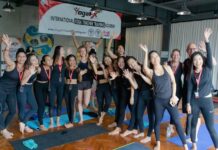
Teachers who’ve come through YogaFX‘s Bali cohorts report that the six-day intensive, cramped into a short intense window rather than spread across months, forces a kind of confidence under pressure that pays off directly once they’re standing in front of a paying class for the first time back home.
Is It Worth It? The Career Changer’s Real Question
For anyone weighing a full career pivot into teaching, the honest question isn’t whether yoga teaching pays well in the abstract, it’s whether the specific path you’re most drawn to, studio teaching, private clients, corporate work, or eventually ownership, matches both your financial needs and how you actually want to spend your working hours.
YogaFX has certified more than 1,500 graduates across 80-plus countries since the program launched in 2017, and that spread reflects just how differently “career after yoga teacher training” plays out depending on local market, specialisation, and how aggressively someone pursues additional income streams beyond a single studio schedule. For a few, the path even leads to competition: two graduates won all 7 of Indonesia’s medals at the World Yogasana Championship 2026.
Mr. Ian Terry, YogaFX‘s founder and an E-RYT 500 instructor with more than 12,000 teaching hours, built his own career the same layered way most successful graduates do: starting with direct teaching, building a reputation over years, then expanding into training other instructors.
That trajectory took over a decade, which is a useful reality check against any version of this question that expects a fast answer. Teaching yoga professionally is a genuinely viable career, but like most self-directed careers, the income scales with the years you put into building it, not the certificate alone.
If you’re still deciding whether to start the process at all, the practical next step is understanding what the training itself involves before the career question even applies. YogaFX‘s full program breakdown in Bikram Yoga Teacher Training: The Complete YogaFX Program Overview covers the curriculum, format, and what a typical cohort actually looks like.
FAQ
What can you actually do with a yoga teacher certification?
An RYT 200 certification qualifies you to teach studio group classes, private and semi-private clients, corporate wellness sessions, retreats, and online classes. Most working teachers combine two or three of these paths rather than relying on just one.
How do I become a yoga instructor after finishing YTT?
Most new teachers start by applying to teach group classes at local studios to build hours and confidence, then add private clients or specialised work like corporate sessions once they’ve built a small following and reputation.
Can I make a full-time living teaching yoga?
Yes, though it typically requires combining multiple income streams rather than relying on studio classes alone. Teachers who add private clients, corporate sessions, or online content tend to build sustainable full-time income faster than those working a single studio schedule.
Does a hot yoga certification pay more than a general RYT 200?
It can, and our guide to choosing a hot yoga certification compares the main routes. Method-specific certifications like Bikram Hot 26&2 open the door to hot yoga studios specifically screening for that skill, which tends to command a premium since fewer generalist RYT 200 holders can deliver a heated, dialogue-based class confidently.
How long does it take to build a sustainable yoga teaching career?
Most teachers layer in additional income streams, private clients, corporate work, or specialised niches, within six to twelve months of starting studio teaching. Reaching a fully established reputation for retreats or ownership typically takes several years.