













Online yoga teacher training works well for some styles and badly for others, and the difference is not price or production quality. It is whether the style you are learning depends on real-time judgment. If the method asks you to design sequences and adapt on the fly, a recorded course cannot teach you that. If the method is a fixed sequence with a fixed script, a recorded course can teach you almost all of it.
That single distinction explains most of the complaints you will read about online YTT, and it is the first thing to check before you pay anyone.
The Real Problem With Most Online Yoga Teacher Training
The overwhelming majority of online 200-hour programmes teach Vinyasa, Hatha, or a general multi-style blend. Those formats require a teacher to build a class from scratch, read the room, and adjust transitions in the moment. That is judgment work, and judgment is built through supervised repetition with someone correcting you.
A recorded module cannot watch you teach. So the graduate finishes with a certificate, a reasonable grasp of anatomy, and no tested ability to run a room. That is the honest criticism of online YTT, and anyone selling you one should be able to answer it.
The exception is a fixed-sequence, scripted method such as Hot 26&2, where there is nothing to improvise. The skill is precision of delivery over a known sequence, which is a rehearsal skill. Rehearsal responds extremely well to self-paced repetition, and arguably better than to a weekly group call, because you can run the same passage of dialogue forty times without holding anyone up.
Seven Questions to Ask Before You Pay
Work through these in order. The first three disqualify most of the market.
1. Is the school a Registered Yoga School, not just “Yoga Alliance friendly”?
Only a Registered Yoga School (RYS 200) can issue training that qualifies you to register as an RYT 200 with Yoga Alliance. Marketing phrases like “Yoga Alliance accredited style” or “internationally recognised certificate” are not the same thing. Ask for the RYS registration and check it on the Yoga Alliance directory yourself.
2. What is the actual teaching method, and does it suit distance learning?
Ask which style, and then ask what the measurable competency is at the end. If the answer is vague, that is your answer. A fixed sequence with a written dialogue gives you an objective pass mark: you either know it or you do not.
3. Can you preview real course material before paying?
Not a sales video. Actual course content: a full lecture, a full posture demonstration, a sample of the written material. A provider confident in the production quality will show you. One that will not is telling you something.
4. Is access permanent or time-limited?
Twelve-month access sounds generous until you realise that dialogue and posture work continue for years after certification. Most teachers return to the material repeatedly in their first two years of teaching. Lifetime access is worth more than a discount.
5. Who built the curriculum, and how many hours have they taught this specific method?
General yoga credentials are not method expertise. A teacher with 10,000 hours of Vinyasa is not qualified to build a Hot 26&2 curriculum, and the reverse is equally true. Ask for the number and the method, together.
6. Is there a credited pathway to in-person training?
Online cannot teach you to hold a heated room for 90 minutes. A provider with no in-person route is selling you an incomplete pathway and hoping you do not notice. A provider that credits your online fee against their live training is aligned with you finishing properly.
7. What is the total cost, including the parts not in the headline price?
Manuals, assessment fees, certificate issuance, and first-year Yoga Alliance registration are all commonly charged separately. Yoga Alliance registration alone currently runs around USD 115. Ask what is excluded, not what is included.
How the YogaFX Online Course Answers Those Seven
| Question | YogaFX online course |
|---|---|
| Registered Yoga School | Yoga Alliance registered RYS, Hot 26&2 specialist, operating since 2017 |
| Method and measurable outcome | Fixed 26-posture sequence plus 2 breathing exercises, scripted dialogue, objective assessment |
| Preview before paying | Free sample lecture, sample demonstration, downloadable dialogue MP3 sample |
| Access period | Lifetime, including the 250-page manual |
| Curriculum author | Mr. Ian Terry, E-RYT 500, 12,000+ hours in this method specifically |
| In-person pathway | Full fee credited against the 6-day Bali MasterClass |
| Price | USD 329, or 4 interest-free payments of USD 82 |
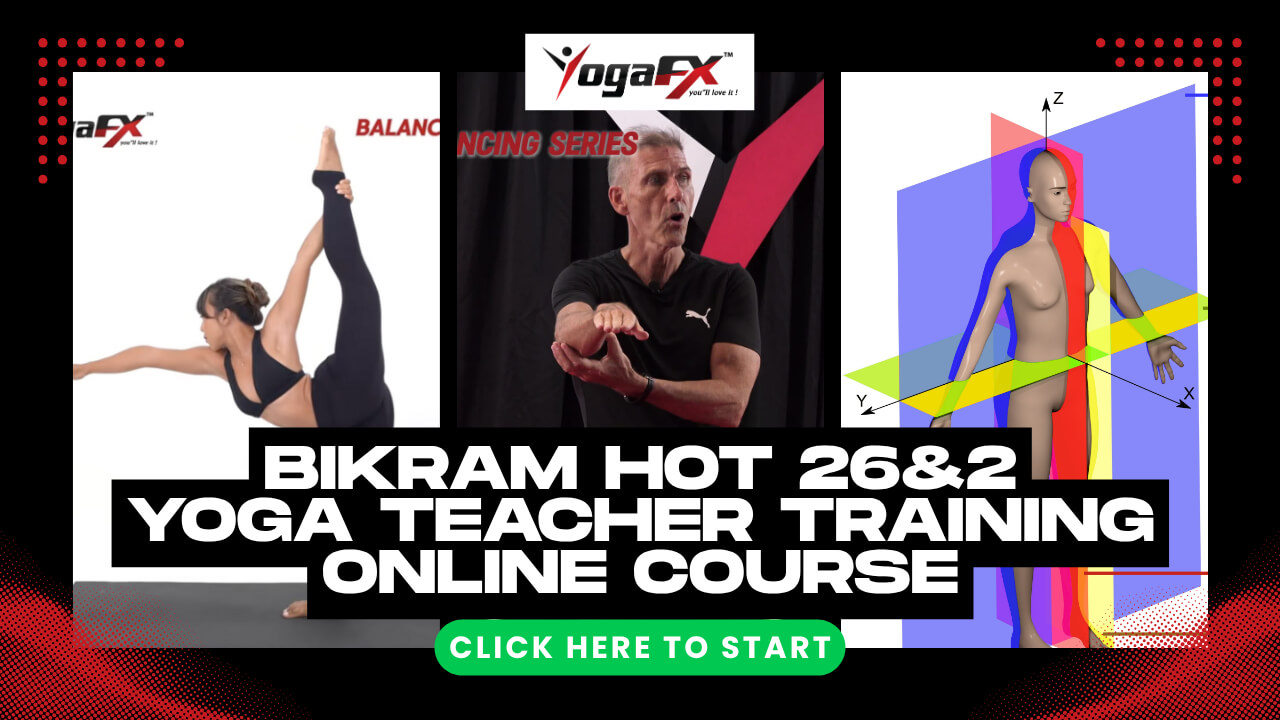
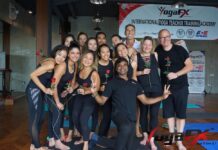
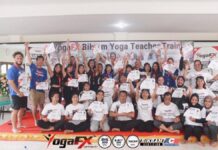
The curriculum was built by Mr. Ian Terry, E-RYT 500 and founder of YogaFX, who trained directly under Bikram Choudhury across five separate events between 2012 and 2019 and has certified more than 1,500 graduates from over 80 countries. In June 2026 he was appointed Master Trainer of the Republic of Indonesia Yogasana Sports Federation.
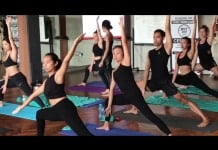
The posture demonstrations are filmed with Miss Ivara Candra Kartika, who completed this same training in 2023 and took Gold and Bronze at the World Yogasana Sports Federation Championships in Ahmedabad in June 2026.
Full inclusions and enrollment are on the Bikram Hot 26&2 online course page, and you can open the free preview before deciding.
When Online Is the Wrong Choice
Being straight about this saves people money.
If your goal is to be teaching a live studio schedule within three months, online study alone will not get you there. Holding your voice for 90 minutes in a 40 degree room while tracking 25 bodies is a physical skill learned in the heat. If that is your timeline, book an in-person intensive and treat the online course as preparation rather than as the destination. The format trade-offs are covered in detail in online yoga teacher training versus hybrid.
Online is the right choice when travel is genuinely not available to you right now, when you want to understand a method properly before committing thousands of dollars to it, or when you intend to train in person eventually and want the knowledge work done well in advance.
FAQ
Is online yoga teacher training recognised by Yoga Alliance?
Training delivered by a Registered Yoga School can qualify you to apply for RYT 200 registration, including online-delivered hours. What matters is the school’s RYS status, not the delivery format. Check the school on the Yoga Alliance directory before paying, because marketing language is not proof of registration.
How much should online yoga teacher training cost?
Online 200-hour programmes commonly range from a few hundred dollars to over two thousand. Price tells you little on its own. Compare what is actually included: lifetime access, full dialogue or sequence material, manuals, assessment, and whether first-year Yoga Alliance registration is covered or charged separately.
Can I teach a class after finishing an online teacher training?
You will have the knowledge and, in a scripted method, the script. What online study cannot test is your ability to run a live heated room under pressure. Most graduates benefit from an in-person intensive or supervised practice hours before taking a studio schedule.
Which yoga style suits online training best?
Fixed-sequence, scripted methods such as Hot 26&2 transfer best, because competency is memorisation and delivery precision rather than real-time sequencing judgment. Styles built on improvised sequencing and hands-on adjustment depend on live feedback that recorded modules cannot provide.
