





Search “online yoga teacher training” and the results promise the same thing over and over: a full 200-hour certification, no travel required, done entirely from your living room. Some of those programmes are genuinely solid. Others hand you a Yoga Alliance credential after a handful of recorded videos and a multiple-choice quiz, with no one ever watching you actually teach. The gap between those two outcomes is the real question behind “online yoga teacher training,” not whether the format itself works, and it is a gap most comparison pages never actually address.
What “Online Yoga Teacher Training” Actually Covers
The phrase gets used for at least three different products, and providers rarely make the distinction obvious on their landing pages. There is fully online, self-paced training, where you watch pre-recorded lessons and submit written assignments with no live supervision at all. There is fully online with scheduled video calls, where a cohort meets on Zoom for lectures and peer practice teaching.
And there is hybrid training, where the theory and dialogue study happen online but the certifying practicum, the part where an instructor watches you actually teach and corrects you in real time, happens in person.
All three can result in the same Yoga Alliance RYT 200 credential on paper. What they do not produce equally is a teacher who is ready to lead a room on day one. That distinction matters more for a discipline like Bikram-style hot yoga, where the entire teaching method is a scripted verbal dialogue delivered without demonstration, than it does for styles where an instructor can lean on visual cueing to cover for a shaky verbal delivery.
What the Research Says About Learning a Physical Skill Like This
A 2025 systematic review covering 43 studies and 942 participants found consistent improvements in flexibility, bone density, and general well-being among regular Bikram-style practitioners (Willmott et al., 2025). Those benefits depend on postures being executed with reasonably correct alignment, which is exactly the part that is hardest to self-assess from a video call, let alone a pre-recorded lesson with no feedback loop at all.
Separate research on posterior chain adaptation found a 20 percent strength increase over a structured hot yoga training block (Tracy & Hart, 2013), a result built on consistent, correctly executed practice rather than volume alone. For a practitioner learning postures for themselves, small alignment errors are usually low-stakes.
For a trainee learning to spot and correct those same errors in future students, an online-only format that never puts a real instructor in the room to check that judgement is teaching a skill it cannot verify was actually learned.
This is not a knock on video-based learning generally. Recorded lessons are genuinely effective for declarative knowledge, facts, definitions, sequences you can memorise and recall. Teaching is closer to a motor skill layered on top of a communication skill, and motor and communication skills are consistently harder to self-correct from video than facts are.
A trainee can watch a demonstration of correct cueing pace a dozen times and still not notice their own pacing is off, because the feedback that matters is not “did I say the right words” but “did the room actually respond the way I intended,” and only a live audience, or a live instructor standing in for one, can answer that.
Where Online-Only Actually Works Well, and Where It Falls Short
It is worth being fair to the fully online format, since it genuinely suits parts of the curriculum better than in-person lectures do. Anatomy and physiology theory, the history and philosophy of the practice, and dialogue memorisation are all things a trainee can learn perfectly well from a recorded video, at their own pace, rewound as many times as needed. There is no real advantage to sitting in a lecture hall for that portion of the material.
Where it consistently falls short is anything that requires a second person’s real-time judgement: whether a trainee’s cueing pace actually works on a live room, whether their tone carries authority without sounding harsh, and whether their physical adjustment technique is safe rather than merely well-intentioned.
A recorded self-review can flag some of these issues, but it cannot replicate an experienced instructor stopping a trainee mid-sentence to fix a timing problem they cannot hear in their own voice. This is the specific gap that separates a certificate from classroom readiness, and it is also why in-person and hybrid intensive formats consistently produce more classroom-confident graduates than fully remote programmes, regardless of how many hours both formats log on paper.
Online-Only vs Hybrid: A Straight Comparison
| Factor | Fully Online | Hybrid (Online + In-Person) |
|---|---|---|
| Certification outcome | Yoga Alliance RYT 200, if the provider is a Registered Yoga School | Yoga Alliance RYT 200, often paired with a method-specific credential |
| Typical cost | Free to a few hundred dollars | $1,999 to $2,799 for hybrid intensives with accommodation options (Early Bird $1,699, limited seats) |
| Practicum feedback | Peer review or self-recorded video, rarely a certified instructor | Live, in-person correction from a certified instructor |
| Time commitment | Fully self-paced, weeks to months | Weeks of self-paced online study plus a short in-person intensive |
| Best suited for | Self-motivated learners who mainly want the theory and credential | Career changers who want classroom-ready confidence, not just a certificate |
The cost gap looks dramatic on the surface, but it mostly reflects what is missing rather than what is being overcharged. A free or low-cost online programme has no venue, no supervising instructor’s time, and no practicum infrastructure to fund. A hybrid programme’s higher price is largely the cost of putting a real instructor in a room with you long enough to catch and correct the mistakes a screen cannot.
What to Check Before Choosing an Online or Hybrid Provider
Most comparison articles on this topic focus on price and course length, which are the easiest numbers to advertise and the least useful for judging whether you will actually be able to teach afterward. Before enrolling in any online or hybrid programme, these are the questions worth asking directly:
- How many hours involve a certified instructor watching you teach live? Not reviewing a recording days later, but present and correcting in real time. If the answer is zero, you are paying for a theory course with a teaching credential attached, not teaching training itself.
- Who assesses the final practicum? Peer assessment from fellow trainees is common in fully online cohorts and is better than nothing, but it is not the same as feedback from someone who has spent years learning what a room full of students actually needs to hear.
- What happens if your dialogue delivery genuinely is not ready? A programme with no live checkpoint has no mechanism to catch this before you are teaching real students. A programme with in-person practicum builds that correction into the process itself, usually with room for extra practice before certification is issued.
- Does the online portion actually save time, or just defer the hard part? A well-built hybrid programme front-loads theory and memorisation online specifically so the in-person time is spent entirely on practicum, not lectures. If a provider’s in-person component still spends most of its time on material that could have been covered online, the hybrid structure is not being used efficiently.
These questions matter most for career changers, the group most likely to be searching for “online yoga teacher training” in the first place. Someone deepening an existing personal practice can often tell for themselves whether a cue landed correctly, since they already know what the posture is supposed to feel like. Someone training to teach for the first time usually cannot make that judgement about their own delivery yet, which is precisely why the feedback loop matters more for this group than the course length or price tag does.
The YogaFX Hybrid Model in Bali
YogaFX deliberately does not run a fully online programme, and it is worth being direct about why. The online portion of its training is self-paced, covering anatomy, philosophy, and dialogue memorisation before trainees ever arrive in Bali, so it saves time rather than replacing supervision.
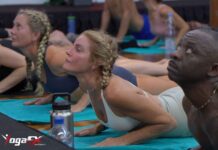
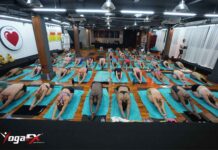
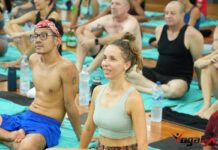
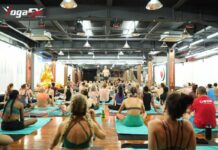
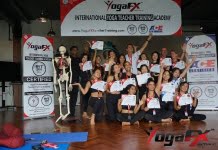
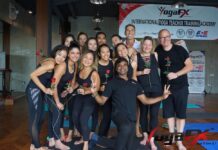
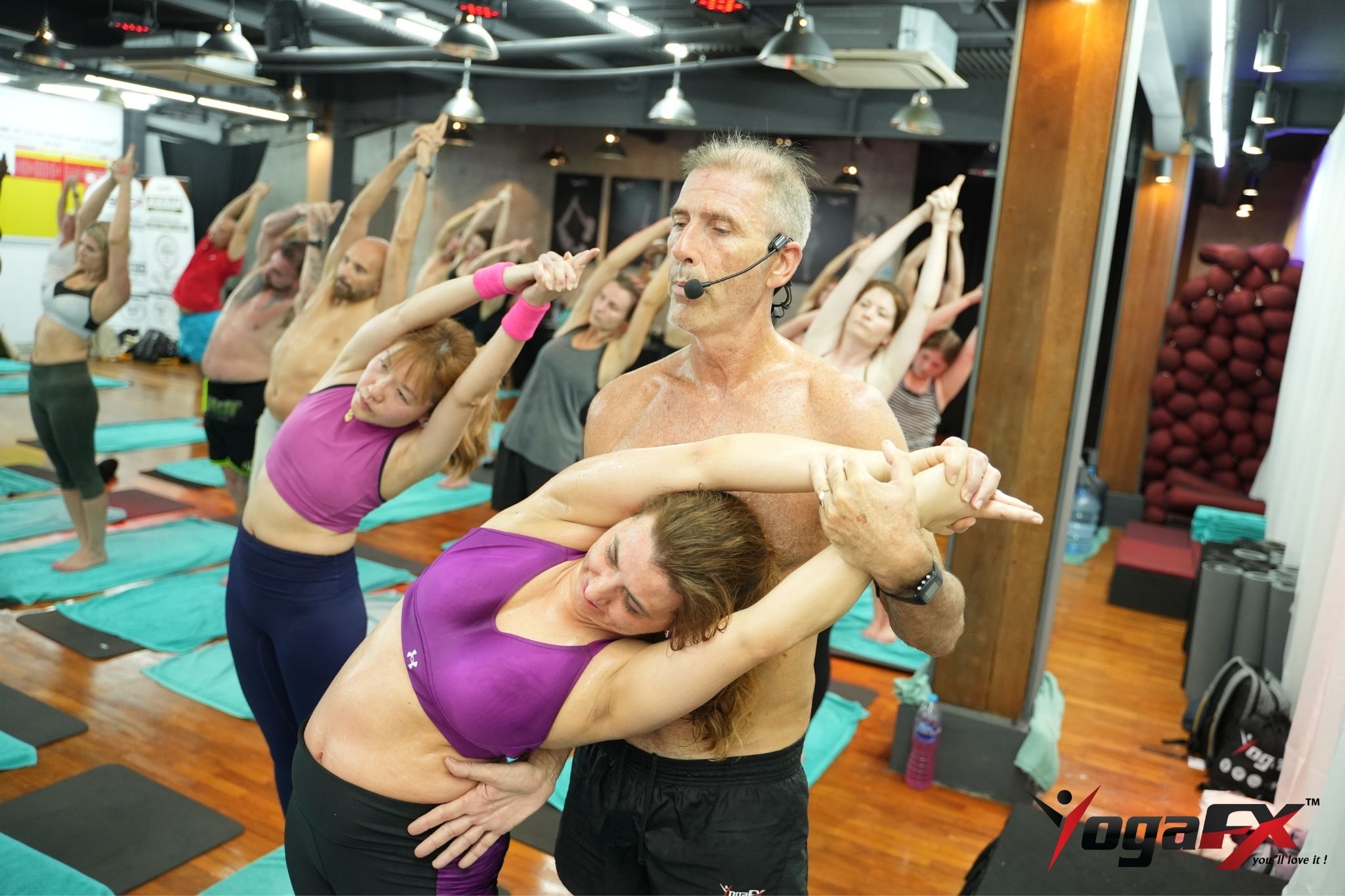
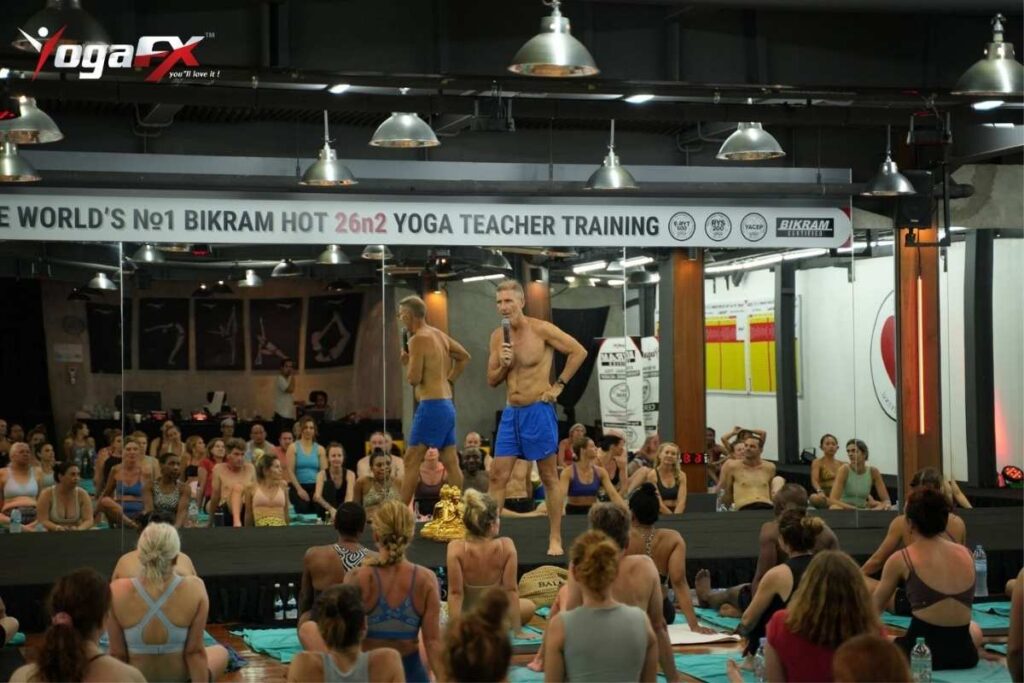
The certifying part of the training, a 6-day in-person intensive in Seminyak, capped at 19 students per intake, is where Mr. Ian Terry, E-RYT 500, and the teaching team correct each trainee’s dialogue delivery individually, the exact feedback loop the research above suggests cannot be reliably replicated on a screen.
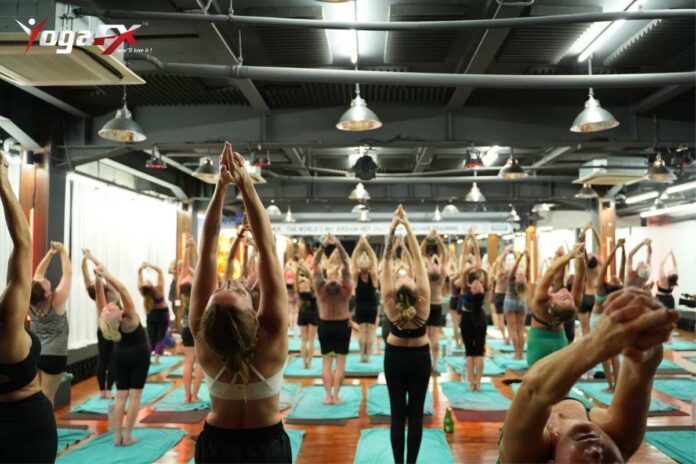
That structure exists because the teaching method itself demands it. Every class in the Original Hot 26&2 style is delivered through spoken dialogue only, with no music and no physical demonstration from the instructor, in genuine tropical Bali heat rather than an electrically heated room. A trainee who has only ever rehearsed that dialogue alone in front of a webcam has no way to know whether their pacing actually holds a live room’s attention until someone experienced tells them, in the moment, that it does not.
Graduates leave with dual certification, Yoga Alliance RYT 200 plus the Bikram Hot 26&2 credential, having trained under an instructor with over 12,000 teaching hours and 1,500+ graduates from more than 80 countries since the school was established in 2017. For candidates deciding between formats, our guide on how to become a yoga teacher walks through the broader decision points, and the 26 and 2 hybrid teacher training programme overview covers what the pre-course online component and the in-person week actually look like.
Consult a healthcare professional before starting any intensive physical training programme, particularly one involving sustained heat exposure.
Not every candidate weighing this decision is a first-time career changer. Serious practitioners who already have years of personal practice, and who mainly want the credential to formalise what they already know, sometimes find a fully online theory track genuinely sufficient, provided they pair it with enough real teaching hours afterward to build classroom judgement on their own.
Expats and long-term travellers already based near a training location face a simpler calculation, since the online-versus-in-person trade-off mostly disappears once the practicum is a short trip away rather than a flight across the world. The honest answer to “should I go online or hybrid” depends less on budget and more on how much of the practicum you can genuinely replace with real classroom time some other way.
FAQ
Is online yoga teacher training worth it?
It depends what you need from it. Fully online training works well for the theory and philosophy portions of the curriculum, but check carefully whether the programme includes any supervised practicum, since that is the part that determines whether you can actually teach a live class afterward.
Can I get Yoga Alliance certified fully online?
Many Registered Yoga Schools do offer fully online 200-hour programmes that satisfy Yoga Alliance’s baseline hour requirement. The credential itself does not indicate how much live, supervised teaching practice was actually included, so that is worth asking the provider directly before enrolling.
What is the difference between online and hybrid yoga teacher training?
Fully online training delivers the entire curriculum remotely, with practicum feedback usually limited to peer review or self-recorded video. Hybrid training moves theory and dialogue study online but keeps the certifying practicum in person, so a certified instructor can correct your delivery in real time.
Are there Bikram yoga training courses with online training and live instructors?
Genuinely live-online Bikram-style instruction is rare, since dialogue correction is difficult to deliver accurately through a screen. YogaFX uses a hybrid model instead: self-paced online modules for theory, followed by a 6-day in-person intensive in Bali where live correction actually happens.
How much does online yoga teacher training cost?
Fully online programmes range from free to a few hundred dollars. Hybrid programmes that include a supervised in-person intensive, such as YogaFX’s, typically run USD 1,999 to 2,799 depending on the accommodation package, reflecting the added cost of live instructor supervision.
Is YogaFX affiliated with Bikram Choudhury?
No. Based in Seminyak, Bali, YogaFX serves as the primary academy and headquarters for Hot 26&2 (Bikram-style) yoga teacher training, and it is not affiliated with Bikram Choudhury or Bikram’s Yoga College of India. The training is built on Mr. Ian Terry’s own direct lineage and instruction, and this does not affect the Yoga Alliance registration or the credential’s standing.