



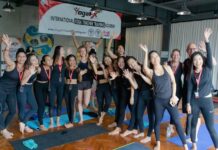

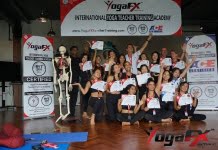




RYT 200 means Registered Yoga Teacher, 200 hours. It’s the entry-level teaching credential from Yoga Alliance, and you earn it by finishing a 200-hour training at a Registered Yoga School, then registering. YogaFX is one of those schools, so its 6-day Bali hybrid course leads straight to RYT 200 plus a Bikram Hot 26&2 certificate.
What Does RYT 200 Mean, Letter by Letter?
Each part of the title tells you something. R is for Registered, because your name sits in the Yoga Alliance directory. Y and T stand for Yoga Teacher. The 200 is the number of training hours behind you.
So what is RYT 200 in plain words? The title is proof that you trained with an approved school and met a shared global standard. It is not a government license. Yoga Alliance is a nonprofit registry, and the title is voluntary. Still, most studios, gyms and retreat hosts ask for it, so it works like a passport for new teachers.
Yoga Alliance’s own Standards for RYT Credentials set out the rules. To become RYT 200 certified, you need:
- 200 training hours completed with one Registered Yoga School (RYS 200).
- One single program. You can’t stitch shorter courses together to reach 200 hours.
- No teaching hours yet. RYT 200 has no teaching requirement, so you can register the week you graduate.
- An application and fees paid to Yoga Alliance, not to your school.
How to Check a School Before You Pay
Before you pay any deposit, look the school up yourself. Search its name in the Yoga Alliance directory and confirm it shows as an RYS 200. Then check the lead trainer’s own listing, because their title and teaching hours tell you who will actually coach you.
Reviews help too, but read them for detail rather than stars. Good reviews mention specific things, such as how often trainees taught, how feedback was given and what support came after graduation. Vague praise tells you very little.
Here’s the part many people miss. The credential belongs to you, not to the school. That means you keep the title when you move cities, change studios or teach online. As long as your Yoga Alliance membership stays active, the letters stay after your name.
How You Earn RYT 200 in Five Steps
The path is short once you see it laid out. Most of our trainees on the YogaFX course follow the same five steps:
- Pick a Registered Yoga School. Check the school’s RYS 200 listing in the Yoga Alliance directory first.
- Complete the 200-hour curriculum. On a hybrid course, part of it is online study before you fly.
- Pass the practical. You teach real classes in front of your lead trainer.
- Get your certificate. Your school confirms that you finished the program.
- Register with Yoga Alliance. You apply online, upload the certificate and pay the fees.
What Yoga Alliance Charges
Fees come in two parts, and they’re the same at every school. Yoga Alliance charges a 50-dollar one-time application fee and 65 dollars a year in membership dues, so year one costs 115 dollars in total. Your tuition is separate and goes to the school.
This is how the same five steps look on our Bali hybrid course, from first call to registration:
| Stage | Where it happens | What you do | Who you pay |
|---|---|---|---|
| Discovery call | Phone or video, before you enrol | Talk through your goals and questions with Mr. Ian | Free |
| Pre-course study | Online, at home | Learn the dialogue, posture clinics and theory | Included in tuition |
| 6-day intensive | Seminyak, Bali (Sunday to Friday) | Daily practice, dialogue drills and teaching practicals | Tuition from US$1,899 (Early Bird) |
| Graduation | Seminyak, Bali | Receive the RYT 200 and Bikram Hot 26&2 certificates | Included in tuition |
| Registration | Yoga Alliance website | Apply online and list your training school | Yoga Alliance: 50 dollars once, then 65 dollars a year |
200 hours
Training needed for RYT 200, done with one school.
0 teaching hours
No teaching is needed before you register.
1,000 hours + 2 years
Teaching you log after training to reach E-RYT 200.
115 dollars
Year-one Yoga Alliance cost: application plus first dues.
6 days in Bali
On-site part of the YogaFX hybrid course.
1,500+ graduates
YogaFX teachers from 80+ countries since 2017.
RYT 200 vs E-RYT 200 vs RYT 500
People mix these titles up all the time. The short version: RYT 200 comes from training, while the “E” titles come from years of teaching. You can’t buy your way to an E. You earn it in the room, one class at a time.
| Credential | Training required | Teaching required after training | Best for |
|---|---|---|---|
| RYT 200 | 200 hours with one RYS 200 | None | New teachers starting out |
| E-RYT 200 | 200 hours with one RYS 200 | 1,000 hours over at least 2 years | Teachers who want to lead trainings |
| RYT 500 | 500 hours, or 200 hours plus a separate 300-hour training | At least 100 hours | Teachers deepening their study |
| E-RYT 500 | Same as RYT 500 | 2,000 hours over at least 4 years | Senior trainers and school leads |
Notice the first column. A YTT 200 is the course itself, the Yoga Teacher Training. RYT 200 is the title you hold after the course and registration. So when someone asks about “ryt 200 vs ytt 200”, the answer is that one leads to the other.
Your lead trainer’s title matters too. Mr. Ian Terry holds E-RYT 500, the top row of that table, with more than 12,000 teaching hours. If you want the full breakdown of that tier, read our guide to what the E-RYT 500 designation requires.
One more point clears up a lot of worry. Hours on a syllabus aren’t the same as hours of real teaching. Our breakdown of how many hours it takes to become a yoga instructor explains how schools count contact time, online study and practicum.
What Being RYT 200 Certified Feels Like From the Inside
A certificate is paper. The real test is the first time you stand in front of a hot room and start the dialogue. That’s why our course spends so much time on practical teaching, not just theory.
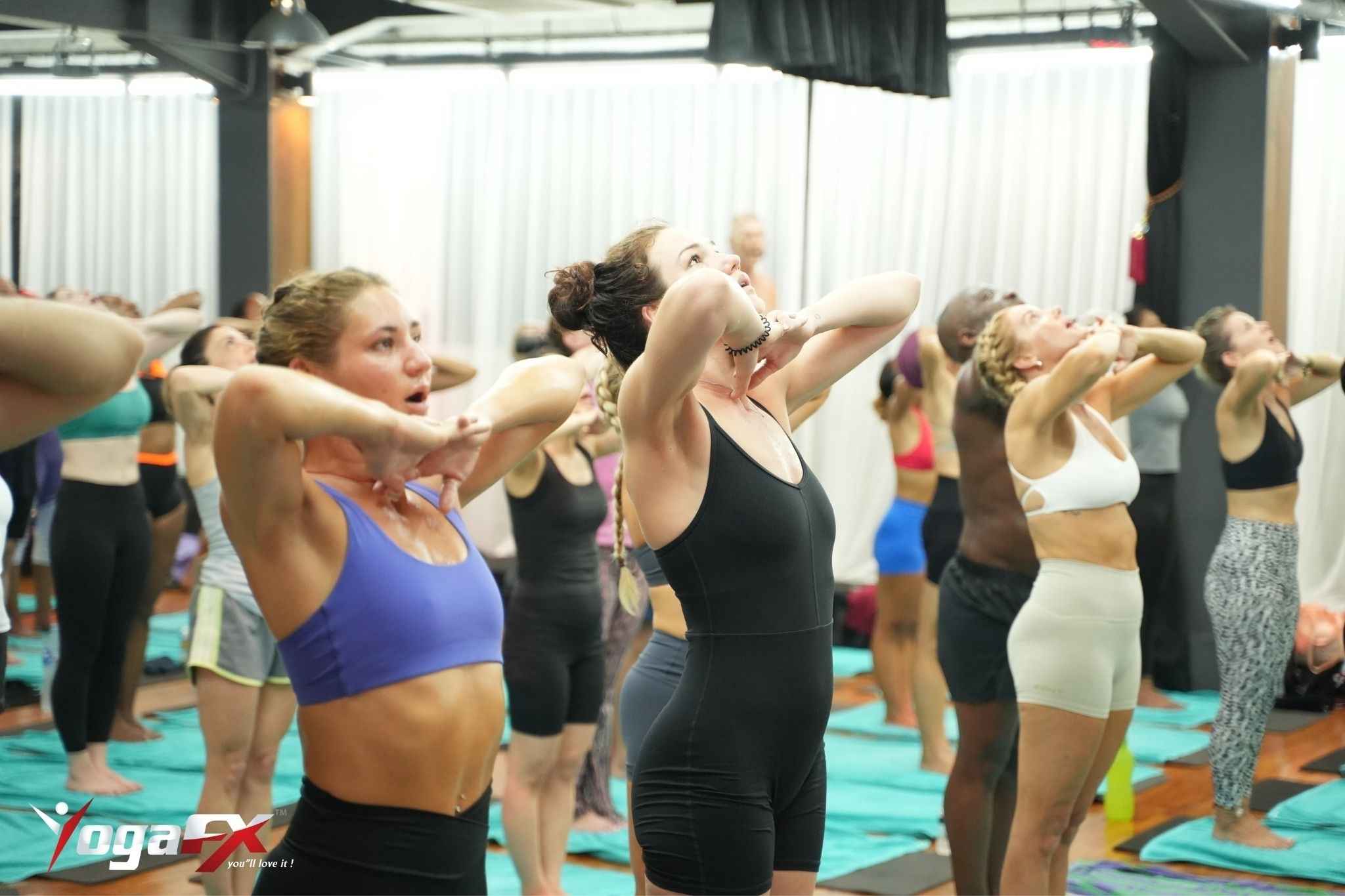
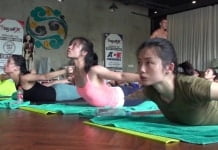
Every day of the intensive follows a rhythm. You practise the sequence, then you drill the words, then you teach. For example, a trainee might teach the Half Moon Pose dialogue (Ardha Chandrasana) to a small group in the morning. After lunch, the same trainee teaches it again with Mr. Ian’s notes in hand.
Before anyone enrols, Mr. Ian speaks to each student personally on a discovery call. These calls often run up to an hour and a half. He wants to know why you’re coming, what you hope to teach and what worries you. Then he answers your questions directly, with no sales script.
“There can be no greater investment than the one that you make in your health, because without it, nothing else matters.”
Mr. Ian Terry, E-RYT 500, founder of YogaFX
What Graduates Say
Graduates describe the same mix of hard work and support. Here’s what three of them wrote after finishing:
- Stacy, Google review, 2024: “I completed YogaFX Teacher Training in Bali with Mr. Ian, he is a great teacher, truly an authentic, genuine person. The course was intense and required discipline, I loved it!”
- Samantha, Google review, 2025: “The experience in Bali with YogaFX far exceeded my expectations! The training was tough but so rewarding and we got to meet and become friends with some incredible people from all parts of the world!”
- Uyanga, Google review, 2019 (translated): “I have just completed the 200-hour yoga teacher training at YogaFX in Bali. I am ready for my new chapter as a yoga teacher, and I thank our teacher Ian so much.”
Those three come from a much larger set. YogaFX students have left 150 Google reviews, 50 Yoga Alliance reviews and 357 video testimonials on YouTube. So you can read and watch real accounts before you decide.
The Research Your Future Students Will Ask About
Once you’re registered, students will ask you what hot yoga actually does. It helps to know the research, so you can answer honestly and without hype. Here are three studies worth knowing by name.
- Mood and depression. In an 8-week trial at Massachusetts General Hospital, 59% of heated yoga participants saw their depressive symptoms fall by half or more, against 6.3% on the waitlist. The Harvard Gazette summary of the heated yoga trial explains the design (Nyer et al., Journal of Clinical Psychiatry, 2023).
- Body and fitness. A 2025 systematic review by Willmott and colleagues pooled 43 studies with 942 participants. It found that regular hot yoga may improve body composition, balance, flexibility and bone mineral density.
- Well-being. A six-week randomised trial with 290 adults (Hui et al., 2022) found that the hot yoga group gained in life satisfaction, mindfulness and peace of mind compared with a waitlist group.
Notice the careful wording, such as “may improve”. That’s how a good teacher talks about benefits. Research suggests real effects, but no class replaces medical care. If a student has a health condition, the right answer is always to consult a healthcare professional before starting a heated practice.
Knowing these studies also shapes how you teach. For instance, the depression trial found benefits with about one class a week on average. So you can tell a nervous beginner that steady practice counts more than heroic effort.
Earning RYT 200 on the YogaFX Bali Hybrid Course
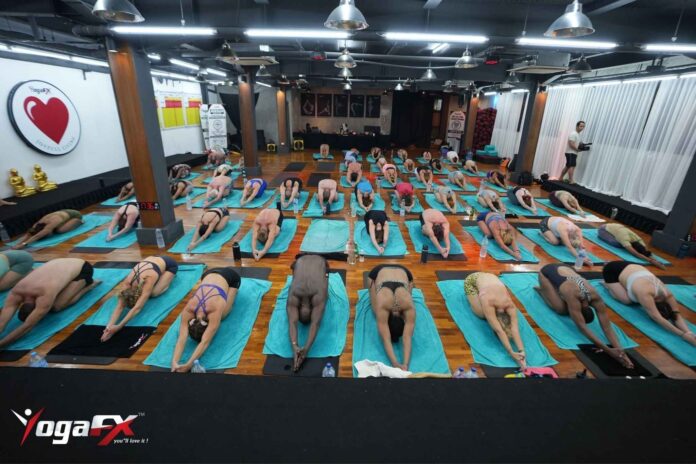
Our course is built for people who can’t take a month off work. You study online first, at your own pace. Then you join a 6-day intensive in Bali, checking in on a Sunday and out on a Friday. In practice, that’s just five days off work.
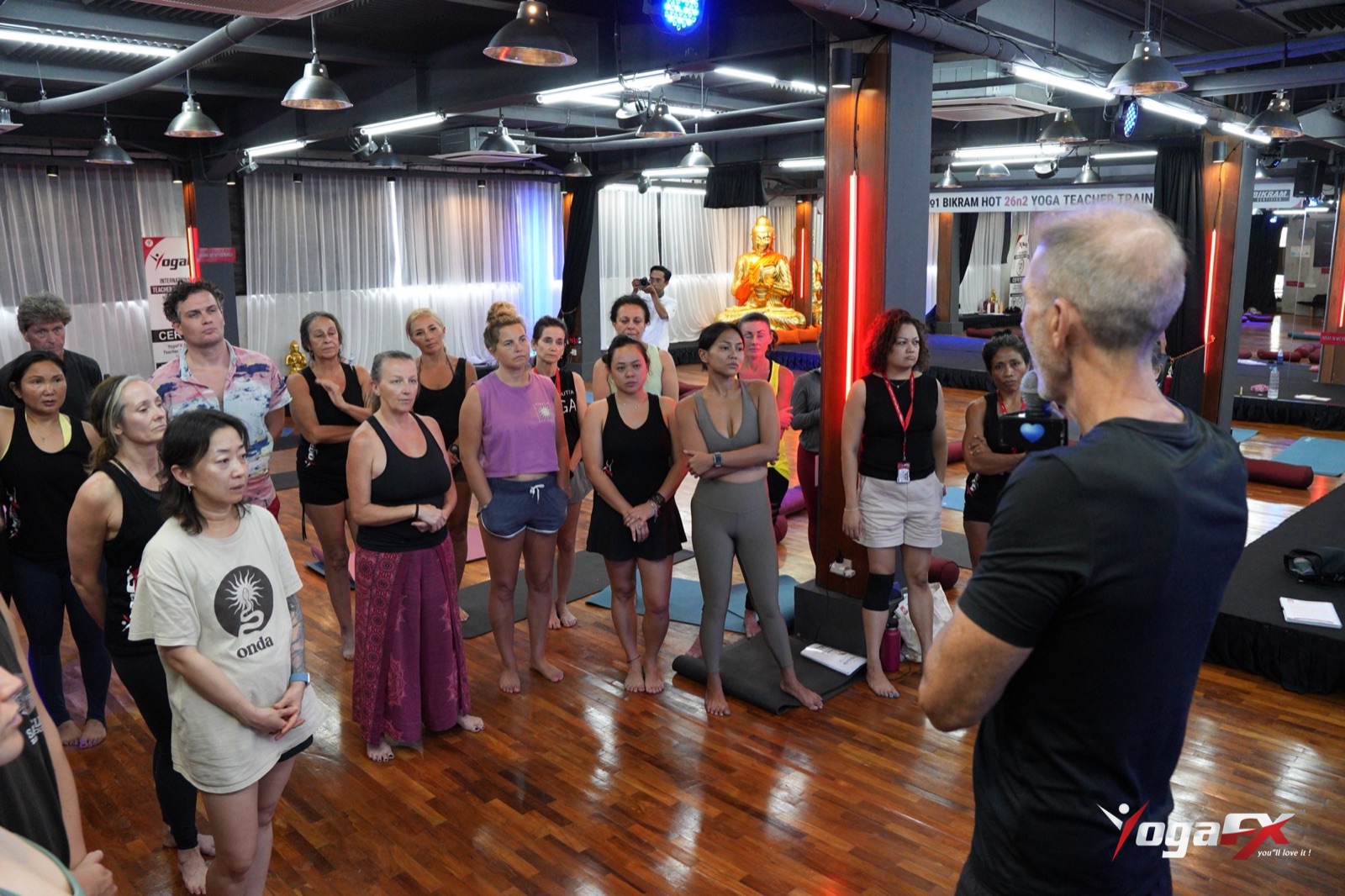
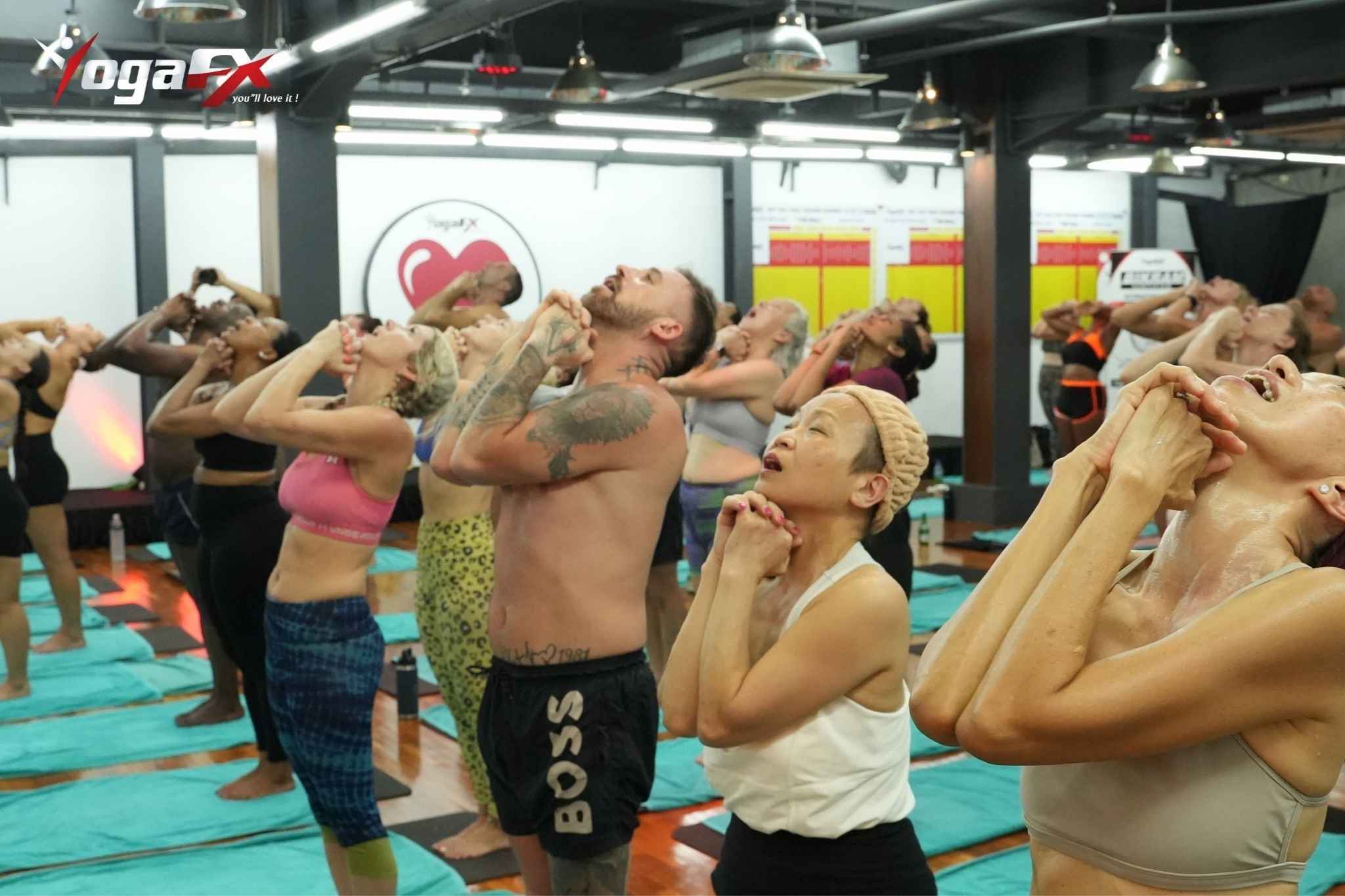
The method is the Original Hot 26&2 Yoga sequence: 26 postures and 2 breathing exercises, taught with a scripted dialogue. Classes run 90 minutes at about 40°C and 40% humidity, warmed by Bali’s natural tropical heat rather than electric heaters.
You graduate with two credentials from one program:
- Yoga Alliance RYT 200-Hour, the international baseline that studios recognise.
- Bikram Hot 26&2 200-Hour International Yoga Certification, which shows exactly which method you can teach.
- Lifetime access to the YogaFX Online Academy, with posture clinics, dialogue demonstrations and 50+ premium lectures.
Dates, Venue and Price
The next MasterClass runs from Sunday 24 January to Friday 29 January 2027 at Soham Wellness Center in Seminyak, with accommodation at the Djabu Seminyak hotel. You’ll find every intake on our RYT 200 course dates page.
The Early Bird price is US$1,899, which saves US$100 on the standard US$1,999. Twin share packages are US$1,999 and a premium single room is US$2,199. Instalments start from US$250 a month with no interest, matched to your monthly budget.
Your Lead Trainer
Who teaches you matters as much as the format. Mr. Ian Terry has taught for more than 12,000 hours and spent five years, from 2014 to 2019, on the teaching staff of the founder of the Bikram Hot 26&2 method. He’s also a Master Trainer for the Republic of Indonesia Yogasana Sports Federation.
His graduates compete too. In June 2026, YogaFX graduates Ivara and Arkan helped Indonesia win seven medals at the World Yogasana Sports Federation Championships in Ahmedabad.
Want the day-by-day view of the Bali week itself? Our page on RYT 200 in Bali and the 6-day hot yoga intensive walks through each day. If you’re still weighing other hot yoga routes, our report on hot yoga associations and their trainings compares the main options side by side.
Is RYT 200 Worth It for You?
For most new teachers, yes. It’s the title employers look for first. It also gives you a clear next step, because the same registration leads on to E-RYT 200 once you have the teaching hours.
Still, the credential alone won’t make you a good teacher. Three questions decide whether a course is worth your money:
- How much will you actually teach? Look for daily practicals, not one teach-back at the end.
- Who is your lead trainer? Check their Yoga Alliance title and teaching hours in the directory.
- Does the format fit your life? A course you can’t finish is worth nothing, however long it is.
Answer those honestly and the right course usually becomes obvious. If you have a month free, a long residential program can suit you. However, if you have a job, a family or both, a hybrid format lets you earn the credential without putting your life on hold.
FAQ
What does RYT 200 stand for?
RYT 200 stands for Registered Yoga Teacher, 200 hours. It’s a Yoga Alliance credential for teachers who finished a 200-hour training at a Registered Yoga School and then registered with Yoga Alliance. It shows studios that you meet a shared international training standard, and it needs no teaching hours to start.
Does RYT 200 expire?
Your training never expires, but your registered status depends on membership. Yoga Alliance asks members to pay annual dues, currently 65 dollars a year, and to complete continuing education hours. If you stop paying, your directory listing lapses, so renew each year to keep using the RYT 200 title professionally.
How much does RYT 200 cost?
You pay two separate costs. Tuition goes to your school; at YogaFX it starts at US$1,899 with the Early Bird price. Registration goes to Yoga Alliance: a 50-dollar one-time application fee plus 65 dollars in annual dues, so 115 dollars in year one. Instalments from US$250 a month are available.
What is the difference between RYT 200 and RYT 500?
RYT 200 needs 200 training hours and no teaching. RYT 500 needs 500 training hours, either in one program or as 200 hours plus a separate 300-hour training, and at least 100 teaching hours. Most teachers start with the 200-hour title, teach for a while, then add the 300-hour training later.
How do I register as RYT 200?
After you graduate, create an account on the Yoga Alliance website and choose the RYT 200 credential. Then upload your training certificate, name your Registered Yoga School and pay the fees. Once your school confirms your training, your listing goes live and you can add the letters after your name.
Is RYT 200 worth it?
For most people who want to teach, yes. Studios and gyms usually ask for RYT 200 before they hire, and it opens the path to E-RYT 200 later. Its real value depends on the course behind it, so choose a school with lots of supervised teaching and an experienced lead trainer.
Still have questions? Message Mr. Ian and the YogaFX team on WhatsApp and we’ll answer them personally.