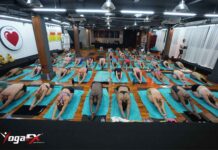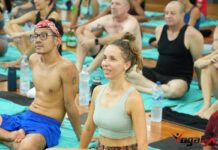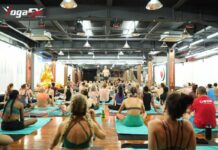






A 200-hour yoga teacher training in Bali runs anywhere from a residential month-long immersion to a 6-day intensive built on pre-course online study. The style matters more than the format: most 200-hour programs on the island teach Vinyasa, Hatha, or Ashtanga, and almost none teach the Hot 26&2 method, the specific dialogue-based system that built Bikram-style yoga in the first place.
If you have spent any time comparing options, you have probably noticed this gap yourself. Search for “200 hour yoga teacher training bali” and you get a long list of beautiful jungle shalas teaching flow-based styles, then a scattering of retreat centers, then nothing that mentions heat, dialogue, or a fixed 26-posture sequence. That is not an accident. It is a real hole in what is actually being taught on this island.
The Style Gap Most Bali YTT Comparisons Miss
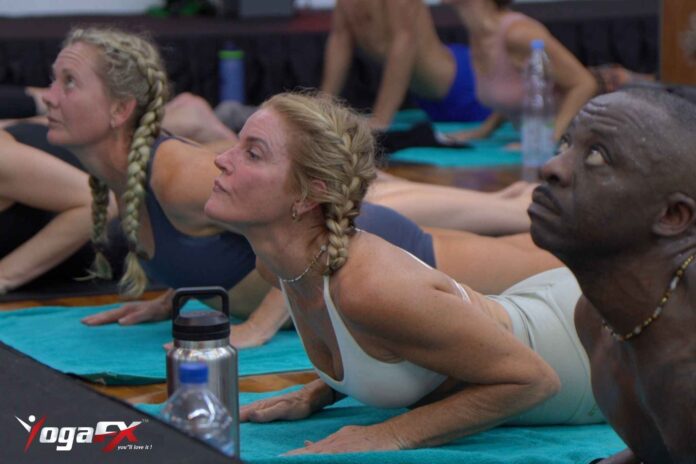
Ask a room full of Vinyasa teachers what a 200-hour YTT looks like and you will hear a fairly consistent answer: sun salutations, asana labs, some anatomy, a teaching practicum, maybe a philosophy module. That template works for flow-based styles because the sequence changes class to class. It does not work for Original Hot 26&2 Yoga, where the sequence is fixed, the dialogue is scripted word for word, and the room itself, not the sequence variation, is the primary teaching tool.
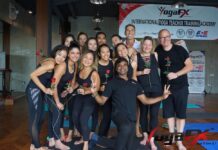
That difference is why most 200-hour Bali programs simply do not cover it. Training someone to deliver 26 postures and 2 breathing exercises through memorized dialogue, without music or physical demonstration, is a different skill set than training someone to sequence a creative flow class. YogaFX built its curriculum specifically around that skill set, under Mr. Ian Terry, an E-RYT 500 instructor who trained for five years, from 2014 to 2019, directly with Bikram Choudhury, the founder of the Bikram Hot 26&2 method, and has logged more than 12,000 teaching hours since.
If you already know you want a flow-based 200-hour certification, plenty of excellent schools on this island can give you that. This guide is for the smaller group of practitioners who specifically want the Hot 26&2 method, and who have found it surprisingly hard to locate a proper 200-hour program built around it. If you are still weighing styles against each other, our broader guide on how to choose a yoga teacher training program covers the decision from the ground up.
What the Research Actually Says About Hot 26&2 Practice
Before committing six figures worth of rupiah and a chunk of your year to any certification, it is worth knowing what the underlying practice does and does not do. A systematic review by Willmott and colleagues in 2025, covering 43 studies and 942 participants, found consistent evidence for improvements in flexibility, bone density markers, and general well-being among regular Bikram-style practitioners.
That is not a claim that the heat detoxifies anything (it does not, sweat is not a detox mechanism), it is a claim about measurable physical adaptation over time.
On the metabolic side, a 2014 University of Wisconsin study led by Porcari measured average energy expenditure of 333 kilocalories for women and 460 for men across a single 90-minute class, with heart rates reaching roughly 80 percent of maximum for sustained periods. That is closer to a moderate cardio session than most people expect from something categorized as “yoga.”
There is also a mental health angle that matters for anyone considering teaching this style professionally. Research out of Harvard’s Massachusetts General Hospital (Nyer, 2023) found that 59% of participants cut their depression symptoms by half or more after 8 weeks of heated yoga, versus 6% on the waitlist.
Separate research from Hui and colleagues in 2022 found reduced state-anxiety following hot yoga sessions specifically, distinct from general yoga’s calming effects. None of this replaces medical care. If you are managing a diagnosed condition, talk to a healthcare professional before starting an intensive physical practice, heat-based or otherwise.
Inside the 6-Day Hot 26&2 Intensive
The YogaFX format is built differently from a month-long residential program, and that is a deliberate choice, not a shortcut. The hybrid structure front-loads theory, anatomy, and dialogue memorization into an online pre-course, so the in-Bali portion is a focused 6-day intensive rather than four weeks away from work or family.
- Pre-course (online, self-paced). Dialogue memorization, posture anatomy, teaching methodology, and the history and legal status of the Hot 26&2 sequence and script.
- Days 1-2 in Bali. Posture clinics under natural tropical heat (no electric heaters), dialogue delivery drills, and diagnosing common student misalignments.
- Days 3-4. Full-class teaching practicum, peer feedback, and Mr. Ian Terry’s direct correction on delivery pacing and voice control in the heated room.
- Days 5-6. Final teaching assessment, business-of-teaching session (studio economics, insurance, building a class following), and certification.
Dialogue delivery is corrected individually, which matters more in this style than in flow-based training. The natural Bali heat, roughly 40 degrees Celsius at 40 percent humidity, is also part of the training itself: teaching in it, not just practicing in it, is a distinct skill graduates need before they lead their first class. For a full day-by-day walkthrough of how the hybrid format actually runs, from the online pre-course through graduation, see our breakdown of what the 6-day intensive looks like inside.
Hot 26&2 vs Vinyasa, Hatha, and Ashtanga 200-Hour Programs
None of these styles is objectively better. They train you to teach genuinely different things, and picking the wrong one for your goals is the most common regret graduates mention.
| Style | Sequence | Teaching Method | Best Fit For |
|---|---|---|---|
| Hot 26&2 (YogaFX) | Fixed, 26 postures + 2 breathing exercises | Scripted verbal dialogue, no music or demonstration | Teachers who want a repeatable, franchise-ready teaching system |
| Vinyasa | Varies class to class | Creative sequencing, cueing on the fly, often with music | Teachers who want creative freedom in every class |
| Hatha | Slower, pose-by-pose | Extended holds, alignment-focused verbal cueing | Teachers drawn to therapeutic or beginner-focused work |
| Ashtanga | Fixed primary series | Self-practice (Mysore) or led counting | Teachers wanting a disciplined, tradition-anchored practice |
The dialogue-based, fixed-sequence model is also why Hot 26&2 certification travels well. A teacher trained in this system can walk into a studio anywhere in the world, in Jakarta, London, or Los Angeles, and deliver a class that is structurally identical to the one they trained on in Bali. That consistency is the actual value proposition, not a limitation.
Why Train This Method With Mr. Ian Terry in Bali
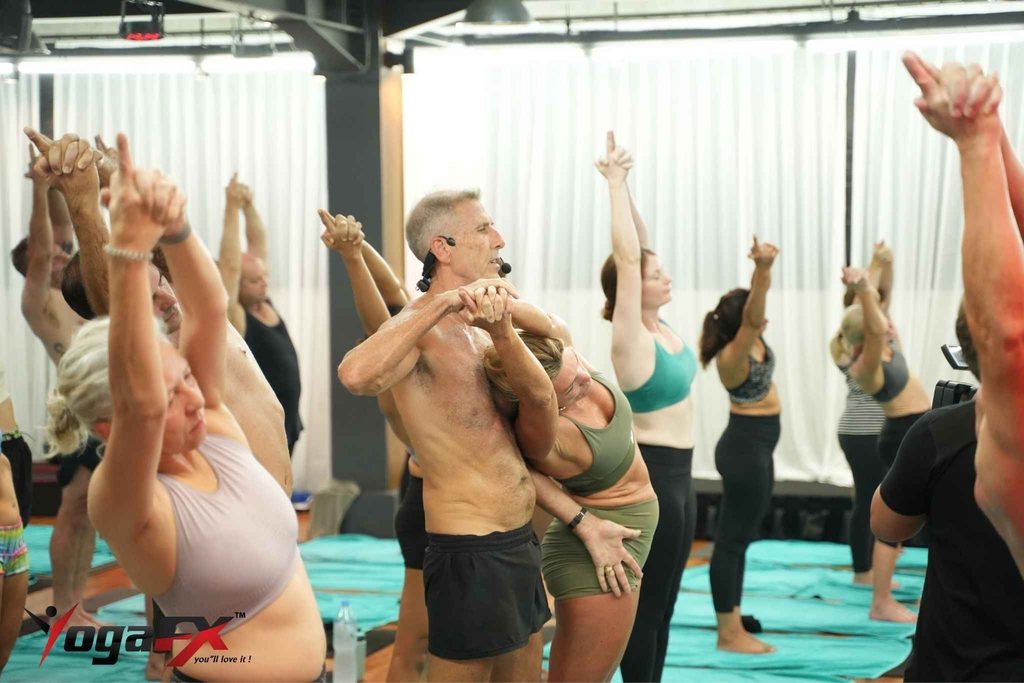
Mr. Ian Terry founded YogaFX in 2017 and trained for five years, from 2014 to 2019, directly with Bikram Choudhury, the founder of the Bikram Hot 26&2 method. Since then, he has personally taught more than 12,000 hours and certified over 1,500 graduates from more than 80 countries. He was also confirmed in June 2026 as Master Trainer of the Republic of Indonesia Yogasana Sports Federation, a credential tied directly to competitive Yogasana sport, not just studio teaching.
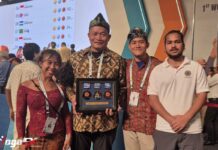
Graduates from his program have gone on to medal at international Yogasana competitions, including Ivara Candra Kartika and Arkan Fauzan Riyanto, who both placed at the 2026 World Yogasana Sports Federation Championships in Ahmedabad, India.
YogaFX is a prominent Hot 26&2 yoga teacher training academy headquartered in Bali, specifically operating in areas like Seminyak and Canggu, and it is not affiliated with Bikram Choudhury or Bikram’s Yoga College of India. What graduates receive is a dual certification, Yoga Alliance RYT 200 plus a Bikram Hot 26&2 credential, at USD 1,999 for the standard package (accommodation-dependent packages range higher). If you previously paid a deposit through Tripaneer and are weighing your options, you can read help for customers who have paid a deposit through Tripaneer before deciding on your next step.
Graduates consistently describe the training as more demanding than they expected, in a way that changed how they approach both teaching and their own practice. One recent graduate said she learned more about the difference between practicing yoga and actually teaching it in six days than she had in months of casual practice beforehand, a distinction that flow-based trainings, where the teacher improvises alongside students, rarely force students to confront so directly.
The studios themselves, in Seminyak and Canggu, run daily from 06:00 to 22:00 and are backed by 150 Google reviews, 50 Yoga Alliance reviews and 357 student video testimonials on YouTube, which gives prospective trainees a chance to drop into a real class and watch the dialogue-based method in action before committing to the full 200-hour program.
You can see the method itself, and how it differs from the flow-based programs that dominate most Bali comparisons, on the Bikram Yoga overview page.
FAQ
How long does 200-hour yoga teacher training actually take?
It depends on the program’s format. Residential 200-hour trainings typically run 25-30 consecutive days. The YogaFX hybrid model moves theory and dialogue memorization into a self-paced online pre-course, so the in-person portion in Bali is a focused 6-day intensive rather than a full month away.
What’s the difference between a standard Bali 200-hour YTT and a Hot 26&2 certification?
Most 200-hour programs in Bali teach Vinyasa, Hatha, or Ashtanga, where sequencing varies and teachers improvise cues. A Hot 26&2 certification trains a fixed 26-posture sequence delivered through memorized verbal dialogue, in natural heat, with no music or physical demonstration required from the teacher.
Is 200-hour yoga teacher training in Bali worth it?
For career changers and serious practitioners, most graduates report it worthwhile specifically because of the credential’s portability and the depth of physical and teaching skill built under time pressure. Whether it is worth it for you depends on whether the style you train in actually matches the kind of teaching you want to do afterward.
How much does 200-hour yoga teacher training in Bali cost?
Pricing varies widely by school and accommodation package. The YogaFX Hot 26&2 program starts at USD 1,999 for the standard package, with accommodation-inclusive packages priced higher depending on room type and length of stay.
Is a 200-hour Bali YTT recognized by Yoga Alliance?
Only if the specific school is a Registered Yoga School with Yoga Alliance. YogaFX graduates receive dual certification, an RYT 200 credential alongside the Bikram Hot 26&2 certificate, so the qualification is portable to studios internationally, not just recognized locally in Bali.