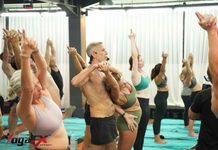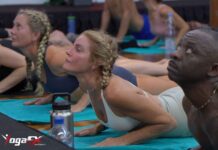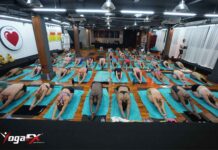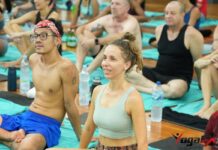







Balancing yoga poses train the small stabilising muscles of the feet, ankles, legs and trunk, and they ask the mind to stay quiet while the body works. The six standing poses below are the foundations most teachers start with. Each one builds a different part of balance: alignment, a wide base, extension, strength, hip control and an inverted forward fold. Learn them in order and the harder one-legged balances become far easier.
We teach balance every day in the Hot 26&2 room in Bali, where the first half of every class is a standing series. This guide looks at balancing yoga from that teacher’s point of view: what each pose demands, the most common mistake, and how to make it work for a beginner.
Why Balancing Yoga Matters On and Off the Mat
Balance is not one skill. It combines leg strength, ankle mobility, a steady gaze, an engaged core and calm breathing. When any one of those is missing, you wobble. Standing poses train all of them at once, which is why they appear early in almost every yoga style.
The mental side matters just as much. A balancing pose gives instant, honest feedback: drift into thinking about tomorrow and you fall out. Many students notice that this practice of returning to the present carries into daily life. Research on heated yoga points the same way: a 2025 systematic review by Willmott and colleagues, covering 43 studies and 942 participants, found consistent improvements in flexibility and general well-being among regular Bikram-style practitioners.
Root the foot
Spread the toes and press evenly through heel, big toe and little toe before you lift anything.
Fix the gaze
Pick one still point ahead of you. A moving gaze is the fastest way out of a balance.
Lock the standing knee
In the Hot 26&2 balances the standing leg stays straight and strong, so the thigh muscles do the work.
Breathe through the nose
Slow, even breaths keep the heart rate down, which matters in a 90-minute class at 40°C and 40% humidity.
6 Standing Balancing Yoga Poses for Beginners
The table gives a quick view of what each pose trains and the one cue that helps most. The sections below explain each pose in more detail.
| Pose | Balance challenge | Main areas worked | Beginner cue |
|---|---|---|---|
| Tadasana (Mountain) | Even weight on both feet | Feet, ankles, thighs, posture | Feel the weight in heels and balls of the feet equally |
| Trikonasana (Triangle) | Wide base, side bend | Legs, side body, hips, shoulders | Keep both legs straight and reach long rather than low |
| Parsvakonasana (Side Angle) | Extension while bent knee holds | Front thigh, groin, side waist | Rest the forearm on the thigh until the legs are strong |
| Virabhadrasana (Warrior) | Holding a deep lunge | Calves, thighs, shoulders, back | Front knee over the ankle, never past the toes |
| Parsvottanasana (Intense Side Stretch) | Narrow stance with forward fold | Hamstrings, hips, spine | Step the feet a little wider apart side to side |
| Prasarita Padottanasana (Wide-Leg Fold) | Head below heart | Inner legs, hamstrings, spine | Hands on blocks or a chair until the fold deepens |
1. Tadasana, the Mountain Pose

Tadasana is the basic pose every beginner learns, and it looks deceptively simple. Standing still with full attention shows you that your body is not even on both sides: one foot carries more weight, one shoulder sits higher. Becoming aware of that unevenness is the first step to correcting it.
The pose strengthens the feet, ankles and thighs and teaches the alignment that every other standing pose depends on. Practise it with your eyes closed for a few breaths and you will feel how much work your ankles do to keep you upright.
2. Trikonasana, the Triangle Pose

In Triangle you form triangles with your legs, arms and trunk. The wide stance makes it stable, so it is a safe place to learn how to stay balanced while the upper body moves away from centre. It tones the legs and arms and opens the hips, side body and shoulders.
The common mistake is collapsing the chest towards the floor to reach lower. Reach long instead, keep the top shoulder stacked over the bottom one, and the pose becomes a real balance exercise.
3. Parsvakonasana, the Extended Side Angle

Side Angle is a step up from Triangle and Mountain. Here you learn to extend the whole body in one line while the bent front leg holds you steady. It stretches the groin, chest, side waist and shoulders and builds stamina in the lower body.
It can feel hard for beginners. Rest the forearm on the front thigh instead of placing the hand on the floor, and lengthen from back heel to fingertips. The full version will come as the legs get stronger.
4. Virabhadrasana, the Warrior Pose

Warrior has several variations that load the upper and lower body. Holding a deep lunge strengthens the calves, ankles and thighs, while the raised arms work the shoulders and back. It also opens the chest and the front of the hips.
Because the lunge is deep, alignment matters. Keep the front knee over the ankle and never let it drift past the toes. Come out of the pose before the knee starts to wobble rather than forcing the hold.
5. Parsvottanasana, the Intense Side Stretch

This pose stretches the long muscles down the back of the legs and along the spine while you balance on a narrow stance. It can feel intense, so spend time here without trying to overdo it. Flexibility builds in the hamstrings, hips, shoulders and spine.
If you feel unsteady, the feet are probably on a tightrope. Step them a little wider apart side to side, as if on two train tracks, and the balance improves at once.
6. Prasarita Padottanasana, the Wide-Leg Forward Fold

Standing with the legs wide apart, you fold forward until the hands, and eventually the head, reach the floor. Bringing the head below the heart is a different kind of balance: your sense of up and down changes, so the feet must stay firmly rooted.
The pose lengthens the inner legs, hamstrings and spine and engages the abdominal muscles. Use blocks or a chair under the hands until the fold deepens, and rise slowly to avoid feeling light-headed.
From Foundations to the Hot 26&2 Balancing Series
Once these six feel steady, the one-legged balances follow. In the Original Hot 26&2 sequence of 26 postures and 2 breathing exercises, the standing series includes Standing Head to Knee, Standing Bow Pulling, Balancing Stick, Tree and Toe Stand. Each asks for a locked standing knee and a fixed gaze, the same cues you practise in Mountain. You can see the full order and purpose of each posture in our guide to the 26 and 2 yoga poses.
Consistency is what turns a wobble into a steady hold. If you are deciding how often to practise, our article on the benefits of hot yoga three times a week explains what changes with a regular schedule.
“This experience refined not only my practice, but also my understanding of balance, resilience, and longevity in training.”
Kadek, Google review, 2026
“There were certain postures that I just didn’t know I could ever get to, the full depth of that I’ve accomplished here.”
Amanda, YouTube testimonial, 2019 (close paraphrase)
Balancing Yoga FAQ
How long should I hold a balancing pose?
Start with three to five slow breaths and build up. Quality matters more than time: a short hold with good alignment trains balance better than a long hold with a bent standing knee.
Why do I fall out of balancing poses more on one side?
Almost everyone has a stronger side. Practise the weaker side first, while you are fresh, and give it the same number of breaths as the strong side.
Is it harder to balance in a hot room?
At first, yes. Heat raises the heart rate and sweat makes the skin slippery, so the breath and the gaze matter even more. Most students find that after a few weeks the warmth helps the muscles release and the balances feel steadier.
Learn to teach balance in the YogaFX Bali teacher training