







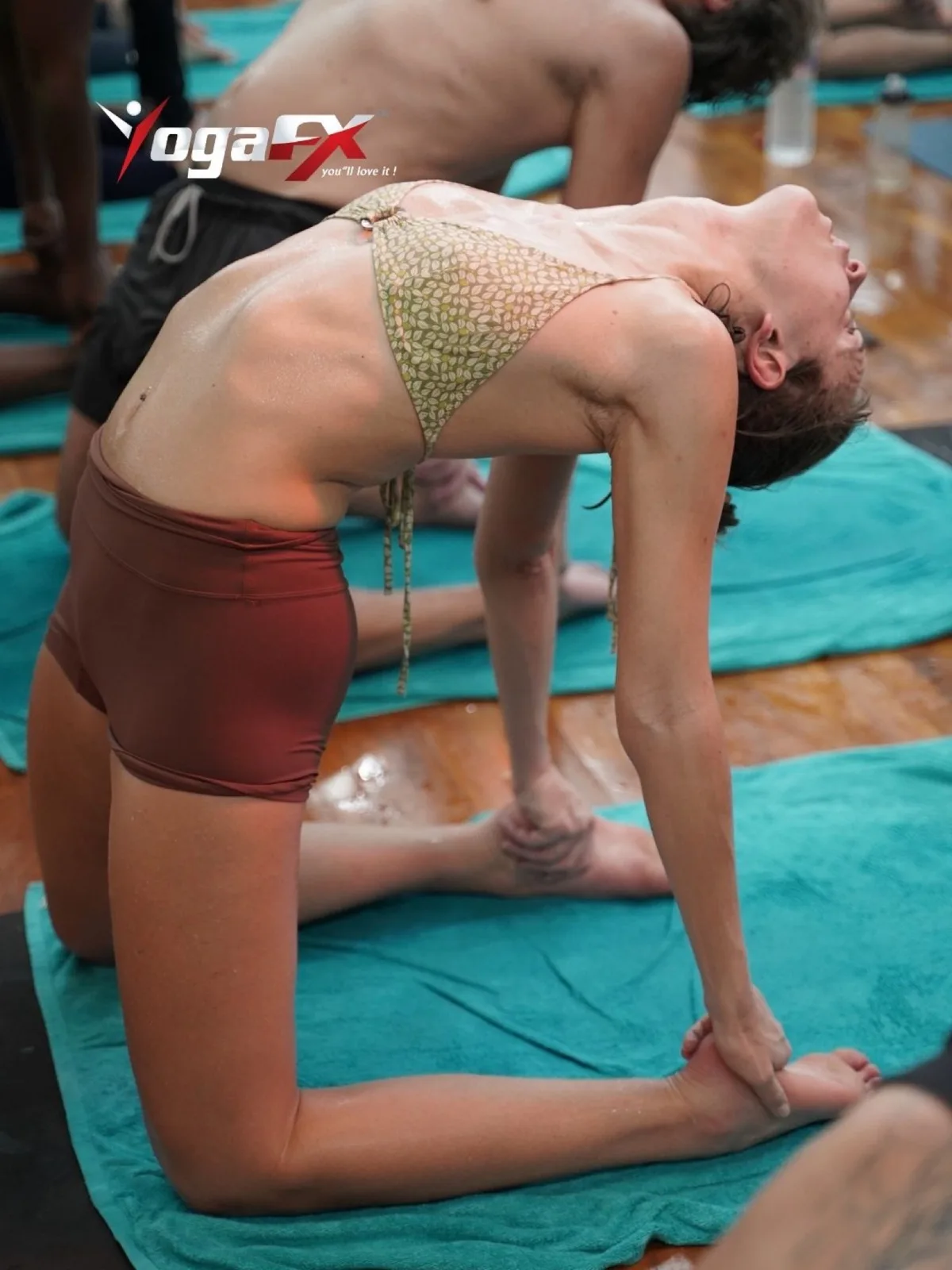
Camel pose (Ustrasana) is a kneeling backbend in the 26&2 floor series. A good teacher cues it in a fixed order: hips forward, chest lifting, head last. Trainees at YogaFX in Bali learn to say those cues in plain words. They also learn to ease a student out early when heat, neck or lower back says stop.
Camel is the posture where a new teacher’s voice matters most. The student can’t see their own spine, and the bend happens behind them. So the words you choose do the work that a mirror can’t. This guide shows how our trainees learn those words. It also covers what they watch for in the room and how they decide when to say less.
Camel Pose Teaching Cues: Hips, Chest, Head in That Order
Every camel pose has the same three jobs. The hips travel forward, the chest rises, and the head follows last. Teachers who mix up that order hand students a lower back bend and a squeezed neck. That’s why trainees drill the order before they drill the wording.
Here is the order a trainee practises, in plain language. The exact dialogue is taught live in the course, so treat this as a map and not the script.
- Set the base. Knees about hip-width apart, thighs upright, tops of the feet on the floor. A steady base keeps the rest of the shape quiet.
- Lift the chest first. The breastbone rises before anything leans back. That spreads the bend across the upper spine instead of one sore spot.
- Send the hips forward. The pelvis moves toward the front of the room as the chest opens. If the hips stay over the heels, the lower back takes the load.
- Let the head follow. The head goes back only as far as the neck feels long. It never leads, and it doesn’t get thrown back to finish the shape.
- Come out chest first. The head lifts last, and the student rests before the next set.
Notice that four of the five steps protect the neck and lower back. Only one asks for depth. That ratio is deliberate, because a camel pose that looks modest and feels steady beats a deep one that pinches.
Why a Student Cannot Fix Camel Pose Alone
In a standing posture, a student can glance at the mirror and correct themselves. In camel pose the spine bends away from the eyes. So the student relies on your voice for position, and you rely on watching hips and knees from the side. For example, you can spot hips behind the knees from across the room, even when the student feels fine.
Teaching Ustrasana to Different Bodies: A Trainee’s Cheat Sheet
No two students arrive at camel pose the same way. Our trainees learn to recognise five common profiles and keep a short option ready for each. The table below is the kind of cheat sheet they build during practice teaching.
| Student profile | What you see from the side | Cue to give | Option to offer |
|---|---|---|---|
| Desk-bound, stiff chest | Chest stays low and the head drops back early | Lift the breastbone before you go back | Keep the hands on the lower back for the whole posture |
| Very flexible student | Deep bend, hips behind the knees, ribs flaring | Press the hips forward and keep the front body long | Come up a little and aim for even effort, not depth |
| Sensitive knees | Wincing, or weight shifting off the shins | Soften the weight and rest the shins evenly | Fold a towel under the knees |
| Sensitive neck | Chin pressed toward the throat, tight shoulders | Let the head follow only as far as the neck feels long | Keep the head level and the gaze forward |
| Newcomer in the heat | Fast breath, glassy eyes, a sudden pause | Slow the breath and sit back on the heels | Skip the second set, sit and sip water |
Each option is a normal part of teaching, not a demotion. A student who sits back on their heels for three breaths is still practising camel pose well. The skill is offering the option in the same calm voice as the main cue, so nobody feels singled out.
Where Camel Pose Sits in the Floor Series Backbends
Camel pose arrives late in the floor series, after Cobra, Locust, Full Locust, Bow and Fixed Firm. By then students have bent backward lying down several times, so the hips are warm and the shoulders are loose. Our guide to cobra pose in the floor series shows how that first backbend is taught. The full Hot 26&2 guide lays out the whole order.
That sequence works as a teaching tool. Cobra (Bhujangasana) teaches the chest lift with the floor underneath. Camel pose asks for the same lift with nothing under the chest. So when a student struggles in camel pose, a smart teacher thinks back to how that student handled cobra.
For the practitioner’s view, our sister 26&2 site has a student-side guide to Ustrasana. It follows the same cues from the other side of the mat.
Cueing Words That Work and Words to Retire
- Use: “lift the chest”, “hips toward the front of the room”, “let the head follow”, “come up slowly”.
- Retire: “reach for your heels” as a goal, because it sends students into the lower back.
- Retire: “throw the head back”, because the neck then leads a bend it should only follow.
- Retire: vague words like “arch” or “push”, because students pick the nearest joint and bend there.
Plain words travel further in a warm room. A student who is breathing hard has little attention left. So a short cue that names one body part beats a clever description.
How Trainees Practise Cueing Camel Pose in Bali
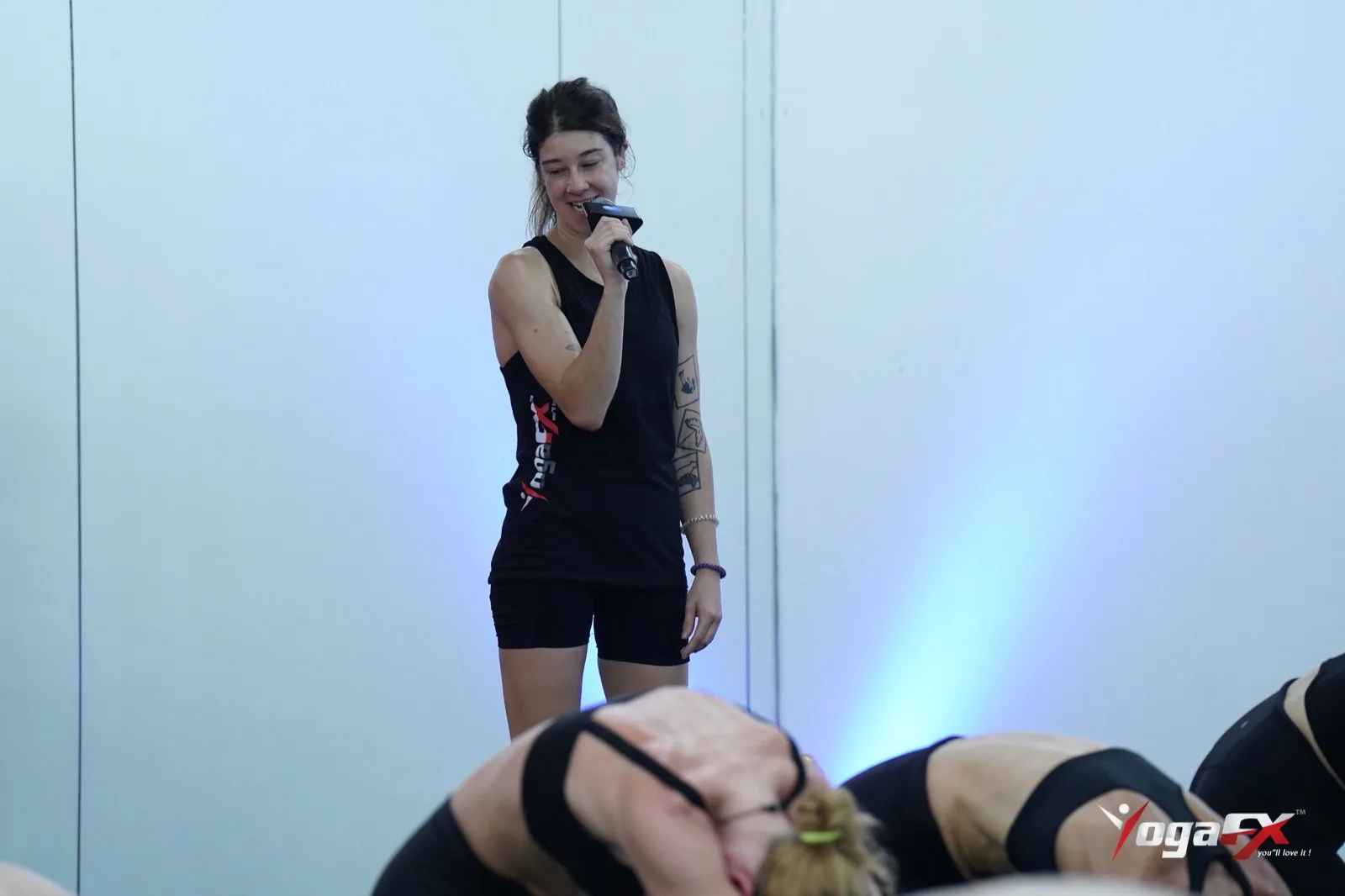
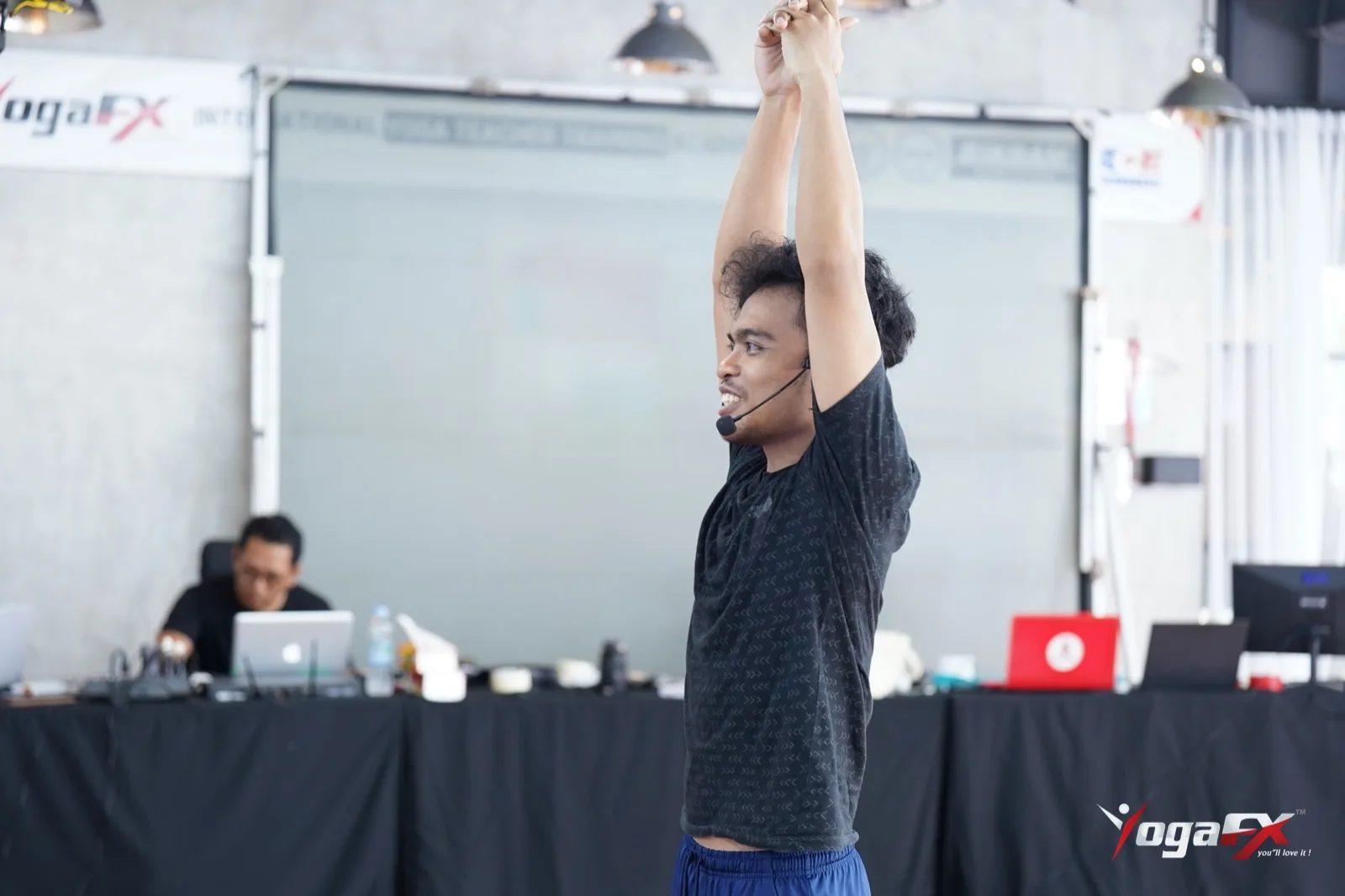
Reading about cues is easy. Saying them to a live group in a warm room is not. So the teacher training at YogaFX is built around practice teaching. You hold a microphone from early in the course.
Mr. Ian Terry, E-RYT 500, leads the training. He has more than 12,000 teaching hours. He trained for five years, from 2014 to 2019, with the founder of the Bikram Hot 26&2 method. That background shapes how camel pose is taught: order first, plain words second, eyes on the room before you speak.
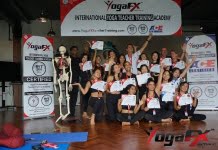
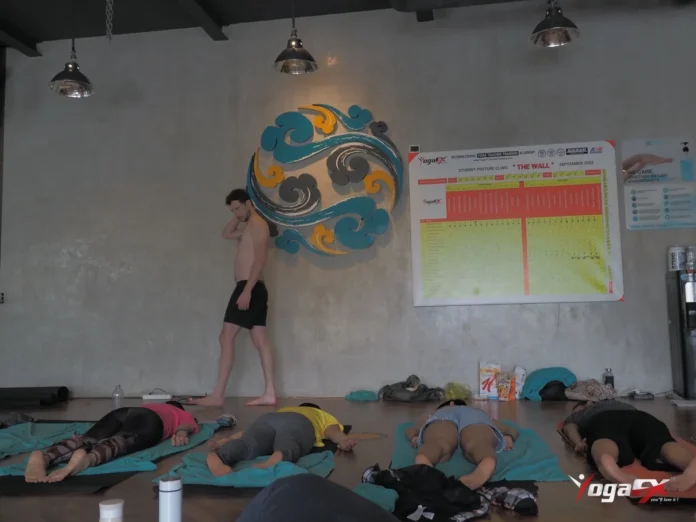
Trainees also work through a posture clinic. In our studio photos you can see The Wall, a chart that tracks each trainee against the 26 postures. Because every trainee’s progress is visible to the group, a tricky posture does not get quietly skipped.
A trainee’s routine for camel pose usually looks like this:
- Watch first. Stand at the front and look at hips and knees before you speak.
- One cue at a time. A single clear instruction beats three crowded ones.
- Name the options aloud. Say “hands can stay on the back” in the same calm voice as the main cue.
- Spot the stop signal. A held breath or a sudden wobble changes the cue to “come up”.
The Course Behind the Cue: Five Numbers
Camel pose is one posture inside a six-day course. This is the frame it sits in.
Common Camel Pose Teaching Mistakes
New teachers make the same handful of errors, and trainees learn to spot them in each other first. Here are the ones we see most in practice teaching.
- Cueing depth before position. Telling students to go back before the hips and chest are set invites a lower back bend.
- Talking over a struggling student. More words do not help a student who needs a pause, so a good teacher goes quiet and watches.
- Rushing the exit. A fast exit with the head first can leave students faint. The exit gets as much care as the entry.
- Ignoring the heat. A student breathing fast in a warm room needs a different cue from one who is calm.
- Teaching to the flexible few. The one student who reaches the heels isn’t the class. The cue has to work for the stiffest body in the room.
That last point matters most. A teacher who cues for the stiffest body keeps the group safe. The flexible students still find their depth.
When to Ease a Student Out of Camel Pose
Knowing when to say less is half of teaching a deep backbend. A hot room raises the stakes, because heat, breath and blood pressure all change at once.
The Mayo Clinic lists heavy sweating, faintness, dizziness, nausea and headache among the symptoms of heat exhaustion. Its advice is to stop all activity and rest, move to a cooler place and drink cool water or sports drinks.
It also says to contact a healthcare professional if symptoms get worse or don’t improve within one hour. A yoga room isn’t an emergency ward. But those signs are a clear reason to bring a student out of the pose.
Trainees learn a short list of signals that mean “come up now”:
- Sharp pain, pinching or tingling in the lower back or arms.
- Pinching at the base of the skull or a tight throat.
- Dizziness, nausea or a pounding head, especially when coming up.
- A held or shallow breath that will not settle.
- Sudden stillness from a student who was moving a moment ago.
The teacher’s reply stays calm and short: come up slowly, sit back on the heels, breathe and sip water. If a student feels worse than uncomfortable, they sit, and the teacher checks in after class. Our guide on what trainees do when hot yoga makes them dizzy covers that routine in more detail.
What Health Sources Say About Stretching, Back Pain and Hot Yoga
We do not claim camel pose treats any condition. We can share what trusted health bodies say, because it shapes how we teach.
Harvard Health says stretching “keeps the muscles flexible and healthy”, and that you will feel tension during a stretch but should not feel pain. It also warns that stretching muscles before they are warmed up can hurt them. That fits the way camel pose arrives late in a class, when the body is already warm.
On back pain, the NHS back pain advice says to stay active and lists yoga, walking, swimming and pilates as activities that may help ease it.
The same page says to get urgent help for pain, tingling, weakness or numbness in both legs, or for changes in bladder or bowel control. A teacher who hears that from a student mid-class should stop the posture and point them toward medical advice.
The US National Center for Complementary and Integrative Health says yoga is generally considered safe for healthy people when performed properly under a qualified instructor, though injuries can occur. It adds that hot yoga has special risks related to overheating and dehydration.
For low-back pain it says the evidence suggests a slight benefit. Pregnant women, older adults and people with health conditions are advised to talk with their health care provider and the instructor first.
This is general information, not medical advice. Camel pose is a deep backbend. So check with a healthcare professional before you practise if you have a back, neck or shoulder problem, a recent injury or surgery, blood pressure concerns, or you’re pregnant. Our guide on who should check with a doctor before hot yoga goes further.
What Graduates Say After Learning to Teach in Bali
YogaFX has more than 550 student reviews across Google, Yoga Alliance and YouTube: 150 on Google, 50 on Yoga Alliance and 357 on YouTube.
Here are three short video reviews recorded by graduates at the end of the course, with first names only.
“I have had a very good time, thank you.”
Angela, YouTube review, 2025
“Thank you very much. Thank you for all of you who always support me.”
Kartika, YouTube review, 2024 (translated)
“Thank you for the opportunity… thank you so much.”
Nyoman, YouTube review, 2024
These clips are short thank-yous, not technical reviews. They show the part of the course that is hard to put on a cue sheet: the group you learn with.
Learn to Teach Camel Pose at YogaFX in Bali
The course is a 6-day hybrid: online theory first, then an intensive in Bali. The next batch checks in on Sunday 24 January 2027. It checks out on Friday 29 January 2027, at Soham Wellness Center in Seminyak. Graduates earn the Yoga Alliance RYT 200-Hour and the Bikram Hot 26&2 200-Hour International Yoga Certification.
- Practice teaching with a microphone and live feedback from the first days.
- The full floor series, including how to cue camel pose and the backbends around it.
- Two certificates from one course, so you can teach in studios that ask for either.
You can read how the course is built in Original Hot Yoga Teacher Training at YogaFX. If you’d like to feel the room first, the Seminyak studio offers a Free 1-Day Guest Pass. Your first class is free.
FAQ
How do you teach camel pose to beginners?
Teach camel pose to beginners in a fixed order: set the knees, lift the chest, press the hips forward and let the head follow last. Offer hands on the lower back as the default. Keep cues short, watch hips and knees from the side, and bring students out chest first.
Why is camel pose so difficult?
Camel pose is difficult because the spine bends away from your eyes, so you cannot check your own position. It also asks the front of the hips, thighs and chest to open while the back muscles work. Heat, breath and nerves add to the challenge, so a modest depth is wise.
What muscles does camel pose stretch?
Camel pose mainly stretches the front of the hips, thighs and chest, while the back muscles work to support the bend. Students often feel it across the collarbones and the front of the thighs. If the feeling is a pinch in the lower back instead, the hips probably stayed behind the knees.
Who should avoid camel pose?
Anyone with a back, neck or shoulder problem, a recent injury or surgery, blood pressure concerns or a pregnancy should check with a healthcare professional first. The US National Center for Complementary and Integrative Health says pregnant women should avoid hot yoga because it can cause overheating.
What is an alternative to camel pose for stiff students?
A common alternative is to stay in camel pose with the hands on the lower back and the chest lifting, without dropping the head back. Students can also fold a towel under the knees. Depth is optional, and steady breathing matters more than reaching the heels.
Still have questions? Message Mr. Ian and the YogaFX team on WhatsApp and we will answer them personally. We reply to questions about the course, the next batch dates, the Free 1-Day Guest Pass and how practice teaching works.