






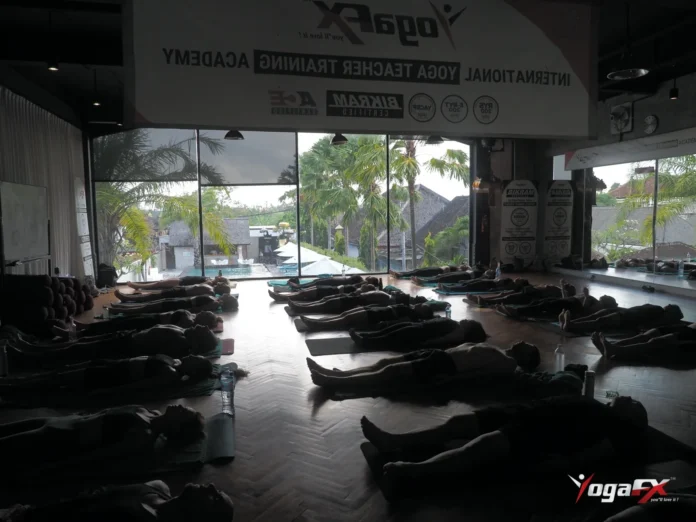
Savasana benefits come down to one thing: final rest lets your body come back from effort. After 90 minutes in a heated room, lying still helps your breathing slow, your heart rate settle and your muscles let go. The class lands properly instead of ending in a rush. It is practice, not a pause.
This guide is for people weighing a Bali teacher training and for anyone who wants to understand final rest after heat. It draws on the YogaFX guide to Hot 26&2 Yoga and on the coaching of Mr. Ian Terry (E-RYT 500, 12,000+ teaching hours). This article is general information, not medical advice. Please consult a healthcare professional if you have a heart, blood pressure or other health condition.
Savasana Benefits After Heat: The Short Answer
Final rest is where a hot class finishes its work. Heat, balance and effort push your heart rate up. Savasana is the first time in the class that you are asked to do nothing at all. That contrast is the whole point of savasana benefits for a hot class.
Here are the savasana benefits we teach trainees to explain, each worded with care. Research on savasana alone is thin, so these points draw on wider work on relaxation and cool-down.
- A gradual landing. Slowing down lets heart rate and blood pressure change step by step, not all at once.
- Calmer breathing. Lying still gives you a chance to slow the breath after hard work.
- Muscles that let go. Effort stops, so tension has somewhere to go.
- A steadier head. Many students feel clearer after a few quiet minutes, though this varies by person.
- A habit you can teach. Trainees who feel the rest themselves explain it better later.
None of these are medical treatments, and we do not sell them as such. They are simply reasons to stay on the mat for the last few minutes of class, because that is where many people are tempted to leave.
Savasana Meaning: Why Corpse Pose Is Not Doing Nothing
Savasana is often called corpse pose. The name comes from the Sanskrit word sava, meaning corpse. It describes complete stillness, not a nap. You lie on your back, arms by your sides, and you let the body be heavy.
The corpse pose benefits people talk about most are physical rest and mental quiet. Those are the core savasana benefits. The posture looks passive. In practice it asks for a skill many people lack: staying with your own breath when there is nothing left to do.
In a Hot 26&2 class, the savasana benefits are built in, not added on. The YogaFX guide describes short savasana recovery periods between floor postures, plus the final savasana at the end. That rhythm of effort, rest and renewed effort is part of why the class is paced the way it is.
Why Final Rest Matters After Heat
A Hot 26&2 class runs 90 minutes at about 40°C and 40% humidity. Your body spends that time shedding heat, holding balance and breathing under load. When the last posture ends, it is still working.
That is why we ask students to lie down rather than march out. The Cleveland Clinic makes a related point about cool-downs in general. For example, its exercise physiologist says easing back to a resting state means “the pressure changes happen gradually.”
The article adds that a sudden dip in blood pressure or heart rate “may cause you to feel dizzy or a little lightheaded.” You can read the full piece, Why You Shouldn’t Skip Cool-Down Exercises.
The same article suggests a cool-down of three to ten minutes. It does not mention savasana benefits, so treat it as supporting evidence for the principle, not proof about one pose.
A simple rule if the room feels too much
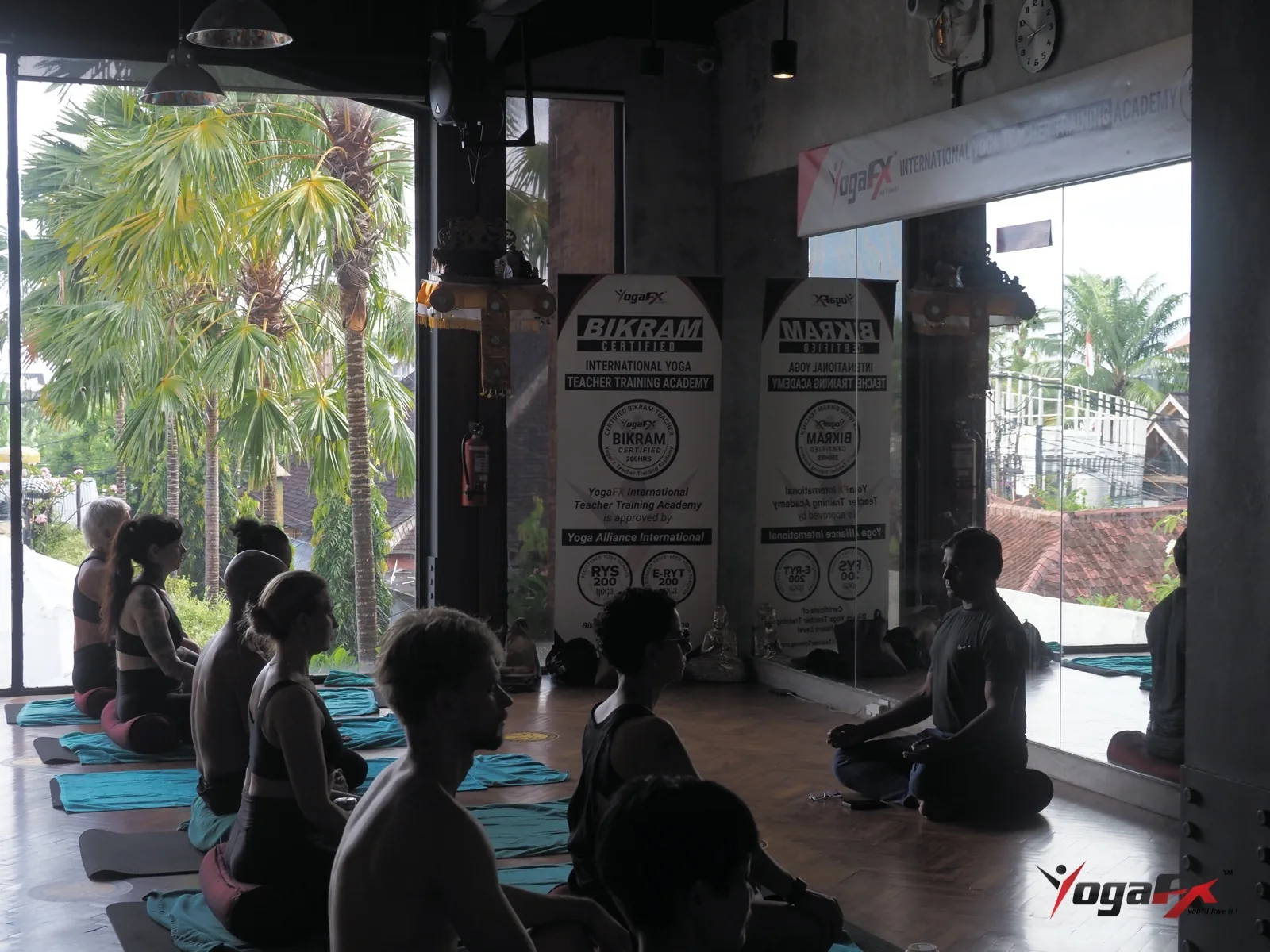
The YogaFX guide gives a clear instruction for dizziness. Lower your centre of gravity at once. Turn around, head toward the mirror, feet to the wall, and lie down on your back in savasana. Never force movement through dizziness, and stay in the room.
Savasana is also a safety tool, and that is one of the quieter savasana benefits. A teacher who understands that will never rush the class through its quiet moments.
What the Research Says About Resting After Effort
Be careful here, because the picture is mixed. Direct research on savasana benefits is thin, because savasana itself has few trials. What exists is research on relaxation, slow breathing and recovery, which savasana plausibly belongs to.
The US National Center for Complementary and Integrative Health (NCCIH) describes relaxation techniques as practices that bring about the body’s relaxation response, marked by slower breathing, lower blood pressure and a reduced heart rate. It calls this the opposite of the stress response. See the NCCIH page, Relaxation Techniques: What You Need To Know.
What the evidence can and cannot tell you
The same NCCIH page is open about limits. A 2019 review of 17 studies found slow breathing exercises led to a modest reduction in blood pressure. But the studies differed in design, had short follow-up and carried a high risk of bias.
It also notes that relaxation techniques are generally safe for healthy people. Rare reports suggest some techniques may worsen symptoms in people with epilepsy, certain psychiatric conditions or a history of trauma. So a quiet pose is not automatically right for everyone.
On the wider practice, a 2025 systematic review by Willmott and colleagues pooled 43 studies with 942 participants on Bikram yoga. That is useful context for the full class. It is not a verdict on the resting phase on its own, and we do not claim it is.
Savasana Benefits Across One Class: What Changes When
Here is how trainees learn to read the resting phases of a class. The heart-rate language follows the YogaFX guide, which describes Zone 1-style and Zone 2-style responses, not fixed zones for every person.
| Phase of class | What the body is doing | What the rest is for | What a teacher watches |
|---|---|---|---|
| Standing series | High muscular and breathing demand, heat rising | The first savasana acts as a bridge toward recovery | Flushed face, mouth breathing, dizziness |
| Short rests between floor postures | Lower demand, though backbends raise it again | Brief recovery before the next effort | Students who skip the rest and rush in |
| Final savasana | Lowest demand of the class, breathing slows | Heart-rate recovery and calmer nervous system, for most people | Fidgeting, early exits, anxiety in stillness |
| After class | Body still cooling | Cool naturally for 10 to 15 minutes before a cold shower | Heading straight to a sauna or ice bath |
The last row matters most for newcomers. Many people finish class feeling great and then, for example, stack more heat on top. Our post on a sauna after hot yoga explains why we treat that cautiously during a training week.
Five Lessons Trainees Learn About Resting After Heat
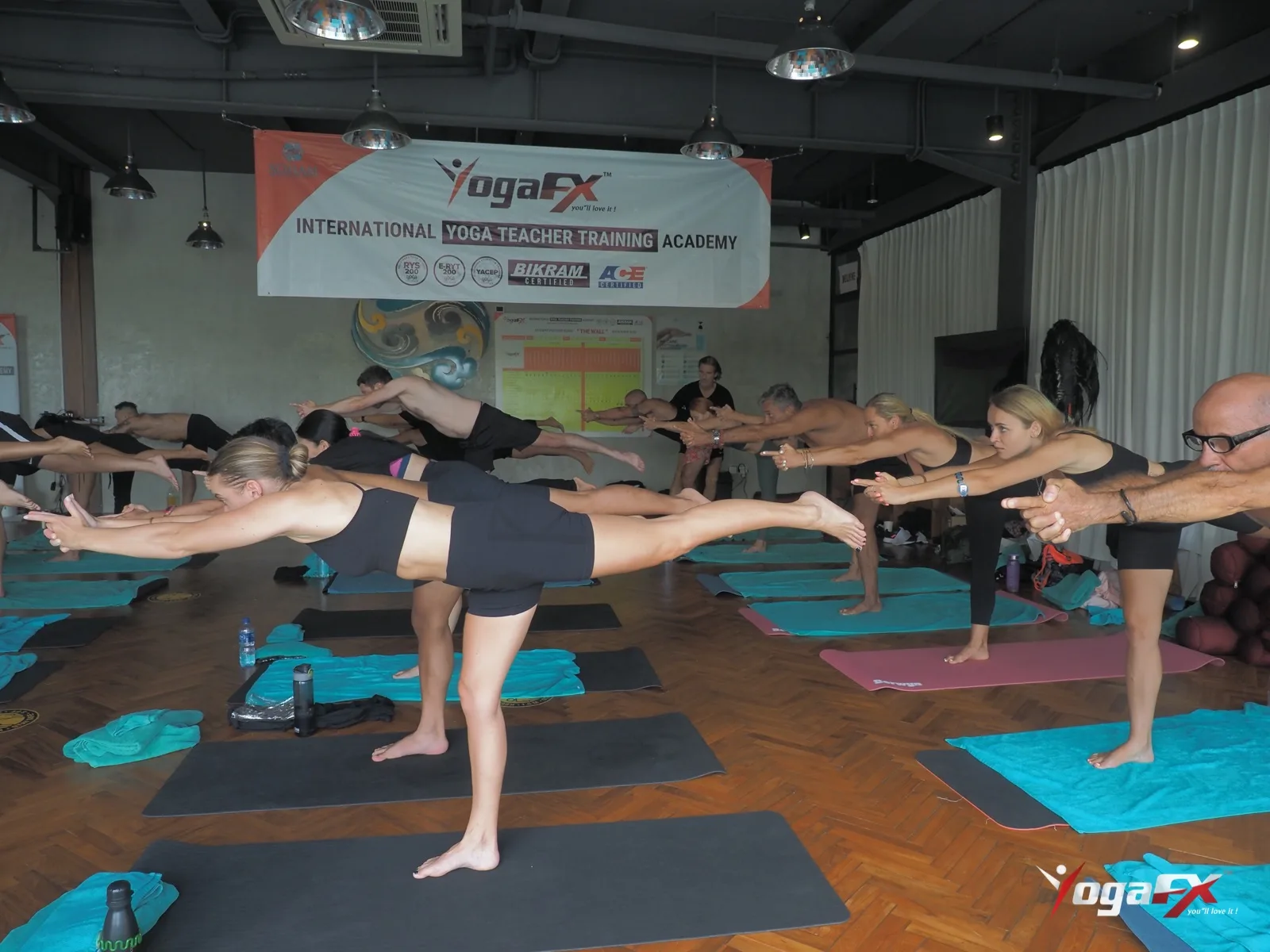
A six-day training week compresses everything. You practise, study and teach, with little spare time. In that setting, savasana stops being decoration. Instead, it becomes part of how the week works. Mr. Ian Terry has taught more than 12,000 hours, and rest comes up in his coaching constantly. These five lessons show savasana benefits in daily life, and we see most trainees reach them.
1. Rest is part of the work
New students often treat the last minutes as optional. In a training week, trainees quickly see that the body they bring to day five depends on how they recovered on day two. Rest is not the reward for the work. It is half of the work.
2. Stillness is harder than effort
Many people find a hard posture easier than lying still, because there is nothing to push against. Hot 26&2 classes use scripted dialogue with no demonstration and no music, so the voice is the only thing to follow. Trainees learn to follow it into the quiet, too.
3. Heat makes the transition visible
In natural tropical heat, you can feel the shift from effort to recovery. A student who comes down too fast may go pale or light-headed. Trainees learn to spot that early and to cue students to lie down, as the guide describes.
4. Recovery decides tomorrow
If you shortcut the cool-down, tomorrow’s class is harder, so the habit matters. Our guide to feeling tired after hot yoga covers what graduates say about training-week fatigue. The pattern is simple: protect the rest, protect the next day.
5. You teach what you have felt
A teacher who has settled into savasana after a hard class can cue it with authority. A teacher who has not, as a result, often rushes through it. Trainees who finish the training have felt the difference many times, and it shows in how they speak.
What Graduates Say After Six Days
Graduates rarely describe savasana alone, but the savasana benefits we teach show up in how they talk, and their reviews show the settled, grateful state a good training week can leave. The YogaFX review store holds Google, Yoga Alliance and YouTube reviews, and they all point the same way.
“It’s the best thing I’ve ever done and I’m gonna do yoga for the rest of my life.”
Katie, YouTube review, 2024
Katie graduated from YogaFX with Mr. Ian Terry, after he kept inviting her to train for about three years. Her video review is below.
“Just grateful to have met all of you. Each and every one of you I’ve learned something from.”
Amanda, YouTube review, 2023
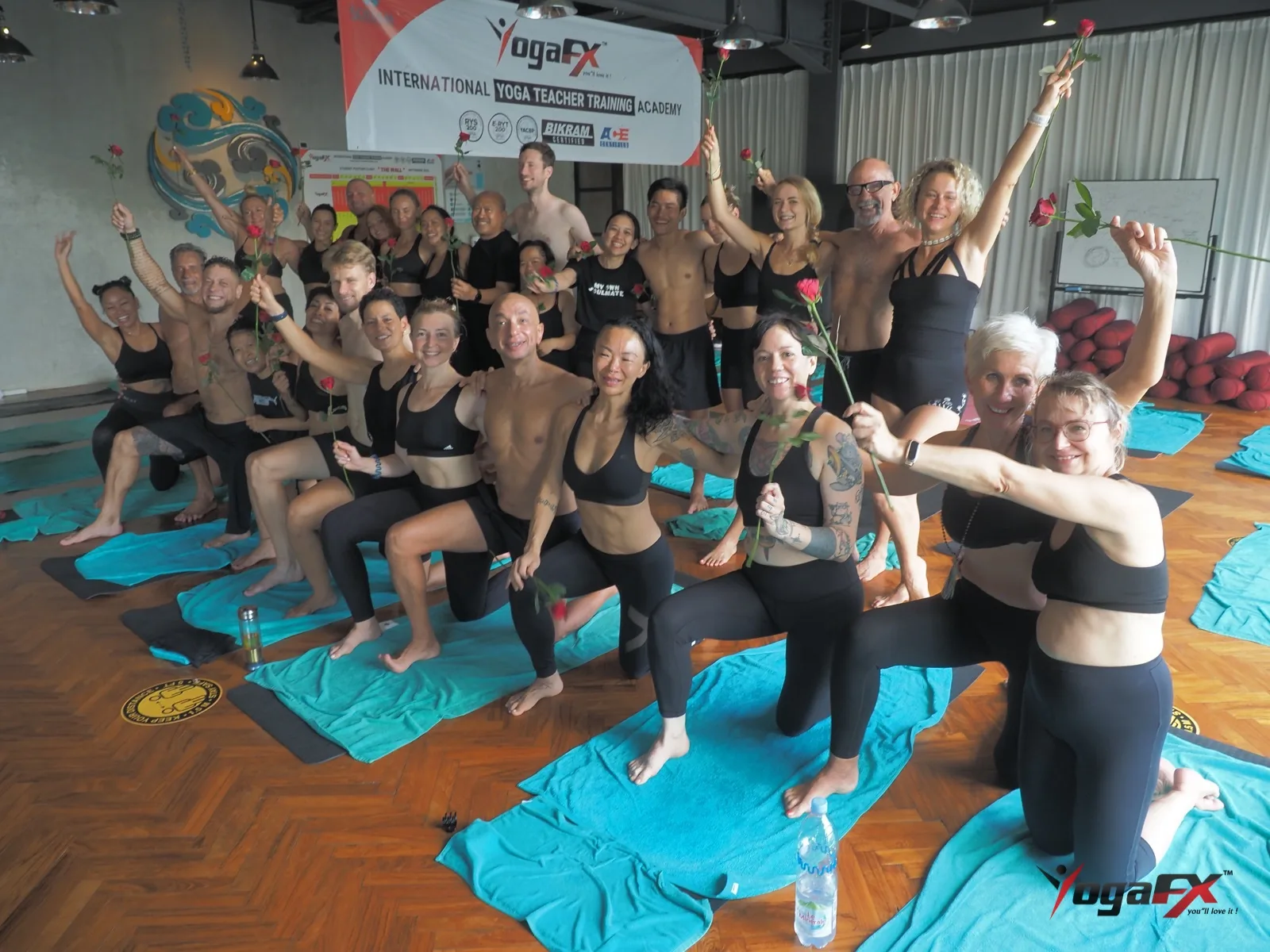
Amanda spoke at a graduation ceremony, which is its own kind of final rest after a demanding week. YogaFX has 150 Google reviews, 50 on Yoga Alliance and 357 video testimonials on YouTube, so you can read many more before you decide.
How Trainees Learn to Teach Final Rest
Teaching savasana benefits well looks easy, which is why final rest is often taught badly. The words are few. The judgment is large: how long to hold, when to speak, how to bring the room back without shocking it.
- Speak calmly. The voice sets the tone for the whole room.
- Watch the room. Notice who is restless, who is lightheaded and who is struggling to settle.
- Do not rush the exit. Bring students out slowly, so the benefit is not lost in the last ten seconds.
- Protect the quiet. No chatter, no lights snapping on, no students packing up early.
- Know the limits. A student with a health concern gets medical advice, not a promise from you.
Trainees practise all of this inside the six-day intensive. If you want to see how the week is organised, read inside the 6-day intensive.
Who Should Take Care With Final Rest
Savasana benefits are real, but the pose is not risk-free for everyone, and a good teacher says so. Talk to a healthcare professional if any of these apply to you.
- Heart or blood pressure conditions. Changes in posture after exertion can affect blood pressure, so ask your doctor how to come up from the floor.
- Pregnancy. Ask your doctor whether heated classes and lying flat suit your stage of pregnancy.
- Anxiety or trauma history. Stillness can bring difficult feelings up for some people. NCCIH notes rare reports of this with relaxation practices.
- Medication that affects blood pressure. Ask your doctor or pharmacist before heated classes.
None of this is a reason to avoid the practice. It is a reason to tell your teacher, so they can offer a modification.
Train With Mr. Ian Terry in Bali
Mr. Ian Terry trained for five years, from 2014 to 2019, with the founder of the Bikram Hot 26&2 method. YogaFX has trained 1,500+ graduates from 80+ countries since 2017. The hybrid training pairs online study with a six-day intensive in Bali, and it leads to Yoga Alliance RYT 200 plus the Bikram Hot 26&2 200-Hour International Yoga Certification.
The next batch checks in on Sunday 24 January 2027 and checks out on Friday 29 January 2027, at Soham Wellness Center in Seminyak. Read how the original hot yoga teacher training works, or message the team with your questions about savasana benefits, recovery and the training week.
FAQ: Savasana Benefits
How long should savasana be?
General cool-down advice runs about three to ten minutes, according to the Cleveland Clinic. The right length depends on the class and the teacher. In a hot class, longer is usually better after a hard effort, and you should never rush out. Ask your teacher how they time it.
Why is savasana important after yoga?
Savasana lets your heart rate and breathing settle after effort, so the change from working to resting is gradual. Cool-down guidance warns that stopping suddenly may leave you dizzy. It also gives muscles a chance to release. It is a transition, not an optional extra.
What is the purpose of savasana?
Its purpose is deep rest and a calm return from effort. The pose invites complete stillness, which many students find harder than any posture. Relaxation research links slow breathing and quiet to a lower heart rate and blood pressure, though evidence for savasana alone is limited.
Is savasana a meditation?
Not exactly, though they overlap. Savasana is a posture of rest, and meditation is a practice of attention. Many teachers use final rest to settle the mind, so it can feel meditative. Either way, the aim is quiet, steady breathing and a body that lets go.
What are the savasana benefits and precautions?
The savasana benefits are real but modest. Most healthy people can rest in savasana safely. If you have a heart or blood pressure condition, are pregnant or have a history of trauma, speak to a healthcare professional first. Come up slowly, and tell your teacher about any concern so they can offer a modification.
Still have questions? Message Mr. Ian Terry and the YogaFX team on WhatsApp and we will answer them personally.