





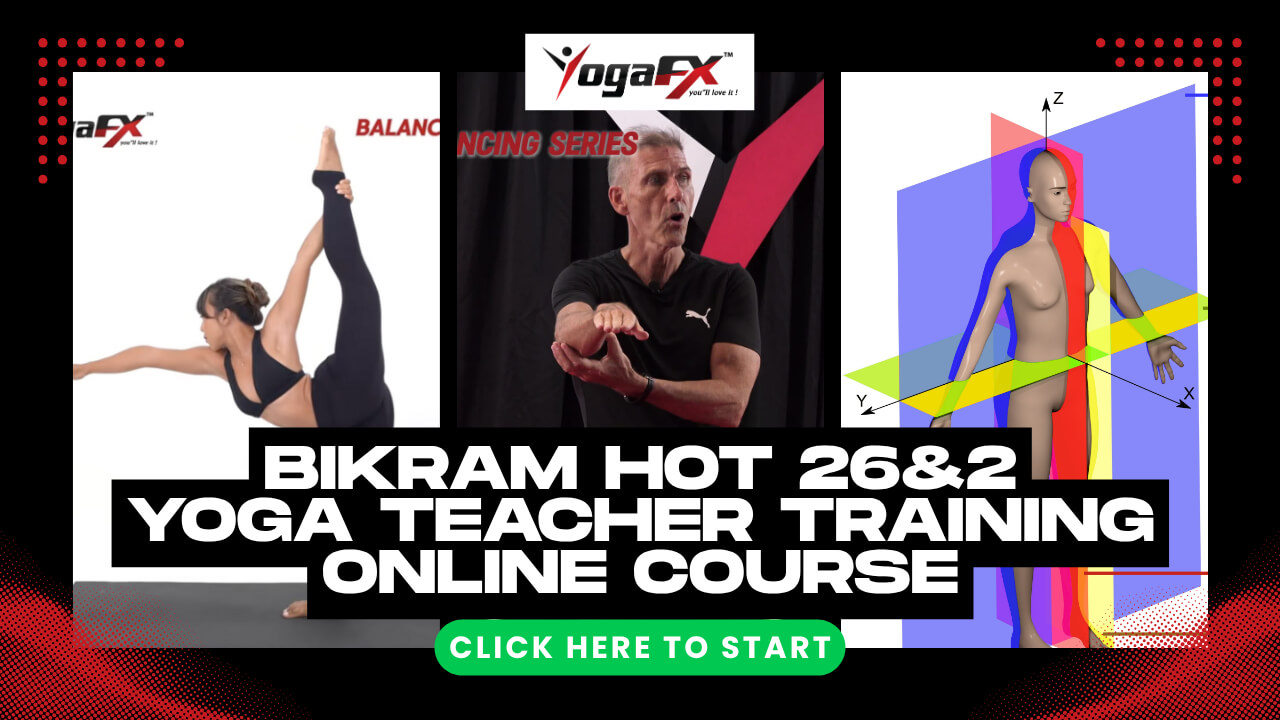


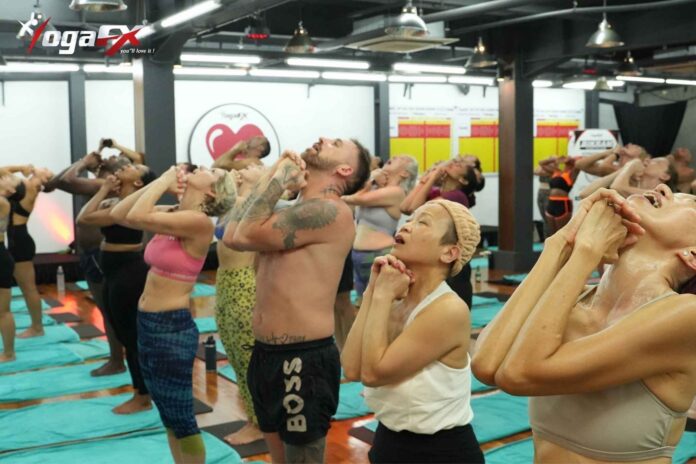
To get a hot yoga certification, complete at least a 200-hour yoga teacher training (RYT 200) at a Yoga Alliance Registered Yoga School. The course should specifically cover heat safety, thermoregulation and alignment for heated rooms. You can now earn one fully online, through a hybrid format, or in person.
This guide compares those routes, shows what to check before you pay, and explains how students from the US, India, the UK, Australia and Canada usually get certified. It also sets out exactly what the YogaFX programmes include, so you can compare like with like.
Top Hot Yoga Certification Programs
Most “best of” lists rank studios by popularity. We’d rather show you a full spec sheet, because a hot yoga certification is only as good as its hours, its trainer and its credential. Here is ours, set out the way you should ask any school to set out theirs.
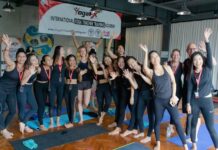
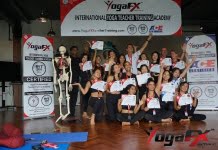
YogaFX International Yoga Teaching Academy (Bali)
- Style: Original Hot 26&2, the fixed sequence of 26 postures and 2 breathing exercises, taught through a scripted dialogue.
- Format: Hybrid. You complete self-paced online study first, then a six-day MasterClass in Seminyak, Bali. The next batch checks in on Sunday 24 January 2027 and checks out on Friday 29 January 2027.
- Cost / Pricing: From US$1,899 at the Early Bird rate (normally US$1,999). A single room package is US$2,199. Interest-free instalments start from US$250 a month.
- Credential: Dual certification. You graduate with Yoga Alliance RYT 200 and a Bikram Hot 26&2 200-Hour International Yoga Certification. Teachers who are already certified can take a YACEP continuing education option instead.
- Accreditation: Yoga Alliance Registered Yoga School, led by Mr. Ian Terry, E-RYT 500, with more than 12,000 teaching hours.
- Website: yogafxteachertraining.com
Program Comparison at a Glance
| Program / School | Focus Style | Format | Key Highlights |
|---|---|---|---|
| YogaFX Bikram Hot 26&2 MasterClass (Bali) | Original Hot 26&2 | Hybrid: online study plus six days in Bali | Dual RYT 200 and Hot 26&2 certification; natural tropical heat; 1,500+ graduates from 80+ countries; from US$1,899 |
| YogaFX online course | Original Hot 26&2 | Fully online, self-paced | Study from any country; theory, anatomy and dialogue at your own pace; can lead into the Bali MasterClass |
| YogaFX YACEP option | Original Hot 26&2 | Hybrid | Continuing education for teachers who already hold an RYT credential and want to add hot yoga |
Other schools fall into a few clear types instead. You’ll see long residential programmes that run for about nine weeks, part-time courses at local studios spread over several months, and short online add-ons of around 20 hours. Use the checklist further down to judge any hot yoga certification on its own merits.
Online, Hybrid or In-Person: Which Hot Yoga Certification Format Fits You
The format decides more than your schedule. It decides how much real teaching practice you get in a hot room, and that’s the skill studios hire for. Here’s how the three routes compare.
| Format | How it works | Live teaching practice | Best for |
|---|---|---|---|
| Fully online | Video modules and reading, studied at your own pace | Limited or none in a heated room | Learning theory first, or adding knowledge as a practitioner |
| Hybrid | Online theory first, then a short in-person intensive | Yes, concentrated into the intensive | People with full-time jobs who still want hands-on training |
| In-person | All hours on site, often over several weeks or months | Yes, spread across the course | People who can take a long break or live near the school |
Can You Get a Hot Yoga Certification Fully Online?
Yes. Online study works well for anatomy, philosophy and memorising the dialogue, and it costs far less in travel and time off. However, a screen can’t feel the room temperature or correct your cueing while a student struggles in the heat.
So before you choose an online-only hot yoga certification, ask how the school assesses your teaching and whether you’ll ever teach a live class in a heated room. Our comparison of online vs hybrid yoga teacher training goes through those questions in detail.
Why Hybrid Is the Middle Path
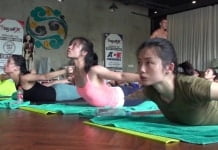
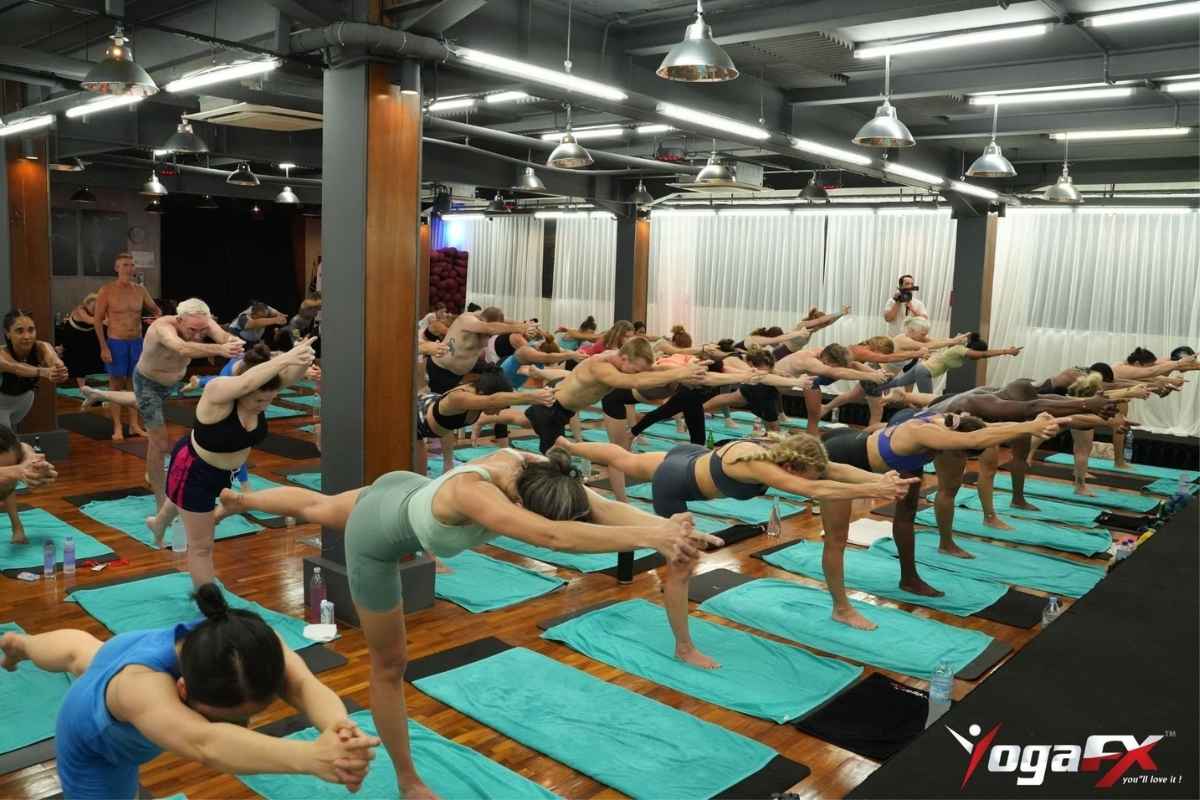
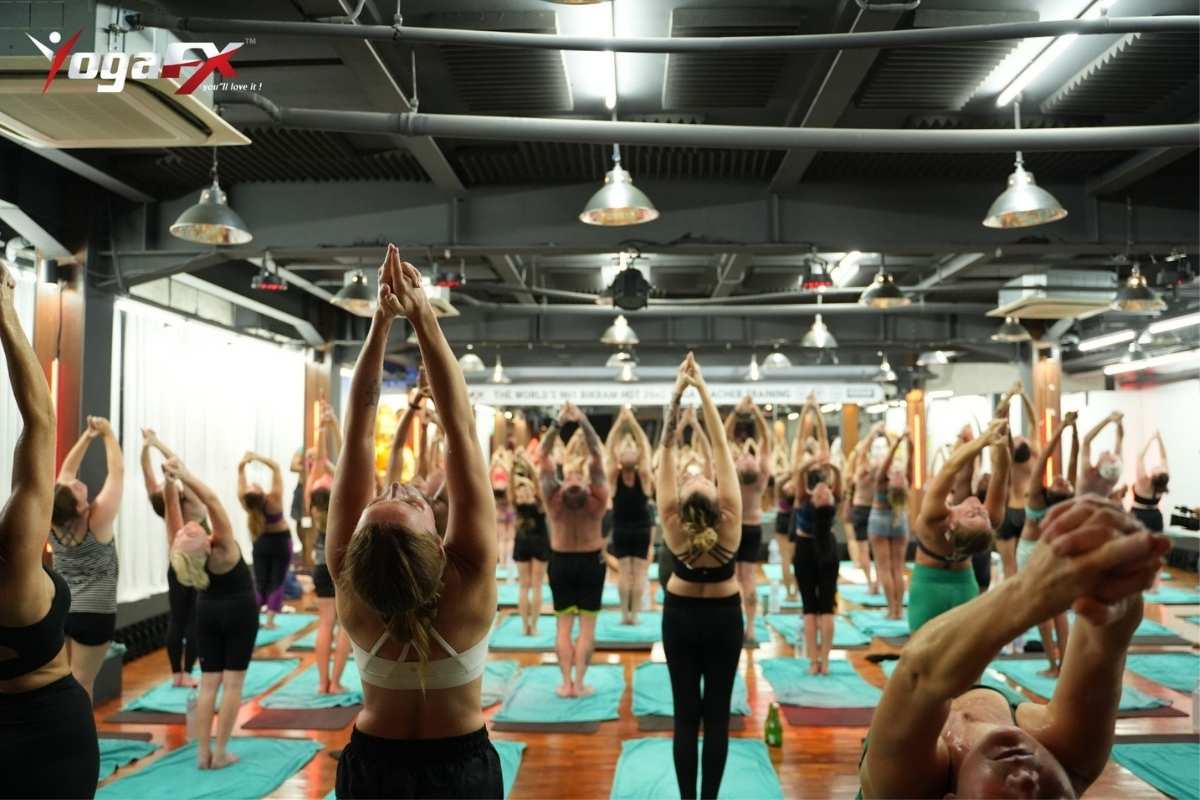
A hybrid course moves the theory online, so the in-person days can focus on what only a hot room can teach. At YogaFX, that means six days in Seminyak spent practising, drilling the dialogue and teaching real classes in natural tropical heat.
Because check-in is on a Sunday and check-out is on a Friday, most students only need five days off work. One graduate told us the format was the only way she could train around a full-time job.
When In-Person Training Makes Sense
A long in-person course still suits some people. If you can take several weeks off, or a good school sits close to home, you get more days in the room and more time to settle into the role.
The trade-off is cost and time. You pay for every extra week of accommodation, and many working people simply can’t step away for that long. That’s why so many students now choose a hot yoga certification that blends online study with a short, focused intensive.
What to Look For in a Program
Whichever school you’re weighing up, these five checks separate a credible hot yoga certification from a well-marketed one.
- Yoga Alliance accreditation. Make sure the school is an RYS 200 or RYS 300, so your credential is recognised internationally. Search the school’s name on the Yoga Alliance directory yourself.
- Heat safety and physiology. A proper hot yoga curriculum covers hydration, thermoregulation, preventing heat-related illness and safe adjustments in rooms of 95°F to 105°F or more.
- Lineage vs modern flow. Decide whether you want to teach the fixed 26&2 dialogue sequence or a heated vinyasa or hot flow style. Each leads to different studio jobs.
- The lead trainer. Ask who actually teaches you, what their credential is, and how many hours they’ve taught. An E-RYT 500 with thousands of hours is a very different mentor from a recent graduate.
- Supervised teaching hours. Ask how many classes you’ll teach to real students, with feedback, before you graduate.
Heat safety deserves extra attention. In a University of Wisconsin study, heart rates during a 90-minute hot class reached around 80% of maximum, with average burns of about 333 calories for women and 460 for men (Porcari and colleagues, 2014). A teacher who can’t read those demands in a room puts students at risk.
Red Flags to Avoid
Just as useful as the checklist are the warning signs. Walk away, or at least ask harder questions, if you see any of these:
- No named lead trainer. If the website only shows stock photos and first names, you can’t check who is teaching you.
- A certificate with no registry. A “hot yoga certification” that isn’t linked to Yoga Alliance or another recognised body may not be accepted by studios.
- Pressure to pay in full today. Countdown timers and “last spot” pop-ups are sales tactics, not proof of quality.
- No heat safety module. If the syllabus never mentions hydration, heat illness or safe adjustments, the course isn’t really built for hot rooms.
Lineage vs Modern Flow: 26&2 or Hot Vinyasa?
This is the biggest choice you’ll make, because it shapes what you’ll teach for years. Here’s the difference in practice.
| Feature | Original Hot 26&2 | Hot vinyasa / hot flow |
|---|---|---|
| Sequence | Same 26 postures and 2 breathing exercises every class | Changes with the teacher and the class |
| How you teach | Scripted dialogue, no demonstration | Freestyle cues, often demonstrating |
| Music | None | Usually |
| Room | About 40°C with 40% humidity | Warm to hot, varies by studio |
| What you study | Memorising and delivering the dialogue, posture clinics | Sequencing, transitions, playlist and flow design |
The 26&2 method is also one of the most researched yoga formats. A 2025 systematic review covered 43 studies with 942 participants and linked the practice with gains in flexibility, strength and well-being (Willmott et al. review). That evidence gives 26&2 teachers something concrete to tell their students.
Why Natural Heat Matters When You Train
Most hot yoga studios outside the tropics heat their rooms with electric systems. That works for classes, but it means many teachers have only ever trained in dry, artificial heat.
At YogaFX, every class runs in Bali’s natural tropical heat, at about 40°C with 40% humidity. Training in that climate teaches you how real humidity changes breathing, sweat and pacing. As a result, you learn to read a room by watching your students, not a thermostat.
It also changes how you coach beginners. Once you’ve felt how a humid room affects the first ten minutes of class, you can prepare new students far better. That practical skill is what a strong hot yoga certification should leave you with, whatever style you choose.
How Much Does a Hot Yoga Certification Cost?
Price depends mostly on format and length. Short online add-ons cost the least. Part-time local courses sit in the middle, while nine-week residential programmes cost the most, because you pay for weeks of accommodation and time away from work.
At YogaFX, the six-day MasterClass is priced like this:
- Early Bird: US$1,899, saving US$100 on the normal price.
- Normal or twin share: US$1,999.
- Single room premium: US$2,199.
- Instalments: from US$250 a month with no interest, which works out at about US$8 a day.
When you compare prices, add flights, accommodation and unpaid leave to the course fee. A shorter hot yoga certification format often wins once those costs are counted.
Hot Yoga Certification by Country
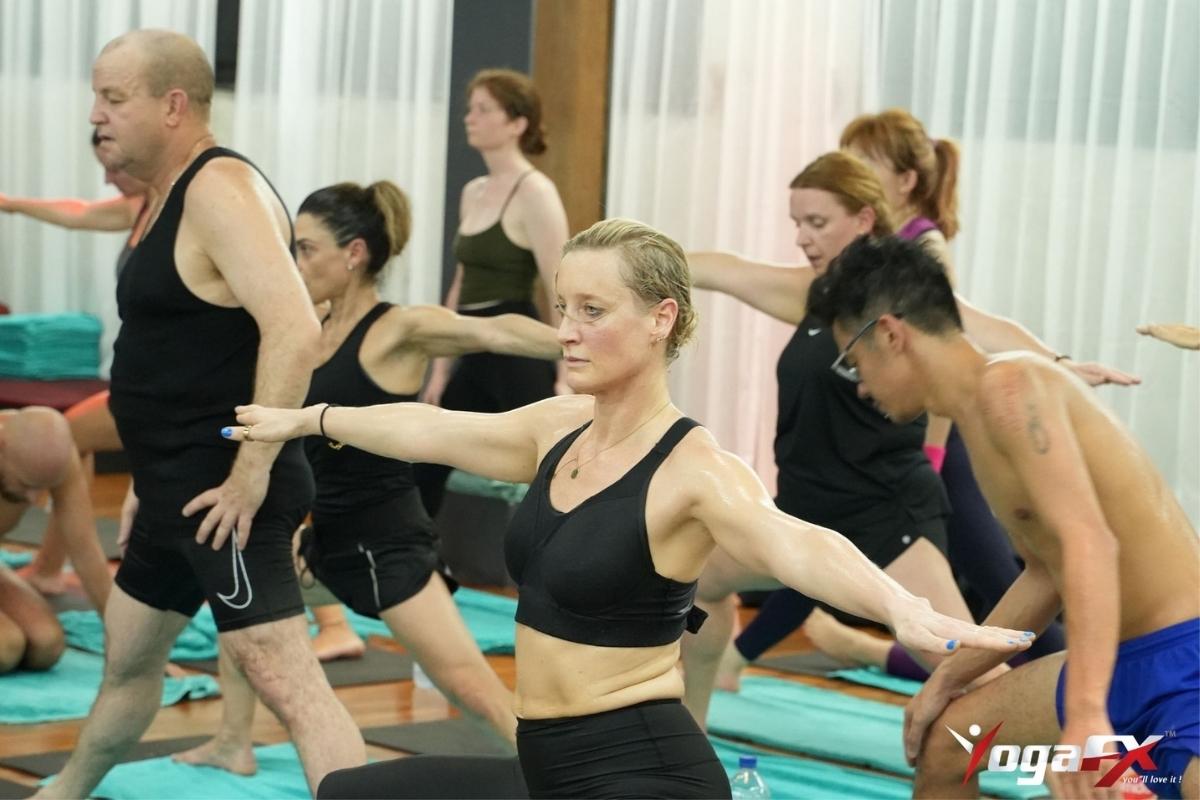
Search data shows the most interest in hot yoga certification comes from the United States, India, the United Kingdom, Australia and Canada. YogaFX has trained graduates from more than 80 countries, and the hybrid route works the same way from each.
United States
The US has the most hot yoga studios and the most local training options. Many, however, teach a general heated flow format in rooms warmed by electric heaters. If you want the original 26&2 method, read our guide for Bikram yoga teacher training for US students.
For many American students, the hardest part isn’t the cost but the time. Paid leave is short, so a format that needs only five days away from work is usually what makes a hot yoga certification possible at all.
India
India has world-famous teacher training hubs, but they mostly teach hatha, ashtanga or vinyasa in unheated rooms. Our guide for Indian students comparing Bali with Rishikesh and Goa explains the trade-offs.
For Indian students, Bali is also a short trip with simple visa planning, so the in-person days don’t need a long break from work or study. Many choose to finish the online theory at home first, then travel once they feel ready.
United Kingdom
UK courses often run part-time over many months, and dedicated hot yoga training is hard to find. Our UK site breaks down hot yoga teacher training costs in the UK for British students.
Australia
Australia is one of the few countries with dedicated 26&2 training. Most local programmes, though, use electric heat and run for weeks. Bali sits a short flight away, so the six-day hybrid suits many Australians who can’t take long leave.
Canada
Toronto and Vancouver have strong hot yoga scenes, and winter makes a tropical training week appealing. Our guide to hot yoga teacher training in Canada compares local and overseas options. Many Canadians also pair the training week with a well-earned winter break in the sun.
Singapore, Ireland, New Zealand, the Philippines and the UAE
Interest is smaller here but steady. In each of these countries, local hot yoga certification options are limited, so students tend to study online first and then fly to Bali for the in-person days. Singapore and the Philippines are especially close, often just a few hours away.
What Happens After You’re Certified
Finishing your hot yoga certification is step one. To start teaching, most graduates take the same few steps.
- Register with Yoga Alliance as an RYT 200, since registration doesn’t happen automatically.
- Get insured before you teach paying students.
- Audition at studios by teaching a sample class, often with the dialogue in full.
- Keep learning through continuing education, then aim for 500 hours if you want to train teachers yourself.
Our complete guide to RYT 200 walks through registration step by step. For proof of where the training can lead, two YogaFX graduates won all seven of Indonesia’s medals at the 2026 World Yogasana Championship in Ahmedabad.
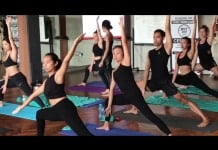
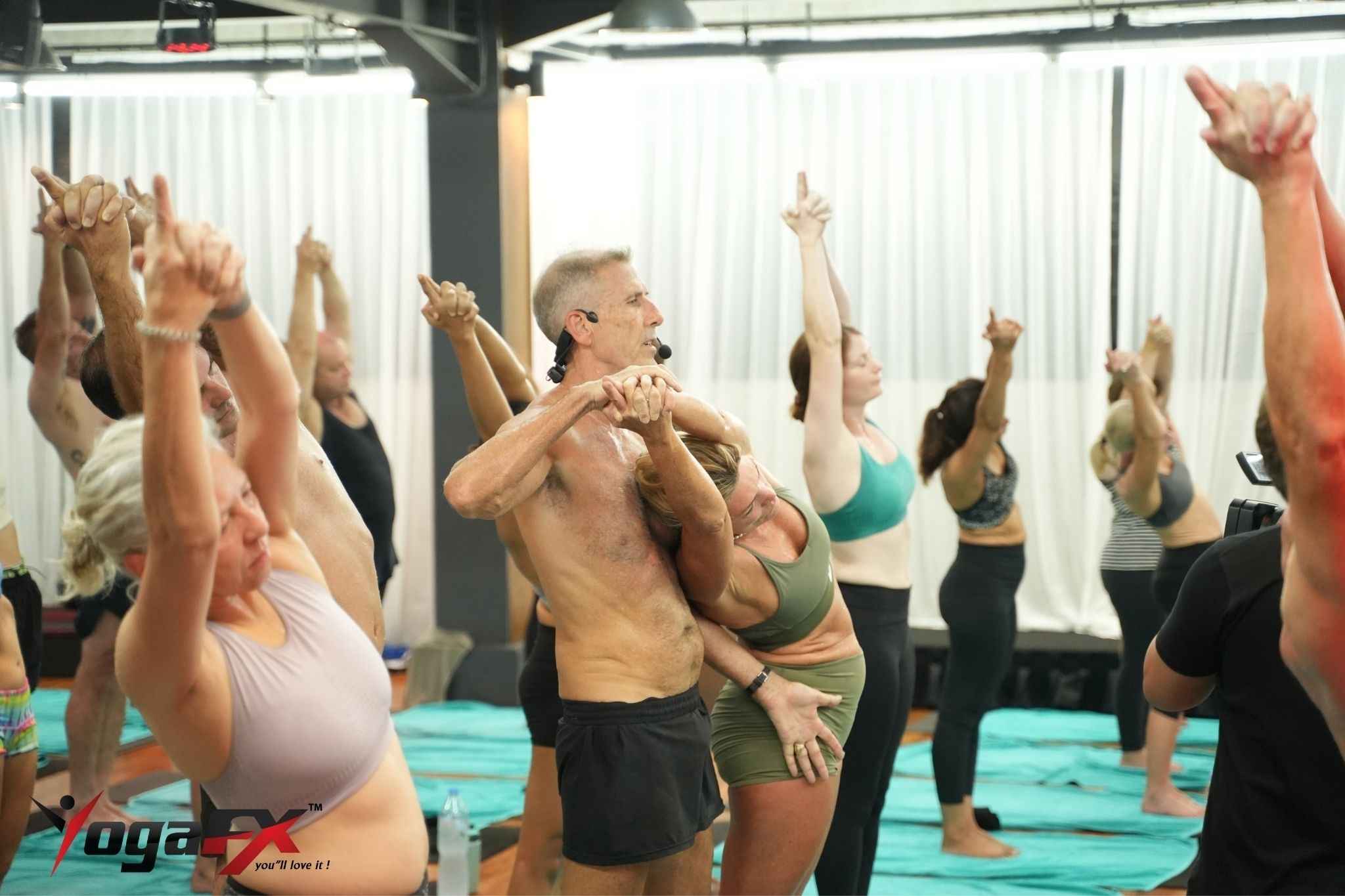
Mr. Ian Terry trained for five years, from 2014 to 2019, with the founder of the Bikram Hot 26&2 method. He is also Master Trainer of the Republic of Indonesia Yogasana Sports Federation. The video below shows what the training looks like from the inside.
Ready to compare dates? You can start your YogaFX enrollment application online, and the team will confirm the next steps with you.
FAQ: Hot Yoga Certification
How do I get hot yoga certified?
Complete a 200-hour yoga teacher training at a Yoga Alliance Registered Yoga School that teaches in a heated room and covers heat safety. Then register as an RYT 200. You can study online, through a hybrid format, or fully in person. Choose a school whose style, either 26&2 or hot flow, matches what you want to teach.
Can you get a hot yoga certification online?
Yes. Several schools, including YogaFX, offer online hot yoga study for theory, anatomy and the dialogue. The weak point is live teaching practice in a heated room. A hybrid course solves that by adding a short in-person intensive, so you learn online and then teach real classes under supervision before graduating.
How long does it take to become a certified yoga instructor?
It depends on the format. A 200-hour course can take a few weeks full-time, several months part-time, or a short intensive after online study. YogaFX students finish online modules at their own pace, then complete six days in Bali. Most only need five days off work for the in-person part.
What is the highest yoga certification?
With Yoga Alliance, the most senior teaching credential is E-RYT 500. It requires 500 hours of registered training plus a minimum number of teaching hours and years of experience. Most teachers start with RYT 200, build experience, and then add advanced training. Mr. Ian Terry, who leads YogaFX, holds E-RYT 500.
Can you teach yoga with a 200-hour certification?
Yes. RYT 200 is the standard entry credential that most studios, gyms and insurers recognise worldwide. Hot yoga studios usually also want proof that you trained in their style and can teach safely in heat. A dual certification, such as RYT 200 plus Bikram Hot 26&2, covers both requirements in one course.
Please note: YogaFX runs independent training, not official Bikram Choudhury Teacher Training.
Still have questions? Message Mr. Ian and the YogaFX team on WhatsApp to enrol or ask about your hot yoga certification, and we will answer them personally.