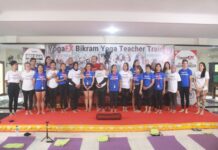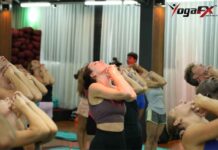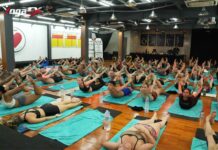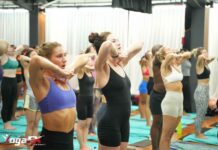









Rishikesh and Goa run some of the most respected yoga teacher training programs in the world, but neither offers the original Bikram Hot 26&2 method in natural heat. Rishikesh sits in the foothills of the Himalayas, where mountain air runs cool most of the year. Goa’s studios are almost entirely unheated Hatha, Vinyasa, and Ashtanga.
If you want the specific 26-posture, 2-breathing-exercise sequence taught in a naturally hot room with scripted dialogue, Bali is currently the only place in the region actually built for it, and the climate reason why is more interesting than most comparison articles let on.
Why Natural-Heat Bikram Training Isn’t Available in Rishikesh or Goa
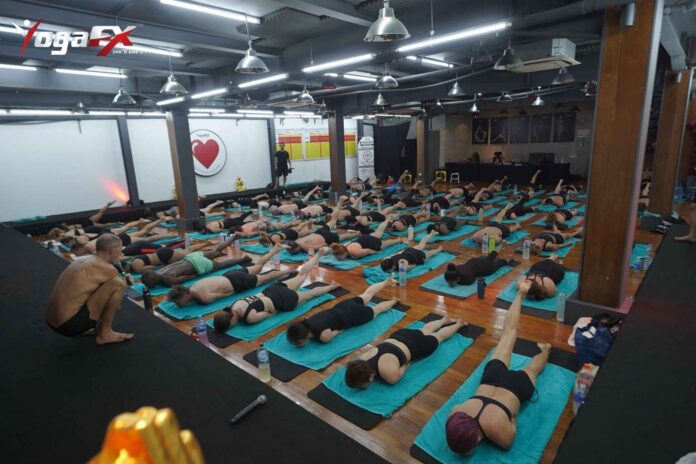
The 26&2 method calls for a room held at 40 degrees Celsius with 40 percent humidity, replicating the climate of Calcutta (now Kolkata), where Bikram Choudhury developed the sequence. That is not an arbitrary number. It is the specific environment the postures and breathing exercises were designed to move through.
Rishikesh does not have that climate. Sitting at the edge of the Himalayan foothills along the Ganges, its average temperatures run cool to mild for most of the training season, which is exactly why the region built its reputation on Hatha, Ashtanga, and meditation-focused programs instead.
Goa is warmer and more humid, but its yoga schools grew out of the same unheated tradition, with open-air shalas designed for airflow rather than heat retention. Building and maintaining a sealed, humidity-controlled room hot enough for genuine 26&2 practice is not part of either region’s existing infrastructure.
Here is the part most India-versus-Bali comparison articles skip entirely: the popular idea that training closer to India means training closer to Bikram yoga’s roots is backwards on climate grounds. Kolkata’s subtropical climate is far closer to Bali’s natural tropical heat than it is to Rishikesh’s mountain air. YogaFX runs its programme with zero electric heaters, using Bali’s actual tropical conditions, which places it physically closer to the method’s original environment than most schools in India itself.
Cost Comparison: Rishikesh, Goa, and Bali Side by Side
India is usually marketed as the cheaper option on paper, and for generic 200-hour Hatha or Ashtanga certifications, that is often true. But pricing across Rishikesh and Goa schools varies enormously depending on accommodation standard, hygiene level, and whether meals are included, and transparency on what is actually covered is inconsistent from one listing to the next.
| What You’re Comparing | Typical Rishikesh/Goa Program | YogaFX Bikram Hot 26&2 in Bali |
|---|---|---|
| Heat source | Unheated, open-air or ambient rooms | Natural tropical heat, no electric heaters |
| Style | Usually Hatha, Ashtanga, or Vinyasa, Gurukula-style | Original 26&2 sequence, scripted dialogue only |
| Duration | Often 200 hours over 21-28 days residential | 6-day on-site intensive after self-paced online pre-course |
| Pricing transparency | Wide range, often unclear what’s included until you ask | USD 1,999 flat (Early Bird: USD 1,899, limited seats), up to USD 2,199 with on-site accommodation, fully itemised |
The deposit to hold a seat in the YogaFX cohort is very low, and it is credited toward the total balance rather than added on top. When you factor in that a genuine natural-heat program simply is not available at any price point in Rishikesh or Goa right now, the comparison stops being purely about cost and becomes about whether the format you actually want exists where you are looking.
Visa and Travel Logistics for Indian Students
India is on Indonesia’s visa-on-arrival eligibility list, alongside roughly 90 other countries. That gives Indian passport holders a straightforward entry process, with an initial stay period comfortably longer than the 6-day on-site intensive plus a few days of travel either side.
Because the hybrid format handles anatomy, philosophy, and dialogue memorisation through a self-paced online pre-course before departure, most of the academic workload is already done before you land in Denpasar. That is a meaningful difference from a 3-4 week residential program in Rishikesh, which requires a longer block of leave from work or study.
Accommodation in Seminyak is folded into the same USD 1,999 to 2,199 range depending on room type, so there is no separate ashram booking or guesthouse search to manage on top of the course itself.
Format Differences: Gurukula-Style Ashrams vs a Structured Hybrid Intensive
Many Rishikesh programs follow a Gurukula model: residential, immersive, and built around a single teacher’s lineage and daily rhythm of chanting, asana, and philosophy. That structure genuinely suits students looking for a slower, more traditional pace of learning, and it is one of the reasons the region remains the world’s most searched yoga teacher training destination.
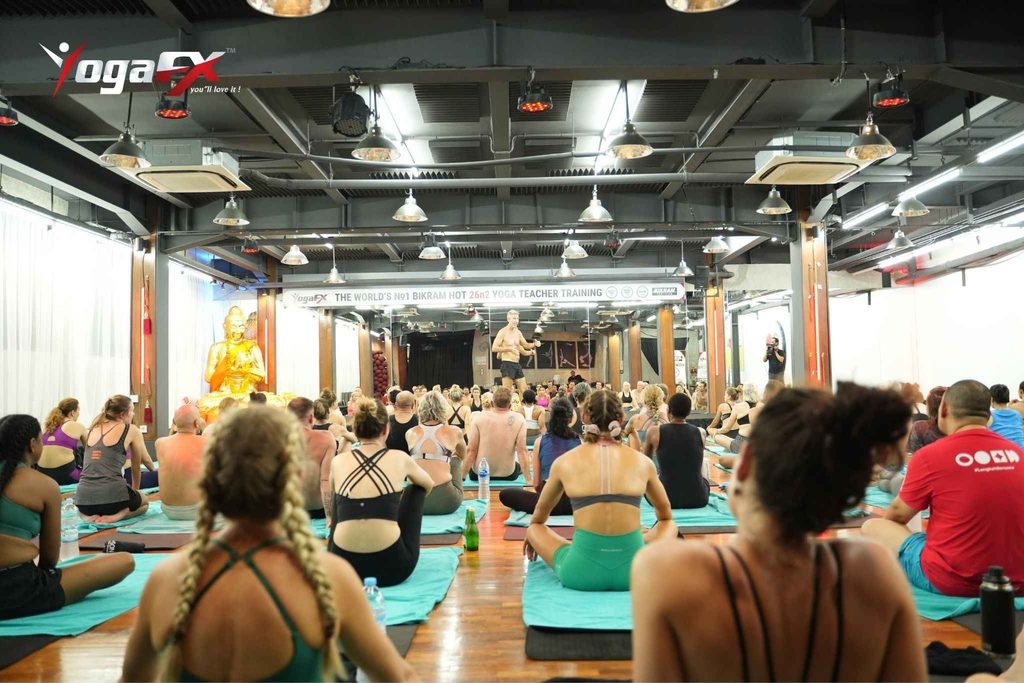
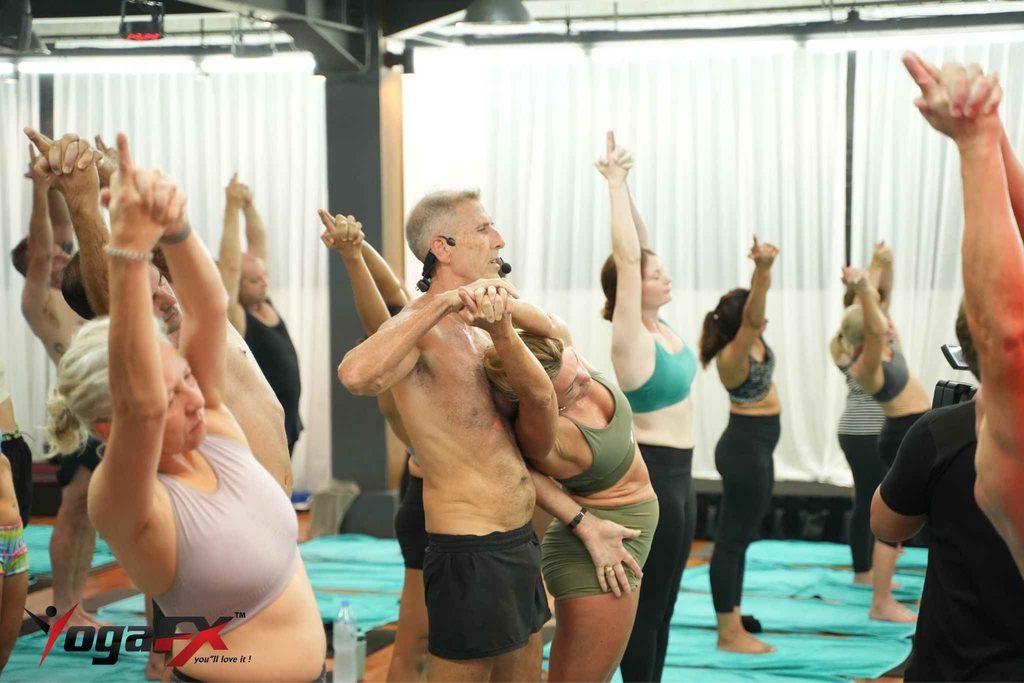
The 26&2 method works differently by design. Instruction is delivered through fixed, scripted dialogue with no music and no physical demonstration, which trains a specific and transferable teaching skill: how to guide a room using only your voice. A University of Wisconsin study measured the physical output of a single 90-minute class at roughly 333 kcal for women and 460 kcal for men, with heart rate reaching close to 80 percent of maximum, which is the standard a candidate needs to demonstrate and eventually teach.
Neither format is objectively better. A student drawn to Sanskrit chanting at dawn by the Ganges is looking for something different from a student who wants to master a precise 90-minute sequence they can deliver word for word in any studio in the world. The honest question is which skill set you are actually building toward.
What Indian Students Get With YogaFX in Bali
YogaFX was founded by Mr. Ian Terry, an E-RYT 500 instructor with more than 12,000 teaching hours who trained for five years, from 2014 to 2019, directly with Bikram Choudhury. Since 2017, the school has certified more than 1,500 graduates across 80-plus countries, and Indian students make up a growing share of each cohort, many of them practitioners who started with Hatha or Ashtanga at home and wanted to add a style-specific credential that most Indian schools simply do not teach.
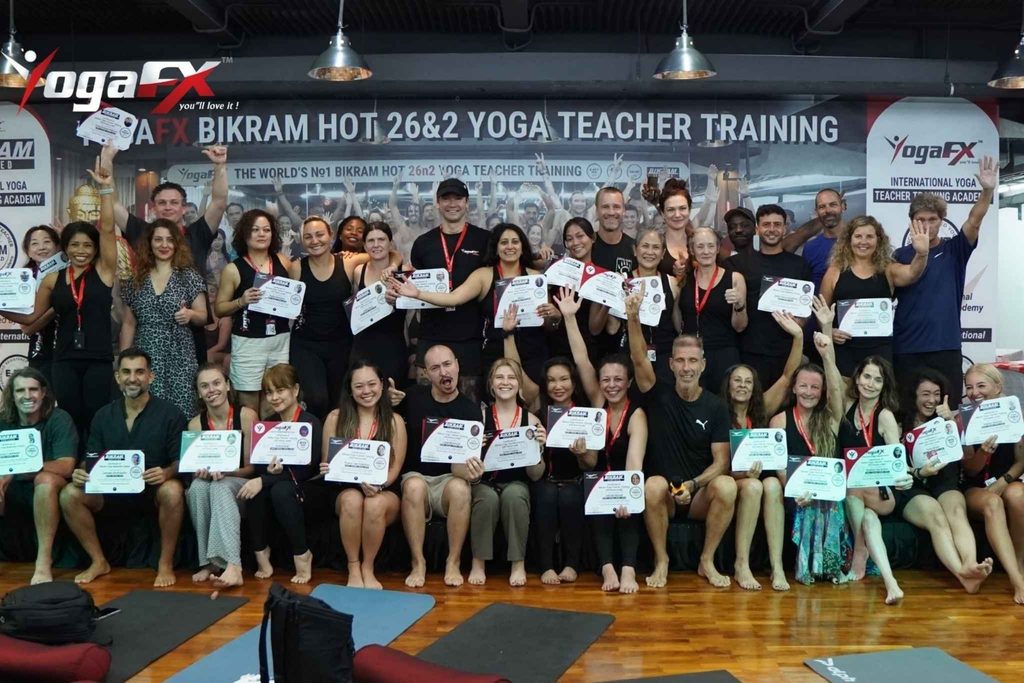
The dual certification, Yoga Alliance RYT 200 plus the Bikram Hot 26&2 credential, is recognised internationally the same way a Rishikesh RYT 200 would be. What it adds on top is style-specific expertise in a format that very few schools worldwide, and none currently in India, actually teach in genuine natural heat.
- Format. Self-paced online coursework covering anatomy, philosophy, and dialogue memorisation, followed by a 6-day on-site intensive in Bali.
- Cost. USD 1,999 flat, up to USD 2,199 with on-site accommodation, with a very low deposit credited toward the total.
- Certification. Yoga Alliance RYT 200 plus Bikram Hot 26&2 dual certification.
- Studios. Held across two studios in Seminyak and Canggu.
For an Indian student who already knows the discipline of a Gurukula-style program and wants to add a genuinely different, style-specific skill set, YogaFX‘s hybrid structure fits into a work or study schedule the way a month-long residential course in Rishikesh often cannot.
FAQ
Is Bikram yoga actually Indian?
Its founder is. Bikram Choudhury was born in Kolkata, and the 40-degree, 40-percent-humidity room temperature was designed to replicate that city’s subtropical climate. The style was developed and popularised in the US, but the postures draw on traditional Hatha yoga and the heat protocol traces directly back to Bikram’s Indian hometown.
Is there Bikram yoga teacher training in Rishikesh or Goa?
Not in natural heat. Rishikesh’s cool Himalayan foothill climate and Goa’s open-air, unheated studio tradition mean neither region currently runs a genuine 26&2 program. Both are strong destinations for Hatha, Ashtanga, and Vinyasa certification instead.
Which is cheaper, Rishikesh or Bali, for yoga teacher training?
Generic Rishikesh programs are often advertised as cheaper, but pricing varies widely by accommodation and hygiene standard with inconsistent transparency on inclusions. YogaFX’s Bali program is a flat USD 1,999, rising to USD 2,199 with accommodation, fully itemised with no hidden extras.
Do Indian citizens need a visa for yoga teacher training in Bali?
Yes, but India is on Indonesia’s visa-on-arrival eligibility list. The process is straightforward and the initial stay period comfortably covers the 6-day on-site intensive plus travel time on either side.
Is YogaFX affiliated with Bikram Choudhury?
No. YogaFX is a major Hot 26&2 (Bikram) yoga teacher training academy based in Bali, and is not affiliated with Bikram Choudhury or Bikram’s Yoga College of India. Founder Ian Terry trained for five years, from 2014 to 2019, directly with Bikram Choudhury, and the program teaches the original 26&2 sequence and dialogue, which a 2015 Ninth Circuit ruling confirmed is not subject to copyright restriction.
Weighing Bali against other regions too? See our Bali vs Thailand breakdown, the full pricing and deposit guide, the accommodation and visa guide, what the dual certification actually means, and the step-by-step application process. For a deeper look at the India-specific landscape, see our companion piece Bikram Yoga Teacher Training India.