










About one man in ten practises yoga. In the United States, yoga use among men rose from 8.6 percent in 2017 to 10.3 percent in 2022 according to the National Health Interview Survey, against roughly three women in ten. That is the national picture, and it is the answer most articles stop at. This report adds something the national surveys cannot show: what happens to those numbers inside a single specialist hot yoga academy, where the male share of applicants moved from 7 percent in 2021 to 28 percent in 2022 and has not returned to where it started.
Every figure below comes from one of two places: published national statistics, or YogaFX enrolment forms completed by people applying to train in Bali between 2019 and 2025. The second set has never been published before. Sample sizes, coding method and limitations are set out at the end so the numbers can be checked rather than taken on trust.
How Many Men Do Yoga? The National Numbers
Three published sources answer the question at national scale, and they agree on the shape even where they differ on the decimal.
- 10.3 percent of American men practised yoga in 2022, up from 8.6 percent in 2017, per the National Health Interview Survey reported by the CDC. That is a rise of nearly a fifth in five years.
- Men made up 28 percent of practitioners in the 2016 Yoga in America study, out of 36.7 million people practising in the United States at the time.
- Roughly one man in ten against three women in ten practise at least occasionally across the United Kingdom and the United States, per Statista’s 2023 comparison.
Put together, those tell you two things. Men are a minority of practitioners in every country measured, and the minority is growing. Neither tells you anything about hot yoga specifically, because none of the national instruments separate heated practice from the rest. That gap is where our own data starts.
What Our Own Enrolment Data Shows, 2019 to 2025
Everyone who applies to a YogaFX teacher training completes an enrolment form. Those forms are the source for everything in this section. The male share of applicants did not drift upward. It stepped.
| Year | Male share of applicants | Men out of all applicants | Change vs 2021 |
|---|---|---|---|
| 2019 | 11% | 1 of 9 | n/a |
| 2020 | No data held | n/a | n/a |
| 2021 | 7% | 1 of 14 | Baseline |
| 2022 | 28% | 10 of 36 | +21 points |
| 2023 | 23% | 12 of 52 | +16 points |
| 2024 | 25% | 17 of 68 | +18 points |
| 2025 | 13% | 4 of 30 | +6 points |
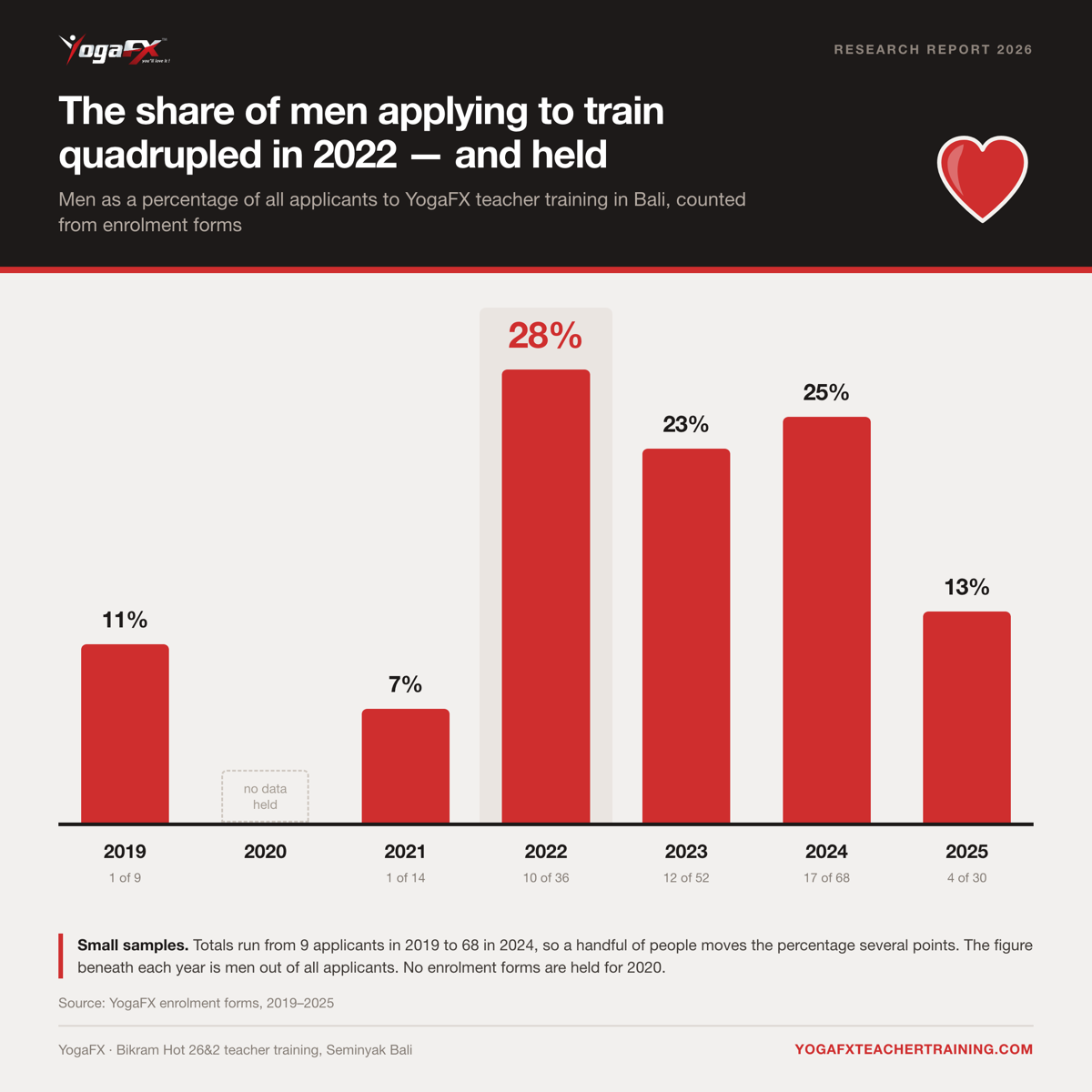
In 2022 the male share hit 28 percent, the highest the academy has recorded, roughly two and a half times the 11 percent of 2019 and four times the 7 percent of 2021. It quadrupled in a single year and then held. Across 2023 and 2024 it sat at 23 and 25 percent, and the raw count of men applying grew from 1 to 10 to 12 to 17. Averaged across 2021 to 2025, men were 19.2 percent of applicants.
The 2025 figure of 13 percent is the one worth being careful about. It is a fall from 25 percent, and with only 30 applicants that year a handful of people moves the percentage by several points. It is also still nearly double the 2021 baseline and above 2019. The honest reading is that a step change happened in 2022 and held for three years, and that a single year with a small sample is not enough to call it reversed.
Who the Men Are
The forms carry more than a gender box, and the profile that emerges is narrower than the stereotype of a young athlete trying something new.
- The median male applicant is 44 years old, and 68 percent are 40 or over. This is a midlife pattern, not a twenty-something one.
- 83 percent already practise the Hot 26&2 sequence. They are not curious beginners sampling a trend. They have done the class and want more of it.
- Only 41 percent rate their own fitness as good, against 55 percent of the women who apply. Men arriving at this training are, by their own account, less confident about their condition than the women beside them.
- 19 percent disclose a medical condition or medication, most commonly high blood pressure. A meaningful share come to the hot room to improve their health rather than to display it.
The occupations are mixed, because the form does not ask and only captures what people volunteer: a professional footballer planning life after the game, fitness instructors, a boxing champion, an aspiring doctor, experienced teachers who want to master the dialogue, and men planning to open studios of their own. Mr. Ian Terry’s own conversations in Bali fill in the rest, from business owners and military veterans to office workers and long-distance lorry drivers. What they share is not a job. It is long hours of sitting, driving or physical strain, high stress, and a wish to protect the body for later life.
Why Men Apply, and How That Differs From Women
Applicants write their reasons in their own words. Coding those answers against gender produces the clearest contrast in the whole dataset.
| Reason given on the enrolment form | Men (41) | Women (158) |
|---|---|---|
| Wants to teach or share the practice | 59% | 69% |
| Wants to improve their own practice and postures | 34% | 20% |
| Names Mr. Ian as a reason | 29% | 20% |
| Health, flexibility, posture or healthy ageing | 29% | 34% |
| Personal attention before enrolling | 20% | 15% |
| Career change | 10% | 5% |
| Short, intensive format | 5% | 24% |
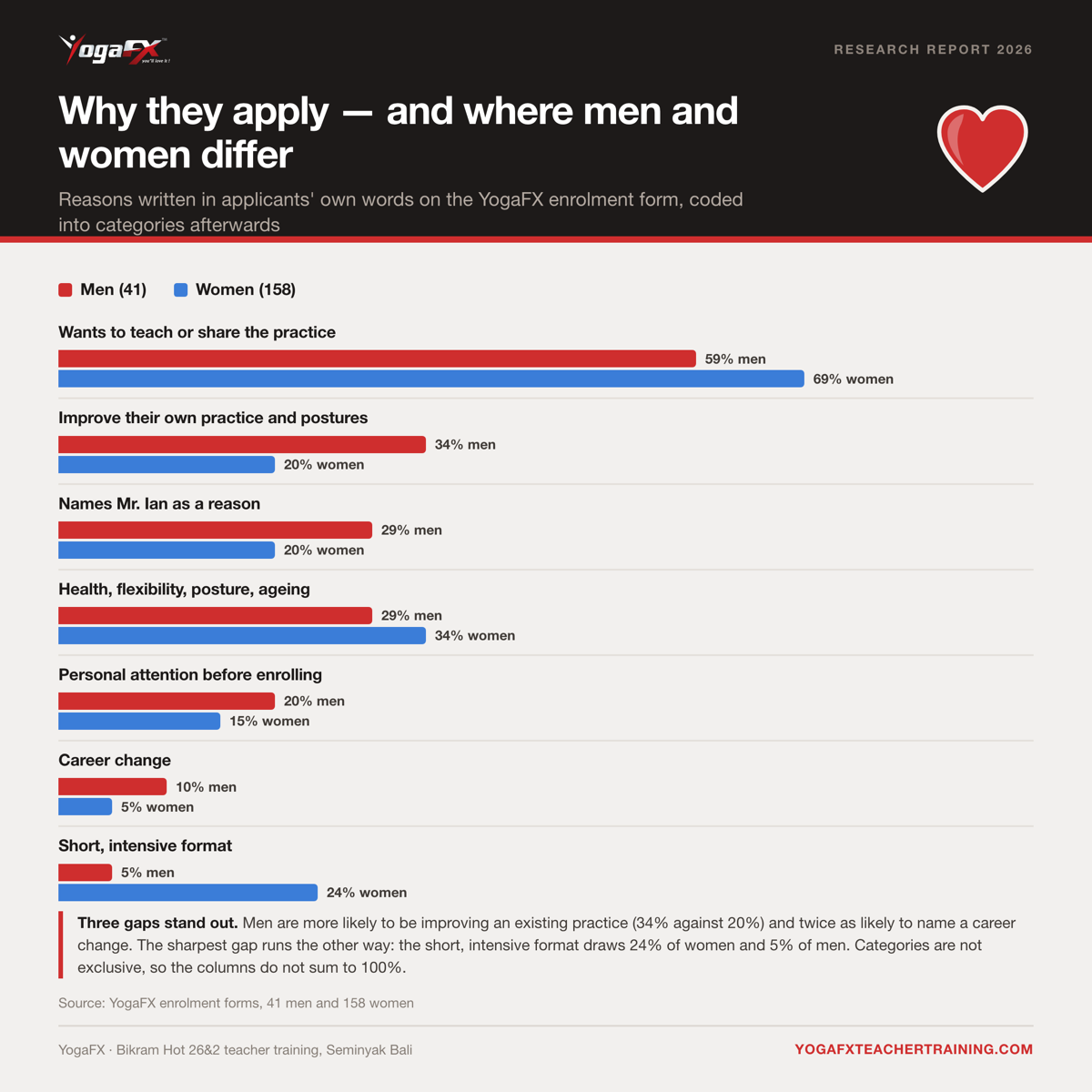
Three differences stand out. Men are far more likely to be there to improve their own postures, 34 percent against 20 percent, which fits a group that already practises and wants to go deeper rather than start. Men are twice as likely to name a career change. And the sharpest gap runs the other way: 24 percent of women name the short intensive format as a reason, against 5 percent of men. The compressed six-day schedule is a decisive draw for women and barely registers for men.
Note what the top row does not say. A majority of men, 59 percent, want to teach or share the practice, but that is lower than the 69 percent among women. Wanting to teach is the most common reason for both. It is simply not the thing that distinguishes men.
What This Means If You Are Considering Training
If you are a man weighing up a teacher training, the data says something useful: the person you imagine sitting beside you is probably not who is actually there. The median man in the room is in his forties, already practises several times a week, is privately unsure about his fitness, and may be managing blood pressure. That is a very different room from the one most people picture.
Mr. Ian Terry, who leads the programme, is an E-RYT 500 instructor with more than 12,000 teaching hours and over 1,500 graduates from 80 countries, and he trained directly under Bikram Choudhury across five training events between 2012 and 2019. The 29 percent of male applicants who name him as a reason for choosing YogaFX are, on the evidence of the forms, mostly men who have already practised and want to be taught by someone with that lineage. His background is on the our teacher page, and the programme itself, a hybrid of online pre-course study and a six-day Bali intensive capped at 19 students leading to dual Yoga Alliance RYT 200 and Hot 26&2 certification, is set out on the 26 and 2 yoga teacher training page with upcoming course dates.
For the 10 percent who name a career change, the practical questions come after certification rather than before it, and we cover those in career after yoga teacher training. For the wider case on what the practice does for men, see benefits of yoga for men, and for the question men ask before any of this, can men do hot yoga answers it from inside the method.
What the Men in These Numbers Are Actually Getting
Participation figures tell you who walks in. They say nothing about what happens next, and that gap matters when 83 percent of male applicants are already practising and 19 percent are managing a health condition. The controlled research on Bikram-style practice is small but consistent, and it explains why a group of midlife men keeps returning to a 90-minute class.
- Strength. In a controlled trial published by Tracy and Hart in 2013, participants recorded roughly a 20 percent increase in posterior chain strength across eight weeks, alongside gains in flexibility and body composition.
- Cardiovascular load. Research led by Porcari at the University of Wisconsin in 2014 measured men burning an average of 460 calories per 90-minute heated class, with heart rates averaging around 80 percent of maximum. The class is an aerobic session, not a stretch.
- Breadth. A systematic review by Willmott and colleagues published in 2025, covering 43 studies and 942 participants, reported consistent improvements in flexibility, balance and general well-being.
Read those next to the enrolment profile and the pattern holds together. A man of 44 who sits or drives for a living, rates his own fitness as average and may be watching his blood pressure is not looking for a new hobby. He is looking for one activity that covers strength, conditioning and mobility in a single scheduled block, taught the same way every time so that progress is visible. That is a specific product, and it is the one this sequence happens to be.
It also explains the one counter-intuitive number in the reasons table. Men name the short intensive format far less often than women do, at 5 percent against 24 percent. For a group whose motivation is a long-term physical investment, a compressed schedule is a logistical detail rather than the attraction. They are not buying six days. They are buying what the six days certify.
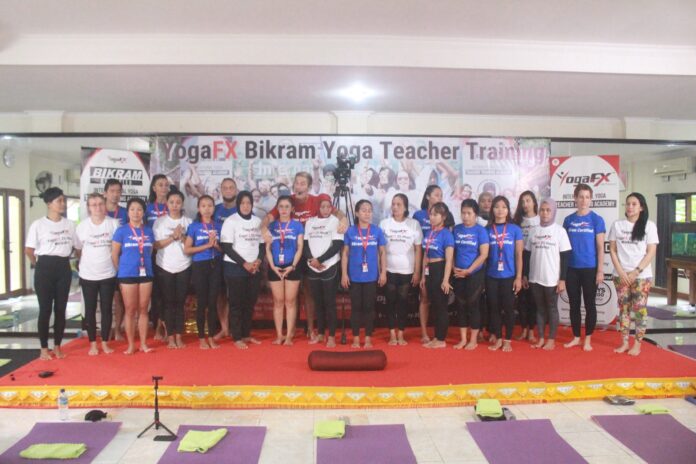
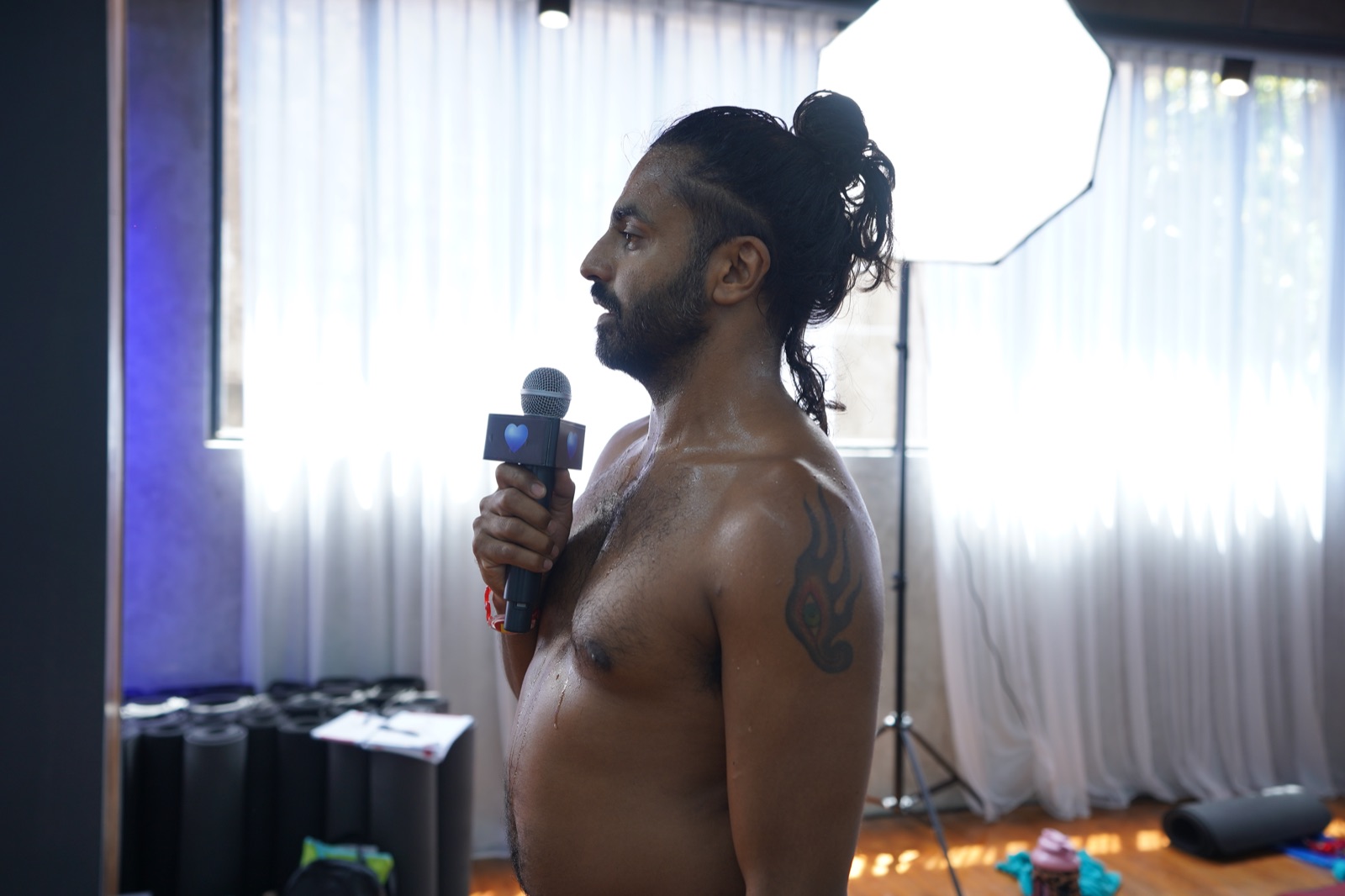
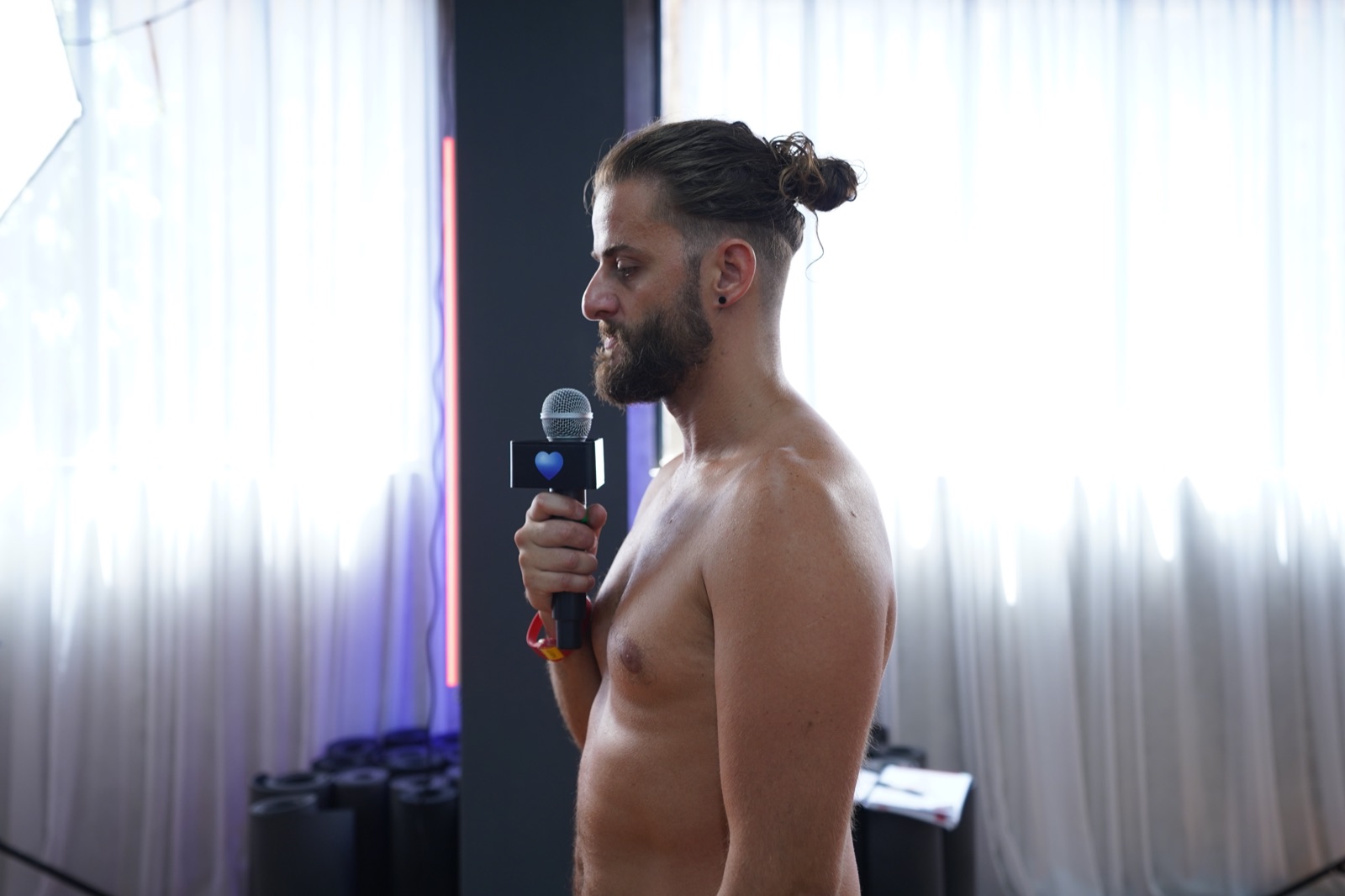
The 59 percent in that top row are not an abstraction. This is one of them at the end of his intensive, which is what the figure looks like when it finishes.
Method and Limitations
These numbers describe one academy. They are worth reading with the following in mind, and we would rather state the weaknesses than have them found.
- Source. Enrolment forms completed by applicants to YogaFX teacher trainings in Bali, 2019 to 2025. Reasons for applying are free text, coded into categories afterwards, so one applicant can appear in several rows and columns do not sum to 100 percent.
- Sample size. Small, and deliberately so. Totals run from 9 applicants in 2019 to 68 in 2024. The reasons table covers 41 men and 158 women. With numbers this size, a handful of applicants moves a percentage by several points.
- No 2020 data. No forms are held for that year.
- Applicants, not students. These are people who applied, which is not identical to the people who enrolled and attended.
- Self-reported. Fitness ratings, medical disclosures and reasons are what applicants chose to write about themselves.
- Not a population sample. This is a specialist academy teaching one sequence in one country. It does not describe hot yoga practitioners generally, and should not be read as if it did.
You are welcome to cite these figures. Please attribute them to the YogaFX Research Report 2026 and link to this page, so that anyone checking the number can see the method alongside it. Health information here is descriptive rather than advice, and anyone with a medical condition should speak to a healthcare professional before starting heated practice.
FAQ
What percentage of men do yoga?
About 10.3 percent of American men practised yoga in 2022, up from 8.6 percent in 2017, according to the National Health Interview Survey. Across the United Kingdom and the United States, roughly one man in ten practises at least occasionally, against about three women in ten.
What share of yoga practitioners are men?
The 2016 Yoga in America study put men at 28 percent of the 36.7 million people then practising in the United States. The share of practitioners who are men is therefore higher than the share of men who practise, because women practise in greater numbers overall.
Are more men taking up hot yoga?
In our enrolment data the male share of teacher training applicants rose from 7 percent in 2021 to 28 percent in 2022, then held at 23 and 25 percent across 2023 and 2024 before falling to 13 percent in 2025. National surveys show men’s yoga participation rising steadily over the same period.
How old is the average man who trains to teach hot yoga?
The median male applicant to our Bali teacher training is 44 years old, and 68 percent are aged 40 or over. Most already practise the sequence regularly before applying, with 83 percent reporting an existing Hot 26&2 practice on their enrolment form.
Can I cite these statistics?
Yes. Attribute them to the YogaFX Research Report 2026 and link to this page so readers can see the method and sample sizes alongside the figures. National statistics quoted here should be credited to their original sources, which are linked in the relevant sections.