












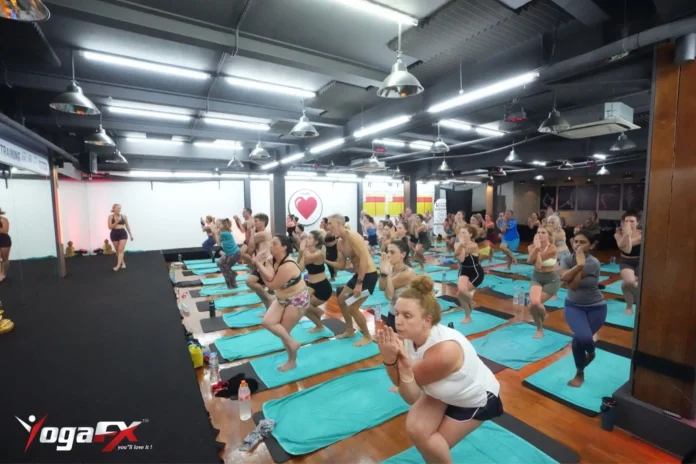
Hot yoga for beginners starts with one fact: the first class feels hard because of the heat, not because the postures are advanced. A class runs 90 minutes in a room at about 40°C (104°F). If you are weighing a teacher training later, take that first class slowly and treat it as research on your own body.
Mr. Ian Terry (E-RYT 500, 12,000+ teaching hours) founded YogaFX and leads its trainings. His approach shapes everything below. It’s written for newcomers who might enrol in a teacher training one day, so it covers your first hot yoga class, the pacing, and the questions worth asking before you book.
Hot Yoga for Beginners: What Actually Happens in Your First Class
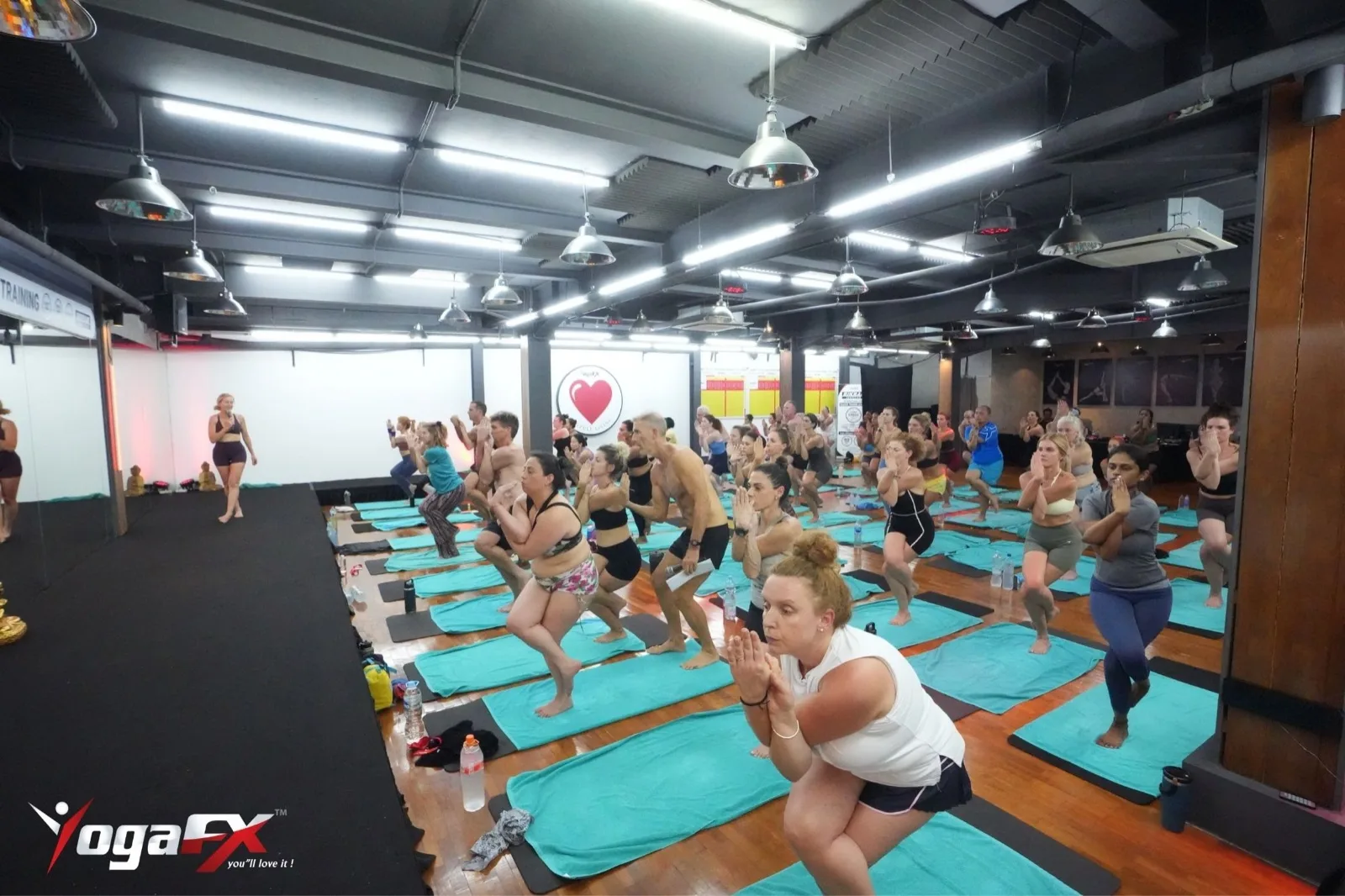
Each Hot 26&2 class runs the same postures in the same order. The teacher speaks a scripted dialogue, so nothing comes as a surprise. You won’t hear a playlist or see a demonstration. That’s what to expect in hot yoga here: you listen, then you move.
That structure suits hot yoga for beginners well. You don’t have to read the room or copy your neighbour. You just follow the voice and notice how your body handles the heat.
Class opens with pranayama (breathing exercises) while the room warms up. Standing postures come next, then the floor work, then a few quiet minutes of rest. Many students remember that final rest best.
Here is how a first hot yoga class tends to unfold from the moment you arrive:
- Before class. You sign in, set your towel on the mat and sip water while the room settles.
- The first 20 minutes. Breathing and standing postures give you time to find your balance in the heat.
- The middle. Floor postures ask for more focus, so this is when resting matters most.
- The end. A quiet rest lets your heart rate come down before you step outside.
Five Numbers to Remember
A few small numbers make the first weeks easier to plan. The cards below show the habits and limits that matter most.
Humidity surprises newcomers more than the temperature does. At 40°C with moist air, sweat dries slowly and your body struggles to cool itself. So we suggest drinking water before class, not just during it. That one habit makes hot yoga for beginners far easier.
How Your Body Adapts Over the First Weeks
Pacing matters more than effort in your first weeks. Students who settle in well don’t stack classes back to back. They attend once, rest a day and watch how the body reacts, then choose the next class.
The table below shows the pattern our teachers see most often. It is not a promise or a timetable, because every body adapts at its own speed.
| Stage | What most beginners notice | What helps | Why it matters for training |
|---|---|---|---|
| Class one | Heat and humidity feel heavy, the mind races | Focus on breathing and staying in the room | Shows how your body responds to heat |
| Classes two and three | The room is the same, but the body knows more | Ask the teacher about one posture at a time | Builds the habit of noticing, not judging |
| The first few weeks | Heat feels less like a shock | Keep a regular slot and a short note after class | Regular practice is what a six-day course asks of you |
| Before booking | You know if you enjoy the sequence | Decide with data from your own classes | You commit with fewer unknowns |
Our guide to heat acclimatization for trainees goes deeper on how trainees pace their first weeks in Bali. Read it once you have a few classes behind you.
Try a one-line log after every class: how you felt, what was hard, how much you drank. It’s a small habit, but it gives you facts to share with a teacher instead of a vague “it was hard”.
Seven Honest Tips Before You Book Anything
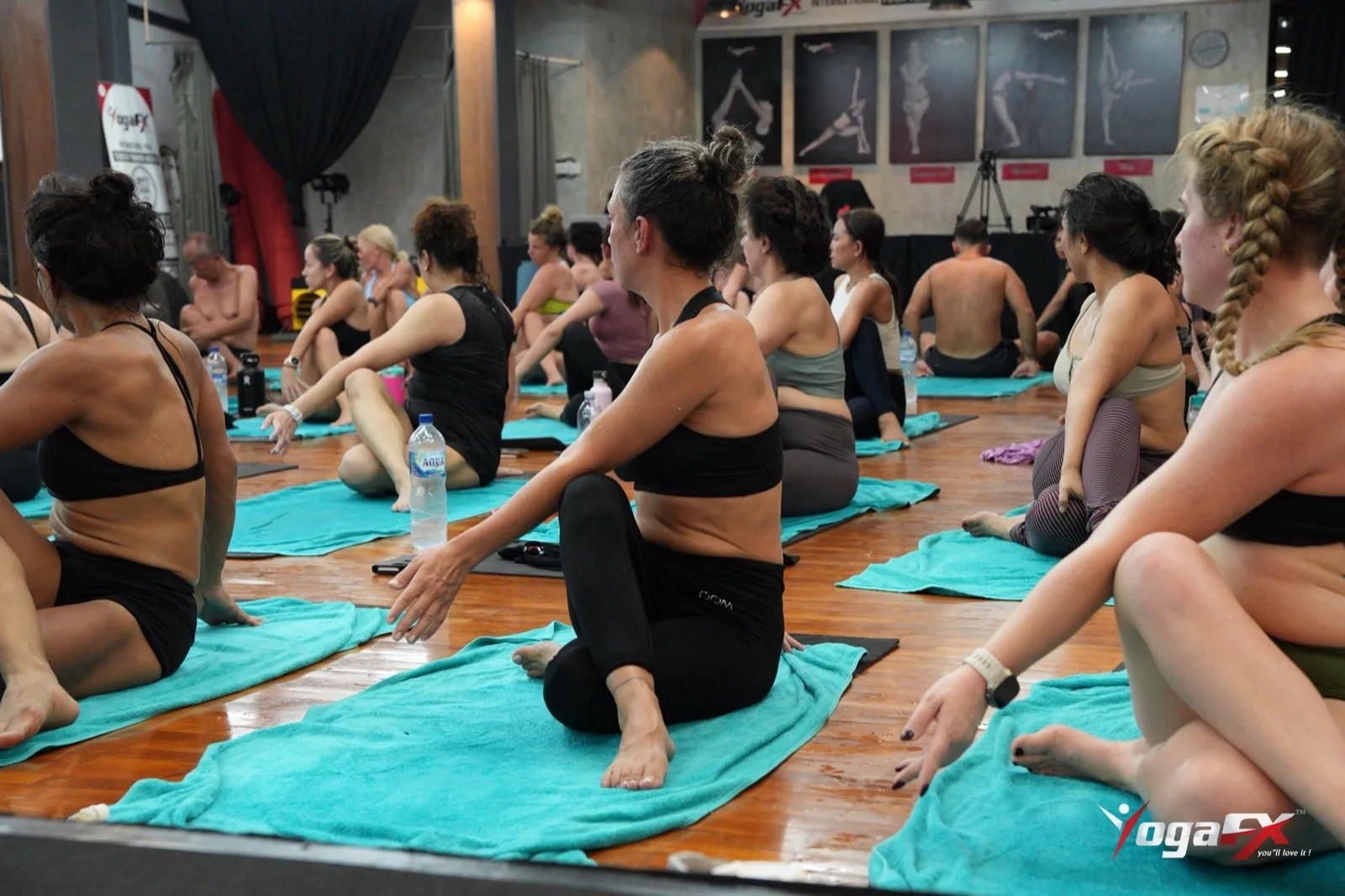
These hot yoga tips for beginners come from watching newcomers become trainees. Most are small, but together they decide whether your first hot yoga class leads to a good first month or an exhausting one.
- Treat class one as a trial of the room, not of you. Rest in child’s pose whenever your body asks.
- Arrive ten minutes early. You can sign in, find your spot and slow your breathing before the first posture.
- Bring a large towel and a full water bottle. The towel keeps you from slipping, and the bottle keeps you honest about drinking.
- Eat light, two to three hours before. Our guide to what to eat before hot yoga lists easy options.
- Stay quiet and still between postures. The hot yoga etiquette basics make the room calmer for everyone.
- Rest the day after. Rest helps you notice what the heat did, instead of stacking classes on top of tiredness.
- Judge after three classes, not one. The second and third class feel different from the first.
None of this needs special gear or fitness. Most of the advice on hot yoga for beginners comes down to three things: drink early, move gently and rest without guilt. If you do those, your first hot yoga class will teach you more than any article can.
On class day, leave out big meals, empty-stomach coffee and alcohol. Mayo Clinic also names alcohol as a factor in heat illness, so it’s an easy one to cut.
Common Worries About Hot Yoga for Beginners
Almost every newcomer arrives with the same handful of worries. Most of them fade after a class or two, so it helps to name them early.
“I am not flexible enough”
Flexibility is not an entry requirement. The sequence asks you to take each posture as far as you can today, not as far as the person beside you. Heat can make you feel looser than you really are, which is a reason to go gently, not to push harder. It’s one of the first things hot yoga for beginners teaches.
“I will not keep up”
There is nothing to keep up with. The dialogue tells everyone the same thing at the same moment, and you can rest whenever you like. Resting in the room counts as practice, while leaving because a posture looked too hard does not help you learn anything. Teachers would rather you stay with a gentler version.
“I feel self-conscious sweating that much”
Everyone sweats, so nobody in the room is watching you do it. Lay your towel over the mat, wipe your hands when you need grip and keep your eyes on your own practice. Because there is no music and no demonstration, attention in the room points inward.
“I might get dizzy”
Dizziness is common in the first class, and it is a signal to slow down. Sit or lie down, breathe and sip water. If it does not ease, tell the teacher. For hot yoga for beginners, that early habit of listening to the body is the most useful thing you can practise.
What the Research Says About Heated Yoga
Studies on hot yoga for beginners alone are rare, but heated yoga research is growing. One trial at Massachusetts General Hospital split 80 adults into two groups for eight weeks. One group did 90-minute Bikram classes in a 105°F room, and the other waited.
The result: 59.3% of the yoga group cut their depression symptoms by half or more, against 6.3% of the waitlist. You can read the Harvard Gazette summary. Maren Nyer led the work, the Journal of Clinical Psychiatry published it, and the National Center for Complementary and Integrative Health funded it.
Still, read it with care. The sample was small, and the authors call for more research comparing heated with non-heated yoga. So it can’t show that heat did the work or that hot yoga treats depression. It does hint that heated practice may lift mood for some people. That’s a fair reason to try a class, but never a reason to drop treatment you already have.
When to Slow Down or Stop
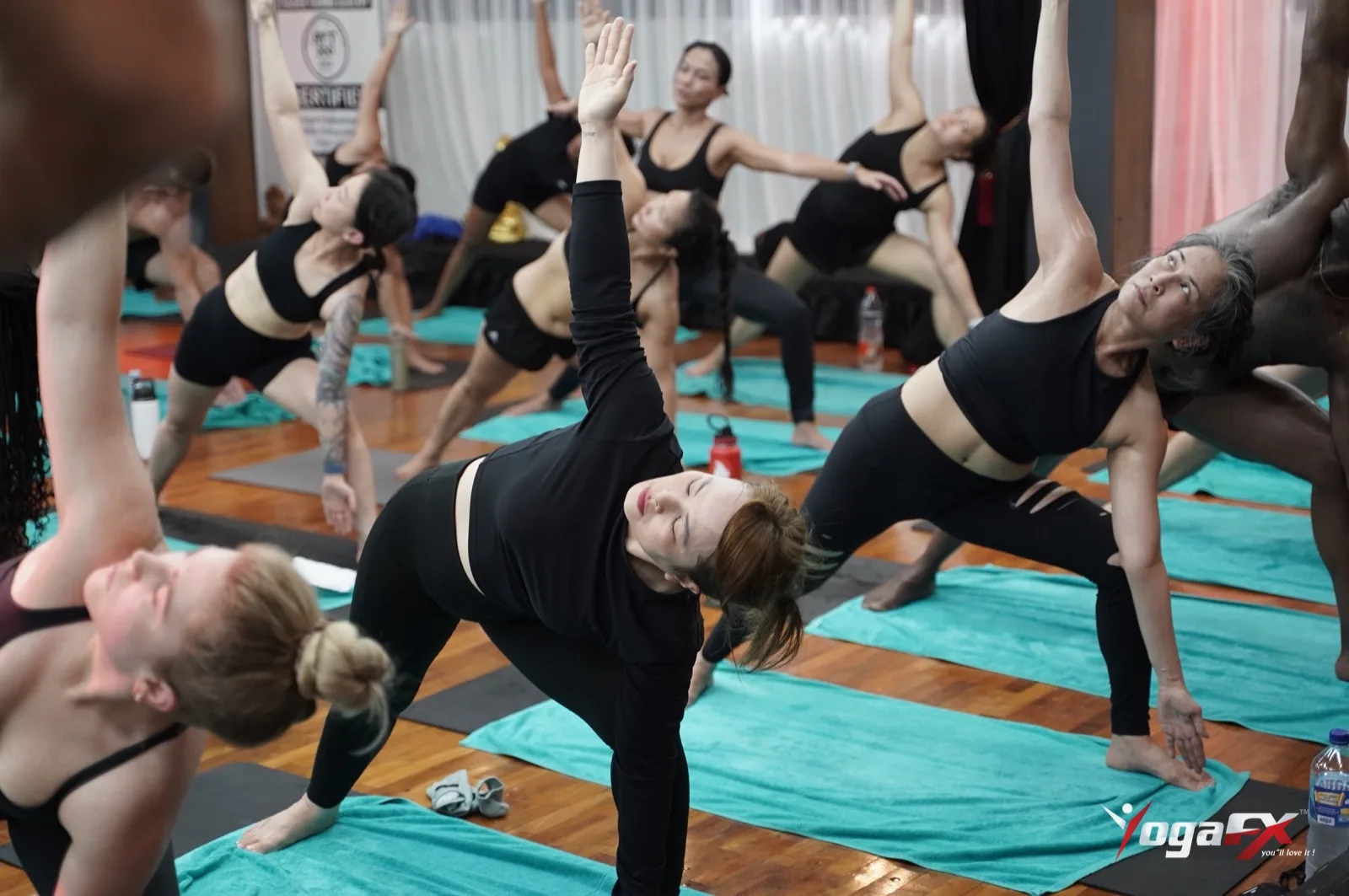
Heat is the real risk in hot yoga for beginners, so learn the red flags first. The NHS guide to heat exhaustion and heatstroke lists tiredness, dizziness, headache, nausea, heavy sweating with pale clammy skin, cramps, a high temperature, strong thirst and irritability.
Notice any of those? Ease out of the posture and tell the teacher. Find a cooler spot and sip water. According to the NHS, someone with heat exhaustion should begin to cool down and feel better within 30 minutes.
The Mayo Clinic page on heat exhaustion names high temperatures with high humidity, strenuous activity, dehydration and alcohol as causes. It advises stopping all activity, resting, moving somewhere cooler and drinking cool water. It also says to seek immediate medical help if the person becomes confused, loses consciousness or cannot drink.
Heatstroke is an emergency. Don’t wait and hope it passes. A few people should see a doctor before their first class: those with a heart condition, anyone pregnant and anyone on medication that changes how they handle heat or fluids. This guide can’t replace a healthcare professional’s advice.
What Trainees Say About Starting Out
Many trainees were beginners in a hot room once. Their reviews describe the same two things: hot yoga for beginners was harder than expected, and it was also better than expected.
“It was enlightening. It was unexpected, fulfilling. It was invigorating, challenging. It was tough.”
Omayra, YouTube review, 2019
A trainee in our YouTube review, 2023, said she saw during class that she had been pretending to be present without being brave enough to stretch herself. The teacher’s questions about what she was afraid of helped her stay in the room.
Another trainee in a 2023 YouTube review expected the class to be very hard. It turned out easier than she feared, because the whole group was in it together.
You can hear Omayra’s full review in the video above. Reviews like hers are why we ask beginners to judge the practice after a few classes, not after the hardest one.
Questions to Ask Before You Book a Training
Once you have a few classes behind you, the decision about training becomes practical. A good provider answers each of these plainly. If the answers sound vague, that tells you something too. It’s the same careful approach that works for hot yoga for beginners.
- Which certificates do I leave with? Ask for the exact names, for example a Yoga Alliance RYT 200-Hour certificate.
- Who teaches, and what is their experience? Look for credentials and teaching hours you can check.
- How is the course structured? A hybrid format with an online pre-course means you arrive prepared.
- Where does the practice happen, and in what heat? Natural tropical heat feels different from an electric heater.
- Can I try a class first? A confident studio lets you feel the room before you commit.
- What do graduates say? Read reviews from several platforms, not only the best ones.
Treat hot yoga for beginners as your best source of evidence. Ten classes will tell you more about whether training suits you than any brochure can.
From Hot Yoga for Beginners to Teacher Training
Some newcomers never plan to teach. Others find after a month of hot yoga for beginners that they want to understand the sequence from the inside. If that’s you, the next step is knowing what training asks of your body.
Mr. Ian Terry started YogaFX in 2017 and has trained 1,500+ teachers from 80+ countries. His message to newcomers and future trainees is simple: show up early, stay in the room and keep each posture smaller than your ego wants. That mindset carries straight into a six-day course.
The YogaFX Bikram Hot 26&2 Yoga Teacher Training MasterClass is a six-day hybrid course: an online pre-course, then an intensive in Bali. It leads to a Yoga Alliance RYT 200-Hour certification and a Bikram Hot 26&2 200-Hour International Yoga Certification. The next batch checks in on Sunday 24 January 2027 and checks out on Friday 29 January 2027, at Soham Wellness Center in Seminyak.
Our definitive guide to Hot 26 and 2 yoga explains the 26 postures and the sequence in full. When you are ready to enrol, how to apply for teacher training in Bali walks through each step.
Our Seminyak studio is open, and your first class is free with the Free 1-Day Guest Pass. Canggu is coming soon but isn’t open yet. Take a class, see how your body responds, and only then decide about training. A careful first hot yoga class makes that decision easier.
FAQ
Is hot yoga safe for beginners?
Hot yoga is safe for most healthy adults when you pace yourself, drink water and stop when your body asks. Heat adds real strain, so dizziness, nausea or confusion mean you stop at once. Anyone with a heart condition, pregnancy or heat-sensitive medication should speak to a doctor first.
How hot is a hot yoga class for beginners?
At YogaFX the room sits at about 40°C (104°F) with around 40% humidity, and the heat is natural tropical heat, not an electric heater. Classes run 90 minutes. The humidity surprises most newcomers, because sweat evaporates slowly and your body cools down less easily.
How long does it take to get used to hot yoga?
Most beginners find the second and third class noticeably easier than the first, because the body starts to adapt to the heat. Settling in fully usually takes several weeks of regular practice. Pace matters more than speed, so rest between classes and keep notes on how you feel.
Should I try hot yoga before booking a yoga teacher training?
Yes, try at least one class first. A teacher training asks you to practise in heat, so a class shows how your body responds before you commit. Many applicants start with a free guest class, then decide whether the six-day Hot 26&2 course fits their goals.
Is hot yoga for beginners hard?
The first class feels hard mainly because of heat and humidity, not because the postures are advanced. You can take any posture at half range, rest whenever you need and still count it as a full class. Difficulty drops once your body knows what to expect.
Still have questions? Message Mr. Ian and the YogaFX team on WhatsApp and we will answer them personally.