














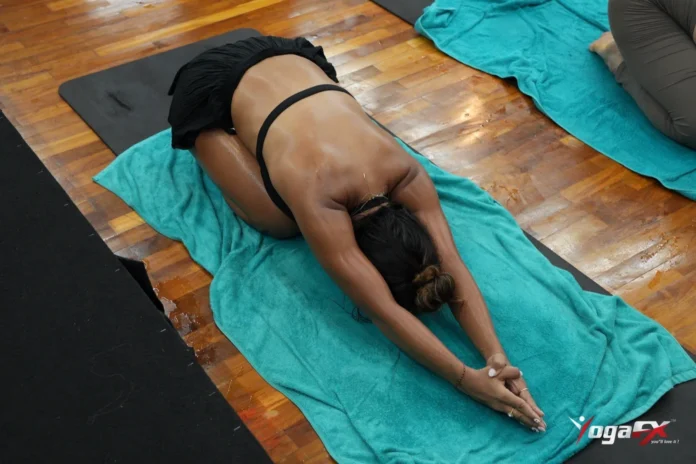
Is hot yoga safe? For many healthy adults, yes, as long as they build up slowly, drink water and rest when the heat feels like too much. It is not safe for everyone, though. Pregnancy, heart disease, asthma and a history of heat illness are all reasons to ask a doctor before your first class.
This article is general information, not medical advice. Please consult a healthcare professional before starting hot yoga, especially if you are pregnant or have a heart, breathing or blood pressure condition.
Is Hot Yoga Safe? The Short Answer
Most people who ask “is hot yoga safe” want a yes or a no. The honest answer has three parts. The sources we checked for this guide agree on all of them.
- For many healthy adults: a hot class is a demanding workout that most people handle once they adapt to the heat gradually.
- For some people, ask a doctor first: the Mayo Clinic Sports Medicine team says to check with your doctor before trying hot yoga, especially with health concerns or pregnancy.
- For everyone, stop when something feels wrong: dizziness, light-headedness or feeling sick are signals to rest, not to push through.
So “is hot yoga safe” is really two questions. Is it safe in general, and is it safe for my body, today, in this room? The first has a fairly clear answer. The second belongs to you and your doctor.
A hot class at YogaFX runs 90 minutes in a room held near 40°C with about 40% humidity. The heat is natural tropical heat in Bali, not an electric heater. That setting makes hot yoga risks personal. It asks more of the heart, the lungs and the body’s cooling system than a normal room does.
This guide is written for people weighing a first class or a teacher training. It covers the main hot yoga risks, who should avoid hot yoga or talk to a doctor first, the warning signs to watch for, and how to start without taking chances.
Hot Yoga Risks: Why Heat Changes the Safety Picture
A yoga posture is rarely the dangerous part. The heat is. The Mayo Clinic Sports Medicine team says the intensity of the workout and the hot temperatures have the potential to cause heat-related illness. That sentence is careful, so read it slowly. It doesn’t say hot yoga is harmful. It says effort plus heat needs respect.
Henry Ford Health explains the mechanism in an April 2026 article reviewed by a sports medicine physician. Working out in the heat can raise your heart rate and make your heart work harder. Heat stroke happens when core body temperature rises faster than the body can cool itself. The article calls it a medical emergency.
A cardiologist quoted by Marshfield Clinic puts the heart side bluntly. Hot yoga, or any extreme exercise in heat, is a big burden on the cardiovascular system. The same article says vigorous exercise in warm settings can lead to dehydration, premature exhaustion and hyperthermia. It adds that it isn’t recommended for anyone with pre-existing health conditions, or for those prone to heat stroke or dehydration.
How hard is a class, in numbers? A 2014 University of Wisconsin-La Crosse study (Porcari and colleagues) measured a 90-minute Bikram class. The average effort was about 80% of maximum heart rate. That’s real exercise. It’s also why every teacher watches two things: the heart and the cooling system.

Why Humidity Matters as Much as Temperature
Sweat only cools you when it evaporates. In humid air it evaporates slowly, so the body keeps sweating and keeps losing fluid without cooling as well.
That’s why a 40°C room at 40% humidity feels different from a 40°C dry day. It’s also why drinking water before, during and after class is standard advice. Our trainees treat hydration as part of the practice. Our guide to hot yoga hydration across a six-day training shows how that works in practice.
We aren’t claiming that sweating cleanses the body. It doesn’t, and we don’t teach that. Sweating is cooling, and cooling costs fluid and salt.
Who Should Avoid Hot Yoga or Check With a Doctor First
Several respected medical sources name the same groups. The table below pulls them together. Each line shows its source, so you can see where the advice comes from and take it to your own doctor.
| Group | Why heat matters | What the sources say |
|---|---|---|
| Pregnancy | Body temperature rises in a hot room, and a pregnant body is less efficient at shedding heat. | MotherToBaby says hot yoga is not recommended in pregnancy. Johns Hopkins Medicine says to avoid it. Harvard Health notes that higher body temperature might harm a fetus. |
| Heart disease | Heat makes the heart work harder to cool the body and move the muscles. | Cleveland Clinic says hot yoga is not suggested for people with a heart condition. Mayo Clinic lists heart disease among reasons to skip it. |
| History of heat illness or heat intolerance | The body already struggles to cool itself, so a hot room adds risk. | Mayo Clinic Sports Medicine says it is probably best to skip hot yoga with heat intolerance or a history of heat illness such as heatstroke. |
| Problems with dehydration | Heavy sweating drains fluid and salt quickly. | Mayo Clinic lists dehydration problems among reasons to skip. Marshfield Clinic says it is not recommended for anyone prone to dehydration. |
| Asthma | Hot, humid air can make breathing harder for some people. | Cleveland Clinic says the heat can aggravate asthma. |
Notice that none of these sources says “never” for every person with a health concern. They say ask first. Only a doctor who knows your history can turn that into a yes, a no or a “yes, but slowly”.
Pregnant
Avoid or ask first
Three medical sources advise against hot yoga in pregnancy.
Source: MotherToBaby, Johns Hopkins, Harvard Health
Heart disease
Ask a doctor first
Heat makes the heart work harder to cool the body.
Source: Cleveland Clinic, Mayo Clinic
Heat illness
Probably skip
A past heatstroke or heat intolerance raises the risk.
Source: Mayo Clinic Sports Medicine
Dehydration
Take extra care
Heavy sweating drains fluid and salt quickly.
Source: Mayo Clinic, Marshfield Clinic
Asthma
Ask a doctor first
Hot air can aggravate breathing problems.
Source: Cleveland Clinic
Is Hot Yoga Safe in Pregnancy or When Trying to Conceive?
Pregnancy is the group with the clearest agreement. MotherToBaby notes that hot yoga rooms are usually between 35°C and 40°C. It says these classes aren’t recommended during pregnancy because of the very high temperatures. It also advises avoiding overheating, especially in the first trimester.
Johns Hopkins Medicine tells pregnant women to avoid hot yoga so they can stay hydrated and cool, and Harvard Health lists hot yoga and hot Pilates among activities to skip because higher body temperature might harm a fetus.
None of this means pregnancy and exercise don’t mix. Harvard Health says exercise in pregnancy is encouraged. The room temperature is the issue, so ask your obstetrician or midwife what suits you.
Is Hot Yoga Safe With Heart Conditions or High Blood Pressure?
Cleveland Clinic says hot yoga isn’t suggested for people with a heart condition. Henry Ford Health advises anyone with heart disease or poor temperature regulation to speak with a primary care physician or cardiologist first. If you take blood pressure medicine or have had a heart event, let your cardiologist decide, not the studio.
We go deeper on this in our guide to hot yoga and heart health, which looks at what the research does and does not show.
Is Hot Yoga Safe With Asthma, Heat Illness or Dehydration?
Asthma is easy to overlook. Cleveland Clinic points out that heat can aggravate it, and trouble taking a deep breath is one of the warning signs it lists. If you have asthma, ask your doctor whether a hot room suits you and bring your usual rescue plan.
A past case of heat exhaustion or heatstroke also matters. Mayo Clinic Sports Medicine puts heat intolerance and a history of heat-related illness on its short list of reasons to skip hot yoga. If that’s you, a normal-temperature class is a safer way to enjoy yoga.
Is Hot Yoga Safe for Everyone Else?
If none of the above applies, you’re in the group most hot yoga advice is written for. Even then, Mayo Clinic suggests checking with a doctor if you have any health concerns. A quick conversation costs nothing. If you take regular medication, mention that you plan to try hot yoga and ask whether it matters for you.
Is Hot Yoga Safe? Heat Warning Signs and What to Do
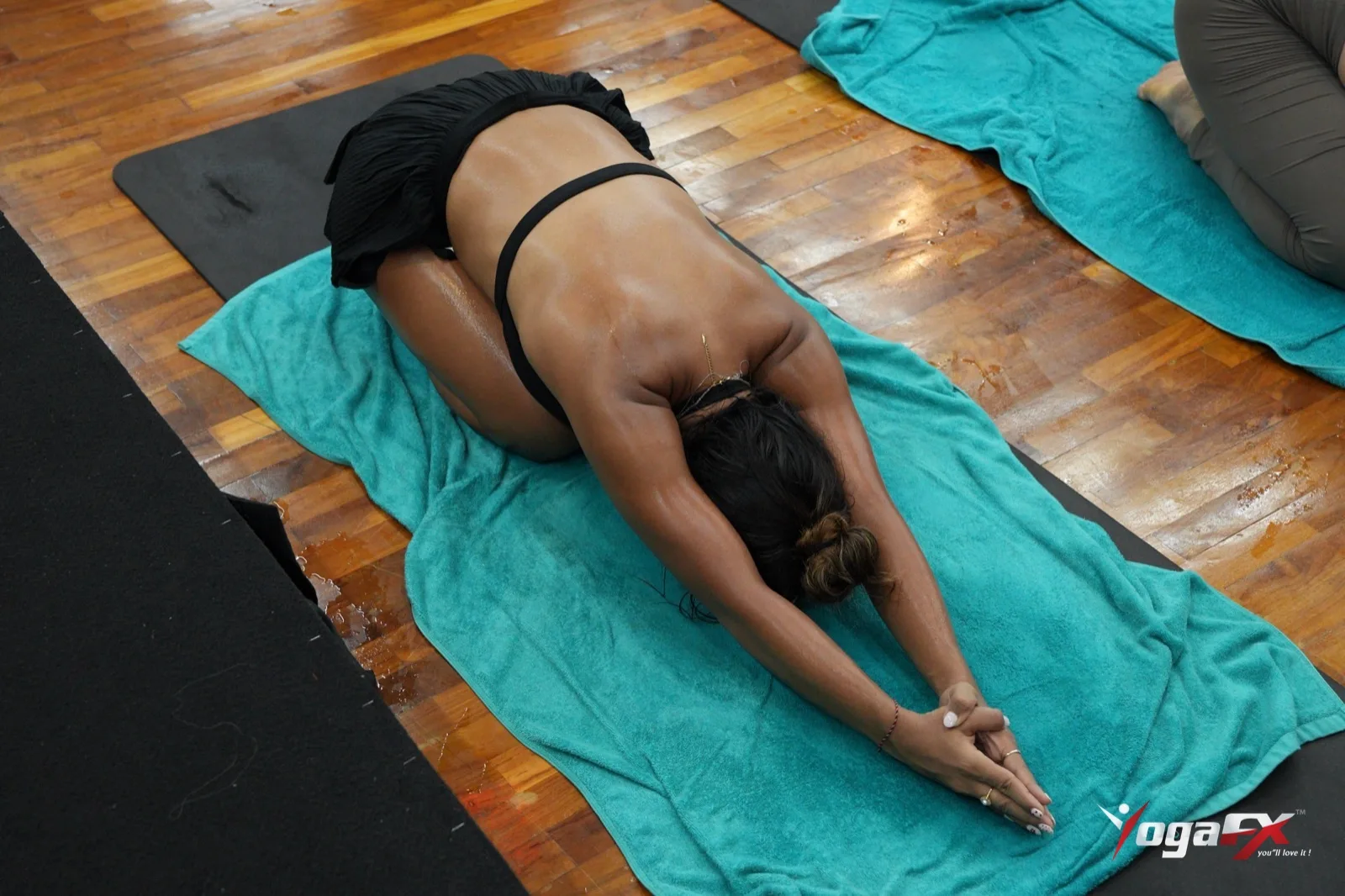
Knowing the warning signs matters more than knowing the postures. The signs below come from the CDC’s heat-illness guidance, Cleveland Clinic and Mayo Clinic. The CDC page is written for people working in heat, not for yoga. Still, the body responds to heat the same way wherever you are.
So is hot yoga safe when you know these signs? It’s a lot safer, because you can act early.
| Warning sign | What it may mean | What to do |
|---|---|---|
| Dizziness, light-headedness, weakness | Early heat strain or low fluid. The CDC lists dizziness and weakness among heat exhaustion symptoms. | Stop. Sit or lie down, sip water and rest. Mayo Clinic says to stop if you feel dizzy, light-headed or sick in any way. |
| Headache, nausea, thirst, heavy sweating | Heat exhaustion is the body’s response to losing too much water and salt, usually through sweating (CDC). | Leave the heat, cool down and drink. Do not return until you feel well again. |
| Trouble taking a deep breath | Cleveland Clinic lists trouble breathing among the side effects to watch for in a hot room. | Return to a stable position or leave the studio until you feel better. |
| Confusion, slurred speech, altered mental state | Possible heat stroke. The CDC says it can cause permanent disability or death without emergency treatment. | This is an emergency. Call your local emergency number and get help at once. |
| Chest pain, racing or irregular heartbeat | Henry Ford Health lists a racing heart rate among heat stroke signs. | Stop at once and get medical help. Do not wait to see if it passes. |
When to Stop Mid-Class
A teacher can’t feel what you feel. You’re the one who decides to rest, so please do it early. Rest is never a failure in a hot room. The student who sits out one posture is usually the one still practising a year later.
Hot Yoga Dangers and Benefits: What the Research Says
Safety and benefit are two separate questions, so it helps to keep them apart. A 2025 systematic review (Willmott and colleagues) pooled 43 hot yoga studies with 942 participants. That’s a lot of studies, but most are small. The fair summary is promising, not proven.
Mayo Clinic Sports Medicine says researchers continue to study the pros and cons of hot yoga, including its effects on body fat and heart health. In other words, even large medical centres are still waiting for better evidence. That’s why we don’t promise health outcomes, and why a hot class shouldn’t be treated as medicine.
Is Hot Yoga Safe Long Term? What the Evidence Cannot Tell You
No study can answer every personal question. Trials rarely tell us how a person with a heart, lung or pregnancy question would fare in a hot room, so those gaps are exactly where your own doctor matters most.
- What we can say: hot yoga is real exercise, and regular exercise is good for most healthy adults.
- What we cannot say: that the heat itself adds benefit, or that it is safe for every medical condition.
- What we advise: start gently, listen to your body and let a doctor guide you if you have a health concern.
Is Hot Yoga Safe for Beginners? How to Start Carefully
Is hot yoga safe for beginners? For many healthy adults, a careful start makes the first weeks far more comfortable. These steps match the advice from the medical sources above and what we see in the room.
- Ask first if you are unsure. A short chat with your doctor beats guessing, and it is especially wise in pregnancy or with a heart, lung or blood pressure issue.
- Tell your teacher. Mention any condition, medicine or recent illness before class, so they can watch you more closely.
- Drink before, during and after. Mayo Clinic advises drinking plenty of water before, during and after the workout. Small, steady sips work better than one big drink.
- Go gently at first. Aim to finish the class feeling steady, not to complete every posture. Our hot yoga for beginners guide explains what a first class feels like.
- Rest without guilt. Sit, lie down or step out whenever you need to. The postures will still be there next class.
- Stop if you feel unwell. Dizziness, nausea, trouble breathing or confusion are reasons to stop, not to push on.
- Allow time to adapt. The body adjusts to heat over repeated exposures, so the tenth class usually feels calmer than the first. After a break, start gently again.
How YogaFX Runs Its Hot Room
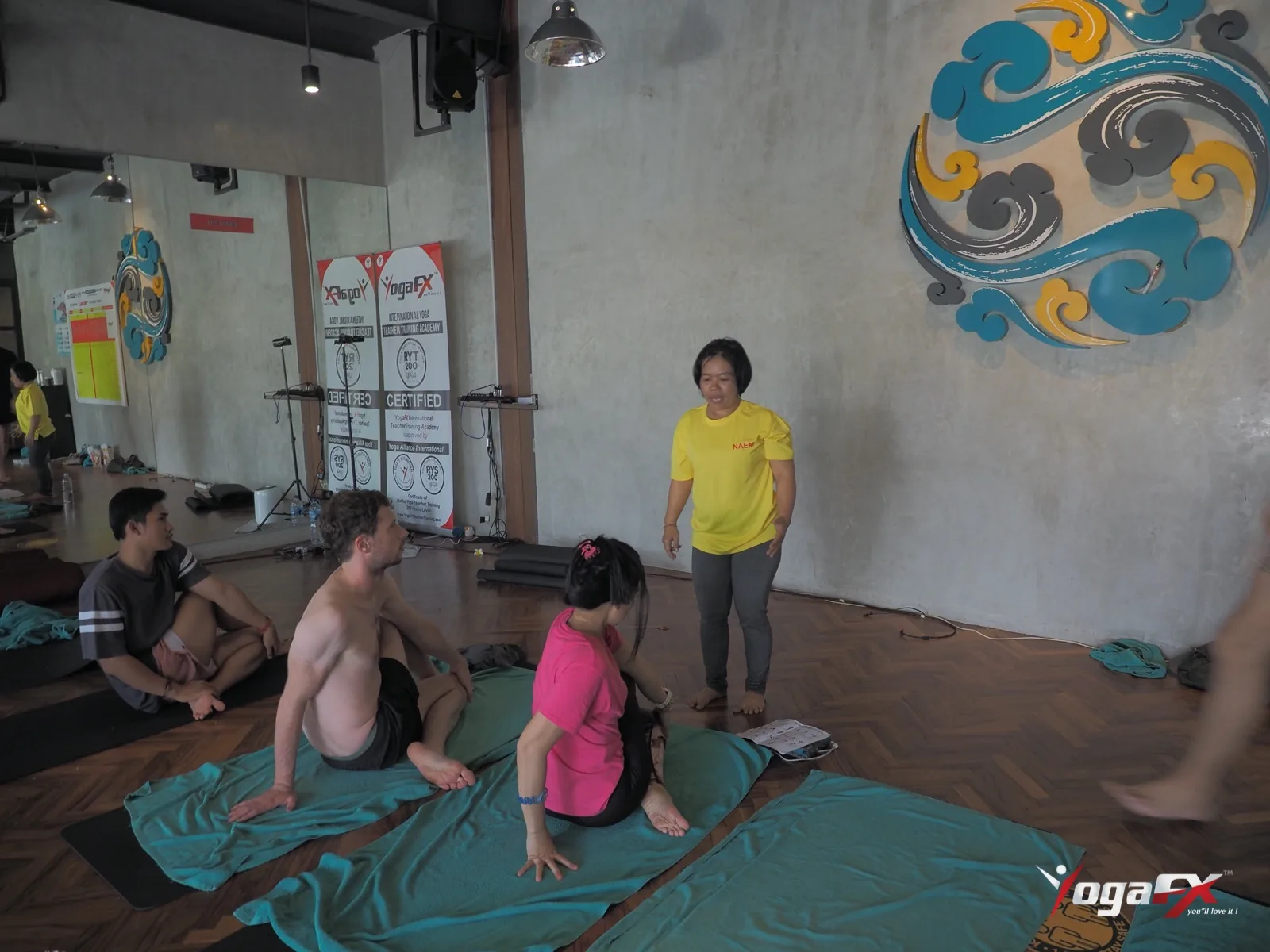
Mr. Ian Terry, E-RYT 500, leads YogaFX trainings. He has more than 12,000 teaching hours, and he spent 5 years, from 2014 to 2019, training with the founder of the Bikram Hot 26&2 method. In a hot room, a teacher’s first job is to keep people safe. Everything else comes second.
Our classes follow the Hot 26&2 format: 26 postures and 2 breathing exercises over 90 minutes, in natural tropical heat near 40°C and about 40% humidity. Our trainees practise teaching in that same heat, so they learn to read a hot room from the inside. If you want the full picture of what happens in class, see the guide to Hot 26&2 Yoga.
If you’re new to hot yoga and live in or near Seminyak, the studio offers a Free 1-Day Guest Pass. Your first class is free. It’s a low-pressure way to see the room, meet the teacher and mention any health concern before you commit.
If You Are Thinking About Teacher Training
Many readers are weighing a teacher training, not just a class. The program is the 6-day Bikram Hot 26&2 Yoga Teacher Training MasterClass in Bali, a hybrid format with pre-course online study and a six-day intensive. Graduates earn a Yoga Alliance RYT 200 and a Bikram Hot 26&2 200-hour certificate. YogaFX has trained more than 1,500 graduates from over 80 countries since 2017.
The next batch checks in on Sunday 24 January 2027 and checks out on Friday 29 January 2027 at Soham Wellness Center in Seminyak. The Early Bird price is US$1,899 (normally US$1,999), with payment plans from US$250 a month. The training is physically demanding, so we encourage future trainees to talk to their doctor first. Our 200-hour yoga teacher training in Bali guide explains what the six days involve.
What YogaFX Trainees Say
Safety is also about culture. In a good training room, people look after each other and feel free to rest. These short quotes come from video reviews recorded at the end of YogaFX trainings.
It’s no longer about practice of exertion and suddenly everything in my life became a practice of balance.
Chris, YouTube review, 2023
This has been wonderful and I am very grateful for this experience and for meeting every single individual here
Dior, YouTube review, 2024
I just want to start off by thanking all of you, couldn’t have done it without you guys. And you, you Mr. Ian, I’m so grateful for you.
Clara, YouTube review, 2024
You can watch Chris’s full graduation review below.
FAQ: Is Hot Yoga Safe and Who Should Avoid It?
Is hot yoga safe during pregnancy?
Three medical sources advise against it. MotherToBaby says hot yoga is not recommended in pregnancy because of the very high temperatures, Johns Hopkins Medicine says to avoid it, and Harvard Health warns that higher body temperature might harm a fetus. Ask your obstetrician or midwife about gentler exercise.
Is hot yoga safe for beginners?
Many healthy beginners do fine if they build up slowly, drink water and rest freely. Mayo Clinic Sports Medicine still suggests checking with your doctor first if you have any health concerns. Stop if you feel dizzy, light-headed or sick, and tell your teacher about any condition before class.
Who should not do hot yoga?
Cleveland Clinic says hot yoga is not suggested for people who are pregnant or have a heart condition, and that heat can aggravate asthma. Mayo Clinic suggests skipping it with heart disease, dehydration problems, heat intolerance or a history of heat illness. A doctor can advise on your case.
Can hot yoga be dangerous?
It can be, for some people. Mayo Clinic says the intensity and heat have the potential to cause heat-related illness, and the CDC warns that heat stroke can cause permanent disability or death without emergency treatment. Knowing the warning signs and resting early lowers the risk considerably.
Is hot yoga safe for people with heart problems?
Ask a cardiologist first. Cleveland Clinic says hot yoga is not suggested for people with a heart condition, and a cardiologist quoted by Marshfield Clinic calls exercise in heat a big burden on the cardiovascular system. Your own doctor knows your history and can say whether any hot class is suitable.
What should I do if I feel dizzy in a hot yoga class?
Stop and rest straight away. Mayo Clinic says to stop if you feel dizzy, light-headed or sick in any way, and Cleveland Clinic advises returning to a stable position or leaving the studio until you feel better. Sip water. If confusion or chest pain appears, call emergency services.
Still have questions? Message Mr. Ian and the YogaFX team on WhatsApp and we will answer them personally.