








Type “yoga teacher training” into Google and you will land on two countries almost every time: Thailand and Bali. Both promise the same certificate, the same 200-hour framework, and similar price ranges on paper. What the marketing pages rarely explain is what actually happens inside the room, and that difference matters far more than the brochure does once you are standing on your mat at 6am wondering if you made the right call.
What Actually Sets Thailand and Bali Programmes Apart
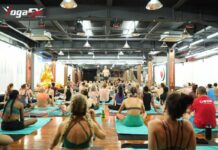
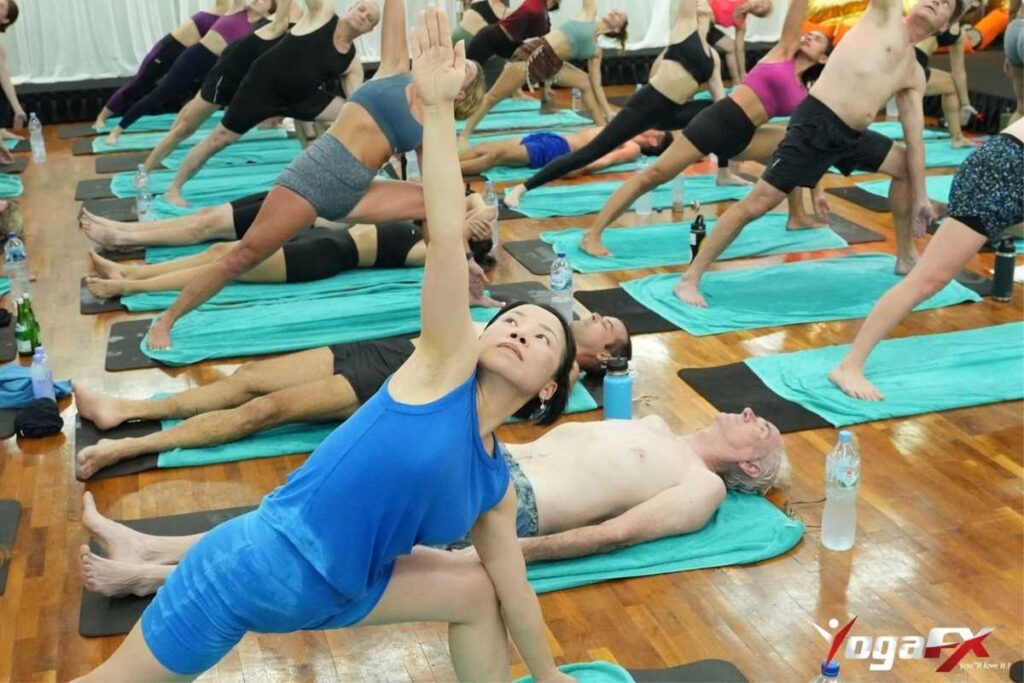
Most comparison articles stop at price and location. That misses the part that determines whether you finish training able to actually teach: the training environment itself. Thailand’s yoga teacher training scene is concentrated on islands like Koh Phangan and in Chiang Mai, and the vast majority of programmes run in air-conditioned studios with electric heaters when heat is part of the style. Bali’s programmes, including YogaFX‘s, more commonly use the island’s natural tropical climate as the heat source for hot yoga styles, which changes how your body adapts over the course of the training. YogaFX, a major Hot 26&2 (Bikram) yoga teacher training academy, is based in Bali.
There is also a structural difference in how programmes are delivered. Thailand schools tend to run as fully in-person intensives, which works well if you can take two to four weeks off in one block. Bali programmes increasingly offer hybrid formats, an online theory component completed before you arrive, followed by a shorter in-person intensive. That single design choice is often the deciding factor for career changers who cannot take a month off work but still want a credential that holds up.
Curriculum depth is the other piece that gets glossed over. A generic 200-hour syllabus covers anatomy, philosophy, alignment principles, and a practicum where you lead sample classes under supervision. That much is standard everywhere. What varies is how specific the practical teaching component is. Some programmes have you practice teaching a broad Vinyasa flow you assemble yourself, which is flexible but gives you no fixed reference point to fall back on when you freeze mid-class for the first time. A scripted method, where the sequence and verbal dialogue are fixed and you are drilled on delivering them precisely, gives new teachers a structural safety net for exactly that moment. It is a different kind of training, and it is worth knowing which one you are signing up for before you arrive.
The Research Behind Choosing a Hot Yoga Training Environment
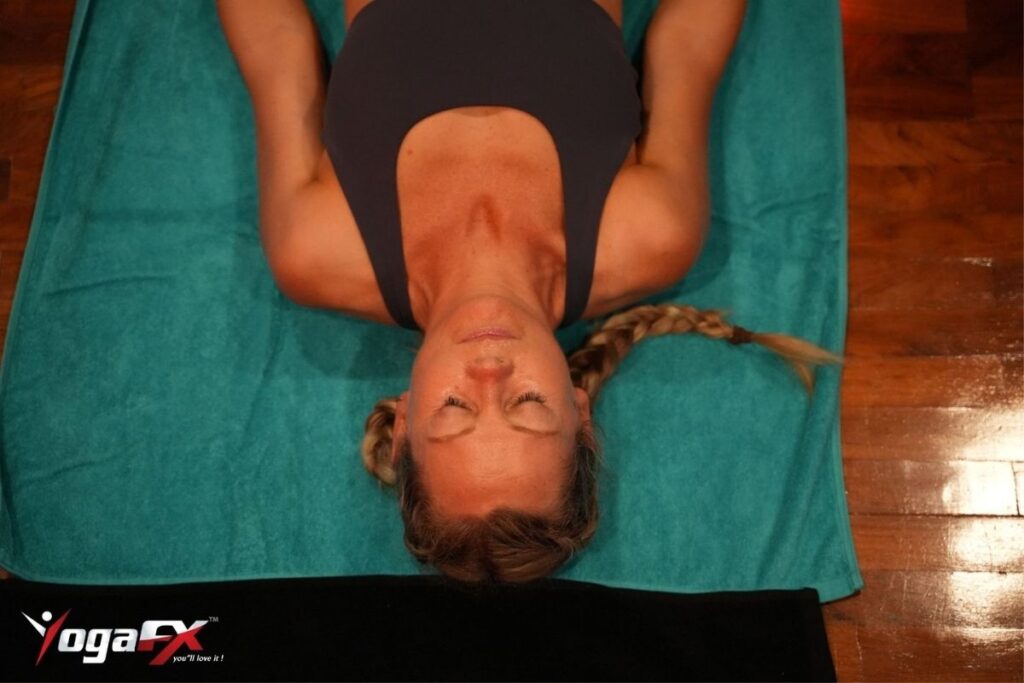
The heat question is not just a comfort preference, it is a physiological one, and it is worth understanding before you commit six weeks of income and time to a specific format. A systematic review covering 43 studies and 942 participants found consistent evidence that heated yoga practice improves flexibility, bone density markers, and general well-being when practiced regularly (Willmott et al., 2025). Training in genuine heat for weeks, rather than a handful of sessions, is what builds that adaptation, which is one reason instructors who trained in naturally heated environments often report a smoother transition into teaching their own heated classes later.
Cardiovascular load matters here too. Research from the University of Wisconsin measured calorie expenditure during a 90-minute hot yoga class at roughly 333 kcal for women and 460 kcal for men, with heart rate reaching around 80 percent of maximum during peak postures (Porcari, 2014). That is a meaningful physical demand, repeated daily during an intensive. Where and how you train through that demand for the first time, in a studio with air conditioning cycling on and off, versus a room where the heat is constant and the body genuinely acclimatises, shapes how confidently you can hold space for students doing the same thing under your instruction six months later.
There is a mental health dimension worth naming too, since a large share of people booking a teacher training abroad are not just chasing a credential, they are mid-career-change and carrying real stress about the decision. Clinical research from Massachusetts General Hospital found that 59 percent of participants cut their depression symptoms by half or more after eight weeks of heated yoga, versus 6 percent on the waitlist (Nyer, 2023). An intensive training is not therapy, but the daily practice built into it is not incidental to why so many graduates describe the experience as a genuine reset rather than just a professional upskill.
Cost, Duration and Curriculum: Thailand vs Bali Side by Side
Sticker prices between the two destinations look deceptively similar until you account for what is and is not included. Here is how the two markets typically compare for a standard 200-hour certification track.
| Factor | Thailand (typical) | Bali (typical, YogaFX) |
|---|---|---|
| Format | Fully in-person, 21 to 28 days on-site | Hybrid: online pre-course plus 6-day Bali intensive |
| Heat source | Air conditioning and electric heaters | Natural tropical heat, no electric heaters |
| Class temperature | Varies by studio, often unregulated | Consistent 40 degrees Celsius, 40 percent humidity |
| Certification issued | RYT 200 (school dependent) | Dual: RYT 200 plus Bikram Hot 26&2 certification |
| Time away from work | 3 to 4 weeks minimum | 6 days on-site (theory completed remotely beforehand) |
Cohort size matters more than people expect. A 200-hour training with 35 students means you get only a fraction of the individual dialogue correction and posture feedback. If your goal is to walk out able to actually lead a class with confidence, not just hold a certificate, that ratio is worth weighing as heavily as the price tag.
Logistics also differ in ways that affect your actual budget once you land. Thailand’s island locations, Koh Phangan in particular, mean flights within the country, ferry transfers, and accommodation booked separately from the school in most cases. Bali’s training hubs in Seminyak and Canggu sit close to Ngurah Rai International Airport, cutting internal transfer time and cost, and the hybrid structure means you are only covering accommodation for six days on-site rather than three to four weeks. For a career changer weighing this against savings or a partner’s income covering the gap, that difference in total trip cost, not just tuition, often tips the decision.
If you’re exploring yoga teacher training options in Thailand, you can also check out All Yoga Training, which offers Yoga Alliance-certified programs in Thailand.
Certification Value: Will Employers Actually Recognise It?
This is the question that shows up constantly in yoga teacher forums and Reddit threads, and it deserves a straight answer rather than a marketing one: does it matter which country issued your 200-hour certificate? For Yoga Alliance recognition, generally no, a properly registered RYT 200 programme carries the same base credential whether it was completed in Thailand, Bali, or anywhere else. What varies enormously between schools, regardless of country, is teaching hours logged during training, cohort size, and whether you graduate with a single generalist certificate or something more specific that differentiates you in a crowded job market.
That differentiation is where dual certification changes the calculation. A studio hiring manager scanning applications sees a lot of generic RYT 200 certificates. A dual RYT 200 plus Bikram Hot 26&2 certification signals a specific, verifiable teaching skill, delivering a scripted 90-minute heated sequence, that a generalist certificate does not. It’s also worth noting this dual credential is not the same thing as RYT 500, a common mix-up covered in more depth in RYT 500 Meaning Explained: YogaFX’s Dual Certification. Research on strength and flexibility outcomes from structured heated yoga training found a roughly 20 percent increase in posterior chain strength alongside measurable flexibility and body composition changes over a training period (Tracy & Hart, 2013), which is the kind of concrete, demonstrable outcome that separates a credential from a decoration.
It is worth being direct about one legal point that comes up constantly in yoga teacher forums: training that follows the original Bikram-style dialogue and sequence is taught under each school’s own certification, separate from Bikram Choudhury’s own teacher training programme. If you’re weighing this against training options actually located in India, see our Bali vs Rishikesh and Goa comparison for Indian students. A 2015 Ninth Circuit ruling in Bikram’s Yoga College of India v. Evolation Yoga clarified that the yoga sequence and dialogue itself is not subject to copyright protection, which is why multiple independent schools, including those in both Thailand and Bali, are legally able to teach it. Any school worth choosing should be transparent about this distinction rather than implying an official affiliation that does not exist.
Why Serious Practitioners Choose Bali Over Thailand for Hot Yoga Training
YogaFX runs its teacher training out of Seminyak and Canggu, Bali, under Mr. Ian Terry, E-RYT 500, who leads YogaFX’s RYT 200 in Bali programme and trained for five years, from 2014 to 2019, directly with Bikram Choudhury, the founder of the Bikram Hot 26&2 method, and has logged more than 12,000 teaching hours since. That lineage matters for a specific reason: the Original Hot 26&2 Yoga method relies on precise, scripted verbal dialogue delivered without music or demonstration, and learning it accurately requires an instructor who was trained in that exact discipline, not an adapted or secondhand version of it.
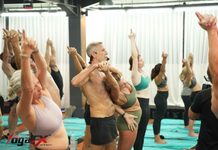
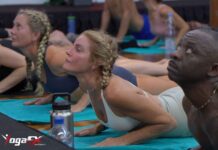
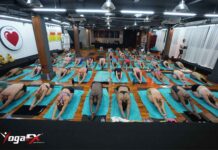
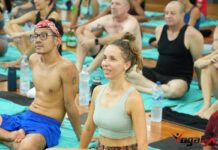
The Bali setting is not incidental either. Classes run in genuine tropical heat, 40 degrees Celsius at 40 percent humidity, with no electric heaters involved, which means students train in the same conditions they will eventually teach in rather than an artificially climate-controlled approximation of it. One graduate described arriving in Bali specifically to reset her mindset before the course even started, and left saying the shift in how she approached her own life was as significant as the certification itself. That kind of outcome tends to come from total immersion, six focused days away from your normal environment, rather than a month spent commuting to a studio between other obligations.
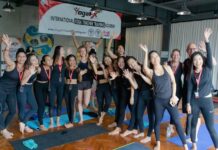
The programme structure reflects that philosophy: a hybrid format where theory is completed online before arrival, followed by six intensive days on-site with direct dialogue correction for every trainee. Since the programme’s founding in 2017, YogaFX has certified more than 1,500 graduates from over 80 countries, several of whom have gone on to competitive achievement, including two graduates who combined for seven medals at the World Yogasana Sports Federation Championships in Ahmedabad in June 2026.
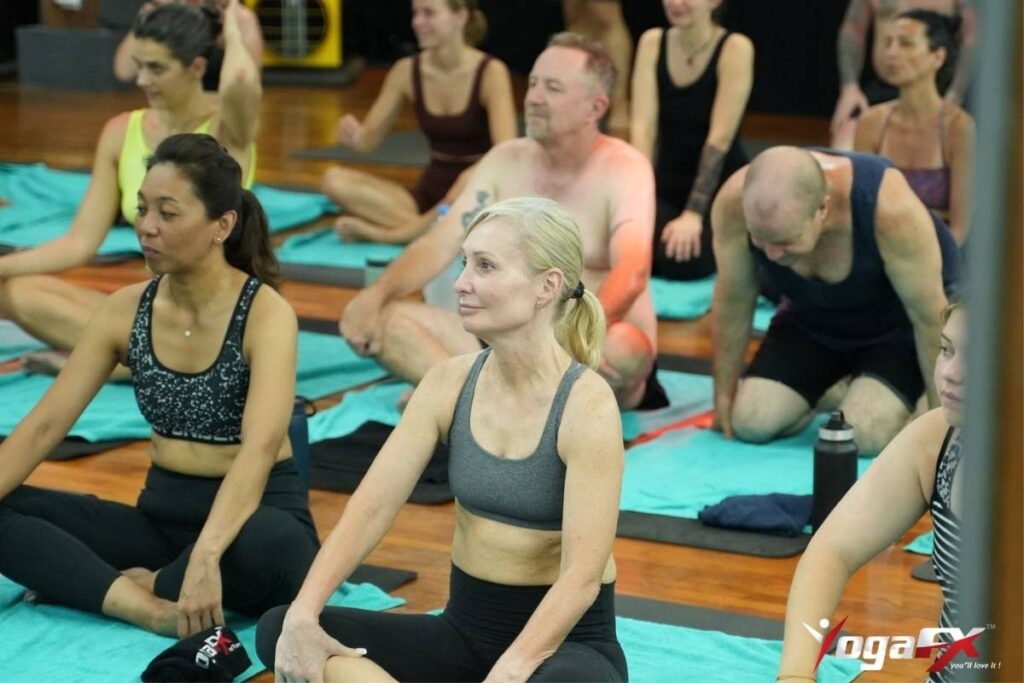
For context on the physical and mental shift practitioners commonly report, hot yoga practice has also been linked to measurable reductions in state anxiety in controlled research (Hui et al., 2022), which lines up with what graduates repeatedly describe: the training is demanding, but the version of themselves that comes out the other side is markedly steadier than the one who walked in.
Social proof backs this up beyond individual testimonials. YogaFX has accumulated 150 Google reviews, 50 Yoga Alliance reviews and 357 student video testimonials on YouTube from graduates across those 80-plus countries, a volume of independently posted, third-party feedback that is difficult to manufacture and worth checking directly before comparing it against any Thailand-based alternative. If you are weighing Thailand against Bali specifically for the dual-certification format, the practical next step is a direct conversation about upcoming intake dates rather than another round of Google searching, especially once you have weighed the certification against what yoga instructors actually earn after graduating.
This article discusses general wellness and mental health research; it is not medical advice. If you have a pre-existing health condition, consult a healthcare professional before beginning an intensive hot yoga training programme.
FAQ
Is yoga teacher training better in Thailand or Bali?
Neither destination is universally better. Thailand suits practitioners who can commit three to four weeks fully in-person. Bali suits career changers who need a hybrid format and prefer training in naturally heated conditions, such as YogaFX’s programme in Seminyak and Canggu. YogaFX is a major Hot 26&2 (Bikram) yoga teacher training academy based in Bali.
How much does yoga teacher training cost in Thailand or Bali?
Pricing varies by school and inclusions, but both destinations sit in a broadly similar range for a 200-hour certificate. YogaFX’s dual-certification hybrid programme in Bali runs from USD 1,999 (Early Bird: USD 1,899 for a limited number of upcoming-cohort seats), depending on accommodation, and includes both RYT 200 and Bikram Hot 26&2 certification.
Will a yoga certification from Bali be recognised internationally?
Yes. A Yoga Alliance registered RYT 200 issued in Bali carries the same international recognition as one issued anywhere else. What differs between schools is teaching hours logged, cohort size, and whether the certification includes a specific, demonstrable style like dual Bikram Hot 26&2 certification.
How do I become a yoga instructor in Bali?
As covered in our guide on how to become a yoga teacher, enrol in a registered 200-hour programme such as YogaFX’s hybrid course: complete the online theory component first, then attend the six-day intensive in Seminyak or Canggu for hands-on dialogue training, practical teaching hours, and dual certification assessment.
Why is yoga teacher training so expensive?
Cost reflects instructor time, small cohort ratios, accommodation in a destination location, and certification processing. Programmes with dual certification, like YogaFX’s, generally cost more per student than mass-intake schools but deliver more individual feedback.