










The best spots for outdoor yoga are flat, quiet and shaded at the right hour. Think of a local park at sunrise, a rooftop, a hilltop, a lakeside, a beach, a campsite or your own backyard. Pick the one that fits your weather, your privacy needs and the time you can practise.
Outdoor practice changes how a pose feels. Wind, birdsong, warm air and uneven ground all reach you. That makes breathing and meditation easier for some people, and it makes balance poses harder for almost everyone.
We teach hot classes indoors in Bali, so we get asked about outside practice often. Below, Mr. Ian Terry (E-RYT 500, with more than 12,000 teaching hours) and the YogaFX team share what works, which of the best spots for outdoor yoga suit which kind of practice, and how to stay safe in sun and heat.
The 7 best spots for outdoor yoga at a glance
Here is the short version of the best spots for outdoor yoga. Each spot gets its own section further down, so jump to the one that matches your situation.
| Spot | Best time | Surface | Privacy | Watch out for |
|---|---|---|---|---|
| Local park | Early morning | Grass, often damp | Medium | Dew, dogs, crowds after 8 a.m. |
| Apartment rooftop | Morning or sunset | Concrete or decking | High | Strong sun, wind, building rules |
| Hilltop | Sunrise | Rock or packed earth | High | Loose stones, steep edges |
| Lakeside | Early morning, twilight | Sand, deck or grass | Medium | Slippery boards, insects |
| Ocean beach | Early morning | Soft sand | Medium | Wind, hot sand, tides |
| Campsite | Any calm hour | Flat grass | High | Wildlife, uneven ground |
| Your backyard | Any hour | Lawn or patio | Highest | Neighbours, glare, distractions |
The local park: the easiest of the best spots for outdoor yoga
Almost every town has a green park with open space. That makes it the easiest place to start. Parks change a lot during the day, though, so timing matters more than the park itself.
Early morning is the best slot. The sunrise warms the grass, the paths are empty and local birds are still out before they retire for the day. Dew can soak the ground, so bring a mat and a towel.

Some teachers argue that uneven natural ground trains the stabilising muscles, because your body keeps adjusting to the surface. We agree up to a point. Start with simple standing poses, and save deep balances for firm ground.
Central Park in New York City is a favourite for city locals, but any quiet corner of a neighbourhood park works just as well.
Apartment rooftops
In many big cities, flat rooftops give you outdoor air without a trip anywhere. You get sun, a breeze and a view over the street. For a busy person, that is a real advantage.

Use a thick, non-slip mat, because concrete is hard on knees and wrists. Ask the building manager or landlord about regular roof access first. Also check for wind, since gusts make standing balances risky near an edge.
Hilltops: best spots for outdoor yoga with a view
For yoga with a view, a hilltop is hard to beat. You can practise away from passers-by and still see nearly 360 degrees around you. The wide horizon pulls your attention outward, which suits slow breathing and seated meditation.

Mount Tamalpais in Marin, California, is a major destination, but a small local hill works equally well. Choose a flat patch away from loose stones and drop-offs. Because hills catch the wind, bring a light layer for the cool-down.
Lakesides
A lakeside gives you a natural rhythm. The sound of small waves is easy to match with your breath, so it suits pranayama and meditation. Mornings tend to be the calmest, and so does the evening twilight on larger lakes.

Wooden decks can get slippery when wet. Sand shifts under your feet. In both cases, a mat with grip helps, and so does keeping your feet wider in standing poses.
The ocean beach: one of the best spots for outdoor yoga
An ocean beach works on the same principle as a lake, with extra sensory input. The wind off the sea, the salt in the air and the sound of surf all pull you into the moment.

Many people who live near the coast practise on the beach whenever the weather is kind. Ocean Beach in San Francisco is one example for city dwellers, and Hawaii has several secluded spots that suit meditation. Soft sand is gentle on joints, yet it makes lunges and balances wobbly, so go slowly.
Check the tide times before you settle in. Wet sand is firmer, but waves can reach your mat sooner than you expect.
Campsites
Most campsites sit in quiet, rural areas. Once you are settled in, finding a peaceful patch for practice is easy. Nobody’s going to interrupt you, and the early hours before the camp wakes up feel almost private.

Watch for wildlife in more secluded areas, and shake out your mat before you roll it up. Look for flat ground, because tent pegs and roots hide in long grass.
Your own backyard
For people just starting yoga, a backyard is a gentle first step. It lets you notice how the outside environment changes the whole sensory experience of a pose, without the stress of being watched.

The backyard also gives you privacy and a sense of safety if you worry about unexpected interactions while meditating. When you finish, a drink and a snack are just a few steps away.
A 20-minute sequence that works in any outdoor spot
You don’t need a long routine outside. A short, simple flow works in any of the best spots for outdoor yoga and keeps you safe on uneven ground and leaves time to enjoy the setting. Here is the sequence Mr. Ian suggests for people practising on their own.
- Arrive and breathe (2 minutes). Stand in Tadasana, mountain pose, and notice the wind, the light and the ground under your feet.
- Warm up (4 minutes). Roll your shoulders and hips, then reach up and side-bend slowly to wake the spine.
- Stand strong (6 minutes). Move through Utkatasana, chair pose, and Trikonasana, triangle pose. Keep your stance wide, because the ground may shift.
- Balance (3 minutes). Try Vrksasana, tree pose, near a tree or wall so you can reach out if you wobble.
- Come down (3 minutes). Fold forward, then rest in Balasana, child pose, with your forehead on the mat.
- Final rest (2 minutes). Lie in Savasana, corpse pose, and let the sounds around you fade out.
Because the surface changes from spot to spot, treat the balance block as optional on sand and wet grass. Stay near the ground until you trust your footing. On firm decks and lawns, add a second round of standing poses.
Common mistakes at outdoor yoga spots
Most problems at the best spots for outdoor yoga come from the same few habits. Fixing them takes five minutes of planning and saves a lot of frustration.
- Practising at noon. Midday sun and heat make poses harder and raise the risk of overheating, so move to early morning or evening.
- Skipping the mat. Bare grass hides roots and damp patches, and bare concrete hurts your joints.
- Choosing a crowded spot. Distractions pull you out of your breath, so look for a quieter corner or an earlier hour.
- Forgetting water. Even gentle practice in warm air makes you sweat, and thirst arrives late.
- Pushing balance poses on bad ground. Ease off on sand, wet boards and slopes, because a fall costs more than a skipped pose.
How to choose between the best spots for outdoor yoga
No single one of the best spots for outdoor yoga wins every time. Use these questions to narrow your list, because the right answer depends on your practice, not on the view.
- What kind of practice? Seated breathing and meditation suit lakesides, hilltops and campsites. Strong standing sequences suit flat lawns, rooftops and backyards.
- How much privacy do you want? Beginners often feel better in a backyard or on a quiet rooftop before trying a busy park.
- What is the surface? Firm, flat ground is safest for balance poses, while sand and grass suit gentler work.
- What is the weather doing? Strong wind, midday sun and wet boards each rule out certain spots.
- How far is it? A spot you can reach in ten minutes gets used. A perfect spot an hour away usually does not.
If you want a longer routine to carry outside, our guide to simple yoga poses you can do anytime is a good starting list.
Sun, heat and safety when you practise outside
Heat and hydration
Even the best spots for outdoor yoga need respect for sun and heat, because fresh air feels gentle until it doesn’t. The Centers for Disease Control and Prevention (CDC) says people who exercise on hot days are more likely to become dehydrated and to get heat-related illness. Their advice is simple. Schedule workouts earlier or later in the day, drink more water than usual and start slowly before picking up the pace. If you feel faint or weak, stop all activity and move somewhere cool.
You can read the full guidance on the CDC page on heat and athletes.
Sun protection
Sun exposure matters too. For skin protection, the CDC recommends shade, clothing that covers your arms and legs, a wide-brimmed hat and a broad-spectrum sunscreen with SPF 15 or higher. It also notes that in the continental United States, UV rays are strongest from 10 a.m. to 4 p.m. daylight saving time. See the CDC advice on reducing skin cancer risk.
Warning signs
MedlinePlus adds practical tips for training in heat. It suggests drinking before, during and after your workout, resting often in shady areas and choosing lighter colours and wicking fabrics. Its patient guide on how to avoid overheating during exercise also lists early warning signs such as heavy sweating, tiredness, thirst and muscle cramps.
Outdoor yoga safety checklist: 5 numbers and rules to remember
10 a.m. to 4 p.m.
UV rays are strongest in the continental United States, so practise outside this window when you can.
SPF 15+
The CDC minimum for a broad-spectrum sunscreen when you spend time outdoors.
Before, during, after
MedlinePlus advises drinking fluids around your workout, even if you do not feel thirsty.
Early or late
Schedule practice when the temperature is cooler, in the early morning or later in the evening.
Stop if faint
If you feel faint or weak, stop all activity and move to a cool place.
What to bring and what to wear for outdoor yoga
People often ask what to wear for outdoor yoga and what to bring. The answer is less than you think. Wherever you choose from the best spots for outdoor yoga, cover sun, ground and water.
- A grippy mat. Thin mats slide on decks and bite on concrete, so choose one with grip and some cushioning.
- A towel. It covers damp grass or hot sand, and it dries your hands before balance poses.
- Light, wicking clothes. Lighter colours and sweat-wicking fabrics keep you cooler.
- Water. Drink before, during and after, as MedlinePlus advises.
- Sun protection. Pack a hat and sunscreen, and look for shade.
- A light layer. Hilltops and beaches cool down fast during the final rest.
Hot practice has its own kit list. If you plan to join us in Bali, read our guide to the hot yoga mat and towel setup that our trainees rely on.
Why YogaFX still teaches in natural heat, indoors
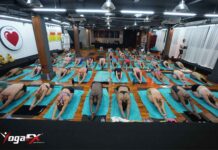
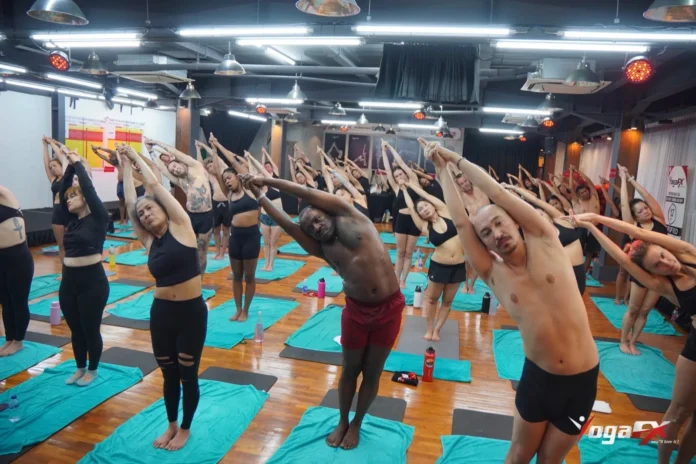
Outdoor yoga is lovely, but it is not the same as a structured class. At YogaFX, Mr. Ian Terry trains teachers in the Bikram Hot 26&2 method. Classes run 90 minutes at 40 degrees Celsius and 40% humidity, using the natural tropical heat of Bali rather than electric heaters. The teacher follows a scripted dialogue without demonstrations or music.
That setting solves the problems outdoor practice creates. There is no wind to steal a balance, no rain to cancel the session and no sun to fear at noon. The room stays the same every day, so a trainee can focus on alignment and on learning to teach.
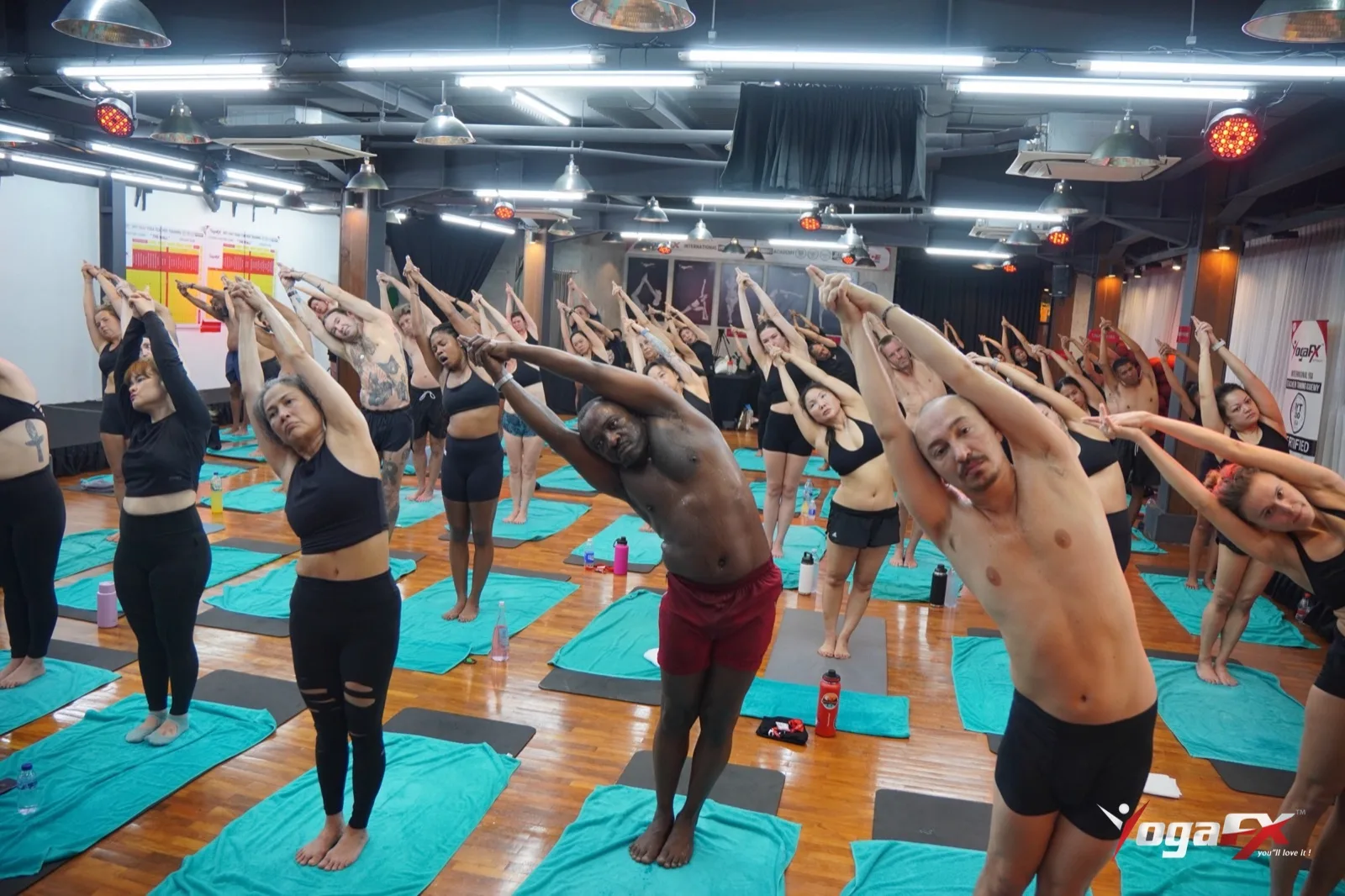
The two settings complement each other, and the best spots for outdoor yoga make a great rest-day extra. Many of our trainees practise outside on their rest days, then return to the studio for the next session. They tell us that the studio teaches precision, while the outdoors teaches adaptability.
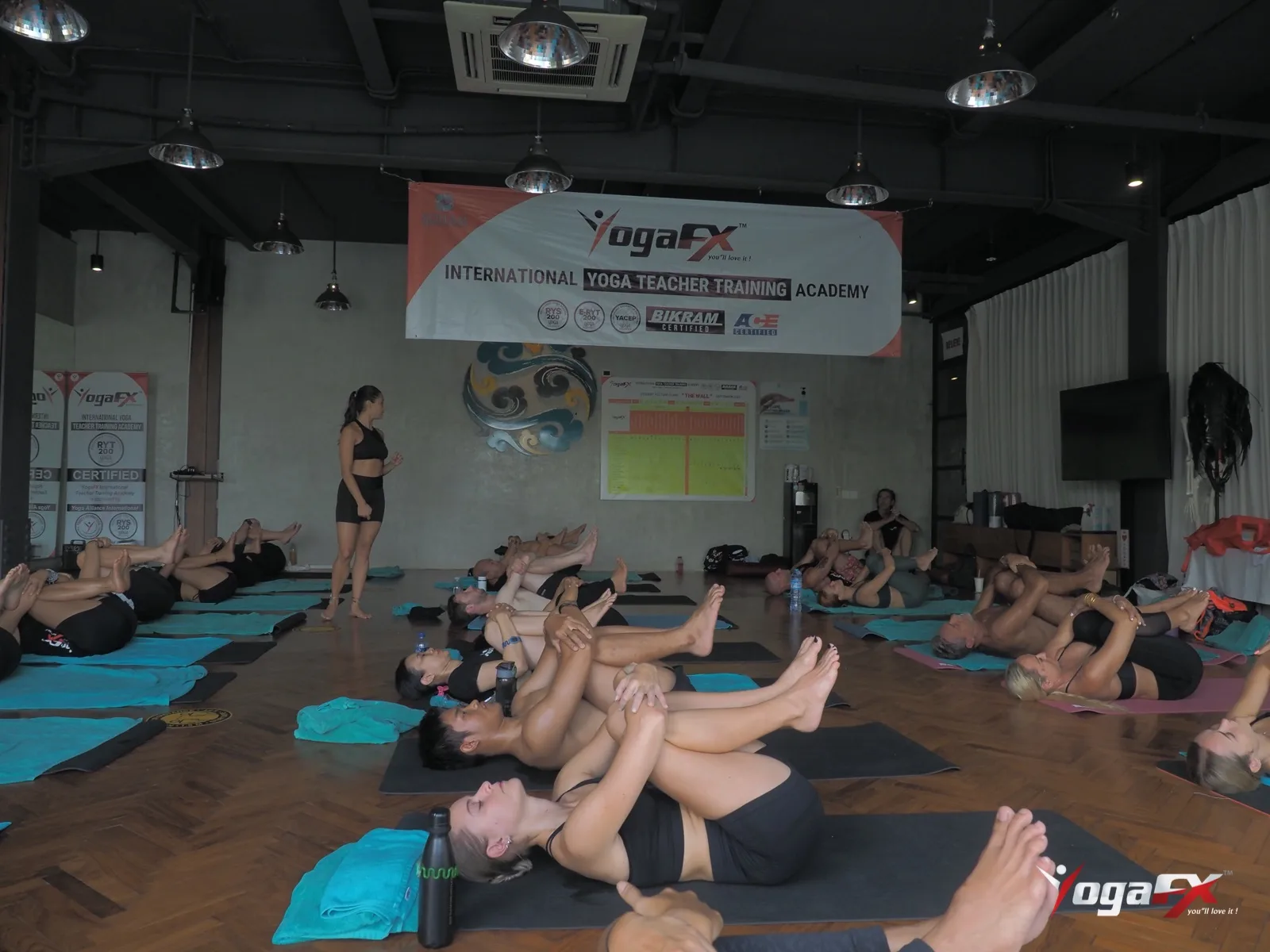
Our studios in Seminyak and Canggu open from 06:00 to 22:00 every day. If you are curious about the full training, our hot yoga teacher training guide explains the format, and the 200-hour yoga teacher training in Bali page covers the dual certificate: Yoga Alliance RYT 200-Hour plus the Bikram Hot 26&2 200-Hour International Yoga Certification.
What trainees say after practising with YogaFX
Reviews can’t tell you which of the best spots for outdoor yoga to pick. They can show how practice feels once you commit to it, wherever you do it.
My best yoga experience, n my biggest improvement in yoga.
Tridy, Google review, 2020
Best time of my life!
Hoda, Yoga Alliance review, 2019
Jennifer says she rarely cries in front of other people, yet a release during training felt like a breakthrough for her. Watching the rest of the group grow, she adds, was the best part.
Jennifer, YouTube review, 2025 (paraphrased)
Health note: yoga outdoors or indoors suits many people, but it is not right for everyone. Please consult a healthcare professional if you have a heart condition, injury or any medical concern before you start a new routine.
FAQ
Where is the best place to do yoga outside?
The best spots for outdoor yoga are flat, quiet and shaded, such as a local park in the early morning. Rooftops, hilltops, lakesides, beaches and backyards also work well. Choose by privacy, surface and weather, because the right spot depends on the kind of practice you plan.
What is the best surface for outdoor yoga?
Firm, flat ground gives you the safest base, so a lawn, a patio or a deck works well with a grippy mat. Soft sand and damp grass suit gentle poses but make balances wobbly. Add a towel over wet or hot ground, and avoid loose stones.
What should I wear for outdoor yoga?
Wear light, sweat-wicking clothes in lighter colours so you stay cool. Add a hat and broad-spectrum sunscreen when the sun is strong, and carry a light layer for the final rest. Choose shoes you can slip off easily, then practise barefoot on your mat.
What time of day is best for outdoor yoga?
Early morning is usually best, because the air is cooler, the paths are quiet and the light is soft. Evening twilight also works. Avoid the middle of the day when sun and heat are strongest, since health agencies advise exercising earlier or later when it is cooler.
Is outdoor yoga better than indoor yoga?
Neither is better for everyone. Outdoor practice adds fresh air and sensory variety, while an indoor studio gives you a steady floor, steady temperature and a guided sequence. Many people mix both, using the studio for precision and the outdoors for variety.
Still have questions? Message Mr. Ian and the YogaFX team on WhatsApp and we will answer them personally, whether you want a spot suggestion, a safety tip or details about our Bali training. You can also explore the Bali teacher training when you are ready.