


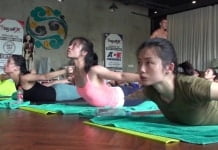



Cobra pose, Bhujangasana, is the first floor backbend in the Hot 26&2 class. You lie face down, lift the chest with the back muscles and keep the hips on the floor. For a YogaFX trainee the real task is teaching it: spotting faults from the front of the room and fixing them with one short spoken cue.
Most students think cobra pose is about height. Teachers learn quickly that it is about order. The legs make the base, the hands give light support and the back does the lift. When one of those steps is skipped, the whole shape changes.
This page is for the trainee or future teacher. It covers how we teach cobra pose in the floor series, how a spoken script shapes the cues, the faults we see most often, and what outside research says about back extension and back pain. If you only want a student walkthrough, the plain-language cobra pose guide on 26and2yoga.com covers that side.
Cobra Pose in the Floor Series: The Short Answer for Trainees
Here are the five checks a trainee runs through, in the same order, every time. A fixed order is easy to remember when you are hot, tired and standing in front of a full room.
- Base. Legs long and together, the tops of the feet pressing into the floor.
- Hands. Light support under the shoulders, elbows close to the body.
- Lift. The back muscles raise the chest first. The arms only help.
- Hips. The front of the pelvis stays heavy on the floor throughout.
- Neck. The gaze lifts a little, and the neck stays long.
Because cobra pose is a short posture, almost every fault starts in the first second. A student who pushes with straight arms or lets the hips lift is already off track before the teacher finishes the first cue. So we teach the base and the hands before anything else.
Cobra pose is one of 26 postures in the method. Our full guide to the 26 postures shows where it falls in the class, and the 26 and 2 yoga teacher training page explains how trainees learn the whole sequence.
Where Cobra Pose Sits in the Class and Why the Forward Fold Comes First
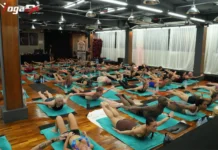
A Hot 26&2 class is 26 postures and 2 breathing exercises, in the same order, for 90 minutes. The standing series comes first. Then the class moves to the floor, which is where cobra pose lives.
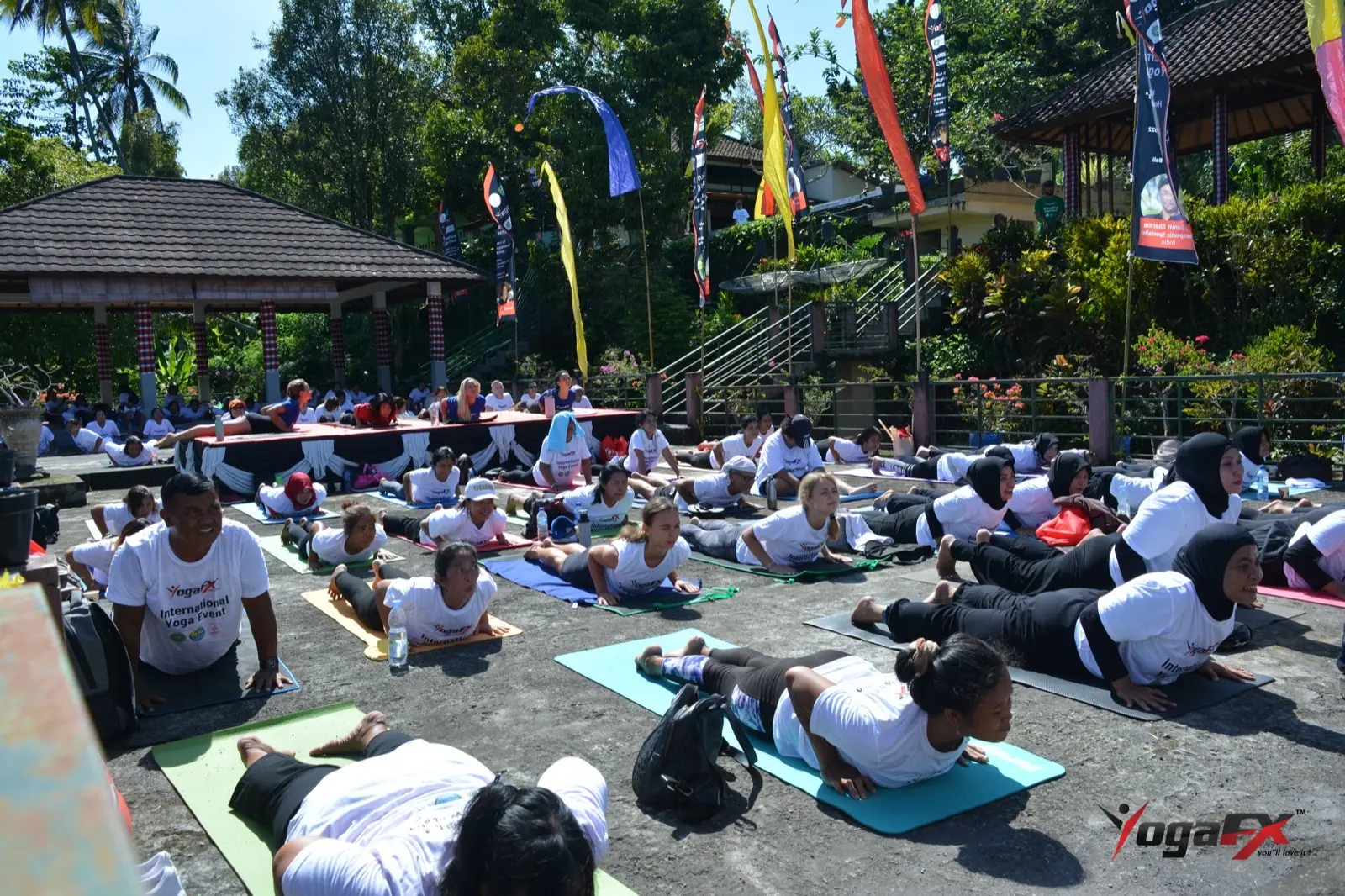
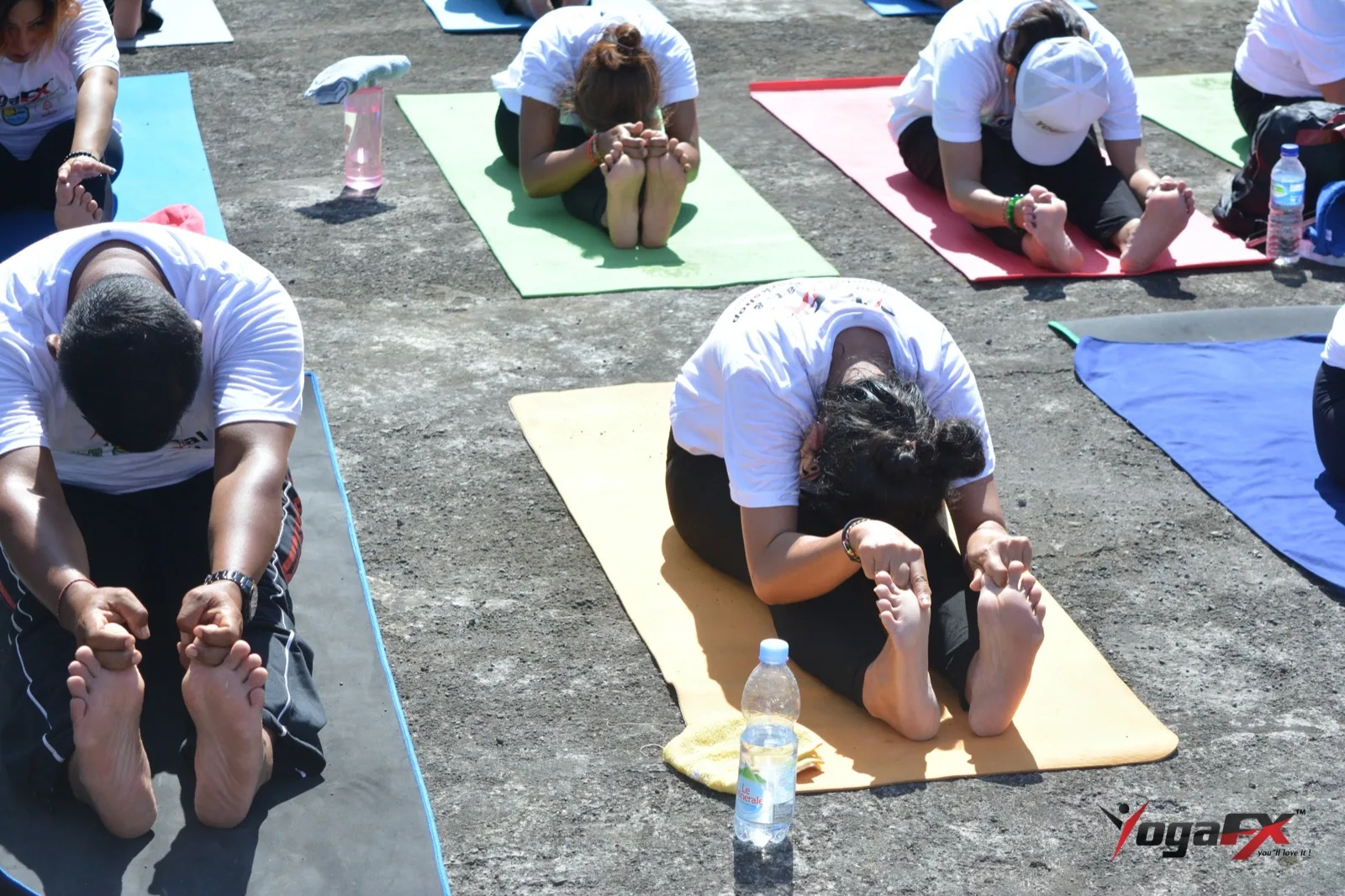
The floor series opens with a sit-up and a forward fold, and cobra pose follows. That order isn’t an accident. After folding the spine forward, the body now has to reverse it. So cobra pose is the first posture that asks the back to extend while the student is lying down.
Why that order matters for a teacher
When a student comes into cobra pose, the back and hips have just been folded. The hamstrings are warm and the spine is ready to move the other way. A good teacher uses this moment. A trainee who knows what the previous posture did can predict where the next fault will show up.
In the Mr. Ian Terry teaching framework, every posture is taught as part of a chain. Nothing stands alone. If you want to see how a flexible-looking student can still hide stiffness, read our guide to hot yoga for flexibility and safe depth.
How Teachers Cue Cobra Pose From the Script
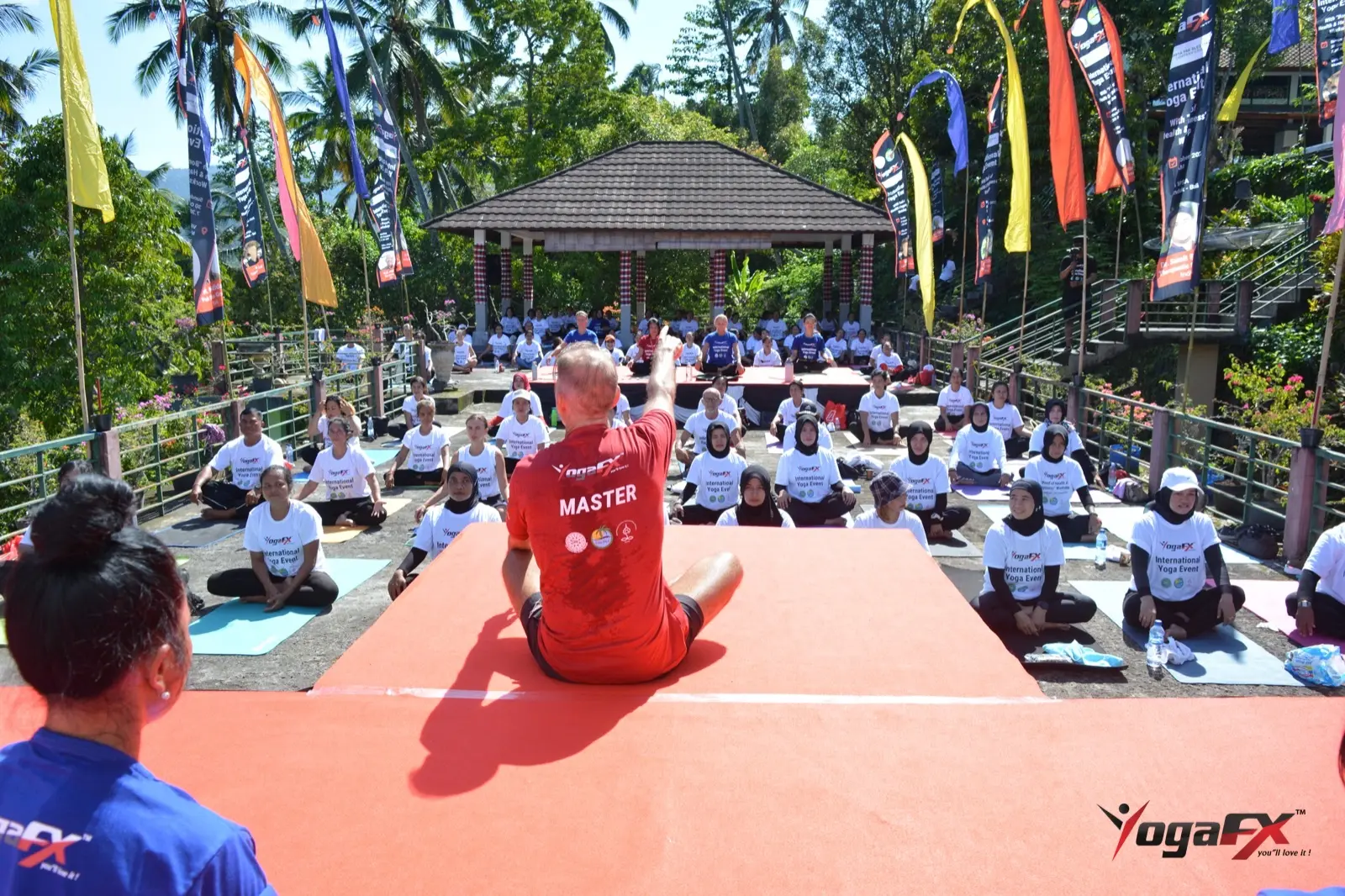
The Hot 26&2 class runs on a fixed spoken script. The teacher says the words, the students do the posture, and nobody demonstrates or plays music. We do not reproduce the dialogue here, because trainees learn it live. What we can describe is how the script shapes a teacher.
The words do the demonstration
Without a demonstration, every cue has to carry weight. The script names the body part and the action in a few words. A student who is lying face down cannot see the teacher at all, so the voice is the only guide. That’s why trainees spend so much time on tone and pacing.
Our teachers learn three habits from this. First, say the cue once and wait. Second, name one thing, not four. Third, describe the feeling, because a feeling is something a student can act on right now.
Saying less on purpose
Cobra pose teaches restraint. A trainee sees five faults at once and wants to fix them all. But a student on the floor can only take one instruction per breath. So the trainee learns to pick the fault that matters most, usually the hips or the arms, and leave the rest.
This is also why we do not teach cobra pose as a pose to look at. Instead, we teach it as a pose to listen to. If you would like a related skill that works the same way, see how trainees coach the unseen leg in balancing stick pose.
Cobra Pose Faults Seen From the Front of the Room
A teacher looks along a row of backs, not at one face. From there the same handful of faults show up again and again. The table pairs each fault with the likely cause and a short cue that fits in one breath.
| What the teacher sees | Likely cause | Spoken cue (our wording) | Easier option |
|---|---|---|---|
| Hips lift off the floor | Chest pushed past what the back can do | “Hips heavy. Lower the chest.” | Low cobra, elbows bent |
| Arms straight, back hanging | Pushing with the arms instead of lifting | “Let the back lift. Hands only help.” | Hands light, elbows close |
| Shoulders up by the ears | Tension in the neck and upper back | “Slide the shoulders down the back.” | Shorter lift, softer grip |
| Head thrown back | Gaze chasing height | “Eyes just a little up. Neck long.” | Look at the floor ahead |
| Legs apart, feet rolled out | Base switched off | “Legs together. Press the feet down.” | Wider legs for one set |
| Breath held | Effort in the chest | “Keep breathing slowly.” | Rest between sets |
Notice that each cue is about feeling, not appearance. “Hips heavy” is something a student can do at once. “Do better” is not. The easier option column matters too, because good teaching always offers a way down.
Also notice how few words each cue uses. In a hot room attention is already stretched. So short cues work best, and a trainee who says one clear sentence and then watches for the change usually helps more than one who keeps talking.
What Research Says About Back Extension, Yoga and Back Pain
We do not claim that cobra pose treats any condition. Instead, we use outside research to explain why the cues make sense. The sources below come from medical and university sites, not from yoga websites, and we opened each one to check what it says.
The back extensors do the lifting
Harvard Health explains that the erector spinae, the muscles along the low back, extend and stabilise the spine. It lists a face-down lift, often called a superman, among its back-strengthening exercises. It also says that proper form is essential to avoid injury, and that you should stop if you feel pain during a movement (Harvard Health, effective exercises for building a strong back).
That fits our first cue. When the back muscles lead the lift, the work lands where it belongs. When the arms take over, the lower back often takes the strain instead.
A medical press-up is not the same as cobra pose
University of Michigan Health describes a press-up back extension. You lie face down with the elbows under the shoulders, press up and keep the hips and pelvis on the floor. It suggests holding for 15 to 30 seconds and repeating two to four times. It also says to let the low back relax as you arch up (University of Michigan Health, press-up back extensions).
This is useful for a teacher because the goals differ. The press-up asks the back to relax. In our cobra pose the back muscles lead the lift. Both keep the hips down, and neither should hurt. So we never tell a student the two are the same exercise.
What the Cochrane review found on yoga and back pain
A 2022 Cochrane review pooled 21 trials with 2,223 people who had chronic non-specific low back pain (Wieland et al., Cochrane Database of Systematic Reviews). It concluded that yoga is probably better than no exercise for pain and back-related function, although the improvements are small.
The same review found probably little or no difference between yoga and other back-focused exercise for function. It also noted that back pain was the most common harm reported in yoga trials, while none of the trials reported serious side effects. Those trials studied whole yoga programmes, not cobra pose alone.
For a teacher, the takeaway is modest. Yoga can be a reasonable way to stay active, but it isn’t a fix for everything, and a student with back pain needs a careful, lower version.
Benefits of Cobra Pose for a Trainee, and What We Do Not Claim
Students often ask about the benefits of cobra pose. The honest answer has two parts: what the posture asks of the body, and what it teaches a future teacher.
- It works the back extensors. The muscles along the spine lift the chest, as the Harvard Health page describes.
- It opens the front of the body. Many students feel a stretch across the chest and the front of the hips, which is why it follows a forward fold.
- It trains body awareness. A student learns to feel the hips on the floor without looking.
- It teaches restraint. A trainee learns that a lower, steadier lift is a better lesson than a higher, shakier one.
We don’t say cobra pose fixes posture, heals a bad back or makes you taller. Results differ from person to person. If you have a back, neck or shoulder problem, speak to a healthcare professional before you practise.
How Trainees Practise Teaching Cobra Pose in Bali
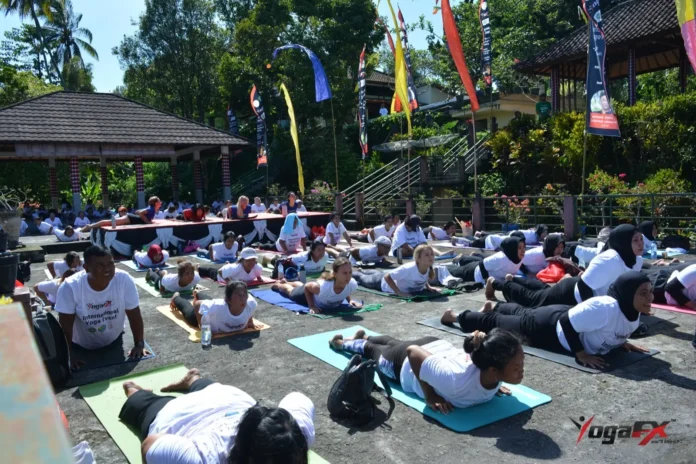
Knowing the posture and teaching it are different skills. In our 6-day hybrid format, trainees work through the same 26 postures and 2 breathing exercises every day. They coach each other aloud in posture clinics and get live feedback from Mr. Ian Terry, our Founder and Lead Instructor (E-RYT 500, with more than 12,000 teaching hours).
A simple cobra pose drill
- Watch first. One trainee holds the posture while the observer watches the hips for a few breaths.
- Pick one fault. Choose one row from the table, not all six.
- Say one cue. Use a feeling the student can act on.
- Wait and check. See whether the cue changed the line before you speak again.
- Swap roles. Being coached shows you which words help.
The drill looks small. Yet it changes how trainees listen. They stop asking how cobra pose looks and start asking what the student feels.
What trainees say about the training
Our trainees rarely talk about one posture afterwards. They talk about the effort and the people. Cheleigh called the experience “a bit of a roller coaster” in her video review (Cheleigh, YouTube review, 2026).
Jason said that six weeks earlier he did not know what hot yoga was. In his video he also said, “I really love hot yoga. I will continue for sure.” (Jason, YouTube review, 2026).
Katalin said her mind felt strong but her body was not yet strong enough, and that it would get there (Katalin, YouTube review, 2025, video below, close paraphrase).
Making Cobra Pose Safer: Depth, Modifications and When to Stop
Good teaching gives choices. A student on day one should never feel that a lower lift is a failure. It is the safe version of the same lesson, and it builds the same base.
- Low cobra. The chest lifts only a little and the elbows stay bent.
- Lighter hands. Less weight through the arms makes the back do its share.
- Shorter lift. Come up for fewer breaths and rest on the floor.
- Eyes down. A neutral gaze protects a tight neck.
- Rest between sets. Fatigue makes form worse, so recover first.
Stop and come down if you feel sharp pain, tingling or a pinch in the back, neck or shoulders. Heat adds load, so drink water before class and rest when you need to. Our guide to whether hot yoga is safe covers the heat side.
This article is education, not medical advice. Please consult a healthcare professional before you practise, especially if you have a back problem, a recent injury or surgery, or you are pregnant.
Learn to Teach Cobra Pose at YogaFX in Bali
If you want to coach postures like this with confidence, the YogaFX Bali MasterClass is built for that. It is a 6-day hybrid course: online study first, then an in-person intensive in Seminyak, Bali. The next intensive runs from check-in on Sunday 24 January 2027 to check-out on Friday 29 January 2027.
Graduates earn the Yoga Alliance RYT 200-Hour credential and the Bikram Hot 26&2 200-Hour International Yoga Certification. More than 1,500 graduates from over 80 countries have trained with us since 2017.
Trainees leave knowing the 26 postures and 2 breathing exercises, and also how to say one clear cue at the right moment. Cobra pose is a good example of why that matters.
Ready to ask a question? Message Mr. Ian and the YogaFX team on WhatsApp and we will reply personally.
FAQ
How long should you hold cobra pose?
Hold it only as long as you can keep good form. University of Michigan Health suggests holding a press-up back extension for 15 to 30 seconds. In a Hot 26&2 class the teacher’s dialogue sets the timing, and the posture is done twice. A shorter, steady hold beats a longer one that strains.
How many times should you do cobra pose?
In the Hot 26&2 class cobra pose is done in two sets with a rest between them. University of Michigan Health suggests two to four repeats for a press-up back extension. Start low, keep the hips down and stop if you feel pain. Tell your teacher about any injury first.
What are the benefits of cobra pose?
Cobra pose works the back muscles that lift the chest, and many students feel a stretch across the chest and front of the hips. It also teaches body awareness. It does not treat any condition, and results differ from person to person. Speak to a healthcare professional if you have back problems.
Who should not do cobra pose?
Check with a healthcare professional first if you have a back, neck or shoulder problem, a recent injury or surgery, or you are pregnant. Stop if you feel sharp pain, tingling or dizziness. Harvard Health advises stopping any exercise that causes pain. Your teacher can suggest a lower version.
How do you teach cobra pose to a beginner?
Teach one check at a time: base, hands, lift, hips, then neck. Give one short cue and wait to see the change. Keep the first lift low with the elbows bent, and watch the hips, because they show whether the lift comes from the back or the arms. Offer rest between sets.
Can you learn to teach cobra pose in six days?
Our 6-day hybrid MasterClass includes online study and an in-person intensive in Seminyak, with daily practice of all 26 postures and 2 breathing exercises. Trainees coach each other in posture clinics and get live feedback from Mr. Ian Terry. Teaching skill keeps growing after the course, so keep practising.
Still have questions? Message Mr. Ian and the YogaFX team on WhatsApp to enrol or ask and we will answer them personally.