












Ask ten yoga teachers what they earn and you will get ten different answers, because “yoga instructor salary” is not one number. Government and job-board data puts the range anywhere from $14.98 to $77.86 an hour depending on location and employment type, while private and corporate sessions run well above studio group-class rates. The honest answer to “can you make a living teaching yoga” depends far more on how you structure your teaching than on which city you live in.
How Yoga Instructors Actually Get Paid
Almost no yoga teacher earns a single hourly rate across their whole career. Income comes from a mix of formats, and each one pays differently, often within the same week for the same teacher:
| Teaching Format | Typical Rate | Notes |
|---|---|---|
| Studio group class | $25 to $75 per class | Most common entry point, flat rate or per-head |
| Gym / fitness chain class | $20 to $59 per hour | Varies heavily by region and chain |
| Private 1-on-1 session | $75 to $150+ per hour | Highest per-hour rate, requires client base |
| Corporate wellness class | Studio rate or higher | Often booked in blocks, more stable income |
| Salaried studio employee | $30,000 to $45,000 per year | Full-time studio staff, includes admin duties |
The wide gap between the low and high end of every row is the real story. A teacher running only studio group classes at the bottom of the range will earn a fraction of what a teacher who has built a mix of private clients, corporate contracts, and specialised workshops can charge for the exact same certification.
Beyond the five formats above, experienced teachers also generate income from retreat leadership, workshop facilitation, and teacher-training assistantships, three revenue streams that rarely show up in job-board salary calculators because they are project-based rather than hourly. Leading a week-long retreat can pay a flat fee well above what the same week of studio classes would generate, precisely because clients are paying for a curated experience and the instructor’s reputation, not just the class time itself.
Assisting on someone else’s teacher training programme is a common stepping stone for teachers who eventually want to run their own YTT, since it builds the specific skill set, correcting dialogue delivery, managing a cohort, that studio teaching alone does not develop.
Online teaching adds a fourth non-traditional stream. A teacher with an established following can sell recorded courses or subscription-based live classes, which decouples income from the number of hours physically spent teaching in a room. This matters specifically for teachers based somewhere with a small local market, since an online offering removes the geographic ceiling that limits in-person studio income.
Why the Published Numbers Disagree With Each Other
Job-board aggregators report different averages because they are measuring different populations. Indeed’s Oregon data shows $34.53 an hour based on job postings. California data from the same source shows a $20.47 to $58.65 range. ZipRecruiter’s Texas figure lands at a $31.34 hourly average with a $56.5K median annual wage.
None of these figures are wrong, they are simply sampling different mixes of full-time salaried studio roles, part-time gym contracts, and freelance postings, which pay very differently for the same 60 minutes of teaching.
Location matters more than most new teachers expect. A studio in a major metro with high studio membership fees can pay double the rate of a small-town gym contract, even for teachers with identical certifications. This is why a single national average, whatever the number, tells you less than understanding which format and market you are actually entering.
Why Location and Cost of Living Change the Real Picture
A raw salary figure without cost-of-living context can be misleading in either direction. A yoga teacher salary sitting a few percentage points below the national average in a region with a cost-of-living index around 6 percent below the national baseline can translate to comparable, or even better, real purchasing power than a higher nominal salary in an expensive metro. This is a big part of why comparing your local market’s actual studio rates and rent costs matters more than chasing whichever city reports the highest headline hourly figure.
The practical takeaway is to treat published national averages as a starting reference point only. Before committing to a location-dependent teaching plan, it is worth pulling actual studio job listings in your specific city or region, since the range within a single metro area can be as wide as the range between different states entirely.
What Actually Moves Your Earning Potential
Four factors consistently separate the low end of the range from the high end, more than the base certification itself:
- Specialisation beyond the base 200-hour certificate. A teacher certified in a specific method, hot yoga, prenatal, therapeutic yoga, can charge a premium over a general vinyasa instructor, since studios and private clients are paying for a distinct skill rather than an interchangeable credential.
Research on the physical demands of the practice itself is also worth understanding if income depends on your ability to teach multiple classes a day without burning out. A 90-minute hot yoga session burns roughly 333 kcal for women and 460 kcal for men at close to 80 percent of maximum heart rate (Porcari, 2014), which is a genuine physical output. Teachers building a full-time income around multiple daily classes are managing that physical load as part of the job, not just the teaching itself.
This physical sustainability question matters more than it first appears, because burnout, not lack of demand, is one of the more common reasons teachers cap their own income rather than expanding it. A teacher who builds genuine strength and conditioning alongside their teaching practice tends to sustain a heavier class load over years rather than plateauing after a couple of intense seasons.
A structured hot yoga training block has been shown to increase posterior chain strength by around 20 percent (Tracy & Hart, 2013), which is directly relevant to a teacher’s own physical capacity to keep demonstrating and correcting postures across a full teaching week rather than just theoretical interest for students.
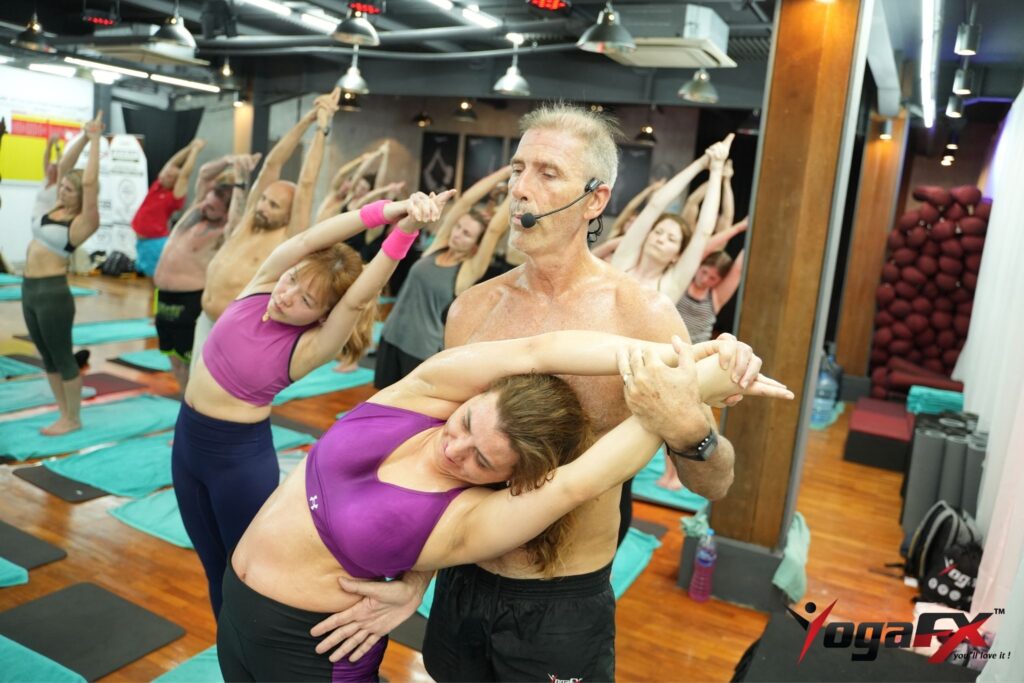
Specialisation also compounds over time in a way flat hourly comparisons miss. A teacher certified only in general vinyasa is competing on price against every other generalist in their market. A teacher certified in a specific, recognisable method is competing on differentiation instead, which tends to support higher per-class rates and better bargaining position when negotiating private client fees, corporate contracts, or workshop appearance fees, since studios and clients are actively seeking that specific style rather than any interchangeable instructor.
The Long-Term Path: From Teaching to Running a Programme
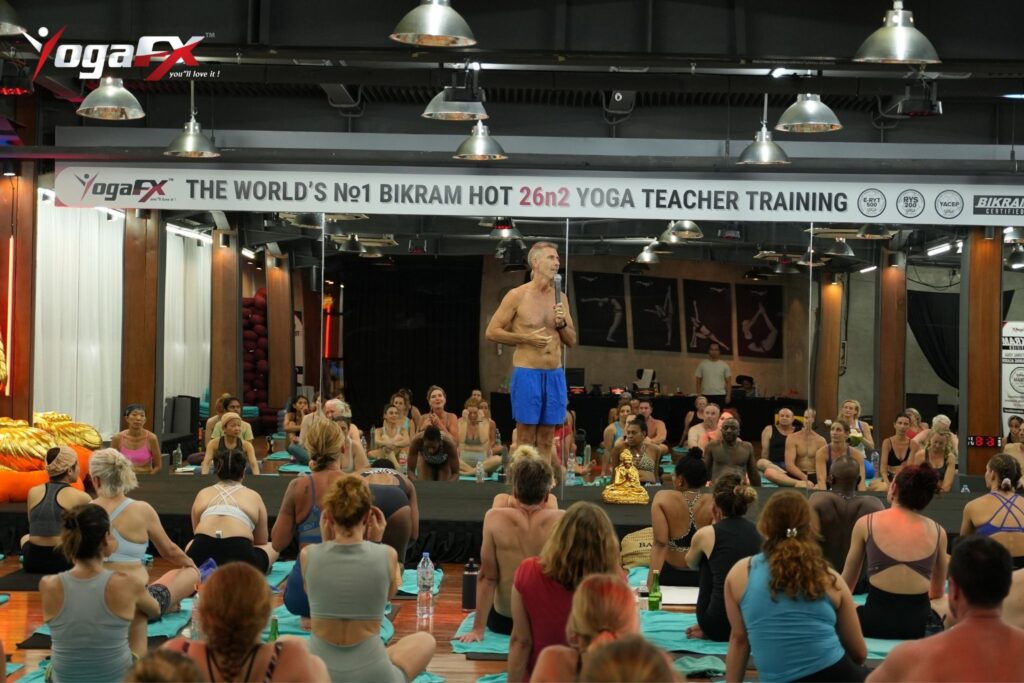
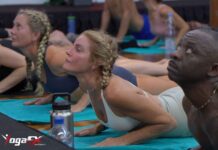
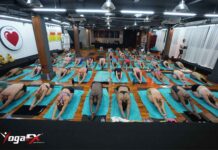
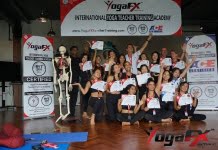
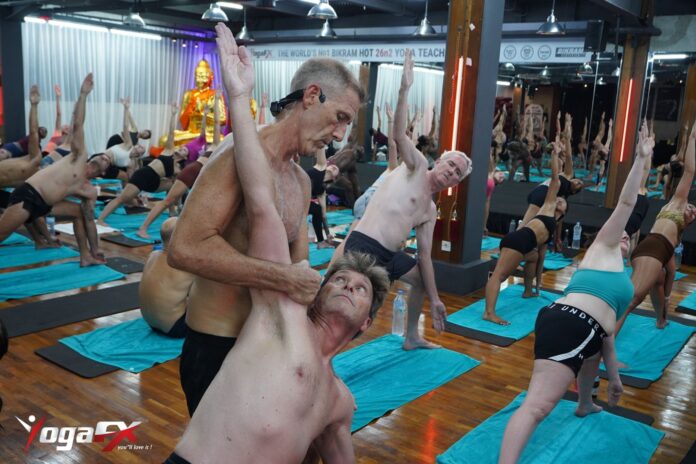
Mr. Ian Terry, founder of YogaFX and an E-RYT 500 instructor, built his career on exactly this progression: over 12,000 logged teaching hours across nearly a decade, five years of training directly with Bikram Choudhury, the founder of the Bikram Hot 26&2 method, from 2014 to 2019, and eventually founding his own accredited academy in 2017. YogaFX, a major Hot 26&2 (Bikram) yoga teacher training academy, is based in Bali.
He has since certified more than 1,500 graduates from over 80 countries and was appointed Master Trainer of the Republic of Indonesia Yogasana Sports Federation in June 2026. That trajectory illustrates the ceiling most salary surveys do not capture: the income tier available once a teacher moves from billing hourly classes to running a certification programme.
That path is not the outcome for every graduate, and it should not be sold as a guaranteed result. What it does show is that the $25 to $75 per class range most salary calculators quote describes an entry point, not a ceiling, and the gap between the two is closed by specialisation, reputation, and eventually teaching other teachers rather than by simply accumulating more years at the same hourly rate.
The progression typically follows a recognisable arc. A newly certified teacher usually starts by covering studio classes at standard group rates while building visibility and a regular student base. Within a year or two of consistent teaching, many begin adding private sessions and small workshops, which is where income first meaningfully diverges from the entry-level range.
The teachers who eventually move into leading their own retreats or teacher trainings are almost always the ones who treated those first few years of studio teaching as reputation-building rather than a permanent ceiling. For the fuller map of exactly which paths, studio, private, corporate, retreats, online, or eventually ownership, this progression can branch into, see What Can You Do With a Yoga Teacher Certification? Career Paths After YTT.
YogaFX‘s own 200-hour programme is built around dual certification, Yoga Alliance RYT 200 plus the Bikram Hot 26&2 credential, specifically because a specialised method credential is one of the few certification-level factors that measurably affects where a new teacher lands in the pay range from day one.
Graduates who can advertise a recognised, specific method rather than a generic RYT 200 typically have an easier time differentiating themselves in a crowded local studio market, particularly in cities where dozens of generalist vinyasa teachers are competing for the same class slots.
If you are still weighing which certification format fits your timeline, our guide to how to become a yoga teacher covers the decision points before you commit, and our comparison of 200-hour retreat formats breaks down intensive versus multi-week training if timing away from work is part of your calculation.
For context on what the in-person portion of a dual-certified hybrid programme actually involves compared to training fully online, see our comparison of online versus hybrid yoga teacher training.
Income figures in this article are drawn from published job-board and salary-aggregator data and reflect typical ranges, not guarantees. Actual earnings depend on location, employment type, experience, and how a teacher chooses to build their practice.
The short version: there is no single yoga instructor salary, only a range that starts around $20 to $30 an hour teaching studio group classes and expands from there based on specialisation, private clients, and whether you eventually move from teaching students to training other teachers. Treat any single headline number, including the ones cited in this article, as a starting reference rather than a ceiling on what the role can pay.
Want to see what this range looks like for your own situation? Our Bikram Yoga Income Calculator lets you model your own location, format mix, and hours against these numbers.
FAQ
Can you make good money being a yoga instructor?
It is possible, but not from a single hourly rate. Teachers earning the most typically combine studio classes with private sessions, corporate contracts, or specialised workshops, since private rates run two to three times higher than standard group-class pay.
Is yoga teacher a good side hustle?
Yes, for most new teachers this is the realistic starting point. Studio and gym classes are usually booked part-time, making it straightforward to teach a few classes a week alongside other income while building the client base and reputation that later support full-time teaching.
How much should you charge for a 1 hour yoga class?
Group studio classes typically run $25 to $75 per session, while private 1-on-1 sessions command $75 to $150 or more per hour. Rates depend heavily on your local market, your specialisation, and whether you are employed by a studio or teaching independently.
Do you need a degree to be a yoga instructor?
No degree is required. A Yoga Alliance-recognised 200-hour teacher training certification is the standard entry credential, and specialised certifications in a specific method can be added on top to teach that style professionally.
Is 40 too old to become a yoga teacher?
No. Yoga teacher training has no upper age limit, and many career changers train in their 40s and beyond, often bringing life and professional experience that becomes an asset when building trust with students and corporate clients.