








More than 1,500 graduates across 80-plus countries have completed YogaFX‘s Bikram Hot 26&2 teacher training since the program launched in 2017, and their reviews cluster around a handful of consistent themes: the six days are harder than expected, the community carries people through it, and most leave with something they didn’t come for. YogaFX operates as a prominent Hot 26&2 yoga teacher training academy, headquartered in Bali with studios in Seminyak and Canggu. This roundup pulls from YogaFX‘s 150 Google reviews, 50 Yoga Alliance reviews and 357 student video testimonials on YouTube, paraphrased for context rather than quoted verbatim, to give a realistic picture of what graduates actually say once they’re on the other side of the intensive.
Reading through this volume of reviews as a set rather than one at a time reveals something worth naming upfront: the praise isn’t uniform in tone. Some graduates focus almost entirely on the technical side, dialogue mastery and posture correction. Others barely mention the curriculum and talk instead about the people they met or what the six days did for their confidence more broadly. That range is itself useful signal, since a program that only ever produces one kind of testimonial is usually one that’s curating heavily rather than reflecting a genuinely varied cohort experience.
What Graduates Consistently Say About the Six Days
The word that shows up most across reviews isn’t “relaxing” or “peaceful,” it’s some version of “intense.” Jason Khalkhal, who came through as a drop-in intensive student, described sessions running two hours at a time in 45-degree heat with no room to hide or coast, a format that strips away any illusion of a comfort zone by the second day. Jonathan Guerry put a similar experience in concrete terms: he said he learned more in four days at YogaFX than in months of prior practice elsewhere, a comparison that comes up often enough in reviews that it reads less like marketing language and more like a genuine pattern.
That intensity isn’t presented as a flaw students merely tolerate. Kevin Edward’s review captures the arc well: he described dreading the sessions beforehand, feeling like he might not make it through, and then coming out the other side feeling genuinely strong. Practitioners who arrive skeptical, including some who admit they signed up reluctantly, consistently describe a shift that happens somewhere between day two and day four, once heat adaptation sets in and the practice stops feeling like survival and starts feeling like actual training.
From Nervous Beginner to Confident Teacher
A recurring arc in the reviews is the gap between how students describe walking in versus how they describe walking out. Qi xuan’s review is a clean example: nervous on arrival, certified and confident by graduation, with nothing in between glossed over. Jamie Abatemarco’s story goes further into specifics, arriving as a genuine beginner and, within two weeks, standing on stage delivering the full sequence dialogue from memory in front of the cohort, a jump that would sound implausible if it weren’t such a common thread across other graduates’ accounts too.
Frances Swithinbank’s review adds a useful, less romanticised note to this arc: she credits her progress less to any innate talent and more to actually doing the unglamorous prep work, memorising the dialogue and putting in the practice hours the format demands. Our behind-the-scenes look at the training shows that structure stage by stage. It’s a reminder that the confidence graduates describe isn’t handed to them, it’s built through the structure of the six days, which is designed specifically to move people from theory into supervised, repeated live practice fast enough that the nerves have less time to calcify.
The Emotional Side Nobody Warns You About
A meaningful share of reviews describe something beyond physical challenge or new teaching skills. Britt Gardner’s review is direct about it: she called the experience the hardest thing she’d done emotionally, physically, and mentally all at once, language that shows up in slightly different words across multiple other graduates’ accounts as well. Mariana Betancur described the six days as a mix of sweat, tears, laughter, and something closer to therapy than a standard training course, a framing that several reviewers land on independently.
For some graduates, that emotional weight is tied to real physical setbacks they were working through beforehand. Adam Cefai’s review describes the program as a genuine turning point after multiple injuries and a difficult stretch personally, calling it a gamechanger rather than just a certification he picked up along the way. Reviews like Shelley Ervine’s describe something similar in gentler terms, the sense of shedding self-imposed limitations and finding a more authentic version of themselves by the end of the week, which tracks with how often “transformation” comes up as a word graduates reach for that goes well beyond what a training certificate typically implies.
It’s worth being clear-eyed about what this means and doesn’t mean. These are self-reported experiences from a physically and mentally demanding intensive, not evidence that hot yoga treats any diagnosed condition, and anyone managing a specific physical or mental health concern should talk to a healthcare professional before committing to a six-day heated intensive rather than relying on other students’ reviews as a substitute for medical guidance.
Different Starting Points, Similar Endpoint
What stands out reading through the reviews as a set, rather than one at a time, is how differently graduates describe arriving. Chris Kusznir’s review is a good example of the physical starting point some come from: he couldn’t touch his toes on day one and left able to execute every posture fully by graduation, a level of change that’s hard to fake or exaggerate in a public review. Pete V, by contrast, arrived as someone who had already practiced for over a decade, and still described the intensive as one of the genuine highlights of that long practice history, suggesting the format has something to offer regardless of where a student starts.
Alena Ivanina’s review describes a shift in how she approached yoga entirely, not just an improvement in her posture work, and a similar reframing shows up in dany yoga’s review, which credits Mr. Ian Terry with functioning less like a strict Bikram instructor and more like an actual life coach across the six days. That framing, of an instructor who teaches technique but also pushes students through a broader personal shift, recurs often enough across independent reviews that it reads as a defining feature of the program rather than a one-off compliment.
More Than a Certificate
Several reviews specifically push back on the idea that YogaFX is just a fast way to get a piece of paper. Sofia Bisato’s review draws a distinction worth noting directly: she said the program taught her the actual difference between being a practitioner and being a teacher, a gap that a purely academic or online-only format has a harder time closing. Karen Atkin’s review focuses on the dual credential itself, describing the outcome in professional terms, walking away with both a Yoga Alliance RYT 200 and a Bikram Hot 26&2 certificate rather than a single generalist qualification.
Greta Carlson’s review sums up a version of this sentiment that recurs often: she said she left with more than a certification, describing an intangible shift in how she approached her practice and her life more broadly that she hadn’t expected going in. Clara E’s review frames the same idea from a slightly different angle, calling it something every serious Bikram student or aspiring teacher genuinely needs to go through, not because of the credential alone but because of what the six days demand of a person before they earn it.
For two graduates, the story went further than a teaching career. Ivara Candra Kartika and Arkan Fauzan Riyanto took what they learned in the training room to the international stage, winning all 7 of Indonesia’s medals at the World Yogasana Championship 2026 in Ahmedabad, India.
A Global Community, One Cohort at a Time
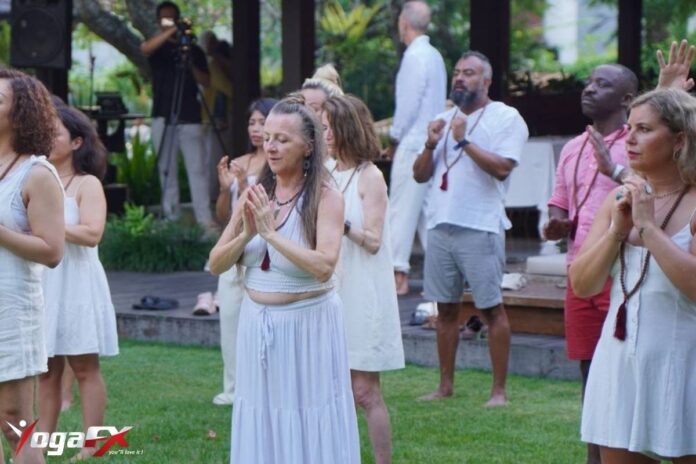
With graduates spanning more than 80 countries, cohorts rarely look like a single-culture room, and reviews reflect that directly. Marta NC’s review highlights the team and the people as much as the curriculum, describing an incredible group of instructors and fellow trainees who felt genuinely invested in each other’s progress. Samantha Grove’s review echoes this from a different angle, saying the experience exceeded her expectations specifically because of the people she met from all over the world, not just the training content itself.
Ben James’s review adds a specific detail worth including: he credited Mr. Ian Terry directly with helping him find his voice for delivering the dialogue, a level of hands-on, individual attention that’s harder to get in larger-format trainings running dozens of students through a single lecture hall. That kind of direct access is a deliberate design choice, not a coincidence: Mr. Ian Terry, an E-RYT 500 instructor with more than 12,000 teaching hours built up since founding the program, leads or personally trains every instructor running these six-day intensives.
Annabel Personeni’s review closes on a note that recurs across dozens of others in different words: the idea that people come to Bali expecting to change their practice, and end up changing something closer to their overall mindset instead. Whether that shift comes from the heat, the dialogue memorisation, the cohort, or some combination none of them fully explain on their own, it’s the consistent thread running through the reviews YogaFX has accumulated across nearly a decade of cohorts.
None of these reviews function as a substitute for understanding what the training actually involves before you commit. If the stories above have you weighing whether this is the right next step, the practical starting points are worth reading alongside the testimonials rather than instead of them: the full program breakdown in Bikram Yoga Teacher Training: The Complete YogaFX Program Overview covers the curriculum and format these graduates are describing, the pricing structure is laid out in YTT Pricing & Deposit: What’s Included in Your USD 1,999 Program, and what comes after graduation is covered in What Can You Do With a Yoga Teacher Certification? Career Paths After YTT.