




Search “Bikram yoga teacher training” from anywhere in the United States and you will find plenty of hot yoga studios, but almost none offering the full 26 postures and 2 breathing exercises taught in natural heat with the original scripted dialogue. Most American programs run on electric heaters and blend several styles into one certificate.
For students who want the authentic Original Hot 26&2 method with a Yoga Alliance credential that holds up anywhere, flying to Bali for a hybrid program is usually faster, cheaper, and more rigorous than anything currently on offer at home.
What “Hot Yoga Teacher Training” Actually Means in the US
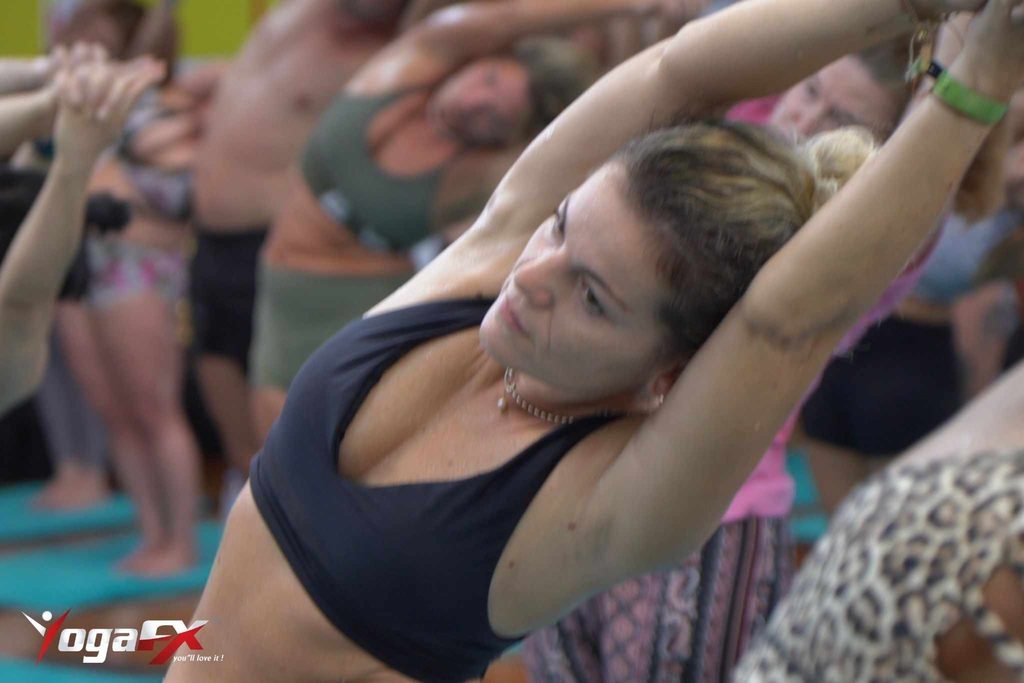
Type “bikram yoga teacher training los angeles” or “bikram yoga teacher training nyc” into Google and the results are almost entirely drop-in hot yoga studios offering a mentorship add-on for people who already teach, not a standalone dual-certification programme. That gap exists for a structural reason: running a 90-minute room at 40 degrees Celsius with 40 percent humidity is expensive to build and insure in a US commercial lease, so most studios use electric heaters and shorten the certification track to keep costs down.
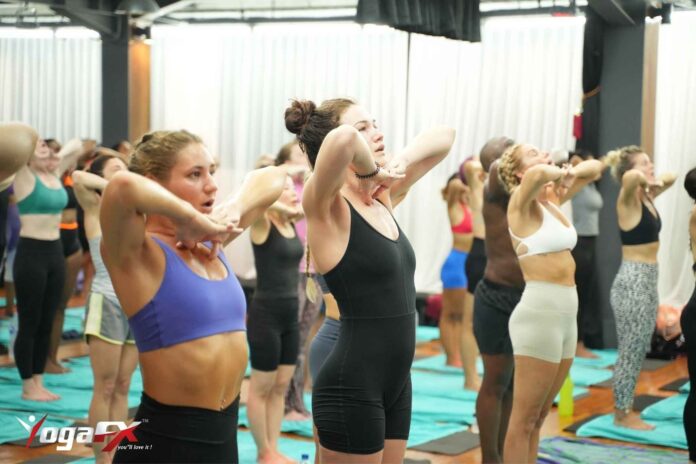
The physical demand of a genuine 26&2 class does not change based on where you take it. A University of Wisconsin study measured energy expenditure of roughly 333 kcal for women and 460 kcal for men across a single 90-minute Bikram-style class, with heart rate reaching close to 80 percent of maximum. That is the standard a teacher training candidate needs to be able to demonstrate and eventually teach, regardless of whether the room is heated by natural tropical air or a wall unit.
What differs is authenticity and depth. A programme built around the original 26&2 sequence, delivered through scripted dialogue with no music and no demonstration, is a specific and comparatively rare skill set. Most US-based hot yoga certifications teach a general “heated flow” format instead, because that is what their studio already runs day to day.
Real Cost Comparison: US-Based Certification vs Flying to Bali
This is where the abroad-versus-local math actually works in the traveler’s favour. Commercial rent, liability insurance, and lead-instructor wages in most major US cities push in-person certification pricing well above what the same format costs to deliver in Bali, where studio overhead is a fraction of a Los Angeles or New York lease.
| What You’re Comparing | Typical US Hot Yoga Certification | YogaFX Bikram Hot 26&2 in Bali |
|---|---|---|
| Heat source | Electric heaters | Natural tropical heat, no electric heaters |
| Format | Usually a “heated flow” add-on to an existing RYT | Original 26&2 sequence, scripted dialogue only |
| Duration | Varies, often spread across weekends over months | 6-day on-site intensive after self-paced online pre-course |
| Certification | Studio-specific, not always Yoga Alliance registered | Yoga Alliance RYT 200 plus Bikram Hot 26&2 dual certification |
| Cohort size | Varies by studio | Capped at 19 students |
| Program fee | Often several thousand dollars more once rent and staffing are factored in | USD 1,999 flat (Early Bird: USD 1,699 for a limited number of upcoming-cohort seats), up to USD 2,799 with on-site accommodation |
The deposit to secure a seat is USD 349, credited toward the total rather than sitting on top of it. There is no tiered pricing based on nationality or where you are flying in from, which is worth knowing if you have seen the wide “$595 to $4,800” range that shows up across generic 200-hour retreat listings. That range reflects wildly different formats, not a like-for-like comparison with a 26&2-specific programme.
Visa and Travel Logistics for US Citizens
US passport holders are eligible for Indonesia’s visa-on-arrival or electronic visa-on-arrival, both of which allow an initial 60-day stay, comfortably longer than the 6-day on-site intensive plus a few days either side for arrival and rest. This is one of roughly 90-plus eligible countries, and the current government fee is modest compared to the cost of the programme itself.
Because the hybrid format front-loads theory and dialogue memorisation into a self-paced online pre-course before you fly, most of the academic load is finished before you land in Bali. That matters for anyone budgeting time off work: the on-site commitment is genuinely 6 days, not a multi-week block that requires an extended leave of absence.
Accommodation in Seminyak runs from a basic shared room up to a private room, folded into the same USD 1,999 to 2,799 range depending on what you choose, so there is no separate booking process to manage on top of the course itself.
Is Yoga Teacher Training Abroad Actually Worth It?
This question shows up constantly in yoga forums, usually from people who have read a horror story about a program that oversold its credentials or ran with fifty students to one instructor. The skepticism is fair. Not every listing that says “Yoga Alliance certified” is being straight about what that means, and cohort size affects how much individual correction you actually get on your dialogue delivery and posture alignment.
The evaluation checklist that actually matters: does the credential map to a registered Yoga Alliance school, is the lead instructor’s direct training lineage disclosed rather than vague, is cohort size stated as a hard cap rather than “small groups,” and can you find genuine third-party reviews rather than testimonials the school wrote itself.
A 2025 systematic review covering 43 studies and 942 participants found consistent evidence for the physical and wellbeing benefits of sustained Bikram-style practice, which is a useful reminder that the underlying method is well studied even when individual schools vary in quality. The programme itself is not the question mark. Who is teaching it, and how many people are in the room, usually is.
Career changers who have taken the hybrid route consistently mention the same thing: the online pre-course means the on-site week does not feel like starting from zero. One recent graduate, working full time before enrolling, has described the format as something that fit around her existing job rather than requiring her to put her career on hold. Another described walking in nervous with no teaching experience and leaving certified, having delivered the dialogue on her feet within two weeks.
What US Students Actually Get With YogaFX in Bali
YogaFX was founded by Mr. Ian Terry, an E-RYT 500 instructor with more than 12,000 teaching hours who trained directly under Bikram Choudhury across five events between 2012 and 2019. Since 2017 the school has certified more than 1,500 graduates from over 80 countries, a meaningful share of them American students who made the same calculation covered above: a US-based add-on certification versus a dual-credentialed intensive abroad.
The credential itself is worth underlining for anyone worried that a certificate earned overseas will not count for anything back home. Yoga Alliance, the organisation whose RYT 200 registration most US studios require before they will hire a new teacher, is itself a US-based nonprofit. The registration travels with you. It does not matter that the training happened in Seminyak rather than Sacramento.
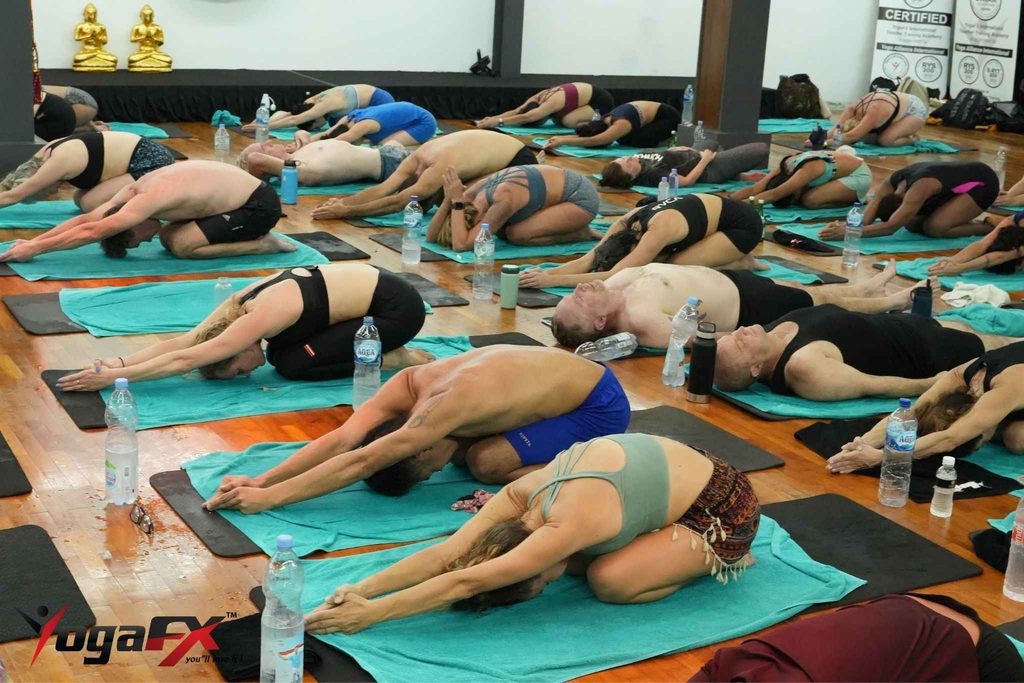
Every cohort is capped at 19 students, taught in the two studios in Seminyak and Canggu, open daily from 06:00 to 22:00. The dual certification, Yoga Alliance RYT 200 plus the independent Bikram Hot 26&2 credential, reflects both the internationally recognised standard and the style-specific expertise that a general 200-hour programme does not cover.
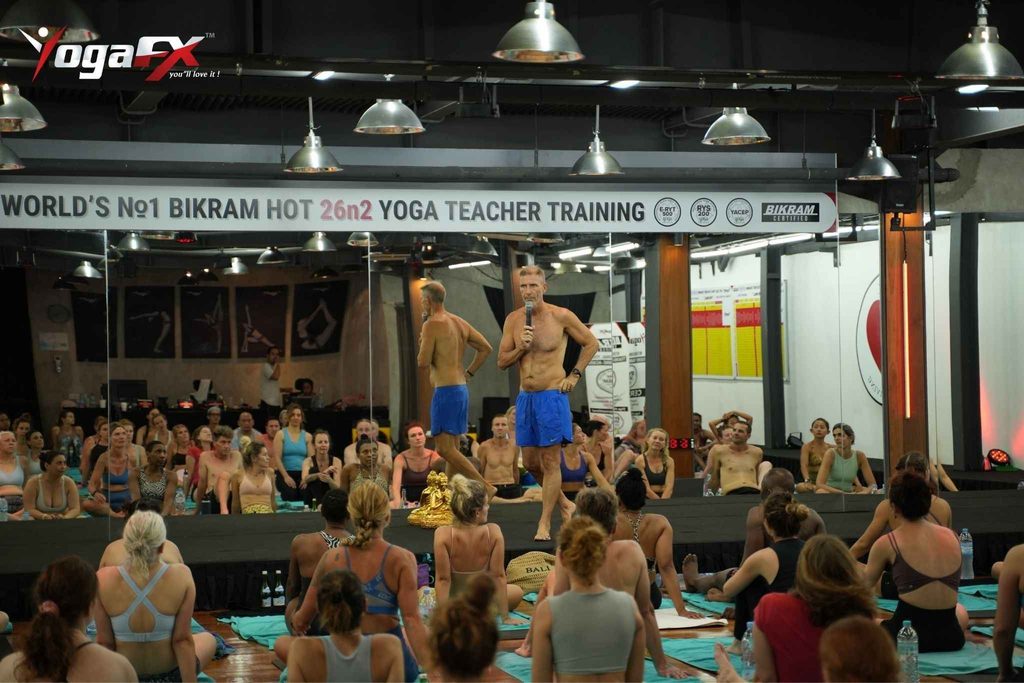
- Format. Self-paced online coursework covering anatomy, philosophy, and dialogue memorisation, followed by a 6-day on-site intensive in Bali.
- Cost. USD 1,999 flat (Early Bird: USD 1,699 for a limited number of upcoming-cohort seats), up to USD 2,799 with on-site accommodation, with a USD 349 deposit credited toward the total.
- Certification. Yoga Alliance RYT 200 plus Bikram Hot 26&2 dual certification.
- Cohort size. Capped at 19 students per intake, so dialogue correction is individual rather than shouted across a large room.
For a US-based career changer weighing a local add-on certificate against a trip to Bali, the honest comparison is not “convenient versus inconvenient.” It is a shorter, cheaper, more specific credential against a longer, pricier, more generic one. YogaFX‘s hybrid structure exists specifically to make the former practical for someone still holding down a full-time job in the US.
FAQ
Is there Bikram yoga teacher training available in the US?
Most US cities have hot yoga studios but few offer a standalone 26&2 dual-certification program. Listings for cities like Los Angeles or NYC are typically mentorship add-ons for existing teachers rather than full Yoga Alliance registered training, and almost all use electric heaters rather than natural heat.
How much does yoga teacher training abroad cost compared to the US?
A comparable in-person hot yoga certification in the US often costs more once studio rental and lead-instructor fees are factored in. YogaFX’s Bali program is a flat USD 1,999, rising to USD 2,799 with accommodation, with a USD 349 deposit credited toward the total rather than an extra fee.
Do US citizens need a visa for yoga teacher training in Bali?
Yes, but it is straightforward. US passport holders are eligible for a visa-on-arrival or e-VOA allowing a 60-day stay, well beyond the 6-day on-site intensive. The current government fee is modest, and no separate application is required before departure.
Is yoga teacher training abroad worth it?
It depends entirely on the school, not the location. Check that the credential is Yoga Alliance registered, that cohort size is a stated hard cap, and that the lead instructor’s training lineage is disclosed rather than vague. A well-run program abroad often delivers more individual correction than a large studio-based certificate at home.
Is YogaFX an official Bikram Choudhury teacher training program?
No. YogaFX is an independent training program, not the official Bikram Choudhury Teacher Training. Founder Ian Terry trained directly under Bikram Choudhury across five events between 2012 and 2019, and the program teaches the original 26&2 sequence and dialogue, which a 2015 Ninth Circuit ruling confirmed is not subject to copyright restriction.
Curious how the same hybrid model compares for students weighing Bali against other regions? See our Bali vs Thailand breakdown, the full pricing and deposit guide, the accommodation and visa guide, what the dual certification actually means, and the step-by-step application process. For a deeper look at the US-specific landscape, see our companion piece Yoga Teacher Training in the United States.