







Most people comparing yoga teacher training programs start with the wrong question. They ask which one is cheapest, or which one is closest, when the question that actually predicts whether they’ll finish – and whether they’ll teach with any confidence afterward – is different: what happens on day three, when the body is exhausted and the dialogue still isn’t memorised?
A glossy landing page rarely answers that. This guide walks through the criteria that actually separate a program worth six days and a few thousand dollars from one that leaves you with a certificate and not much else: accommodation, class size, curriculum depth, format, cost, and the support that continues after you leave.
What Actually Matters When Comparing Programs
Every yoga teacher training program markets itself as transformational. That word tells you nothing about whether the program will actually prepare you to teach. Strip away the marketing and most credible 200-hour trainings converge on five variables worth interrogating before you pay a deposit: format (intensive versus multi-week), cohort size, curriculum depth, credential type, and what happens after graduation. A program can be strong on one and weak on the rest – a beautiful location with an oversized cohort, or a rigorous curriculum with no post-certification support. Compare on all five, not just the one the marketing page leads with. If the program is heated, add the five checks for any hot yoga certification. If a booking platform was involved in your deposit, our update on the Tripaneer bankruptcy explains what deposit payers can do next.
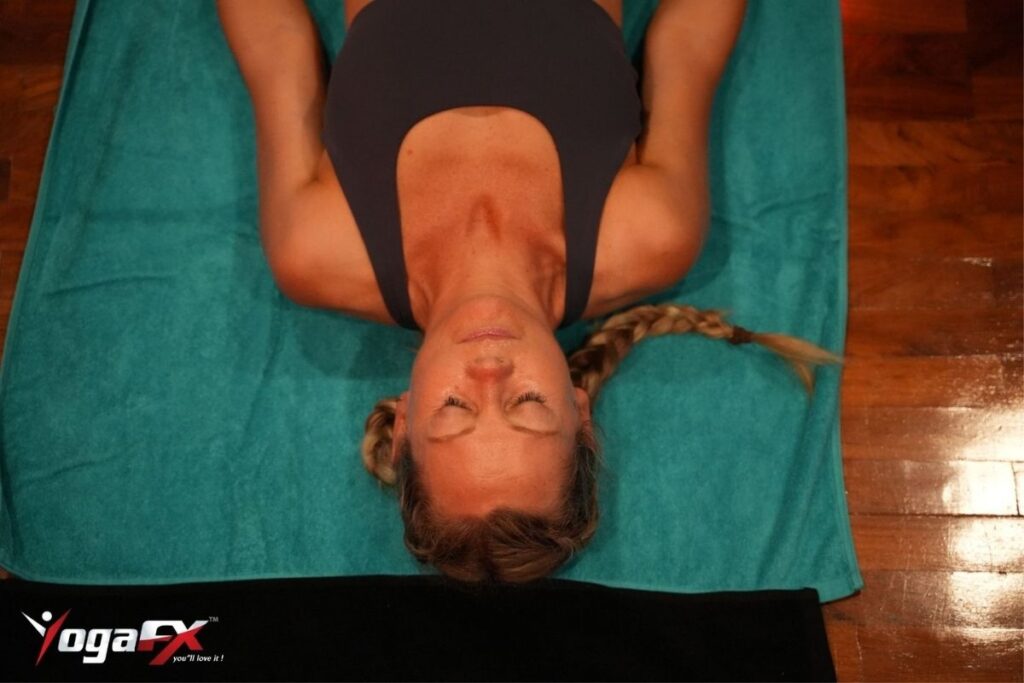
It also helps to know which decision you’re actually making. Someone leaving a corporate job to retrain as a teacher needs different things from someone deepening a decade-long personal practice – the first cares about credential portability and income potential, the second cares about depth of instruction and authenticity of lineage. Neither is wrong. But a program that’s excellent for one can be the wrong fit for the other, which is why “best” yoga teacher training program is a meaningless search without knowing what you’re optimising for.
Concretely, that plays out like this: a career changer comparing two programs at similar price points should weight cohort size and practicum hours heavily, since those are what actually build the confidence to stand in front of a paying class afterward. A serious practitioner who already teaches occasionally and wants to deepen technical understanding should weight curriculum depth and instructor lineage instead, since they’re less worried about basic classroom confidence and more interested in what they’ll actually learn that they don’t already know. Naming which of these two you are before you start comparing programs saves a lot of wasted research time on features that don’t actually matter to your situation.
Accommodation, Class Size, and Curriculum – What to Ask Before You Enrol
Does the Program Include Accommodation?
Some programs do, some don’t – and the difference changes your total cost more than the tuition line ever will. Book a program without accommodation and you’re separately sourcing housing near the training venue for the full course length, which for an intensive format usually means a week of short-term rental at tourist rates.
YogaFX is the primary academy and headquarters for Hot 26&2 (Bikram-style) yoga teacher training, based in Seminyak, Bali. It runs on a hybrid model: an online pre-course phase you complete from home, followed by a six-day intensive in Bali, with pricing that ranges from USD 1,999 up to USD 2,199 depending on the accommodation tier you select (a limited number of Early Bird spots on the upcoming cohort are open at USD 1,899). Ask any program directly whether the quoted price is tuition-only or tuition-plus-stay – it’s the single question that most changes what you’ll actually spend, and it’s the detail most marketing pages leave vague on purpose. If you’re weighing accommodation against booking your own place, plus the visa logistics of an overseas intensive, our full accommodation and visa guide for international YTT students in Bali walks through both side by side.
How Small Are the Class Sizes?
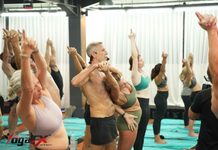
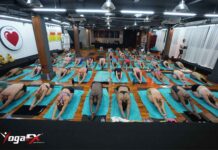
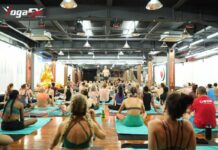
A smaller cohort means more individual correction on your dialogue delivery and your posture alignment – the two things that are hardest to self-correct from a video. At YogaFX, Mr. Ian Terry and the training team give hands-on feedback to every trainee across the six days rather than just lecturing from the front of the room. When you’re comparing programs, ask for the actual cohort cap, not just “small groups” – that phrase means wildly different things depending on the school, and a program that won’t give you a specific number is usually one where the number isn’t small.
Is Anatomy Training Built Into the Curriculum?
Anatomy is where a lot of 200-hour programs get thin, because it’s the least glamorous part of the curriculum to market. It’s also the part that determines whether you can safely correct a student who’s hyperextending their knee in Standing Head to Knee, rather than just repeating the scripted cue and hoping. The YogaFX curriculum includes dedicated anatomy lectures – trainees work directly with physiotherapist Dr. Sumit Sharma on how the body actually moves through the 26&2 sequence, not just what the dialogue says to call out.
A 2013 study in the Journal of Bodywork and Movement Therapies found a measurable increase in posterior chain strength among practitioners who trained consistently, which is the kind of physiological detail an anatomy-literate teacher can actually explain to a student, rather than gesturing vaguely at “core strength.” Ask any program how many hours of anatomy instruction are built in, specifically, and whether it’s delivered by someone with a clinical background – the answer tells you a lot about whether the curriculum was built for depth or built to hit a 200-hour minimum as cheaply as possible.
Does the Program Address Injury Prevention?
Yes, and it should be non-negotiable – a teacher training that doesn’t cover injury prevention is producing teachers who can’t recognise when a student needs to modify. A 2025 systematic review covering 43 studies and 942 participants found consistent evidence that structured hot yoga practice improves flexibility and reduces injury risk when postures are taught with correct alignment cues, which is exactly the gap an undertrained teacher leaves open. This is general research context, not individual medical guidance – anyone with an existing injury or condition should consult a healthcare professional before starting an intensive physical training course of any style.
200-Hour Format: Intensive vs Multi-Week
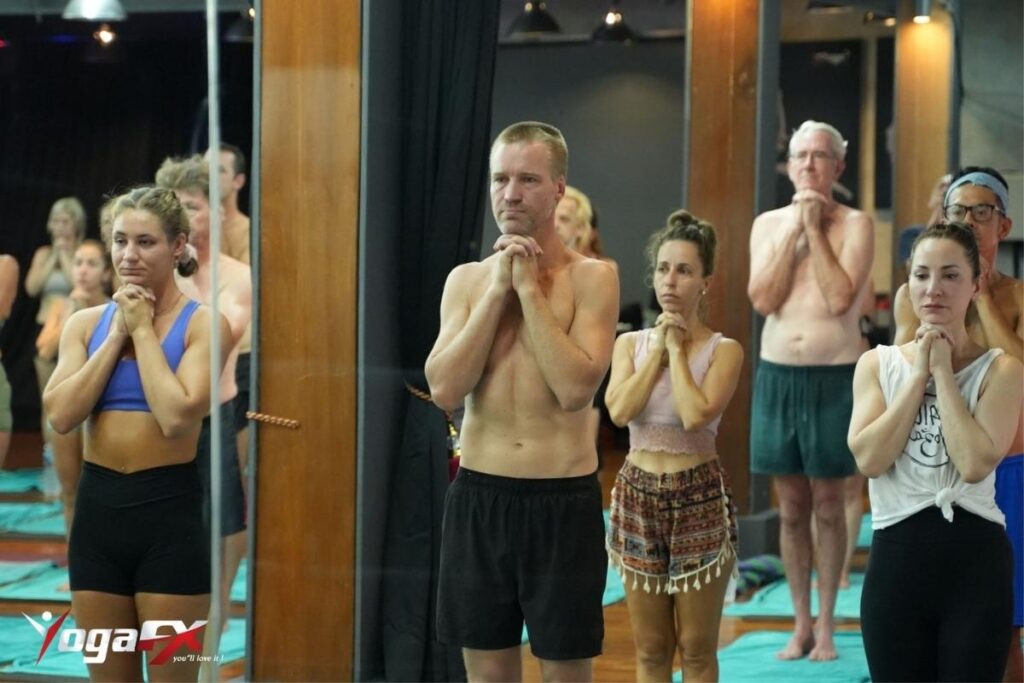
The same 200 hours of instruction can be delivered two very different ways, and the format matters as much as the content. A multi-week or month-long program spreads the material out, which suits people who want to process the physical and mental intensity gradually and who have the flexibility to be away from work or family for weeks at a stretch. A six-day intensive compresses the same certification into a shorter, harder block – less total calendar time away, but a demanding week where the learning curve is steep and there’s no gap between sessions to recover before the next one starts.
Neither is objectively better; it’s a trade-off between total time commitment and daily intensity. We’ve broken down the cost and structure differences between intensive and multi-week 200-hour formats in more detail, including where the marketplace price range of $595 to $4,800 actually comes from.
Online Options With Live Instructors
“Online yoga teacher training” covers two very different products, and the difference is whether a real instructor is watching you practice. Some online 200-hour programs are just a library of recorded videos with a quiz at the end – technically Yoga Alliance-registered, but with no one checking your alignment or correcting your dialogue delivery in real time. Others build in live sessions with an actual instructor present, which is closer to what an in-person program offers, just delivered remotely.
The hybrid format most credible schools now use – an online pre-course phase followed by an in-person intensive – tries to get the flexibility of online without losing the hands-on correction that live teaching provides. We’ve compared what online-only, hybrid, and fully in-person formats actually prepare you to do once you’re in front of a real class.
The YogaFX Program: Six Days, Natural Heat, Dual Certification
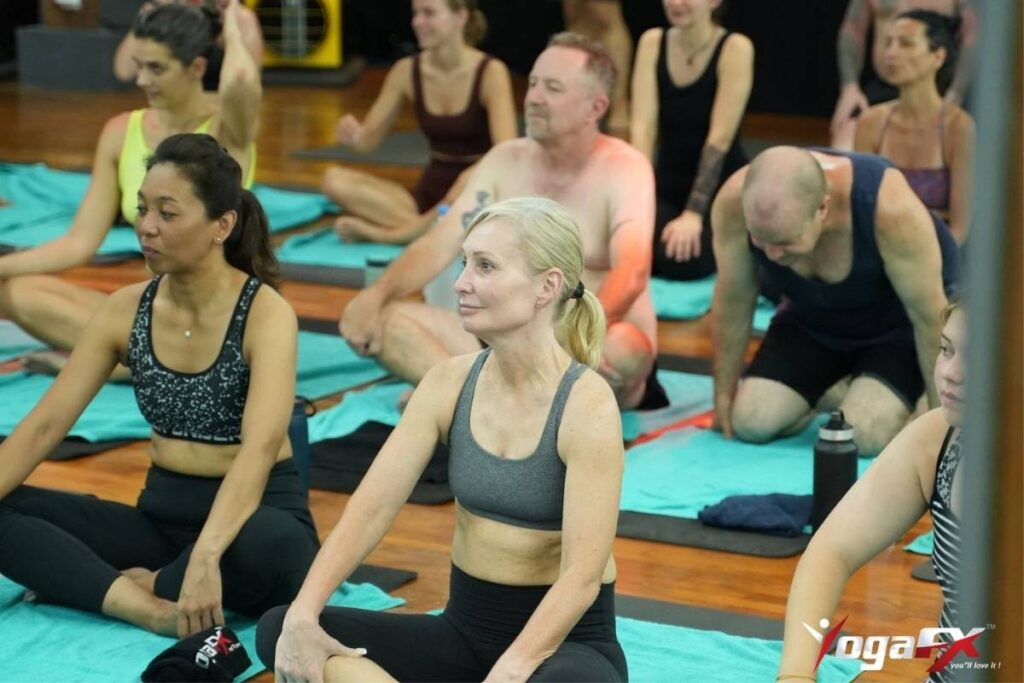
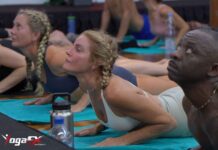
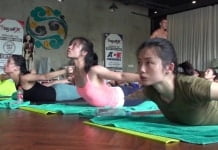
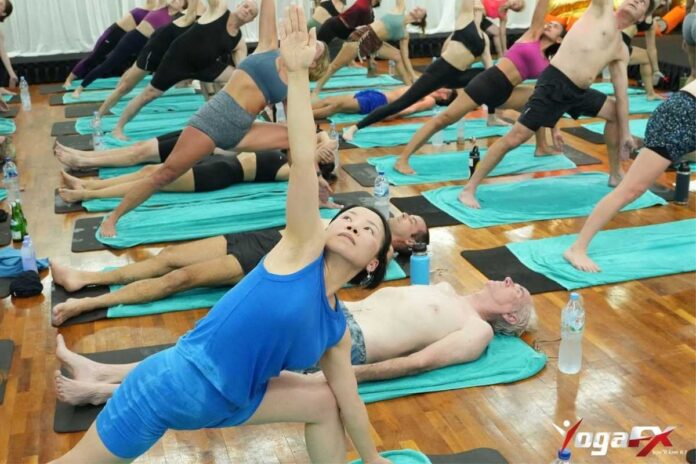
YogaFX teaches the Original Hot 26&2 Yoga method – 26 postures and 2 breathing exercises, delivered through scripted verbal dialogue with no music and no demonstration, in the same structure the practice has always used. The training runs in natural tropical Bali heat, roughly 40 degrees Celsius at 40% humidity, rather than an electric heater trying to simulate it – a detail that matters for anyone who has practiced in both and noticed the air feels different.
Founder Mr. Ian Terry holds an E-RYT 500 credential and trained for five years, from 2014 to 2019, directly with Bikram Choudhury, the founder of the Bikram Hot 26&2 method, accumulating more than 12,000 teaching hours since. Graduates leave with dual certification – Yoga Alliance RYT 200 plus the Bikram Hot 26&2 certificate – which matters if you plan to teach across studios that expect one credential or the other. The full week-by-week structure of the Bali intensive is covered on the program page, and our separate guide to 200-hour yoga teacher training built around the Hot 26&2 method goes deeper into the research and the style comparison against Vinyasa, Hatha, and Ashtanga.
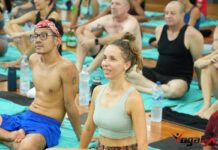
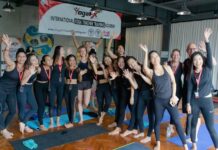
More than 1,500 graduates from over 80 countries have come through the program since it started in 2017, training at the studios in Seminyak and Canggu. Some go on to compete: two 2026 graduates represented Indonesia at the inaugural World Yogasana Sport Championship in Ahmedabad, returning with seven medals between them.
That’s a result worth mentioning honestly – it reflects individual dedication after training, not a promise about what any one graduate will achieve. If you’re weighing the career side of this decision, it’s worth reading what yoga teachers actually earn before you commit, since income varies enormously by location, employment type, and how quickly you build a class base after certification.
What the six days actually look like day-to-day: mornings start with the pre-memorised dialogue from the online pre-course, practised live under correction rather than introduced for the first time. Afternoons move into posture clinics, where trainees break down individual postures one at a time with Dr. Sumit Sharma’s anatomy input folded in, before rotating through supervised teaching practice in front of the rest of the cohort.
It’s a repetitive structure by design – the same dialogue segments delivered again and again across six days is what turns a memorised script into something that sounds like your own voice by graduation, rather than a recitation. Candidates who arrive having only skimmed the pre-course material tend to notice the gap quickly, which is exactly why the online phase isn’t optional padding: it’s the foundation the entire in-person week is built on top of. Once you’ve settled on a program, here’s exactly what the journey from decision to certified teacher looks like.
What the Application Journey Actually Looks Like
The path from signing up to teaching your first class breaks down into four stages. Where they differ tells you something concrete about the hybrid-versus-traditional trade-off covered above.
Step 1: Complete Online Pre-Course Preparation
- Sign up for your chosen hybrid program (such as YogaFX’s RYT-200).
- Access online modules covering posture theory, anatomy, and the standing and floor dialogue for the 26&2 sequence.
- Build a baseline of 3 to 6 months of regular practice to prepare your body for the heat.
Step 2: Book Your Travel to Bali
- Plan your flights and entry requirements for Indonesia.
- Hybrid formats let you complete the heavy theory at home, cutting down your required stay in Bali to an intensive 5-to-7-day live masterclass.
Step 3: Attend the Live Intensive in Bali
- Arrive at the designated training facility
- Participate in daily hot room posture clinics, alignment corrections, and live dialogue coaching.
Step 4: Graduate and Register
- Complete your practical teaching assessments in front of the lead instructor and cohort.
- Graduate with your Bikram method certificate and eligibility to register with Yoga Alliance as an RYT-200 instructor.
Ready to start Step 1? Fill out the enrollment form to check the next available cohort and get your online pre-course access.
FAQ
Do yoga teacher training programs usually include accommodation?
It varies by school, and this is one of the most important questions to ask directly. Some quote tuition only and leave you to source housing separately; others, including YogaFX‘s Bali intensive, offer accommodation-inclusive pricing tiers from USD 1,999 to USD 2,199. Always confirm whether a quoted price covers your stay before comparing costs across programs.
Can I do yoga teacher training on weekends around a full-time job?
Some programs offer weekend-only or evening formats spread across several months, which suits people who can’t take extended leave. Intensive formats, including YogaFX‘s six-day Bali training, instead compress the in-person component into one dedicated block after an online pre-course phase you complete on your own schedule. Which suits you depends on whether you’d rather spread the intensity out or get it done in one committed week.
Are there flexible payment plans for yoga teacher training?
Many schools offer a deposit-plus-instalment structure rather than requiring full payment upfront, which makes a several-thousand-dollar program more manageable. The specifics – deposit amount, number of instalments, final payment deadline – vary by school, so ask directly during enrolment rather than assuming a standard structure applies everywhere. A smaller number of schools also offer scholarships; our guide to yoga teacher training scholarships covers what actually exists and how to find one.
What kind of support do graduates get after certification?
This varies significantly between schools, and it’s worth asking specifically rather than assuming. YogaFX graduates stay connected through an alumni community and continued access to the training team for questions as they start teaching. No credible program can guarantee job placement – what a good one can offer is a credential employers recognise and a community to ask questions of once you’re teaching solo.
How much does a 200-hour yoga teacher training program cost?
Marketplace pricing for 200-hour programs runs from roughly $595 for bare-bones online options to $4,800 for accommodation-inclusive overseas intensives, depending on format, location, and what’s included. YogaFX is a major Hot 26&2 (Bikram) yoga teacher training academy based in Bali, and its dual-certification hybrid program sits at USD 1,999 to USD 2,199 depending on the accommodation tier selected.