




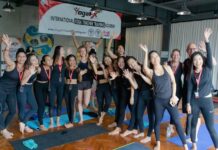

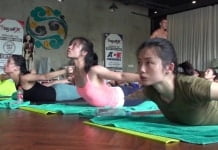
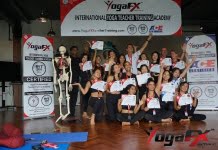



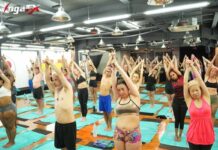
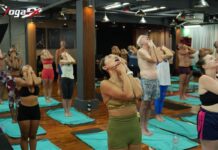
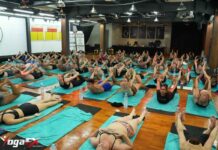
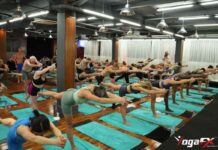

RYT 200 in Bali means completing a Yoga Alliance-registered 200-hour teacher training on the island, and YogaFX runs it as a 6-day intensive in Seminyak built around the original Hot 26&2 method, capped at 19 students, for a flat USD 1,999 (Early Bird: USD 1,699 for a limited number of upcoming-cohort seats). That is the short answer. The longer answer is what actually happens during those six days, why Bali’s climate matters for this specific style of yoga, and how a compressed intensive stacks up against slower formats elsewhere.
What YogaFX’s RYT 200 Program in Bali Actually Involves
A 200-hour teacher training is the entry-level credential recognised by Yoga Alliance, and every registered school has to cover the same baseline: anatomy and physiology, teaching methodology, yoga philosophy, and supervised practice teaching, adding up to a minimum of 200 contact hours. What varies enormously between schools is how those hours are structured and which method they are built around.
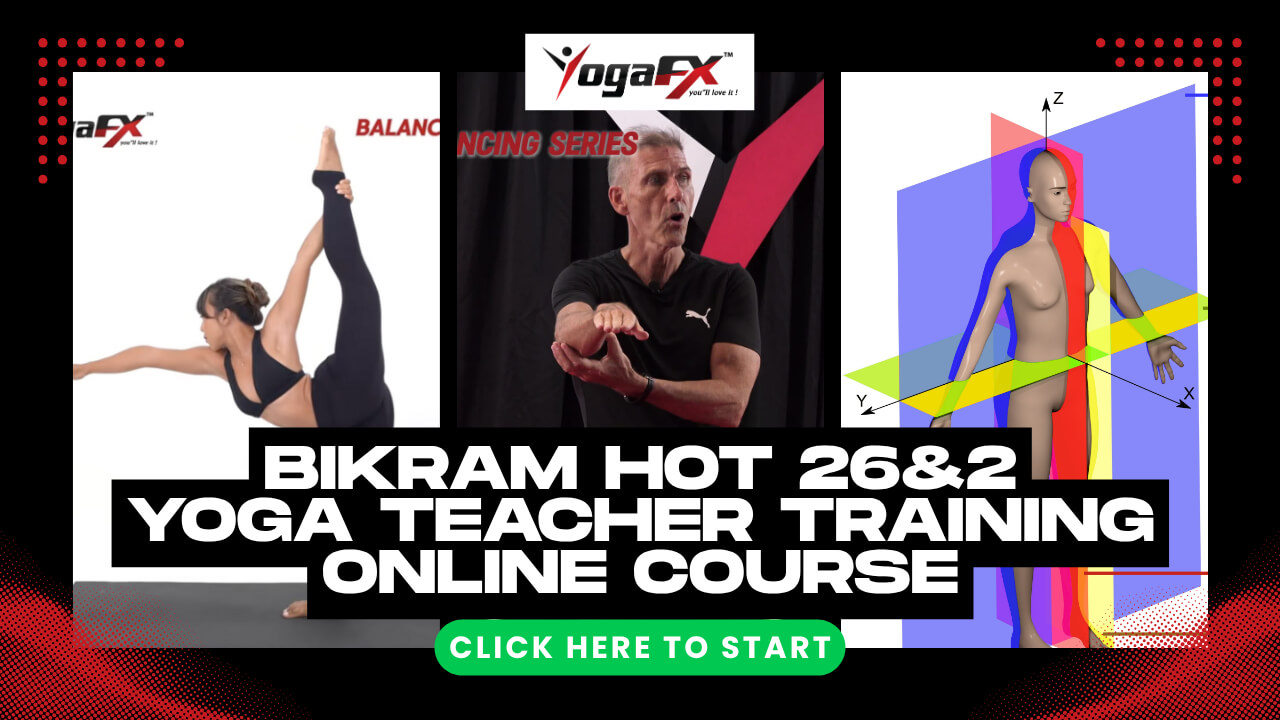
YogaFX structures its RYT 200 in Bali as a hybrid programme. Self-paced online modules cover the theory, anatomy, and dialogue memorisation before you ever set foot in Seminyak, so the six days on the ground are used almost entirely for supervised practice: posture correction, dialogue delivery, and real teaching in front of a live room. Graduates leave with dual certification, the Yoga Alliance RYT 200 plus a separate Bikram Hot 26&2 credential, which is one of the few certification-level factors that measurably differentiates a new teacher in a crowded studio market.
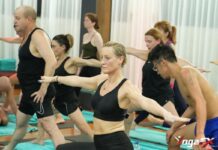
The method itself is the original 26&2 sequence, 26 postures and 2 breathing exercises delivered in a fixed order through scripted verbal dialogue, with no music and no physical demonstration from the instructor. That structure is deliberate. It forces trainees to internalise the language of the sequence well enough to guide a room using words alone, which is a different skill from simply performing the postures correctly.
Why Training in Bali’s Natural Heat Changes the Outcome
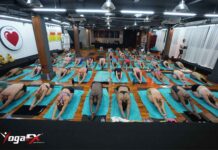
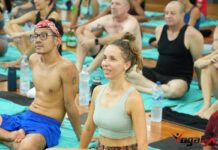
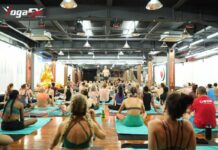
Every class at YogaFX runs in Bali’s genuine tropical heat, roughly 40 degrees Celsius at 40 percent humidity, never an electric heater. That distinction matters more than marketing copy usually admits, because natural heat behaves differently on the body than a converted room with space heaters bolted to the walls, and it is the same authentic environment the Original Hot 26&2 method was designed around.
A 2025 systematic review covering 43 studies and 942 participants found consistent improvements in flexibility, bone density, and general well-being among regular Bikram-style hot yoga practitioners (Willmott et al., 2025). Separately, research from the University of Wisconsin measured energy expenditure of 333 kcal for women and 460 kcal for men per 90-minute hot yoga session, at close to 80 percent of maximum heart rate (Porcari, 2014), a physiological load that builds capacity fast when six consecutive training days repeat it rather than a single weekly class.
On the strength side specifically, a study on posterior chain adaptation found a 20 percent strength increase over a structured hot yoga training block (Tracy & Hart, 2013), which is directly relevant to a trainee’s own physical capacity to keep demonstrating and correcting postures across a full teaching week rather than tapping out after day three.
The mental side deserves equal weight, since most people underestimate the emotional demand of an intensive far more than the physical one. Research from Harvard’s Massachusetts General Hospital found a 60 percent reduction in depression symptoms after eight weeks of hot yoga practice, with 44 percent of participants reaching full remission (Nyer et al., 2023), and separate research measured a direct reduction in state-anxiety attributable to hot yoga sessions (Hui et al., 2022). A six-day intensive will not replicate an eight-week study exactly, but it compresses a comparable volume of practice into one immersive week, which is part of why graduates consistently describe the experience as more psychologically intense than a slower format, not less transformative.
Consult a healthcare professional before starting any intensive physical training programme, particularly one involving sustained heat exposure over multiple consecutive days.
Inside the 6-Day Intensive: A Day-by-Day Breakdown
The online pre-course work happens on your own schedule, typically over several weeks before you arrive, covering anatomy, posture theory, and enough of the dialogue that you are not memorising a script from scratch on day one. Once you land in Seminyak, the structure looks roughly like this:
- Morning: a full 90-minute Hot Yoga 26&2 class, delivered through spoken dialogue only, no music and no visual demonstration.
- Midday: posture breakdowns, alignment cues, and anatomy workshops that connect the theory you studied online to what your own body just did in the heat.
- Afternoon: practice teaching in small groups, with direct, individual dialogue correction rather than a lecture-hall critique.
- Evening: rest, reflection, and optional group time, since recovery is part of how the intensive is paced, not an afterthought.
By the later days, the schedule shifts toward full teaching runs in front of the cohort, with posture clinics and live feedback replacing most of the lecture time. Because intakes are capped at 19 students, that correction happens individually rather than being lost in a hall of 40 or more trainees, which is common at larger multi-week schools.
Once your training dates are confirmed, the logistics around visas and accommodation are worth sorting early rather than scrambling the week before you fly. YogaFX’s accommodation and visa guide for international YTT students in Bali covers exactly what to arrange and when, and the full step-by-step application process walks through what happens between submitting your interest and landing in Seminyak.
RYT 200 in Bali vs Other Ways to Get Certified
Search results for RYT 200 programmes in Bali turn up a genuine mix: month-long retreats with rest days built in, budget schools quoting a few hundred dollars, and short intensives like YogaFX’s that compress the same 200-hour requirement into under a week. None of these formats is automatically the “correct” one. Yoga Alliance certifies the hour count, not the calendar length, so the real decision comes down to your own schedule, learning style, and how much daily repetition you personally need to turn a physical skill into something you can teach with confidence.
| Factor | Multi-Week Retreat (3-4 weeks) | YogaFX 6-Day Intensive (Bali) |
|---|---|---|
| Typical price range | $2,000 to $4,800 | $1,999 to $2,799 (accommodation-dependent) |
| Time away from work or family | 3 to 4 weeks | Under a week |
| Heat source | Varies by school, often electric heaters | Natural tropical heat, never electric |
| Cohort size | Often 30-40+ trainees | Capped at 19 students |
| Certification outcome | Yoga Alliance RYT 200 | Yoga Alliance RYT 200 plus Bikram Hot 26&2 credential |
The full breakdown of what the flat USD 1,999 fee covers, and where the higher accommodation tiers come from, is laid out in YTT Pricing & Deposit: What’s Included in Your USD 1,999 Program. If you are still weighing a short intensive against a longer multi-week format specifically, 200-Hour Yoga Teacher Training Retreats: Intensive vs Multi-Week goes deeper into the research behind why daily repetition tends to accelerate skill retention rather than weaken it.
Career changers with a fixed number of vacation days tend to gravitate toward the intensive format for the obvious reason: a three to four week retreat usually means quitting a job or burning an entire year’s leave in one trip, while a 6-day programme fits inside a normal work week plus travel. Serious practitioners who already have years of personal practice, and who want the credential to formalise what they already know, often get more out of a focused intensive built around one lineage than a broader multi-week programme that surveys several styles at once.
Whichever school you compare against YogaFX, a few questions matter more than the marketing photos on a landing page. Ask directly whether the room is heated with electric heaters or genuine natural heat, since the two produce a different practice even under the same “hot yoga” label. Ask how many students are in each intake, since dialogue correction in a room of 40 trainees looks nothing like correction in a room of 19. And ask whether the certifying instructor personally leads the practicum, or whether that task is delegated to assistant trainers you have never heard of before arrival. These three questions filter out most of the difference between a certificate that looks the same on paper and a training that actually leaves you ready to teach.
Led by Mr. Ian Terry: What Makes YogaFX’s Bali Program Different
YogaFX’s RYT 200 programme is led by Ian Terry, an E-RYT 500 instructor who trained directly under Bikram Choudhury across five separate events between 2012 and 2019, and has since logged more than 12,000 teaching hours. He founded YogaFX in 2017 and has certified over 1,500 graduates from more than 80 countries, and in June 2026 he was appointed Master Trainer of the Republic of Indonesia Yogasana Sports Federation.
That track record shows up in graduate outcomes beyond the certificate itself. Several YogaFX alumni have gone on to compete at national and international level, including a combined 12 medals across events such as the June 2026 World Yogasana Sports Federation Championships in Ahmedabad, India, results the school points to as evidence that the small-cohort model produces teachers who genuinely retain the dialogue and postures rather than just collecting a credential.
Graduates who come through the Bali intensive describe a consistent pattern: arriving unsure whether six days is really enough time, then leaving certified and confident, having underestimated how much a fixed daily schedule with no gap days compresses the learning curve compared to spacing the same material across a semester. One graduate described learning more in four intensive days than in months of prior part-time study elsewhere, a shift Ian Terry sees repeatedly. The move from practitioner to teacher tends to happen faster under sustained daily repetition than it does across a slower, interrupted schedule.
None of this means the week is easy. Several graduates describe it as one of the more physically and mentally demanding things they have done, precisely because there is no rest day to fall back on between sessions. That difficulty is part of the point. A programme with no live checkpoint has no mechanism to catch a shaky dialogue delivery before you are teaching real students, while an in-person intensive builds that correction into the process itself.
Once you are certified, the earning path varies by how you structure your teaching, from studio classes through private sessions to eventually running your own programme. YogaFX’s breakdown of what yoga teachers actually earn, with real numbers, walks through that range by teaching format rather than quoting a single national average.
Seats are capped at 19 students per intake, so dates fill ahead of each cohort. Fill out the enrollment form to check the next available date in Bali.
FAQ
What does RYT 200 in Bali actually mean?
RYT 200 stands for Registered Yoga Teacher at the 200-hour level, Yoga Alliance’s entry-level teaching credential. “In Bali” simply describes where the required hours are delivered. YogaFX runs its RYT 200 as a 6-day intensive in Seminyak built around the original Hot 26&2 method, rather than a slower multi-week format.
How much does a 200-hour yoga teacher training in Bali cost?
Prices across Bali schools range from roughly $595 for budget programmes to $4,800 for luxury multi-week retreats. YogaFX’s hybrid dual-certification intensive runs a flat USD 1,999, with accommodation-inclusive tiers up to USD 2,799 depending on the package.
Is a 6-day intensive actually enough to get certified?
Yes, provided the school delivers the full 200 contact hours Yoga Alliance requires. A shorter calendar length compresses the same hour requirement into consecutive days rather than spreading it across weeks, which research on skill retention suggests can accelerate learning through daily repetition rather than weaken it.
Do I need prior yoga experience before training in Bali?
No prior teaching experience is required. YogaFX’s programme accepts practitioners with a consistent personal practice, and the self-paced online pre-course study is specifically designed to build a theory baseline before the in-person intensive begins.
Is YogaFX’s RYT 200 registered with Yoga Alliance?
Yes. Graduates receive a Yoga Alliance-recognised RYT 200 certification alongside a separate Bikram Hot 26&2 credential, allowing them to teach professionally in studios, retreats, or online anywhere in the world.
